Introduction
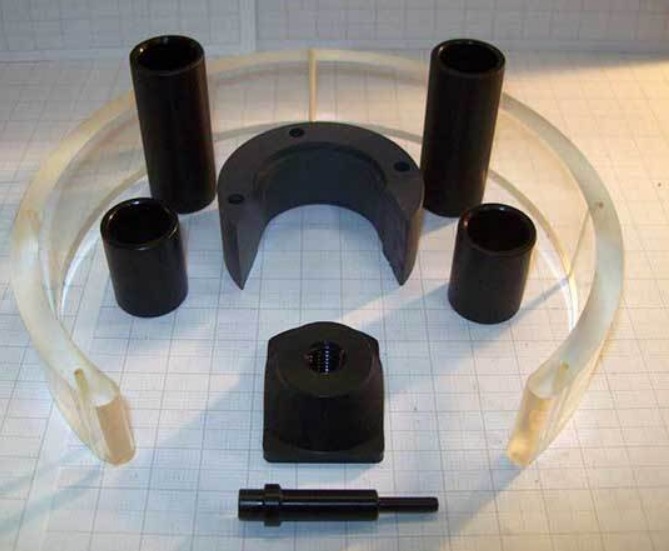
Precision machined components are the building blocks of modern industry. They are in aircraft engines that fly across oceans. They are in pacemakers that keep hearts beating. They are in the cars we drive and the smartphones we use every day.
These components are manufactured to extremely tight tolerances—often within micrometers. A slight deviation can mean the difference between reliable operation and catastrophic failure.
This guide covers precision machined components from three essential angles: services, facilities, and materials. Whether you are sourcing components, designing products, or simply curious about how things are made, you will find practical insights here.
What Services Do Precision Machining Providers Offer?
Prototyping Services
Prototyping is where ideas become physical reality. It allows you to test and validate designs before committing to mass production.
3D Printing (Additive Manufacturing) builds components layer by layer from digital models. A prototype that might take days to machine conventionally can be 3D-printed overnight. This speed enables rapid iteration. You can incorporate feedback and make improvements quickly.
Rapid Prototyping encompasses 3D printing and CNC machining for prototype creation. These techniques achieve tolerances as tight as ±0.05 mm. The prototype closely mimics the final product, allowing for accurate testing. For aerospace components, a rapid-prototyped model can be tested in wind tunnels to optimize aerodynamic performance.
Mass Production Services
Scaling from prototypes to high volumes presents challenges: maintaining consistent quality, controlling costs, and meeting tight schedules.
Automated Production Lines use advanced robotics and CNC machines to perform operations with high precision and repeatability. In automotive manufacturing, automated lines produce thousands of engine components per day. Each part meets strict quality standards. Robotics reduces human error and enables continuous production.
Advanced Manufacturing Processes include:
- Multi-axis machining – Up to five or more axes of movement. Complex geometries are created in a single setup, improving accuracy.
- High-speed machining – High-speed spindles and advanced cutting tools remove material quickly, reducing production time without sacrificing quality.
Value-Added Services
Beyond basic machining, providers offer services that simplify your supply chain.
Surface Treatment enhances performance and appearance:
| Process | Benefit |
|---|---|
| Plating | Improves corrosion resistance (zinc, nickel) |
| Anodizing | Increases hardness, creates decorative finish on aluminum |
| Painting | Adds color and protection |
Assembly combines multiple machined components into sub-assemblies or finished products. This saves coordination time and ensures proper fit.
Quality Inspection uses advanced equipment like CMM (Coordinate Measuring Machines) to verify components meet specifications. CMMs measure dimensions with accuracy to within a few micrometers. Early defect detection reduces waste and ensures only quality products reach market.
What Materials Are Used in Precision Machined Components?
Metals
| Material | Key Properties | Common Applications |
|---|---|---|
| Aluminum Alloys (6061) | Low density (2.7 g/cm³), high strength-to-weight, excellent corrosion resistance | Aerospace wings, automotive engine components |
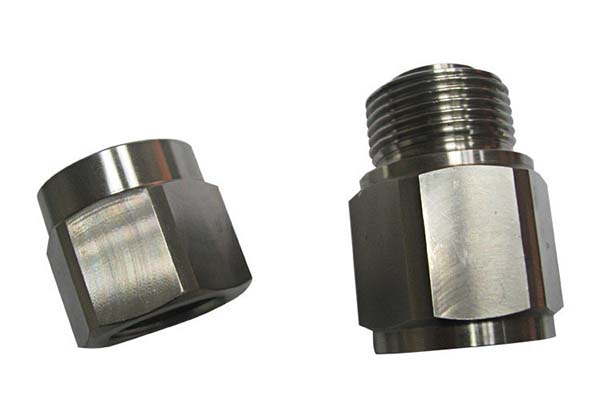
| Stainless Steel (304, 316) | Outstanding corrosion resistance, good strength | Food processing, medical devices, marine applications |
| Titanium Alloys | High strength, low density (4.5 g/cm³), excellent corrosion resistance, high-temperature stability | Aircraft engine parts, structural components |
Aluminum alloys are popular for their machinability and light weight. However, their strength may be lower in high-stress applications.
Stainless steels form a passive oxide layer that protects against rust. 316 stainless steel adds molybdenum for even better marine and chemical resistance. They machine well but require more careful handling than aluminum.
Titanium alloys offer unique properties but are notoriously difficult to machine. They react with cutting tools at high temperatures, causing rapid wear. Specialized tools and techniques are required.
Plastics
| Material | Key Properties | Common Applications |
|---|---|---|
| Polycarbonate (PC) | Highly transparent, excellent impact resistance, wide temperature range (-40°C to 130°C) | Optical components, electronic housings, automotive lighting |
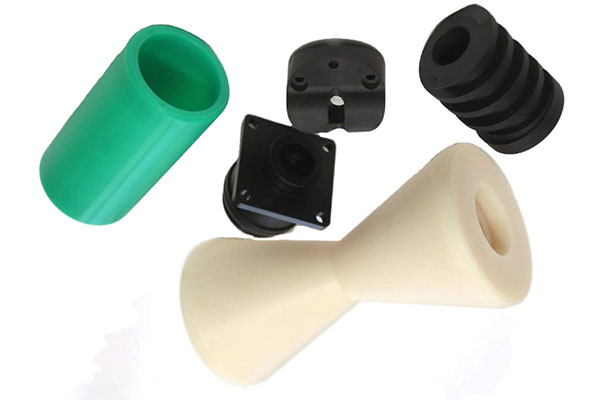
| Nylon (Polyamide) | High strength, abrasion resistance, self-lubricating | Gears, bearings, bushings, timing belt pulleys |
Polycarbonate has good flow characteristics during molding, allowing complex shapes with fine details. Smartphone lenses are often precision-molded from polycarbonate.
Nylon is easily machined and lightweight compared to metal counterparts. Its wear resistance makes it ideal for mechanical systems.
Composites
| Material | Key Properties | Common Applications |
|---|---|---|
| Carbon Fiber Composites | Extremely high strength-to-weight, excellent fatigue resistance | Aircraft structures, wings, fuselages |
| Glass Fiber Composites | Good mechanical properties, affordable, high tensile strength | Boat hulls, automotive body panels, industrial housings |
Carbon fiber composites significantly reduce weight in aircraft, leading to fuel savings and increased range. However, manufacturing and machining are complex and costly. The fibers can cause delamination if not processed correctly.
Glass fiber composites offer a balance of strength and economy. They are easier to mold into complex shapes than carbon fiber, making them popular for mass-produced items.
What Facilities and Capabilities Matter?
CNC Machining Equipment
The right equipment determines what is possible.
CNC Mills range from 3-axis for basic operations to 5-axis for complex 3D shapes. Multi-axis capability allows machining of intricate geometries in a single setup, improving accuracy and reducing handling.
CNC Lathes handle cylindrical and threaded components. Modern lathes with live tooling combine turning and milling operations, eliminating secondary setups.
EDM (Electrical Discharge Machining) machines hard materials using electrical discharges. It achieves tolerances of ±0.001 mm for complex shapes in hardened steel.
Grinding Equipment achieves ultra-smooth finishes. Surface grinders produce finishes as low as Ra 0.025 μm for precision components.
Inspection and Quality Control
Quality control is not an afterthought—it is integrated into the process.
CMM (Coordinate Measuring Machine) measures dimensions with accuracy to ±0.0001 inches. It verifies complex geometries against design specifications.
Optical Comparators project magnified images of parts onto screens for quick shape verification.
Surface Roughness Testers ensure finishes meet requirements—critical for sealing surfaces and bearing interfaces.
Automation and Integration
Modern facilities use automation to improve consistency and throughput.
Robotic arms load and unload workpieces, reducing downtime between operations. Productivity increases by 20–40% .
Automated pallet systems allow machines to run unattended overnight, maximizing utilization.
Zero-point clamping ensures repeatable positioning across multiple setups, essential for complex parts requiring multiple operations.
How Do You Choose the Right Provider?
Key Factors to Consider
| Factor | What to Look For |
|---|---|
| Machining capabilities | Range of processes: milling, turning, grinding, EDM, multi-axis |
| Equipment | Up-to-date CNC machines, inspection equipment |
| Quality system | ISO 9001 certification, CMM inspection, documented processes |
| Experience | Track record in your industry (aerospace, medical, automotive) |
| Value-added services | Surface treatment, assembly, design support |
Balancing Cost and Quality
Price should not be the sole determinant. A low-cost provider may deliver parts that fail inspection, causing delays and rework. A provider with robust quality systems and advanced equipment may cost more upfront but delivers reliability.
The Importance of Communication
Precision machining is a collaborative process. The best providers engage early in the design phase, offering feedback on manufacturability. They clarify specifications and flag potential issues before production begins.
What Real-World Applications Demonstrate Precision Machining?
Aerospace: Engine Components
Turbine blades and engine shafts must withstand high temperatures, pressures, and rotational speeds. Tolerances are measured in microns. A slight deviation can lead to catastrophic failure. Precision machining enables the complex geometries and tight tolerances required.
Medical: Implants and Surgical Tools
Pacemakers, hip replacements, and surgical instruments require absolute reliability. Components must be biocompatible and manufactured with repeatable precision. Surface finishes affect osseointegration—the process where bone bonds with implants.
Automotive: Engine and Transmission Parts
Crankshafts, camshafts, and transmission components operate under high stress. Precision machining ensures consistent quality across thousands of parts, reducing assembly issues and warranty claims.
Electronics: Housings and Connectors
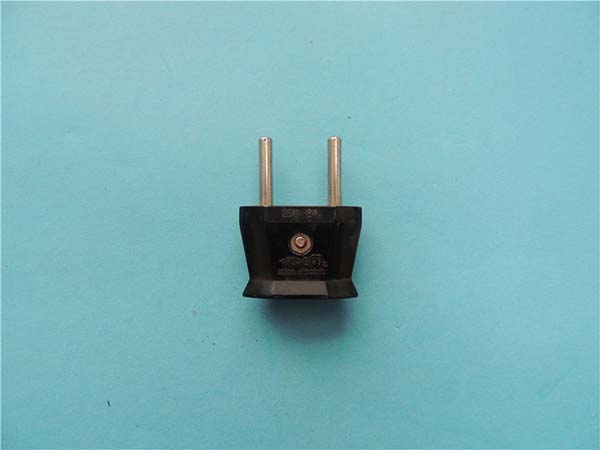
Smartphone housings have wall thicknesses as thin as 0.5–1 mm. Connector pins require consistent dimensions for reliable electrical contact. Precision machining delivers the accuracy needed for miniaturized components.
Conclusion
Precision machined components enable modern technology. They are everywhere, though often unseen. Their quality determines whether systems perform reliably or fail unexpectedly.
Understanding the three pillars—services, facilities, and materials—helps you make informed decisions. Prototyping services accelerate development. Mass production capabilities scale to meet demand. Value-added services like surface treatment and assembly simplify your supply chain.
Material selection matters as much as machining capability. Aluminum offers light weight. Stainless steel provides corrosion resistance. Titanium delivers strength at high temperatures. Plastics and composites expand the possibilities further.
The right provider combines advanced equipment, robust quality systems, and deep experience. They engage early, communicate clearly, and deliver components that meet your specifications consistently.
FAQ
What are the key factors to consider when choosing a precision machining service provider?
Consider machining capabilities (milling, turning, grinding, EDM, multi-axis), equipment quality, quality control systems (ISO 9001, CMM inspection), industry experience, and value-added services like surface treatment and assembly. Balance cost against quality—the cheapest option often leads to delays and rework.
How do different materials affect the precision machining process?
Titanium alloys are strong but difficult to machine, causing rapid tool wear. Aluminum alloys machine easily but have higher thermal expansion, affecting dimensional accuracy. Plastics like polycarbonate can melt or warp at high temperatures. Composites like carbon fiber risk delamination if processed incorrectly. Each material requires specific tooling and parameters.
Can precision machined components be customized according to specific requirements?
Yes. Customization begins with detailed communication between customer and provider. Requirements are documented, CAD models are created, and prototypes are produced for testing. Once validated, production scales while maintaining adherence to specifications throughout the process.
What is the typical tolerance for precision machined components?
Precision machining typically achieves tolerances of ±0.001–0.01 mm for common operations. CNC grinding and EDM can achieve ±0.0001–0.001 mm for specialized applications. The achievable tolerance depends on the process, material, equipment, and part geometry.
Why is surface finish important for precision machined components?
Surface finish affects corrosion resistance, friction, wear, and biocompatibility. For medical implants, a smooth finish (Ra < 0.2 μm) promotes osseointegration. For sealing surfaces, finish determines whether seals leak. For decorative parts, finish affects appearance.
Contact Yigu Technology for Custom Manufacturing
At Yigu Technology, we specialize in precision machined components for demanding industries. Our facilities include 3-axis, 4-axis, and 5-axis CNC mills, CNC lathes with live tooling, EDM, and precision grinding equipment. We work with metals, plastics, and composites to meet your specific requirements.
Our quality system is ISO 9001 certified. We use CMM inspection, optical comparators, and surface roughness testers to verify every component. Our value-added services include surface treatment, assembly, and design for manufacturability support.
From prototyping to high-volume production, we deliver components that meet tight tolerances and perform reliably in the field. We engage early, communicate clearly, and ensure your project succeeds.
Contact us today to discuss your precision machined component needs. Let our expertise help you bring your designs to life with accuracy and reliability.