Introduction
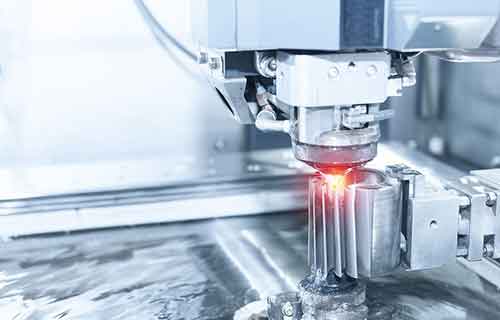
In modern manufacturing, the difference between a part that works and one that works flawlessly often comes down to precision. Precision machining is the process of creating components with extremely tight tolerances—often within micrometers or even nanometers. This level of accuracy ensures that products meet the strictest quality and performance standards. Whether you are building a jet engine, a surgical tool, or an electric vehicle drivetrain, precision machining is what makes excellence possible. This guide explores how this technology drives industrial excellence across key sectors, the core elements that make it work, and real-world examples of its impact.
What Is Precision Machining?
Precision machining is a high-accuracy manufacturing process. It uses advanced equipment and techniques to produce parts with extremely tight tolerances. In practice, this means holding dimensions within ±0.001 mm to ±0.01 mm, depending on the application. In some advanced fields like optics or semiconductor manufacturing, precision reaches the nanometer scale. This level of control ensures that components not only fit together perfectly but also perform reliably under demanding conditions.
Where Is Precision Machining Used?
Precision machining serves industries where failure is not an option. Each sector has unique requirements, but all demand exceptional accuracy.
Aerospace Industry
In aerospace, precision is a matter of safety. Turbine blades in jet engines operate in extreme conditions. Modern engines reach temperatures up to 1,700°C and rotational speeds of 30,000 RPM. A deviation of even a fraction of a millimeter can cause imbalances, reduced efficiency, or catastrophic failure.
- Precision requirement: Micrometer-level accuracy on blade profiles.
- Impact: Engines with precision-machined components achieve up to 15% better fuel efficiency, saving airlines millions in fuel costs and reducing carbon emissions.
Medical Equipment
In the medical field, precision machining directly affects patient outcomes. Surgical instruments used in ophthalmic or neurosurgery have tips machined to less than 0.1 mm in diameter. This allows surgeons to perform delicate procedures with minimal tissue damage.
Medical implants like hip and knee replacements require a perfect fit. Precision-machined implants integrate better with bone structure, reducing rejection risk. Studies show that well-machined implants can last 20 years or more, significantly improving patients' quality of life.
Automotive Industry
High-performance vehicles rely on precision-machined engine components. Pistons in performance engines have clearance tolerances of 0.03–0.08 mm between the piston and cylinder wall. Exceeding this range leads to engine knocking, reduced power, and increased fuel consumption.
Transmission gears also benefit from precision machining. High-end sports cars use precision-engineered gears to achieve smooth power transfer and reduced noise. Some manufacturers report that precision transmissions improve acceleration times by up to 10%.
| Industry | Key Components | Precision Requirements | Impact of Precision |
|---|---|---|---|
| Aerospace | Turbine blades, engine casings | Micrometer-level accuracy | 15% better fuel efficiency |
| Medical | Surgical instruments, implants | Sub-millimeter tips, perfect fit | 20+ year implant lifespan |
| Automotive | Pistons, transmission gears | 0.03–0.08 mm clearance | Up to 10% faster acceleration |
What Are the Core Elements of Precision Machining?
Achieving industrial excellence requires more than just good equipment. It demands a combination of advanced machines, skilled people, and precise programming.
Advanced Equipment
State-of-the-art CNC machines form the backbone of precision machining. A high-end CNC lathe can achieve positioning accuracy of ±0.001 mm. This means the machine moves the cutting tool to within one micron of the programmed position.
High-precision grinding machines take accuracy even further. A precision cylindrical grinder can achieve:
- Roundness accuracy: 0.0001 mm
- Surface finish: Ra 0.01 μm
These capabilities are essential for industries like optics, where even a tiny imperfection on a lens surface affects light refraction and image quality.
Skilled Workforce
Advanced machines are useless without skilled operators. A precision machinist must understand machining principles, material behavior, and equipment operation. In aerospace component production, for example, the operator must know how titanium alloys respond to different cutting speeds, feed rates, and coolant types.
Training is critical. Many companies provide in-house programs lasting 6 months or more, combining theoretical study (CAD/CAM software) with hands-on practice. With years of experience, machinists develop the ability to troubleshoot issues in real time—identifying vibration causes or tool wear before they affect part quality.
Precision Programming
Programming determines how accurately a machine executes its tasks. Precision Machining (PM) numerical control programming offers distinct advantages over traditional NC programming:
| Comparison Item | Traditional NC Programming | PM NC Programming |
|---|---|---|
| Efficiency | Several days to program complex parts | Hours using pre-set templates and parametric models |
| Flexibility | Each new task starts from scratch | Modify parameters to adapt to design changes quickly |
| Error Rate | Higher due to manual code writing | Lower through templates and parameter-driven methods |
For example, switching from one automotive engine component to another with similar structure but different dimensions takes only minutes with PM programming—not days.
What Does Precision Machining Excellence Look Like?
Real-world examples show how precision machining translates into measurable performance gains.
Automotive Excellence: BMW M Series
BMW uses precision-machined engine components in its M-series high-performance cars. The crankshafts in these engines maintain straightness tolerances within 0.02–0.05 mm. This precision ensures smooth operation, reduced vibration, and increased power output. The result? BMW M-series cars accelerate from 0 to 100 km/h in as little as 3.2 seconds—significantly faster than many competitors.
Electric Vehicle Excellence: Tesla Model S
In the Tesla Model S, precision-machined gears in the reduction gearbox hold pitch errors below 0.01 mm. These gears enable efficient power transfer from the electric motor to the wheels. Combined with other optimizations, this contributes to the Model S achieving a range of up to 652 km on a single charge—among the highest in its class.
Aerospace Excellence: Rolls-Royce Trent Engines
Rolls-Royce’s Trent series jet engines feature precision-machined compressor blades. The leading-edge radius of these blades is controlled within 0.05–0.1 mm. This precision optimizes airflow, improves combustion efficiency, and reduces fuel consumption. Some Trent models achieve thrust levels up to 114,000 pounds, making them suitable for a wide range of commercial aircraft.
Structural Excellence: Boeing 787 Dreamliner
The Boeing 787 Dreamliner uses precision-machined wing spars made from advanced composite materials. Dimensional accuracy is maintained within 0.1–0.2 mm over the entire length of the spar. This precision ensures structural integrity, allowing the 787 to fly at altitudes up to 43,100 feet with enhanced fuel efficiency and passenger comfort.
Conclusion
Precision machining is the foundation of industrial excellence. It enables the production of components that meet the tightest tolerances, perform reliably under extreme conditions, and deliver measurable performance gains. From aerospace turbine blades that improve fuel efficiency by 15% to medical implants that last 20 years, the impact is clear. Achieving this level of excellence requires advanced equipment, skilled operators, and precision programming working together. When these elements align, the result is not just a well-made part—it is a product that sets new standards in its industry.
FAQs
What is the difference between traditional machining and precision machining?
Traditional machining typically holds tolerances of ±0.1–0.5 mm using basic machine tools. Precision machining achieves tolerances of ±0.001–0.01 mm using advanced CNC machines, grinding equipment, and precise programming. Traditional machining focuses on material removal; precision machining adds finishing operations like grinding and polishing to meet exact specifications.
How do you ensure accuracy in precision machining?
Accuracy comes from three areas: equipment maintenance (calibrating axes quarterly, cleaning guides monthly), programming optimization (using CAM software to generate efficient tool paths), and operator skill (training to interpret blueprints and make real-time adjustments).
Which industries have the highest demand for precision machining?
The aerospace, medical, and electronics industries have the highest demand. Aerospace requires precision for safety-critical components like turbine blades. Medical demands accuracy for surgical instruments and implants that affect patient outcomes. Electronics relies on nanometer-level precision for semiconductor molds and components.
Contact Yigu Technology for Custom Manufacturing
At Yigu Technology, precision machining is at the core of what we do. We combine advanced 3-axis, 4-axis, and 5-axis CNC machines with a highly skilled engineering team to produce parts that meet the most demanding specifications. Whether you need aerospace components, medical devices, or high-performance automotive parts, we provide DFM feedback, process planning, and quality verification to ensure your project succeeds.
Ready to experience precision excellence? Contact Yigu Technology today for a free consultation and quote. Let us help you turn your designs into precision-machined reality.