Introduction
The modern product world moves fast. Teams need parts yesterday, not next month. Rapid CNC machining has become the go-to solution for engineers, designers, and procurement managers who face tight deadlines every day. Traditional manufacturing simply cannot keep up with today's speed demands. That is where rapid CNC steps in. It delivers precision parts in days, not weeks. It cuts cost waste on small runs. And it removes the guesswork from quality control. In this article, we break down exactly why rapid CNC machining wins when time is your biggest enemy. We also show you how to pick the right partner and avoid costly mistakes.
What Is Rapid CNC Machining?
Speed Meets Precision
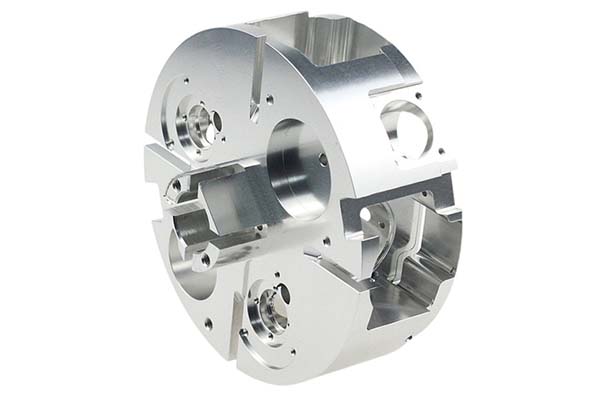
Rapid CNC machining is a high-speed subtractive manufacturing process. It uses computer-controlled machines to cut metal and plastic parts from solid blocks. The "rapid" part comes from optimized workflows. These workflows slash lead times by 50% or more.
Think of it this way:
| Feature | Traditional CNC | Rapid CNC |
|---|---|---|
| Lead Time | 2–6 weeks | 1–5 days |
| Setup Time | Hours to days | Minutes to hours |
| Minimum Order | 50–100+ pcs | 1–10 pcs |
| Design Changes | Costly re-tooling | Near-zero cost |
| Operating Hours | 1 shift | 24/7 possible |
The core idea is simple. You keep the same tight tolerances and surface quality as standard CNC. But you remove every bottleneck in the production chain.
Where It Fits Best
Rapid CNC machining shines in three key scenarios:
- Prototype development — Test your design before committing to tooling.
- Small-batch production — 10 to 500 parts without mold costs.
- Emergency spare parts — Get critical components overnight when a machine goes down.
Why Deadlines Break Traditional CNC
The Hidden Wait Times
Here is a real problem most teams face. You send a drawing to a traditional CNC shop. Then you wait. The part sits in a queue. It waits for machine availability. It waits for tool setup. It waits for quality inspection.
A typical traditional CNC workflow looks like this:
- Quote request → 2–3 days
- DFM review → 1–2 days
- Programming → 1–3 days
- Machine setup → 4–8 hours
- Machining → 1–5 days
- Inspection & shipping → 2–3 days
Total: 10–20+ business days. That is a long time when your product launch is in two weeks.
The Real Cost of Delays
Delays are not just annoying. They cost real money. According to industry data, product launch delays can reduce first-year revenue by 30–50%. For procurement teams, late delivery means contract penalties. For engineers, it means missed design review windows. For designers, it means slower iteration cycles.
One automotive supplier we worked with lost a $200K contract because their prototype arrived 10 days late. The competitor used rapid CNC and shipped in 3 days. Speed won that deal.
How Rapid CNC Cuts Lead Times in Half
Automation Does the Heavy Lifting
Rapid CNC shops use three core strategies to compress timelines:
| Strategy | How It Works | Time Saved |
|---|---|---|
| Auto-programming | CAM software generates toolpaths in minutes | 1–2 days |
| Parallel prep | Material stocking and fixture setup happen at the same time | 6–12 hours |
| 24/7 machine operation | Unmanned night shifts keep machines running | 1–2 days |
The result? A part that would take 10 days in a traditional shop ships in 3–5 days.
Digital DFM Kills Back-and-Forth
One of the biggest time killers in traditional CNC is poor communication. You send a CAD file. The shop finds a problem. They email you. You revise. They re-quote. This loop can eat 3–5 days.
Rapid CNC providers solve this with online DFM (Design for Manufacturability) feedback. You upload your file. Their system flags issues instantly. Wall thickness too thin? Tool access blocked? You see it in minutes, not days.
Case in point: A medical device startup reduced their prototype cycle from 18 days to 4 days. The only change? They switched to a rapid CNC shop with real-time DFM review.
Does Speed Mean Lower Quality?
The Biggest Myth Debunked
Let us be direct. Fast does not mean sloppy. This is the number one fear engineers have about rapid CNC. And it is wrong.
Rapid CNC machines are the same high-precision equipment used in traditional shops. The difference is in the process, not the hardware. Here is how quality stays tight:
| Quality Factor | How Rapid CNC Protects It |
|---|---|
| Dimensional accuracy | ±0.005mm tolerance with in-process probing |
| Surface finish | Ra 0.8–3.2μm achievable, same as standard CNC |
| Material integrity | Optimized feeds/speeds prevent heat damage |
| Repeatability | CNC control ensures every part matches the first |
Real-Time Monitoring Keeps Things Honest
Top rapid CNC shops use in-process inspection. This means the machine checks dimensions while cutting. If a tool drifts, the system compensates automatically. This is called tool wear compensation. It keeps every part within spec without stopping production.
A consumer electronics client once ordered 200 aluminum housings. They required ±0.01mm tolerance on all mounting points. The rapid CNC shop delivered with 100% first-pass yield. Zero rework. Zero scrap. Speed and quality coexisted.
Cost Efficiency: When Rapid Beats Molding and 3D Printing
The Small-Batch Math
This is where procurement teams pay close attention. Let us compare costs for a 50-part run of an aluminum bracket:
| Method | Tooling Cost | Per-Part Cost | Total for 50 pcs | Lead Time |
|---|---|---|---|---|
| Injection Mold | 5,000–15,000 | 2–5 | 5,100–15,250 | 6–10 weeks |
| 3D Printing (SLA/SLS) | $0 | 15–40 | 750–2,000 | 3–7 days |
| Rapid CNC | $0 | 8–20 | 400–1,000 | 3–5 days |
Rapid CNC wins on cost for runs under 500 parts. It also wins on material strength. 3D printed parts are often brittle. CNC parts match the strength of bulk material.
Zero Cost for Design Changes
Here is a hidden advantage. With molding, every design change costs thousands in re-tooling. With rapid CNC, you change the CAD file. You re-run the program. The cost of a design change is near zero.
A robotics team we advised went through 7 design revisions in 3 weeks. Because they used rapid CNC, their total prototyping cost stayed under 3,000.Thesameprojectwithmoldingwouldhavecost25,000+.
How to Pick the Right Rapid CNC Partner
Your Supplier Checklist
Not every shop that says "rapid" can deliver. Use this checklist to filter serious partners from empty promises:
| Criteria | What to Look For | Red Flag |
|---|---|---|
| Online quoting | Instant price within 1 hour | "Call us for a quote" only |
| DFM feedback | Automated file review in minutes | No DFM process at all |
| Machine transparency | Lists actual CNC equipment | Vague about capabilities |
| Quality certs | ISO 9001, AS9100, or IATF 16949 | No certifications listed |
| Lead time proof | Shows real delivery data | Promises "1 day" with no proof |
| Material range | Metals + engineering plastics | Only aluminum or only plastic |
The Red Alert Signals
Watch out for these warning signs:
- ❌ They promise 24-hour delivery but cannot show 24/7 machine capacity.
- ❌ They ask for full payment before any sample.
- ❌ They cannot explain their quality inspection process.
- ❌ Their website has no real project photos or case studies.
A reliable rapid CNC partner will show you their shop floor. They will let you track your order in real time. And they will give you a first article inspection (FAI) report with every shipment.
Conclusion
Rapid CNC machining is not just a faster version of traditional CNC. It is a smarter way to manufacture when time, cost, and quality all matter. It cuts lead times by 50% or more. It eliminates mold costs for small runs. And it delivers the same tight tolerances you expect from precision machining.
For procurement teams, it means fewer budget overruns. For engineers, it means faster design validation. For designers, it means more iterations before launch. The key is picking the right partner. Use the checklist above. Demand transparency. And stop letting traditional CNC timelines hold your projects back.
The future of manufacturing is fast, flexible, and precise. Rapid CNC machining is already here.
Frequently Asked Questions
What is the fastest lead time for rapid CNC machining?
Most shops deliver in 1–3 business days for simple parts. Complex 5-axis parts may take 5–7 days.
Can rapid CNC machining match injection mold quality?
Yes, for small batches. Tolerances of ±0.005mm and surface finishes of Ra 0.8μm are standard.
Is rapid CNC cheaper than 3D printing for metal parts?
Yes, for most metals. CNC uses real billet material. 3D printed metal is often weaker and more expensive per part.
What materials work with rapid CNC machining?
Aluminum, steel, stainless steel, brass, copper, titanium, POM, ABS, PC, PEEK, and many more engineering plastics.
How do I get an instant quote for rapid CNC?
Upload your CAD file (STEP, IGES, or SolidWorks) to a shop with an online quoting system. You get a price in under 1 hour.
Does rapid CNC work for 1-piece prototypes?
Absolutely. One-off prototypes are the #1 use case. No minimum order required.
Contact Yigu Technology for Custom Manufacturing
Need rapid CNC machining that actually delivers on time? Yigu Technology specializes in fast-turn precision parts for prototypes, small batches, and emergency production. We offer instant online quoting, real-time DFM feedback, and 24/7 machine capacity.
📞 Get your quote in under 1 hour — upload your files today.