Introduction
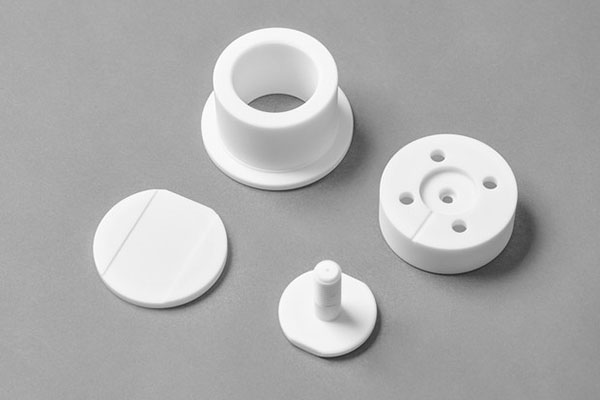
Alumina ceramics (Al₂O₃) are a cornerstone of high-performance manufacturing. With hardness reaching 1500–2000 HV —second only to diamond among industrial materials—they offer exceptional wear resistance, electrical insulation, and thermal stability. They withstand temperatures up to 1600°C , resist corrosion in harsh environments, and maintain dimensional stability where metals would fail. But these same properties make machining alumina extremely challenging. Its brittleness leads to cracking under uneven pressure. Its hardness causes rapid tool wear. And achieving consistent surface finish requires specialized techniques. This guide explores alumina’s unique properties, effective CNC machining methods, tooling strategies, quality control, and applications—equipping you to master this demanding material.
What Properties Make Alumina Ceramics Unique?
Composition and Purity
Alumina ceramics are composed of aluminum oxide (Al₂O₃), typically 85–99.9% pure. Higher purity grades offer superior properties:
| Purity | Hardness (HV) | Fracture Toughness (MPa·m¹/²) | Typical Applications |
|---|---|---|---|
| 95% | 1500–1700 | 3.0–3.5 | General wear parts, insulators |
| 99% | 1700–1900 | 3.5–4.0 | High-performance components, bearings |
| 99.9% | 1900–2000 | 4.0–5.0 | Medical implants, aerospace, precision optics |
Key Mechanical and Physical Properties
| Property | Value | Significance |
|---|---|---|
| Hardness | 1500–2000 HV | Exceptional wear resistance; extremely abrasive to cutting tools |
| Density | 3.5–3.9 g/cm³ | Lighter than steel; good strength-to-weight ratio |
| Flexural strength | 300–450 MPa | Moderate strength; suitable for structural applications |
| Fracture toughness | 3–5 MPa·m¹/² | Low; material is brittle—cracks easily under stress |
| Thermal expansion | 7.0–8.0 μm/(m·°C) | Low; dimensional stability at high temperatures |
| Max service temperature | 1600–1700°C | Withstands extreme heat; ideal for high-temperature applications |
| Electrical resistivity | >10¹⁴ Ω·cm | Excellent insulator; used for high-voltage components |
Why Alumina Is Both Valuable and Challenging
Advantages:
- Wear resistance: Outlasts metals in abrasive environments
- Heat resistance: Maintains properties at temperatures that destroy metals
- Corrosion resistance: Inert to most chemicals, acids, and alkalis
- Electrical insulation: Essential for electronic and high-voltage applications
Machining challenges:
- Brittleness: Low fracture toughness causes cracking under uneven pressure or vibration
- Abrasiveness: Hardness causes rapid tool wear—diamond tools required
- Surface integrity: Micro-cracking during machining can compromise part performance
What Machining Techniques Work for Alumina Ceramics?
CNC Milling
CNC milling is used for complex geometries—slots, pockets, and contours.
Tooling:
- Polycrystalline diamond (PCD) end mills —essential for hardness
- Ultra-fine-grain diamond tools for precision finishing
Parameters:
- Spindle speed: 5,000–15,000 RPM
- Feed rate: 0.01–0.04 mm/tooth (very low to minimize cutting forces)
- Depth of cut: 0.05–0.2 mm (shallow passes)
Critical considerations:
- Use rigid machine setups—vibration is deadly to ceramic parts
- Vibration-damping tool holders reduce chatter
- Climb milling preferred to reduce exit chipping
CNC Turning
Turning produces cylindrical parts—bushings, nozzles, and rollers.
Tooling:
- Diamond-tipped inserts with negative rake angles (shear material cleanly)
- PCD inserts for finishing
Parameters:
- Cutting speed: 10–30 m/min (slow—prevents chipping)
- Feed rate: 0.01–0.05 mm/rev
- Depth of cut: 0.1–0.3 mm
Coolant:
- Water-based coolants with lubricants dissipate heat and flush abrasive debris
- Through-tool coolant for deep cuts
CNC Grinding
Grinding is essential for achieving precise finishes and tight tolerances.
Wheel selection:
- Diamond grinding wheels —resin-bonded or metal-bonded
- Grit sizes: 120–600 mesh (coarse to fine)
Capabilities:
- Surface finishes as low as Ra 0.02 μm
- Tolerances: ±0.005–0.01 mm
Applications: Sealing surfaces, bearing races, precision mating features
Advanced Techniques
Laser machining:
- Fiber lasers (1064 nm wavelength ) cut alumina by vaporization
- Contact-free; no mechanical stress
- Achieves tolerances of ±0.01 mm
- Ideal for intricate shapes, thin sections, and micro-features
EDM (Electrical Discharge Machining):
- Less common due to alumina’s insulating properties
- Can be used with conductive additives or coatings
- Viable for complex aerospace components where other methods struggle
What Tooling and Parameters Are Optimal?
Diamond Tools Are Non-Negotiable
| Tool Type | Application | Notes |
|---|---|---|
| PCD end mills | Milling complex geometries | Ultra-fine-grain for precision; coarse grain for roughing |
| Diamond-tipped inserts | Turning | Negative rake angles for clean shearing |
| Resin-bonded diamond wheels | Grinding | For fine finishes; metal-bonded for rough grinding |
| Nanocrystalline diamond (NCD) coatings | Advanced tooling | Extends tool life by 40–60% compared to PCD |
Cutting Parameters
| Operation | Cutting Speed | Feed Rate | Depth of Cut |
|---|---|---|---|
| Milling | 5,000–15,000 RPM | 0.01–0.04 mm/tooth | 0.05–0.2 mm |
| Turning | 10–30 m/min | 0.01–0.05 mm/rev | 0.1–0.3 mm |
| Grinding | 20–40 m/s | 0.005–0.02 mm/pass | 0.01–0.05 mm |
Key principles:
- Higher speeds reduce contact time and heat buildup
- Slower feeds minimize cutting forces, reducing crack risk
- Shallow depths distribute load evenly
Tool Wear Management
Diamond tools wear 3–5 times faster when machining alumina than when machining metals. Strategies:
- Replace tools when wear exceeds 0.05–0.1 mm
- Use ultra-fine-grain diamond for extended life
- Monitor cutting forces—increases indicate wear
- Implement tool life tracking for predictable replacement
How Do You Control Quality?
Surface Finish
| Finish Level | Ra Value | Method |
|---|---|---|
| Standard machining | 0.4–1.6 μm | Milling/turning with diamond tools |
| Precision grinding | 0.1–0.4 μm | Diamond grinding wheels |
| Lapping/polishing | 0.02–0.1 μm | Post-machining finishing |
| Mirror finish | <0.01 μm | Plasma-assisted polishing; optical applications |
Post-machining finishing:
- Lapping and polishing reduce surface roughness and remove micro-cracks
- Critical for sealing surfaces, medical implants, and optical components
Dimensional Tolerances
| Part Size | Achievable Tolerance |
|---|---|
| Small (<50 mm) | ±0.005–0.01 mm |
| Medium (50–100 mm) | ±0.01–0.02 mm |
| Large (>100 mm) | ±0.02–0.05 mm |
Inspection Methods
| Feature | Tool | Accuracy |
|---|---|---|
| Dimensions | CMM | ±0.001 mm |
| Surface finish | Profilometer | 0.001 μm Ra |
| Cracks | Dye penetrant, ultrasonic | N/A |
| Internal defects | X-ray, CT scan | N/A |
Pre-Machining Stress Relief
Annealing at 1000°C before machining minimizes internal strains, reducing cracking risk during cutting.
Vibration Control
Vibration is fatal to alumina machining. Essential measures:
- Rigid machine bases (granite beds preferred)
- Vibration-damping tool holders
- Dynamic balancing of spindles and tools
- Real-time vibration monitoring with automatic feed/speed adjustment
Where Is Alumina Used?
Industrial Wear Parts
Bearings: Alumina ceramic bearings outperform steel in harsh environments—chemical plants, high-speed spindles, corrosive conditions.
Nozzles: Withstand abrasive slurries in sandblasting, water jet cutting, and spray drying.
Seals and valves: Wear resistance and corrosion resistance reduce maintenance in pumps and flow control equipment.
Electronics
Insulators: High-voltage components, circuit board substrates, spark plugs. Volume resistivity >10¹⁴ Ω·cm.
Semiconductor equipment: Wafer handling components, vacuum feedthroughs.
Aerospace
Heat shields: Withstand temperatures up to 1600°C in re-entry vehicles, rocket nozzles.
Sensor housings: Protect sensitive electronics in extreme environments.
Medical
Implants: Dental abutments, hip replacement components. Biocompatible, wear-resistant, and inert.
Surgical instruments: Cutting tools, forceps tips requiring hardness and sterilization compatibility.
Cutting Tools
Alumina ceramic cutting tools machine abrasive materials—graphite, fiberglass, composites—lasting 5–10 times longer than carbide tools.
A Real-World Alumina Machining Success
A manufacturer producing precision alumina nozzles for water jet cutting faced:
- Cracking: 20% scrap rate from edge fractures
- Surface finish: Ra 0.8–1.2 μm (above 0.4 μm requirement)
- Tool wear: 50 parts per diamond tool
Process improvements:
- Switched to ultra-fine-grain PCD tools
- Reduced feed rate from 0.04 mm/tooth to 0.02 mm/tooth
- Added pre-machining annealing (1000°C, 2 hours)
- Implemented real-time vibration monitoring
- Used lapping for final surface finish
Results:
- Scrap rate dropped from 20% to 4%
- Surface finish improved to Ra 0.2 μm
- Tool life increased to 120 parts per tool
- Customer approved for high-volume production
What Advancements Are Improving Alumina Machining?
High-Speed Machining
Spindle speeds up to 20,000 RPM with rigid machines reduce cycle times by 30–50% while maintaining precision. High speeds reduce contact time, lowering heat generation and tool wear.
Nanocrystalline Diamond (NCD) Coatings
NCD coatings extend tool life by 40–60% compared to traditional PCD tools. The ultra-fine grain structure maintains sharpness longer.
AI-Driven Toolpath Optimization
Software now predicts stress points during machining, automatically adjusting toolpaths to reduce cracking risk. This is particularly valuable for thin-walled or complex geometries.
Hybrid Manufacturing
Additive manufacturing (3D printing) produces near-net-shape alumina parts. CNC machining finishes critical surfaces, reducing machining time and material waste. This is especially effective for complex lattice structures and custom medical implants.
Conclusion
Alumina ceramics (Al₂O₃) combine exceptional hardness (1500–2000 HV), heat resistance (1600°C), electrical insulation (>10¹⁴ Ω·cm), and wear resistance that outperform metals in demanding environments. But machining this material requires specialized knowledge. Diamond tools—PCD for milling/turning, diamond grinding wheels for finishing—are non-negotiable. Cutting parameters must be conservative: slow speeds (10–30 m/min for turning), light feeds (0.01–0.04 mm/tooth), and shallow depths. Vibration control is critical—rigid machines, damping tool holders, and real-time monitoring prevent cracking. Achievable tolerances reach ±0.005 mm, and surface finishes can be polished to Ra 0.02 μm or better. Post-machining processes like lapping remove micro-cracks and improve surface integrity. From industrial wear parts and electronics to aerospace components and medical implants, CNC-machined alumina ceramics deliver performance where other materials fail—and with the right approach, you can achieve the precision and quality these applications demand.
FAQs
Why is alumina ceramic so difficult to machine?
Alumina’s high hardness (1500–2000 HV) causes rapid tool wear—diamond tools are required. Its low fracture toughness (3–5 MPa·m¹/²) makes it brittle and prone to cracking under uneven cutting forces, vibration, or thermal stress. Unlike metals, it has no ductility—it does not deform; it cracks. This combination demands specialized tooling, conservative parameters, and rigid setups.
What tools are best for machining alumina ceramics?
Diamond tools are essential. For milling and turning, polycrystalline diamond (PCD) tools with ultra-fine grain structure provide clean cuts and extended life. For grinding, resin-bonded diamond wheels with grit sizes from 120–600 mesh achieve precise finishes. Nanocrystalline diamond (NCD) coatings extend tool life by 40–60% over traditional PCD. Avoid carbide tools—they wear rapidly and produce poor surface finishes.
What is the typical tolerance for CNC-machined alumina parts?
With advanced techniques, tolerances of ±0.005–0.01 mm are achievable for small parts. Larger parts (100+ mm) typically hold ±0.02–0.05 mm. Achieving tight tolerances requires rigid machine setups, sharp diamond tools, stable temperature control, and in-process inspection. Post-machining lapping can further refine dimensions.
How do I prevent cracking when machining alumina?
Cracking prevention requires: (1) Shallow depths of cut (0.05–0.2 mm)—multiple passes distribute load. (2) Low feed rates (0.01–0.04 mm/tooth) to minimize cutting forces. (3) Rigid setups—any vibration can cause fracture. (4) Pre-machining annealing (1000°C) to relieve internal stresses. (5) Climb milling to reduce exit chipping. (6) Real-time vibration monitoring with automatic adjustment. (7) Coolant to manage thermal stress.
What surface finish can I achieve on alumina ceramics?
Standard milling/turning achieves Ra 0.4–1.6 μm. Diamond grinding achieves Ra 0.1–0.4 μm. Lapping and polishing achieve Ra 0.02–0.1 μm. For optical applications, plasma-assisted polishing achieves Ra <0.01 μm (mirror finish). Surface finish directly affects wear resistance, sealing capability, and fatigue life in ceramic components.
Contact Yigu Technology for Custom Manufacturing
At Yigu Technology, we specialize in CNC machining alumina ceramics (Al₂O₃) for industrial, aerospace, medical, and electronics applications. Our expertise includes diamond tooling (PCD, NCD-coated), rigid machine setups with real-time vibration monitoring, and post-machining finishing (lapping, polishing) to achieve Ra 0.02 μm surface finishes. We achieve tolerances down to ±0.005 mm and maintain rigorous quality control with CMM inspection and non-destructive testing. Whether you need wear parts, insulators, aerospace components, or medical implants, we deliver precision alumina parts that meet the most demanding requirements. Contact us to discuss your alumina ceramic machining project.