Introduction
You have a product idea. You need a prototype that balances strength, cost, and ease of manufacturing. ABS (Acrylonitrile Butadiene Styrene) is one of the most widely used materials for prototyping—and for good reason. It offers excellent mechanical properties, dimensional stability, and aesthetic appeal at a reasonable cost. From automotive components to consumer electronics and toys, ABS prototypes help designers and engineers validate form, fit, and function before mass production. At Yigu Technology, we create ABS prototypes daily across industries. This article covers what you need to know: key characteristics, manufacturing methods, applications, and how to choose the right approach for your project.
What Is an ABS Prototype?
An ABS prototype is a preliminary model created using ABS material—a thermoplastic polymer known for its strength, toughness, and ease of processing. It serves as a crucial step in product development, allowing designers and engineers to test functionality, form, and fit before mass production.
Why it matters:
- Validate design concepts early
- Check component fit and assembly
- Reduce risk of costly design flaws and production issues
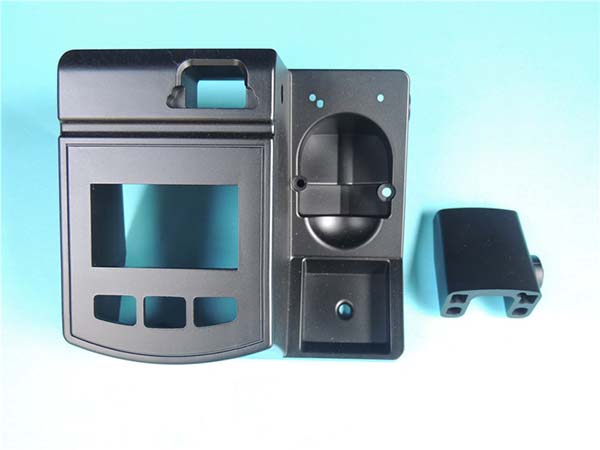
Example: When developing a new consumer electronics device, an ABS prototype helps verify that all components fit together as planned and that physical dimensions are accurate.
What Are the Key Characteristics of ABS?
| Characteristic | Description | Benefit |
|---|---|---|
| Good mechanical properties | High strength and toughness; withstands impact and stress | Suitable for products that experience physical stress; better impact resistance than polystyrene (PS) |
| Dimensional stability | Maintains shape under various environmental conditions; low coefficient of thermal expansion | Ensures precise dimensions; parts fit correctly in hot or cold conditions |
| Easy to process | Suitable for injection molding, 3D printing, CNC machining | Flexible manufacturing options; complex geometries achievable |
| Aesthetic appeal | Easily colored and finished; smooth surface achievable | High-quality appearance; matches brand colors; suitable for consumer products |
Comparison: Compared to polystyrene (PS), which is brittle and cracks under impact, ABS can endure more force—making it ideal for products that may experience physical stress during use.
What Is the Process of Creating an ABS Prototype?
Design Phase
The design phase begins with a clear understanding of product requirements, functions, and target market.
Tools: 3D modeling software (CAD)—SolidWorks, AutoCAD—to precisely define dimensions, shapes, and internal structures.
Example: For a new smartphone case, designers create a 3D model with precise cutouts for camera, buttons, and ports—ensuring perfect fit, ergonomic grip, and aesthetic appeal.
Manufacturing Methods
3D Printing (Additive Manufacturing)
| Factor | Details |
|---|---|
| Advantages | High design freedom; complex geometries (lattice structures, internal features); quick turnaround (hours); low initial investment (no molds) |
| Disadvantages | Limited material options compared to injection molding; lower mechanical properties (strength, surface finish) in some cases; higher per-unit cost for large-scale production |
| Best for | Rapid prototyping, design iteration, small-scale production, one-off prototypes |
Injection Molding
| Factor | Details |
|---|---|
| Advantages | High-volume production; consistent quality; excellent mechanical properties (better strength, dimensional accuracy, surface finish); wide material variety |
| Disadvantages | High initial cost (mold: thousands to tens of thousands); long lead time (weeks to months); limited design flexibility after mold created |
| Best for | Mass production, pre-production prototypes, parts requiring high strength and precision |
Manufacturing Method Comparison
| Factor | 3D Printing | Injection Molding |
|---|---|---|
| Design freedom | High—complex geometries easily | Limited by mold design |
| Production speed (small quantities) | Fast—hours | Slow—mold setup |
| Production speed (large quantities) | Slow—not cost-effective | Fast—efficient for mass production |
| Cost (small quantities) | Low—no mold cost | High—mold cost dominates |
| Cost (large quantities) | High per unit | Low per unit |
| Material options | Growing but limited | Wide variety |
| Mechanical properties | Varies; sometimes lower | Generally better—strength, dimensional accuracy |
Where Are ABS Prototypes Applied?
Automotive Industry
| Application | Benefits |
|---|---|
| Interior components (dashboards, instrument panels, air vents) | Dimensional stability ensures precise fit in car interior; withstands temperature variations |
| Exterior parts (bumper prototypes) | Good impact resistance—withstands impacts up to 20 km/h without significant damage (automotive research institute study) |
Electronics Industry
| Application | Benefits |
|---|---|
| Consumer electronics housings (smartphones, tablets, laptops) | Aesthetic appeal—easily colored, smooth finish; good insulation properties—reduces short-circuit risk by 30% compared to materials with lower insulation (electronics manufacturing case study) |
Toy Industry
| Application | Benefits |
|---|---|
| Action figures, toy cars, building blocks | Durable, colorful, complex shapes; non-toxic—over 80% of toys with ABS prototypes pass safety tests for toxicity and mechanical strength (toy safety research report) |
What Are the Advantages of Using ABS for Prototyping?
| Advantage | Description |
|---|---|
| Cost-effective | Good balance between quality and cost compared to high-performance engineering plastics |
| Excellent processing properties | Easily formed through injection molding, 3D printing, or CNC machining—complex shapes, accurate dimensions |
| Good mechanical properties | High strength and toughness—prototypes withstand stress and impact during testing |
| Aesthetic flexibility | Easily colored and finished—high-gloss or matte; wide color range |
What Are the Typical Lead Times?
| Method | Complexity | Typical Lead Time |
|---|---|---|
| 3D printing | Small, simple | Hours to a day |
| 3D printing | Large, complex | 1–2 days |
| Injection molding | Mold design + fabrication | 4–8 weeks (first prototype) |
Factors affecting lead time:
- Manufacturing method
- Design complexity
- Mold creation (injection molding)
- Material availability
Can ABS Prototypes Be Painted or Finished?
Yes. ABS has good adhesion properties, bonding well with most paints and coatings.
| Finishing Method | Description |
|---|---|
| Spray painting | Smooth, even color finish |
| Electroplating | Metallic appearance |
| Surface preparation | Clean surface (remove grease, dust, contaminants); use primer designed for ABS to improve adhesion and finish quality |
Yigu Technology's Perspective
As a custom manufacturer of non-standard plastic and metal products, Yigu Technology values the role of ABS prototypes in product development.
What we offer:
- Advanced techniques: 3D printing for rapid prototyping and design flexibility; injection molding for high-volume production with excellent mechanical properties
- Precision at every step: State-of-the-art CAD software; quality control throughout manufacturing
- Customized services: Work closely with clients to understand unique product requirements—automotive, electronics, toy industries
Our commitment: Ensure each ABS prototype meets the highest standards of quality, functionality, and aesthetics—helping clients bring innovative product ideas to life efficiently.
Conclusion
ABS prototypes offer a powerful combination of properties that make them ideal for product development:
| Key Takeaway | Benefit |
|---|---|
| Good mechanical properties | High strength, toughness, impact resistance |
| Dimensional stability | Precise fit under varying environmental conditions |
| Easy to process | Multiple manufacturing options (3D printing, injection molding, CNC) |
| Aesthetic appeal | Easily colored and finished—professional appearance |
Applications:
- Automotive: Interior components, bumper prototypes
- Electronics: Consumer device housings—smartphones, tablets, laptops
- Toys: Action figures, toy cars, building blocks
Manufacturing methods:
- 3D printing: Rapid iteration, complex geometries, low-cost for small quantities
- Injection molding: High-volume production, superior mechanical properties, consistent quality
Lead times:
- 3D printing: hours to days
- Injection molding: 4–8 weeks (including mold creation)
Finishing: Can be painted or electroplated with proper surface preparation.
By understanding ABS properties, manufacturing options, and applications, you can leverage ABS prototyping to accelerate development, reduce risk, and bring better products to market.
Frequently Asked Questions
What are the advantages of using ABS material for prototyping?
ABS is cost-effective (good balance between quality and cost), has excellent processing properties (easily formed via injection molding, 3D printing, or CNC machining), and offers good mechanical properties (high strength and toughness)—prototypes withstand stress and impact during testing.
How long does it usually take to create an ABS prototype?
3D printing: small, simple prototypes—hours; large, complex—1–2 days. Injection molding: mold design and fabrication—4–8 weeks from start to first prototype. Factors: manufacturing method, design complexity, mold creation.
Can ABS prototypes be painted or finished?
Yes. ABS has good adhesion properties—bonds well with most paints and coatings. Finishing options: spray painting (smooth, even color), electroplating (metallic appearance). Proper surface preparation: clean surface, use primer designed for ABS to improve adhesion and finish quality.
What is the difference between ABS and PLA for prototyping?
ABS is stronger, more durable, heat-resistant, and impact-resistant—suitable for functional prototypes and parts that will be used in demanding environments. PLA is biodegradable, easier to print, but more brittle and less heat-resistant—ideal for concept models and non-functional prototypes.
When should I choose injection molding over 3D printing for ABS prototypes?
Choose injection molding when you need high-volume production (hundreds to thousands of units), superior mechanical properties (strength, dimensional accuracy), or consistent surface finish. Choose 3D printing for rapid iteration, complex geometries, and low-volume (1–50 units) prototyping.
Contact Yigu Technology for Custom Manufacturing
At Yigu Technology, we specialize in ABS prototyping and custom manufacturing. Our capabilities include 3D printing, injection molding, CNC machining, and finishing. We serve automotive, electronics, and consumer goods industries.
If you are developing a new product and need reliable ABS prototypes—whether for rapid iteration or pre-production validation—contact our engineering team. Let us help you bring your ideas to life with precision, quality, and efficiency.