Introduction
You have a product idea. You need to test it. You need to make it. But traditional manufacturing is slow. Molds cost thousands. Minimum orders force you to buy hundreds. Design changes mean starting over.
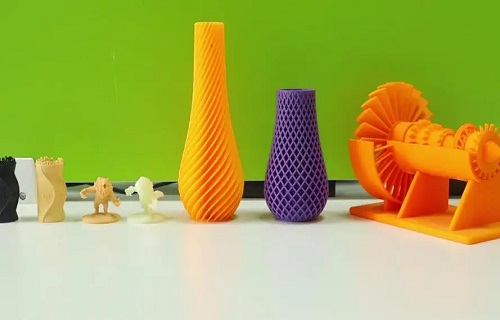
Additive manufacturing services offer a different path. Also known as 3D printing services, they build parts layer by layer from digital files. No molds. No tooling. No minimum orders. Just the parts you need, when you need them.
This approach is transforming how products are designed, developed, and produced. In this guide, we will explore the key benefits of additive manufacturing services and how they are reshaping industries.
What Are Additive Manufacturing Services?
Definition and Process
Additive manufacturing services use 3D printing technology to produce parts on demand. The process has four main stages.
| Stage | Description |
|---|---|
| Design | A 3D model is created in CAD software |
| Preparation | Software slices the model into thin layers |
| Printing | The printer builds the part layer by layer |
| Finishing | Post-processing cleans, cures, or polishes the part |
Key fact: Additive manufacturing can use plastics, metals, ceramics, composites, and even biomaterials. This versatility makes it applicable across industries.
A Brief History
Additive manufacturing traces its origins to the 1980s, when Chuck Hull developed stereolithography (SLA)—the first commercial 3D printing technology. Since then, new techniques have emerged: Selective Laser Sintering (SLS), Fused Deposition Modeling (FDM), and metal printing.
What started as a prototyping tool has grown into a production technology. Today, additive manufacturing services support full-scale production in aerospace, automotive, medical, and consumer goods.
What Are the Key Benefits?
Time and Cost Efficiency
Traditional manufacturing requires tooling. A mold for injection molding costs $5,000–$50,000. Machining setups take hours. Additive manufacturing eliminates these costs.
For low-volume production (1–100 units) , additive manufacturing is often 50–80 percent cheaper than traditional methods. No tooling. No setup. Just the part.
For rapid prototyping , 3D printing compresses timelines. A prototype that took weeks to machine now prints overnight. Design iterations happen in days, not months.
Real-world example: A startup needed 10 custom brackets. Machining would cost $3,000 and take 3 weeks. 3D printing cost $500 and took 5 days.
Design Freedom
Traditional manufacturing imposes constraints. Machining requires tool access. Casting requires draft angles. Injection molding requires uniform wall thickness.
Additive manufacturing removes these constraints.
| What You Can Create | Why It Matters |
|---|---|
| Internal channels | Cooling passages, fluid flow |
| Lattice structures | Lightweight, high-strength internal patterns |
| Organic shapes | Ergonomic, aerodynamic forms |
| Part consolidation | Multiple parts → one, fewer assemblies |
Key fact: A hydraulic manifold printed as one piece eliminated 12 seals, 30 fasteners, and 60 percent of the weight compared to the traditionally assembled version.
Material Optimization
Subtractive manufacturing wastes material. Machining a complex part from a solid block can waste 70–90 percent of the raw material.
Additive manufacturing uses only the material that becomes the part. Waste is typically under 5 percent. For expensive materials like titanium or Inconel, this is a significant cost saving.
Key fact: The World Economic Forum estimates that additive manufacturing can reduce material waste by up to 90 percent in some applications.
Customization at No Extra Cost
In traditional manufacturing, customization is expensive. Each variation requires new tooling or setup.
In additive manufacturing, customization is free. The same digital file that produces one part produces a different part with a simple design change. No new tooling. No additional setup.
Real-world example: A medical device company prints custom surgical guides for each patient. Each guide is unique. The cost per guide is the same as for a standard design.
Rapid Iteration
Product development is about learning. Each prototype teaches something. The faster you iterate, the faster you learn.
Additive manufacturing enables rapid iteration. A designer can make a change in CAD in the morning and hold the new version by afternoon. This accelerates the design-test-improve cycle.
Real-world example: A product designer tested five ergonomic handle shapes in two weeks. Each iteration printed overnight. Traditional machining would have taken weeks per iteration.
Supply Chain Simplification
Traditional supply chains are complex. Parts are sourced from multiple suppliers. Warehouses hold inventory. Lead times are long.
Additive manufacturing simplifies this. Digital files are stored. Parts are printed locally when needed. No inventory. No shipping. No waiting.
Key fact: The U.S. military uses 3D printing to produce spare parts in the field. Lead times dropped from months to days.
How Are Different Industries Benefiting?
Aerospace
Aerospace demands lightweight, high-strength parts. Additive manufacturing delivers.
Case Study: GE Aviation
GE prints fuel nozzles for jet engines. The printed nozzle consolidated 20 parts into 1, reduced weight by 25 percent, and increased durability by 5 times. GE has produced over 100,000 of these nozzles.
Key benefits:
- Weight reduction → fuel savings
- Part consolidation → fewer failure points
- On-demand spares → reduced inventory
Automotive
Automotive manufacturers use additive manufacturing for prototyping, tooling, and production.
Case Study: Ford
Ford uses 3D printing for prototype parts. Development time for new engine components dropped from 6 months to 2 weeks.
Case Study: Local Motors
Local Motors produced the Strati—the world’s first 3D printed car. The vehicle demonstrated the potential for fully printed production.
Key benefits:
- Faster prototyping
- Custom tooling
- Low-volume production
Medical
Medical applications benefit from personalization.
Case Study: Mayo Clinic
Surgeons use 3D printed surgical guides for complex procedures. The guides are customized to each patient. Surgical precision improves. Recovery times shorten.
Case Study: Custom Implants
Patients receive custom hip implants matched to their anatomy. Traditional implants come in standard sizes—a compromise.
Key benefits:
- Patient-specific devices
- Improved outcomes
- Faster surgery
Consumer Goods
Consumer brands use additive manufacturing for customization and rapid innovation.
Case Study: Adidas
Adidas prints custom footwear midsoles tailored to individual foot shapes and gait patterns. Athletes get shoes that fit perfectly.
Case Study: Nike
Nike uses 3D printing for custom performance-enhancing shoe features.
Key benefits:
- Customization
- Limited-edition products
- Faster time to market
What Does the Future Hold?
Advanced Materials
New materials are expanding what is possible.
| Material | Application |
|---|---|
| Stronger metals | Higher-performance aerospace components |
| Biocompatible materials | Medical implants, tissue engineering |
| Eco-friendly plastics | Sustainable packaging, consumer goods |
Hybrid Manufacturing
Hybrid manufacturing combines additive and subtractive processes in one machine. Print near-net shape. Machine critical surfaces. No refixturing. Higher accuracy.
Broader Adoption
As equipment costs decline and materials expand, additive manufacturing will reach new industries: construction, electronics, food production.
Key fact: The global additive manufacturing market is projected to reach $51 billion by 2026, growing at a CAGR of 22.3 percent.
Yigu Technology’s View
At Yigu Technology, we provide additive manufacturing services across industries. We have seen the benefits firsthand.
Case Study: Aerospace Component
A client needed a titanium bracket with internal lattice structures. Traditional machining was impossible. We printed the bracket using SLM. The part was 45 percent lighter than the original design and passed all tests. Production time: 10 days. Casting would have taken 8 weeks.
Case Study: Medical Device
A medical device company needed custom surgical guides for a complex procedure. Each guide was unique to the patient. We printed the guides in biocompatible resin using SLA. Accuracy: ±0.05 mm. The surgery was successful with reduced operating time.
Case Study: Consumer Product
A startup needed 200 custom ergonomic handles for a new kitchen tool. They had no in-house manufacturing. We printed the handles in glass-filled nylon using SLS. The parts were strong, lightweight, and had a professional finish. The startup launched on time and under budget.
Our Approach
We help clients leverage the benefits of additive manufacturing:
- Time savings – Parts in days, not weeks
- Cost savings – No tooling, minimal waste
- Design freedom – Complex geometries made simple
- Customization – Each part unique
We do not push one technology. We recommend what fits the application.
Conclusion
Additive manufacturing services offer compelling benefits. Time and cost efficiency—no tooling, minimal waste. Design freedom—complex geometries that traditional methods cannot produce. Material optimization—use only what you need. Customization—each part unique at no extra cost. Rapid iteration—test and improve in days. Supply chain simplification—print locally, on demand.
These benefits are not theoretical. They are realized daily in aerospace, automotive, medical, and consumer goods industries. As materials and technologies advance, the benefits will only grow.
Additive manufacturing is not replacing all traditional manufacturing. But for the right applications, it is the best choice—delivering better parts, faster, at lower cost.
FAQ
What are the primary benefits of additive manufacturing services?
The primary benefits are time and cost efficiency (no tooling, minimal waste), design freedom (complex geometries, internal channels, lattice structures), material optimization (use only what you need), customization (each part unique), rapid iteration (test designs in days), and supply chain simplification (print locally on demand).
How is additive manufacturing impacting product development?
Additive manufacturing accelerates product development by enabling rapid prototyping and iteration. Engineers can test multiple designs in the time previously required for one. This reduces time-to-market and enables more innovative solutions. A study found that companies using 3D printing for prototyping reduced development time by 40 percent.
What are some future trends in additive manufacturing?
Key trends include advanced materials (stronger metals, biocompatible materials, eco-friendly plastics), hybrid manufacturing (combining additive and subtractive processes in one machine), and broader adoption across industries like construction, electronics, and food production. The technology is also moving from prototyping to full-scale production.
Contact Yigu Technology for Custom Manufacturing
Ready to leverage the benefits of additive manufacturing? Yigu Technology offers professional 3D printing services across FDM, SLA, SLS, and metal printing.
Contact us today to discuss your project. Let us help you save time, reduce costs, and create better parts.