Introduction
You need a part. Not a plastic toy. Not a decorative sculpture. A functional component that will withstand heat, stress, or wear. It needs to meet specifications. It needs to be reliable. And you need it now.
Industrial 3D printing services are the answer. They use advanced additive manufacturing technologies to produce end-use parts, tools, and prototypes for demanding industries. Aerospace. Automotive. Medical. Industrial machinery.
These are not desktop printers. They are industrial systems costing $50,000 to $1.5 million. They use engineering-grade materials. They produce parts that meet strict quality standards.
In this guide, we will explore what industrial 3D printing services offer, how they are used, and how to choose the right provider.
What Are Industrial 3D Printing Services?
Definition
Industrial 3D printing services use additive manufacturing to produce industrial-grade components. Unlike traditional manufacturing (subtractive or formative), 3D printing builds parts layer by layer from digital files.
Key characteristics:
- Industrial equipment – High-power lasers, precision motion systems, inert chambers
- Engineering materials – Metals, high-performance plastics, composites
- Quality systems – ISO 9001, AS9100, ISO 13485 certifications
- Production scale – From prototypes to thousands of parts
How They Differ from Consumer Services
| Aspect | Consumer/Desktop | Industrial |
|---|---|---|
| Equipment cost | $200–$5,000 | $50,000–$1.5 million |
| Materials | PLA, ABS, basic resins | Metals, engineering plastics, composites |
| Accuracy | ±0.2–0.5 mm | ±0.05–0.1 mm |
| Quality control | Minimal | ISO-certified processes |
| Applications | Prototypes, hobby | End-use parts, production |
What Technologies Do Industrial Services Use?
Metal Printing
| Technology | Process | Best For |
|---|---|---|
| SLM/DMLS | Laser melts metal powder | High-performance metal parts |
| Binder Jetting | Binder + sintering | Medium-volume metal production |
| EBM | Electron beam melts powder | Large titanium parts |
Plastic Printing
| Technology | Process | Best For |
|---|---|---|
| SLS | Laser sinters nylon powder | Durable functional parts |
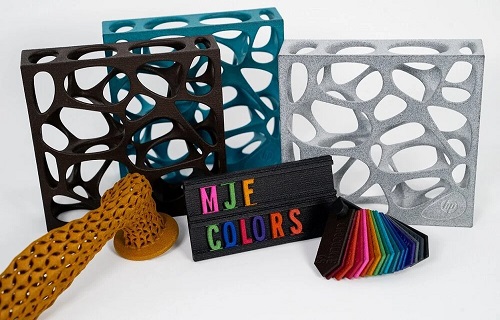
| MJF | Inkjet fuses powder | High-detail, smooth finish |
| SLA | Laser cures resin | High-detail, smooth surface |
| FDM | Extrudes filament | Large parts, low-cost |
What Are the Key Applications?
Aerospace Industry
Aerospace demands lightweight, high-strength components that withstand extreme conditions. Industrial 3D printing delivers.
Case Study: Engine Components
GE Aviation uses metal 3D printing for jet engine fuel nozzles. The printed nozzle consolidated 20 parts into 1, reduced weight by 25 percent, and increased durability by 5 times. Over 100,000 have been produced.
Case Study: Structural Brackets
Airbus prints titanium brackets for the A350. The brackets are 40 percent lighter than machined equivalents and meet all structural requirements.
Key fact: Some aerospace companies have reduced material waste by up to 90 percent by switching to 3D printing for component production.
Automotive Industry
Automotive manufacturers use industrial 3D printing for prototyping, tooling, and production parts.
Case Study: Rapid Prototyping
A study found that companies using 3D printing for automotive prototyping saw a 40 percent reduction in development time. Parts that once took weeks now print overnight.
Case Study: Custom Components
BMW uses 3D printing for custom interior parts. Personalized dashboard inserts and gear knobs are printed in small batches without tooling costs.
Case Study: Tooling
Ford prints assembly jigs and fixtures. CNC-machined jigs cost $3,000 each and take weeks. 3D printed jigs cost $500 and take days.
Healthcare Industry
Healthcare benefits from patient-specific devices made possible by 3D printing.
Case Study: Custom Implants
A patient with unique bone structure receives a custom titanium hip implant. The implant matches their anatomy exactly. Traditional implants come in standard sizes—a compromise.
Case Study: Surgical Guides
Dentists use 3D printed models to plan complex procedures. A survey found that over 80 percent of dental professionals reported that 3D printed models improved treatment plan accuracy.
Case Study: Prosthetics
3D printed prosthetics cost a fraction of traditional versions and can be customized to each patient. A child with a growing limb can receive new prosthetics as they grow—affordable and precise.
Industrial Machinery
Industrial equipment manufacturers use 3D printing for complex components and replacement parts.
Case Study: Conformal Cooling Molds
Injection molds with conformal cooling channels reduce cycle times by 20–40 percent. Traditional machining cannot create these channels.
Case Study: Replacement Parts
When a machine breaks down, waiting for a replacement part can cost thousands in downtime. 3D printing produces the part locally in days, not weeks.
How Do You Choose the Right Service Provider?
Experience and Expertise
Look for providers with experience in your industry.
| Industry | Key Requirements |
|---|---|
| Aerospace | AS9100 certification, material traceability, NDT inspection |
| Medical | ISO 13485, biocompatible materials, cleanroom capabilities |
| Automotive | IATF 16949, rapid turnaround, cost optimization |
| Industrial | ISO 9001, large build volumes, durable materials |
Ask for: Case studies from your industry. References from similar clients.
Equipment and Materials
Does the provider have the right equipment and materials?
| Technology | Materials | When to Use |
|---|---|---|
| SLM/DMLS | Titanium, steel, aluminum, Inconel | Metal parts, high performance |
| SLS | Nylon, TPU, glass-filled | Durable plastic parts |
| MJF | Nylon, TPU | High-detail, smooth finish |
| SLA | Resins (standard, tough, castable) | High-detail, smooth surface |
| FDM | ABS, PC, PEEK, ULTEM | Large parts, engineering plastics |
Key fact: A full-service industrial provider should offer at least 4–5 different technologies and 50+ materials.
Quality Control
Quality systems are non-negotiable for industrial applications.
| Quality Element | What to Look For |
|---|---|
| Certifications | ISO 9001 (minimum), AS9100 (aerospace), ISO 13485 (medical) |
| In-process monitoring | Sensors that detect defects during printing |
| Inspection | Dimensional reports, CT scanning, material testing |
| Traceability | Records of material batches, process parameters |
Post-Processing Capabilities
Raw 3D prints rarely meet final specifications. Post-processing is essential.
| Post-Process | Purpose |
|---|---|
| Support removal | Remove structures that held overhangs |
| Heat treatment | Relieve stress, improve mechanical properties |
| Machining | Achieve tight tolerances, critical surfaces |
| Surface finishing | Polishing, sandblasting, coating |
| Inspection | Verify dimensions, detect defects |
Turnaround Time
Industrial projects have deadlines. Ask about:
- Standard lead times – Typically 5–10 business days
- Expedited options – 24–72 hour turnaround for urgent needs
- Batch production – Time for 10, 100, or 1,000 parts
What Are the Costs?
Factors Affecting Cost
| Factor | Impact |
|---|---|
| Technology | Metal printing costs more than plastic |
| Material | Titanium costs more than nylon |
| Part complexity | Complex parts take longer to print and post-process |
| Quantity | Per-part cost drops with volume |
| Post-processing | Machining, heat treatment, and finishing add cost |
Typical Cost Ranges
| Part Type | Technology | Cost Range |
|---|---|---|
| Small plastic bracket | SLS | $20–$80 |
| Large plastic housing | FDM | $100–$500 |
| Small metal component | SLM | $50–$200 |
| Large metal part | SLM | $500–$2,000 |
| Injection mold | Binder Jetting + machining | $2,000–$10,000 |
Key fact: For complex geometries, 3D printing can be 50–80 percent cheaper than traditional manufacturing for low to medium volumes.
Yigu Technology’s View
At Yigu Technology, we provide industrial 3D printing services for clients across industries. We have seen how the technology transforms manufacturing.
Case Study: Aerospace Component
A client needed a titanium bracket with internal lattice structures. Traditional machining was impossible. We used SLM to print the bracket. The part was 45 percent lighter than the original design and passed all vibration tests. Production time: 10 days. Traditional casting would have taken 8 weeks.
Case Study: Injection Mold
A client needed a mold with conformal cooling channels. Traditional machining could not create the curved channels. We printed the mold in tool steel using binder jetting, then machined critical surfaces. The mold reduced cycle time by 30 percent and cost $4,000—half the cost of a traditionally machined mold.
Case Study: Custom Medical Device
A medical device company needed a custom surgical guide for a complex procedure. The guide required high accuracy and biocompatibility. We printed the guide in biocompatible resin using SLA. Accuracy: ±0.05 mm. The surgery was successful with reduced operating time.
Our Approach
We guide clients through:
- Technology selection – Matching process to requirements
- Material selection – Engineering-grade materials
- Design optimization – Ensuring printability and performance
- Quality assurance – ISO 9001 processes, inspection reports
- Post-processing – Heat treatment, machining, finishing
We do not push one technology. We recommend what fits the application.
Conclusion
Industrial 3D printing services are transforming manufacturing. They produce parts that traditional methods cannot. They reduce weight, improve performance, and shorten lead times. They enable custom designs without tooling costs.
For aerospace, automotive, medical, and industrial applications, 3D printing is not experimental. It is production-ready. Certified. Reliable.
The key is choosing the right partner. One with the right technology, materials, quality systems, and expertise. One who understands your industry and your application.
When you find that partner, industrial 3D printing becomes not just a capability—it becomes a competitive advantage.
FAQ
What is the difference between industrial and desktop 3D printing services?
Industrial services use high-end equipment ($50,000–$1.5 million) that can print engineering-grade materials (metals, PEEK, carbon fiber) with tight tolerances (±0.05–0.1 mm) and certified quality systems (ISO 9001, AS9100). Desktop services use lower-cost printers for prototypes and hobbyist applications.
How do I choose the right industrial 3D printing service provider?
Consider their industry experience (aerospace, medical, automotive), technology range (SLM, SLS, MJF, etc.), material selection, quality certifications (ISO 9001, AS9100), and post-processing capabilities. Review case studies and ask for references from similar projects.
What materials can industrial 3D printing services use?
Industrial services offer a wide range: metals (titanium, stainless steel, aluminum, Inconel), engineering plastics (nylon, PEEK, ULTEM), composites (carbon fiber nylon), and specialty resins (biocompatible, high-temperature). The material selection depends on the application requirements.
Contact Yigu Technology for Custom Manufacturing
Need industrial 3D printing for your next project? Yigu Technology offers professional services across SLM, SLS, MJF, and SLA technologies. We work with metals, engineering plastics, and composites.
Contact us today to discuss your project. Let our expertise bring your industrial designs to life.