Introduction
Picking the wrong CNC machining material can cost you thousands. It can kill your timeline. It can even make your final part fail in the field. Most engineers spend weeks on CAD designs but only minutes choosing a material. That is a huge mistake. Material selection is the most important decision you make before anything gets cut. It affects your tool life, your surface finish, your cost per part, and whether your project even works. This guide gives you a real decision framework. Not just a list of alloys. You will walk away knowing exactly how to match the right material to your project — every single time.
1. Understanding Material Machinability
What Machinability Really Means
Machinability is not one thing. It is a mix of three factors:
- Cutting speed — How fast can the tool move through the material?
- Tool life — How long does the cutting tool last before it wears out?
- Chip formation — Do chips break clean or tangle up?
A material with high machinability lets you run faster. It kills tools slower. It leaves a clean cut. Simple, right? But here is the catch. Easy to machine does not always mean right for the job. Aluminum 6061 machines like butter. But it will not handle the heat in an exhaust manifold. You need to look at the full picture.
The Machinability Index Explained
Engineers use a machinability index to compare materials. AISI 1212 steel is the baseline at 100%. Here is how common materials stack up:
| Material | Machinability Index | Relative Ease |
|---|---|---|
| AISI 1212 Steel | 100 | Baseline |
| Aluminum 6061 | 135 | Very Easy |
| Brass C360 | 160 | Extremely Easy |
| Stainless 303 | 45 | Hard |
| Titanium Ti-6Al-4V | 25 | Very Hard |
| Inconel 718 | 15 | Extremely Hard |
Source: Society of Manufacturing Engineers (SME) data
A higher number means easier machining. But again — ease of cutting is not the same as part performance. Always balance machinability with what the part actually needs to do.
2. Metals: Properties and Trade-offs
2.1 Aluminum Alloys: The Versatile Workhorse
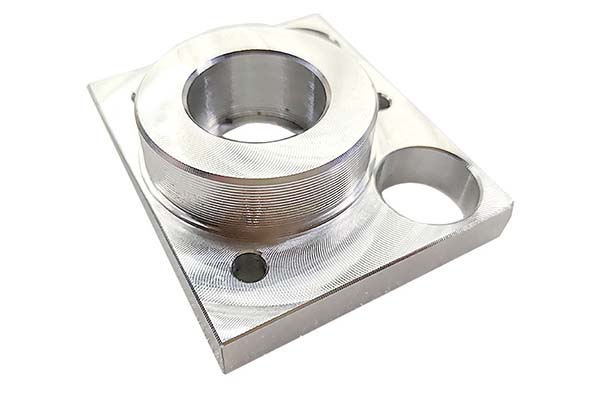
Aluminum 6061 and 7075 are the two most popular CNC metals in the world. Here is why:
- 6061-T6 — Great all-rounder. Good strength. Good corrosion resistance. Easy to weld. Costs about 2–4/lb. This is your go-to for enclosures, frames, and structural parts.
- 7075-T6 — Almost as strong as steel. Weighs one-third as much. Used in aerospace and high-performance tools. Costs about 4–6/lb.
Real-world example: A drone startup we worked with switched from 6061 to 7075 for their landing gear brackets. Weight dropped 30%. Strength went up 40%. The only trade-off? Tool wear increased by about 15%. But the flight performance gain was worth every cent.
| Property | 6061-T6 | 7075-T6 |
|---|---|---|
| Tensile Strength | 45,000 psi | 73,000 psi |
| Density | 2.7 g/cm³ | 2.81 g/cm³ |
| Machinability | Excellent | Good |
| Cost/lb | 2–4 | 4–6 |
2.2 Stainless Steels: Corrosion vs. Machinability
Stainless steel is tricky. You get amazing corrosion resistance but you pay for it with slower cuts and more tool wear.
| Grade | Best For | Machinability | Key Trait |
|---|---|---|---|
| 303 | High-volume turning | Good | Sulfur added for free-machining |
| 304 | General purpose | Fair | Most common stainless |
| 316 | Marine/chemical | Fair | Molybdenum adds corrosion resistance |
| 17-4 PH | High strength | Poor | Heat-treatable, very hard |
Pro tip: If you need stainless AND good machinability, pick 303. The sulfur content makes it cut almost like mild steel. But 303 has lower corrosion resistance than 304 or 316. Know your trade-off.
2.3 Carbon and Alloy Steels: Strength on a Budget
1018 cold-rolled steel is the budget king. It machines fast. It is cheap (~0.50–1.00/lb). It works for most non-critical parts.
4140 alloy steel is the step up. It handles heat treatment. It gets tough and hard. Used in gears, shafts, and tooling. Costs about 1.50–2.50/lb.
| Property | 1018 | 4140 |
|---|---|---|
| Hardness (HRC) | ~15 (as rolled) | 28–34 (quenched) |
| Tensile Strength | 64,000 psi | 160,000 psi |
| Cost/lb | 0.50–1.00 | 1.50–2.50 |
| Machinability | Excellent | Good |
Case study: A medical device company needed custom shaft housings. They started with 4140. Tool wear was high. After consulting with their machinist, they switched to 1018 with a case-hardened surface. Cost dropped 40%. Part performance stayed the same. That is smart engineering.
2.4 Titanium and Inconel: Worth the Pain?
Let us be honest. Titanium Ti-6Al-4V and Inconel 718 are nightmares to machine. They eat tools. They run slow. They generate insane heat. But when you need them, nothing else works.
| Material | Why Use It | Machining Speed vs. Steel | Tool Life Reduction |
|---|---|---|---|
| Ti-6Al-4V | Aerospace, medical implants | 30–50% slower | 5–10x shorter |
| Inconel 718 | Jet engines, oil & gas | 10–20% of steel speed | 10–20x shorter |
Titanium costs 15–30/lb. Inconel costs 25–45/lb. Your raw material cost goes up. Your machining cost goes up even more. But if your part must survive 600°C or resist jet fuel, there is no alternative.
When it is worth it: A turbine blade supplier told us their Inconel parts cost 8x more to machine than steel equivalents. But the part lasts 10x longer in service. The lifecycle cost was actually lower. Always think in lifecycle terms.
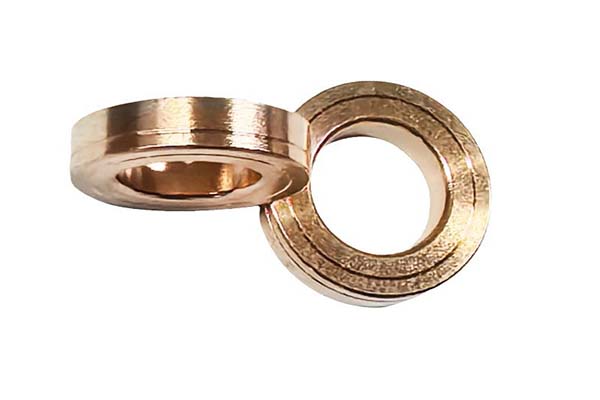
2.5 Brass and Copper: Precision Heroes
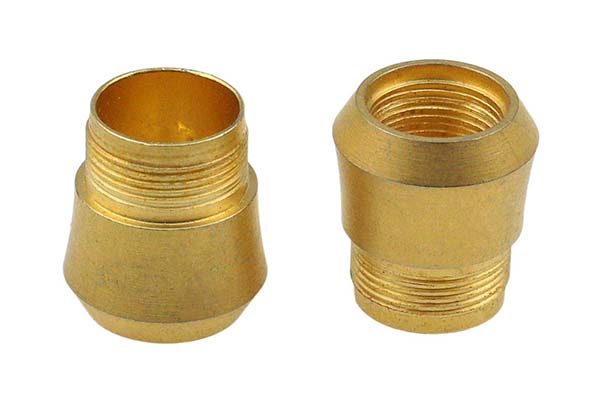
These metals do not get enough love. Brass C360 is the king of free-machining materials. It produces clean chips. It holds tight tolerances (±0.001"). It looks great with no plating.
| Material | Best Use | Machinability Index | Key Benefit |
|---|---|---|---|
| Brass C360 | Fittings, valves, connectors | 160 | Best machinability of any common metal |
| Copper C110 | Electrical contacts, heat sinks | 90 | Excellent thermal/electrical conductivity |
| Bronze C932 | Bearings, bushings | 70 | Low friction, wear-resistant |
Brass costs 3–5/lb. For precision parts with thousands of units, it often beats stainless on total cost per part — even though the raw material is pricier. Why? Because you machine it 3x faster.
3. Engineering Plastics and Composites
3.1 PEEK, Delrin, and Nylon
Not every part needs metal. Engineering plastics save weight. They resist chemicals. They insulate. Here are the top three:
| Plastic | Strength | Temp Range | Best For | Cost/lb |
|---|---|---|---|---|
| PEEK | Very high | -100°F to 480°F | Aerospace, medical implants | 100–150 |
| Delrin (POM) | High | -40°F to 180°F | Gears, sliders, precision parts | 2–4 |
| Nylon 6/6 | Medium-high | -40°F to 250°F | Bushings, housings, wear parts | 1.50–3 |
Delrin (POM) is a hidden gem. It machines almost as easily as brass. It has low friction. It holds tight tolerances. For high-volume plastic parts, it is often the smartest choice.
3.2 PTFE and Ultem: Extreme Environments
| Material | Key Trait | Max Temp | Typical Use |
|---|---|---|---|
| PTFE (Teflon) | Lowest friction of any solid | 500°F | Seals, gaskets, non-stick surfaces |
| Ultem (PEI) | Flame-retardant, very strong | 340°F | Aerospace interiors, medical trays |
PTFE is soft. It gums up tools. You need sharp tools and slow speeds. But for chemical resistance, nothing beats PTFE.
3.3 Machining Composites: Know the Risks
Carbon fiber composites are getting popular in CNC shops. But they are dangerous to machine if you do not know what you are doing.
Key risks:
- Delamination — Layers peel apart if feed rate is too high
- Fiber pull-out — Rough surface if tool is dull
- Tool wear — Carbon fiber is extremely abrasive (10x worse than aluminum)
| Composite Type | Machining Difficulty | Recommended Tool |
|---|---|---|
| Carbon fiber (CFRP) | Very High | Diamond-coated carbide |
| Fiberglass (GFRP) | High | Uncoated carbide, sharp edge |
| Kevlar | Extreme | Special geometry, very sharp |
Rule of thumb: Always machine composites with the fiber direction in mind. Cutting against the fiber causes tear-out. Cutting with the fiber gives a cleaner edge.
4. The Decision Matrix: Match Material to Application
Stop guessing. Use this framework every time you select a material.
4.1 Mechanical Load and Stress
| Load Type | Best Material Picks |
|---|---|
| High static load | 4140 steel, 7075 aluminum, titanium |
| High fatigue/cyclic | 4140 (heat-treated), 17-4 PH stainless |
| Low load, high precision | Brass C360, Delrin, aluminum 6061 |
| Impact/shock | Nylon, polycarbonate, 4140 steel |
4.2 Environmental Factors
| Condition | Best Material Picks |
|---|---|
| Corrosive chemicals | 316 stainless, PEEK, PTFE |
| High temperature (>400°F) | Inconel, titanium, PEEK, Ultem |
| UV exposure | Aluminum, acetal (Delrin), stainless |
| Food/medical contact | 316L stainless, PEEK, titanium, Delrin |
4.3 Regulatory Standards
| Industry | Key Standard | Material Implication |
|---|---|---|
| Aerospace | AS9100 / AMS specs | Must use certified alloys (e.g., Ti-6Al-4V per AMS 4911) |
| Medical | ISO 10993 (biocompatibility) | Titanium, PEEK, 316L stainless only |
| Automotive | IATF 16949 | Material traceability required for all steel grades |
| Food grade | FDA 21 CFR | 316L stainless, Delrin, PTFE approved |
4.4 Cost Per Part vs. Lifecycle Cost
This is where most engineers get it wrong. They look at raw material cost only.
| Material | Raw Cost/lb | Machining Cost Multiplier | Tool Wear | Total Cost Rank |
|---|---|---|---|---|
| 1018 Steel | $0.75 | 1x (baseline) | Low | ★★★★★ Cheapest |
| 6061 Aluminum | $3.00 | 1.5x | Low | ★★★★ Very Cheap |
| Brass C360 | $4.00 | 1.2x | Very Low | ★★★★ Very Cheap |
| 304 Stainless | $2.50 | 2.5x | Medium | ★★★ Moderate |
| Titanium | $25.00 | 5x | Very High | ★★ Expensive |
| Inconel 718 | $35.00 | 8x | Extreme | ★ Very Expensive |
Machining cost multiplier is relative to 1018 steel at 1x
The lesson: Brass can cost more per pound than steel. But because it machines so fast and tools last so long, your total cost per part is often lower. Always calculate the full picture.
5. Common Mistakes and How to Avoid Them
5.1 Over-Specifying Material Grade
Do you really need 7075-T6? Or will 6061-T6 do the job? Many engineers over-spec to be safe. This drives up cost for no reason.
Fix: Start with the lowest grade that meets your requirements. Only step up if testing proves you need to.
5.2 Ignoring Heat Treatment Effects
A part that is soft when you machine it can become hard after heat treatment. This changes dimensions. It can cause warping.
Fix: Always ask: "Will this part be heat-treated after machining?" If yes, leave extra stock for post-heat-treat machining.
5.3 Underestimating Tooling Costs for Hard Materials
Machining titanium with a standard carbide end mill? You will burn through tools in hours. Titanium-grade tools (with special coatings like TiAlN) cost 3–5x more. But they last 5–10x longer.
| Material | Recommended Tool Coating | Tool Cost Multiplier |
|---|---|---|
| Aluminum | Uncoated or ZrN | 1x |
| Steel | TiN or TiCN | 1.5x |
| Stainless | TiAlN | 2x |
| Titanium | AlTiN or CVD Diamond | 3–5x |
| Inconel | CVD Diamond or ceramic | 5–8x |
5.4 Failing to Consult Your Machinist Early
This is the #1 mistake. Engineers finalize the material spec and then hand it to the machinist. By then, it is too late to optimize.
Fix: Involve your CNC shop during the design phase. A good machinist will tell you: "Switch from 316 to 303 and save 30% on machining time." That conversation alone can save you thousands.
Conclusion
Choosing the best CNC machining material is not about picking the strongest or the cheapest. It is about matching the right material to your real-world requirements — load, environment, regulations, and total cost. Use the decision matrix in this guide. Avoid the four common mistakes. And always talk to your machinist before you lock in a spec. The right material choice saves money, reduces risk, and gets your product to market faster. Start with the framework. Then let the data guide you.
FAQ
What is the easiest metal to CNC machine?
Brass C360 is the easiest common metal. It has a machinability index of 160. It cuts clean, holds tight tolerances, and barely wears tools.
Is aluminum or steel better for CNC machining?
It depends. Aluminum 6061 machines faster and is lighter. Steel 1018 is cheaper and stronger. For most general parts, aluminum wins on speed. For strength-critical parts, steel wins.
Can you machine titanium on a standard CNC mill?
Yes, but you need the right setup. Use sharp carbide tools with AlTiN coating, run at 30–50% of normal steel speeds, and use plenty of coolant. Expect tool life to be 5–10x shorter than steel.
What plastic is best for high-temperature CNC parts?
PEEK handles up to 480°F continuously. It is expensive (~100–150/lb) but it replaces metal in many aerospace and medical applications.
How do I choose between 304 and 316 stainless steel?
Use 304 for general corrosion resistance. Use 316 if the part will see saltwater, chemicals, or marine environments. The molybdenum in 316 makes a big difference.
What is the most cost-effective CNC material for high-volume production?
Delrin (POM) or Brass C360. Both machine extremely fast. Both hold tight tolerances. Both cost less per part than stainless or aluminum when you factor in machining time.
Contact Yigu Technology for Custom Manufacturing
Need help selecting the right material for your CNC project? Yigu Technology offers expert consultation, rapid prototyping, and high-volume custom CNC machining. We work with metals, plastics, and composites — and we will help you pick the best material for your application, your budget, and your timeline.
📞 Get a quote today — because the right material starts with the right partner.