Making holes, cutouts, or complex shapes in sheet metal seems simple. But doing it accurately, repeatedly, and efficiently requires the right tool. This guide explains what a sheet metal punch is, how it works, and why it matters for your manufacturing success.
Introduction
A sheet metal punch is a machine that cuts and shapes metal with precision and speed. It transforms flat sheets into components with holes, slots, or complex outlines. Without this tool, mass production of metal parts would be slow, inconsistent, and expensive.
In this guide, you will learn how sheet metal punches work. You will understand the different types available. And you will discover how to choose the right one for your projects. Whether you run a small shop or manage large-scale production, this information helps you make better decisions.
What Is a Sheet Metal Punch?
Defining the Machine
A sheet metal punch—often called a punch press—is a machine tool designed to cut and form sheet metal. It applies high force through a punch (a hardened tool) and a die (a matching cavity). The punch strikes the metal against the die, creating a shearing force that cuts or shapes the material.
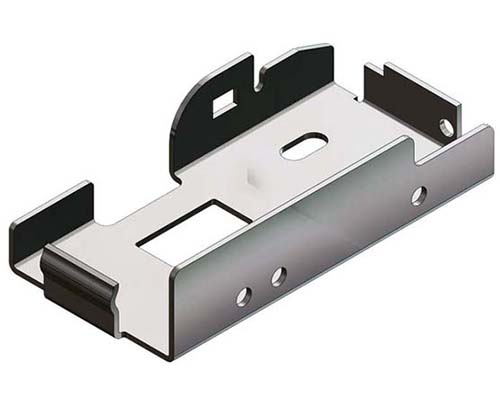
The result is precise, clean holes or shapes. A single operation can produce a hole, a slot, or an entire part outline. For metal brackets, for example, the punch can cut the final shape in one quick motion.
Why It Matters in Manufacturing
Sheet metal punches are essential across industries. They enable high-speed, high-precision production with consistent quality.
In the automotive industry, punches create car body panels, engine components, and interior fixtures. A single car may contain hundreds of punched parts. Mass production demands machines that can produce thousands of identical pieces per shift.
In the aerospace industry, precision is critical. Punches help manufacture lightweight components for aircraft. Accurate shaping reduces weight while maintaining structural integrity. Better fuel efficiency and performance depend on this precision.
In the electronics industry, punches create enclosures for devices. The high precision ensures that housings fit perfectly with internal components. Even small errors can cause assembly problems or electromagnetic interference issues.
How Does a Sheet Metal Punch Work?
The Basic Working Principle
The process starts with a sheet of metal placed on the machine’s worktable. The machine applies pressure through a mechanical, hydraulic, or pneumatic system.
In a mechanical punch, a flywheel stores rotational energy. When activated, that energy transfers to the punch mechanism. The punch moves rapidly downward toward the die. As it strikes the metal against the die, a shearing force cuts or shapes the material.
If the die has a circular shape, the punch creates a round hole. If the die is shaped like a complex part, the metal takes that shape. The entire operation happens in a fraction of a second.
Key Components and Their Roles
Understanding the parts helps you appreciate what makes a punch work.
| Component | Function | Materials / Notes |
|---|---|---|
| Punch | Applies force to cut or shape metal | Hardened tool steel; shape determines cut |
| Die | Provides counter-surface against the punch | Durable materials; can be single or multi-stage |
| Bed & Frame | Provides stable base and alignment | Designed to withstand high forces without flexing |
| Drive System | Powers the punch movement | Mechanical, hydraulic, or pneumatic |
The punch directly contacts the metal. It must be made from high-strength, wear-resistant materials. A sharp-edged punch creates clean cuts. A rounded-edge punch may be used for gradual deformation.
The die works with the punch. Simple operations use single-stage dies for tasks like punching one hole. Complex operations use multi-stage dies for progressive cutting and forming. A car door panel, for instance, might require a multi-stage die that first cuts the rough shape, then forms curves and edges.
The bed and frame provide stability. They must withstand high forces without deforming. A rigid bed ensures the punch and die stay aligned. Misalignment leads to poor quality and tool damage.
The drive system provides power. Hydraulic systems use pressurized fluid to generate force. They offer smooth, precise control—ideal for high-precision work.
Types of Sheet Metal Punches
Mechanical Punches
Mechanical punches are traditional and widely used. They use a flywheel and crankshaft to generate force. The flywheel stores energy. When activated, that energy transfers through the crankshaft to move the punch rapidly up and down.
Advantages:
- High-speed operation: Can perform hundreds of punches per minute
- Simple structure: Easier to maintain and repair
- Lower initial cost: More affordable than hydraulic or CNC options
A factory producing metal washers or simple brackets might use mechanical punches. The speed allows high-volume production at low cost.
Limitations:
- Less precise than hydraulic or CNC options
- Force is fixed by the flywheel design
- Can struggle with thick materials
Hydraulic Punches
Hydraulic punches operate based on Pascal’s law. A pump pressurizes hydraulic fluid, which transmits force to the punch. The fluid distributes force evenly, enabling smooth, precise control.
Advantages:
- High force capacity: Handles thick sheet metal easily
- Precise control: Pressure and speed adjust accurately
- Consistent force throughout stroke: Unlike mechanical punches
A manufacturer of heavy industrial equipment might use hydraulic punches for thick steel components. The high force and precise control ensure clean cuts even in heavy-gauge material.
Limitations:
- Slower cycle times than mechanical punches
- Higher initial cost
- More complex maintenance
CNC-Controlled Punches
CNC (Computer Numerical Control) punches are the most advanced type. Operators program punching operations into a computer. The machine then controls punch movement and sheet positioning automatically.
Advantages:
- Extreme precision: Tolerances within thousandths of an inch
- Automation: Runs continuously without constant manual intervention
- Complex shapes: Reproduces intricate patterns accurately
In electronics manufacturing, CNC punches create precise components for circuit boards. In custom automotive work, they produce complex interior parts with tight tolerances.
Limitations:
- Highest initial cost
- Requires skilled programmers
- More expensive to maintain
Choosing the Right Type
| Your Need | Recommended Type | Why |
|---|---|---|
| High volume, simple parts | Mechanical | Speed and low cost |
| Thick materials, high force | Hydraulic | Force capacity and control |
| Complex shapes, tight tolerances | CNC | Precision and automation |
| Small batches, varied parts | CNC or Hydraulic | Flexibility and accuracy |
Real-World Applications
Automotive Manufacturing
A major automotive supplier needed to produce 50,000 brackets per week. They used a mechanical punch press with a multi-stage die. The machine ran continuously, producing completed brackets every two seconds. Consistency across the production run was within ±0.1mm. That reliability allowed assembly lines to operate without delays.
Aerospace Components
An aerospace contractor required titanium brackets with complex cutouts. Material thickness varied, and any deviation could affect structural integrity. They chose a hydraulic CNC punch. The machine applied consistent force regardless of thickness variations. Final parts met all specifications with zero defects in the first production batch.
Electronics Enclosures
A medical device company needed small aluminum housings with precise cutouts for connectors. The cutouts required tolerances of ±0.05mm. A CNC turret punch completed the job with automated tool changes. The first 1,000 units matched the prototype exactly. No rework was needed.
Yigu Technology’s Perspective
As a custom manufacturer of non-standard metal and plastic products, Yigu Technology relies on sheet metal punches daily. We have learned that the right punch—and the right operator—makes the difference between good parts and great parts.
In one project, a client needed stainless steel panels with hundreds of ventilation holes. The pattern was complex, and the material was thin. A mechanical punch would have caused distortion. We used a CNC punch with optimized feed rates. The panels came out flat, with clean edges, and met the client’s aesthetic requirements.
We have also seen the value of automation. Integrating robotic material handling with CNC punches reduces labor costs and improves consistency. One of our high-volume lines now operates with minimal human intervention, producing consistent quality across shifts.
Looking forward, we see intelligent features becoming standard. Self-diagnosis systems can predict tool wear before failures occur. Real-time monitoring ensures quality throughout production. These advances help us deliver better products to our customers.
Conclusion
A sheet metal punch is more than just a machine that makes holes. It is a precision tool that enables efficient, consistent manufacturing. From simple washers to complex aerospace components, punches shape the metal parts that surround us.
Choosing the right type depends on your needs. Mechanical punches offer speed for high-volume, simple work. Hydraulic punches deliver force for thick materials. CNC punches provide precision for complex shapes.
Investing in the right punch—and working with fabricators who use them well—pays off in quality, consistency, and long-term cost savings.
FAQ
What is the typical lifespan of a sheet metal punch?
With proper maintenance, mechanical punches often last 10-15 years. Hydraulic punches can last 15-20 years. CNC punches typically last 10-18 years, depending on usage. Regular lubrication, component inspection, and timely replacement of worn parts can extend lifespan by 20-30%. Heavy use without maintenance can reduce it by 30-50%.
Can a sheet metal punch be used for non-metal sheets?
Yes, for some materials. Soft plastics and thin rubber sheets can often be punched successfully. Harder non-metals like thick acrylic or fiberglass require specialized punches or alternative methods. Using a standard punch on inappropriate materials risks damaging the tool and producing poor cuts.
How do I choose the right sheet metal punch for my business?
Consider your production needs first. For simple parts in high volume, a mechanical punch offers the best value. For thick materials, hydraulic provides necessary force. For complex shapes with tight tolerances, CNC is the right choice. Also consider budget, available space, and maintenance capabilities.
What maintenance does a sheet metal punch require?
Regular lubrication of moving parts is essential. Inspect punches and dies for wear; replace them when tolerances drift. Check hydraulic fluid levels in hydraulic machines. For CNC units, keep software updated and calibrate positioning systems regularly. Preventive maintenance reduces downtime and extends machine life.
Contact Yigu Technology for Custom Manufacturing
Need precision sheet metal components for your next project? Yigu Technology combines advanced punching equipment with skilled operators to deliver consistent quality. From prototypes to production runs, we handle custom requirements with accuracy and care. [Contact us] to discuss your specifications.