Introduction
A turbine blade with complex curved surfaces. A medical implant that must match a patient’s unique anatomy. A mold with deep cavities and sharp internal corners. These parts share one thing: they are nearly impossible to produce efficiently on traditional 3-axis machines. Multiaxis machining changes this reality. By adding rotational axes to the standard X, Y, and Z linear movements, it allows cutting tools to approach the workpiece from virtually any angle. This capability transforms what is possible in manufacturing—reducing setups, improving accuracy, and enabling geometries that were once considered unmanufacturable. This guide explores what multiaxis machining is, how it works, its benefits, and where it is applied across industries.
What Defines Multiaxis Machining?
Beyond Three Axes
Traditional machining operates along three linear axes:
- X-axis: Horizontal movement (left-right)
- Y-axis: Lateral movement (front-back)
- Z-axis: Vertical movement (up-down)
This 3-axis configuration handles flat surfaces, straight holes, and simple contours. But for complex geometries—curved surfaces, undercuts, angled features—it falls short. Machining such parts on a 3-axis machine requires multiple setups. Each repositioning adds time and introduces alignment errors.
Multiaxis machining adds rotational axes to the linear movements:
| Axis | Rotation Around | Description |
|---|---|---|
| A-axis | X-axis | Tilts the workpiece or tool forward/backward |
| B-axis | Y-axis | Tilts left/right |
| C-axis | Z-axis | Rotates horizontally |
A 5-axis machine typically combines X, Y, Z linear axes with two rotational axes—commonly A and B, or A and C. The machine can move the cutting tool and the workpiece simultaneously along all five axes, maintaining optimal cutting angles throughout the operation.
How It Differs from 3-Axis Machining
| Aspect | 3-Axis Machining | Multiaxis Machining |
|---|---|---|
| Tool approach | Fixed orientation | Variable, optimized angles |
| Setups per part | Often 3–6 for complex parts | Typically 1 setup |
| Precision | ±0.1–0.5 mm typical | ±0.001–0.01 mm achievable |
| Surface finish | Step-over marks visible | Smooth, continuous finish |
| Complexity limit | Simple geometries | Complex, undercuts, deep cavities |
How Does Multiaxis Machining Improve Manufacturing?
Precision and Accuracy
Multiaxis machining achieves tolerances that 3-axis machines cannot match. By eliminating multiple setups, it removes the cumulative alignment errors that occur each time a workpiece is repositioned.
Typical precision:
- Standard 3-axis: ±0.1–0.5 mm
- High-end 3-axis: ±0.02–0.05 mm
- Multiaxis (5-axis): ±0.001–0.01 mm
Example: A turbine blade machined on a 3-axis machine requires four separate setups. Each repositioning introduces potential error. A 5-axis machine completes the same blade in one setup, holding all features to ±0.005 mm relative to each other.
Production Efficiency
Multiaxis machining dramatically reduces production time. By completing multiple operations in one setup, it eliminates:
- Setup time between operations
- Workpiece repositioning
- Multiple tool changes for different orientations
Cycle time reduction: For complex parts, multiaxis machining reduces production time by 30–50% compared to 3-axis methods.
Surface Finish Quality
Because the tool can maintain an optimal angle relative to the workpiece surface, multiaxis machining produces smoother finishes. The step-over distance between tool paths can be much smaller, and the tool never cuts with its “heel” dragging against the material.
Result: Many parts come off the machine with finishes that previously required secondary polishing or grinding.
Tool Life Extension
In 3-axis machining, the tool often cuts at the same angle repeatedly, causing uneven wear. Multiaxis machining distributes cutting forces more evenly across the tool’s edge. Tools last 2–3 times longer in multiaxis applications compared to similar 3-axis operations.
What Types of Multiaxis Machines Exist?
4-Axis Machining
Adds one rotational axis (typically A-axis or C-axis) to the three linear axes. The workpiece can rotate while the tool moves linearly. Suitable for parts with features around a cylindrical axis—such as impellers, gears, and parts requiring indexing.
5-Axis Machining
Adds two rotational axes. The two most common configurations:
Table-table (trunnion): The workpiece rotates on a tilting table. The tool remains stationary in orientation. Best for smaller, heavier parts where workpiece movement is practical.
Head-head (spindle tilt): The cutting head tilts and rotates. The workpiece remains stationary. Best for large, heavy parts where moving the workpiece is impractical.
Simultaneous 5-axis: All five axes move together during cutting. This enables continuous tool angle optimization and produces the most complex geometries.
3+2 Axis Machining
Also called “positional 5-axis,” this approach uses the rotational axes to position the workpiece at an optimal angle, then locks them while machining with standard 3-axis movements. Faster programming than simultaneous 5-axis, suitable for parts with features on multiple faces but without continuous curved surfaces.
Where Is Multiaxis Machining Applied?
Aerospace Industry
Turbine blades: Complex aerodynamic shapes optimized for gas flow. A leading aerospace manufacturer reported that using 5-axis machining reduced turbine blade error rates by 80% compared to 3-axis methods, significantly improving engine performance and reliability.
Engine components: Compressor disks, combustion chambers, and structural frames. Multiaxis machining creates internal cooling channels and complex geometries that reduce weight while maintaining strength.
Structural frames: Honeycomb-like internal structures machined from solid billet reduce weight without sacrificing strength. Precise fit between components reduces fastener requirements and improves structural integrity.
Automotive Industry
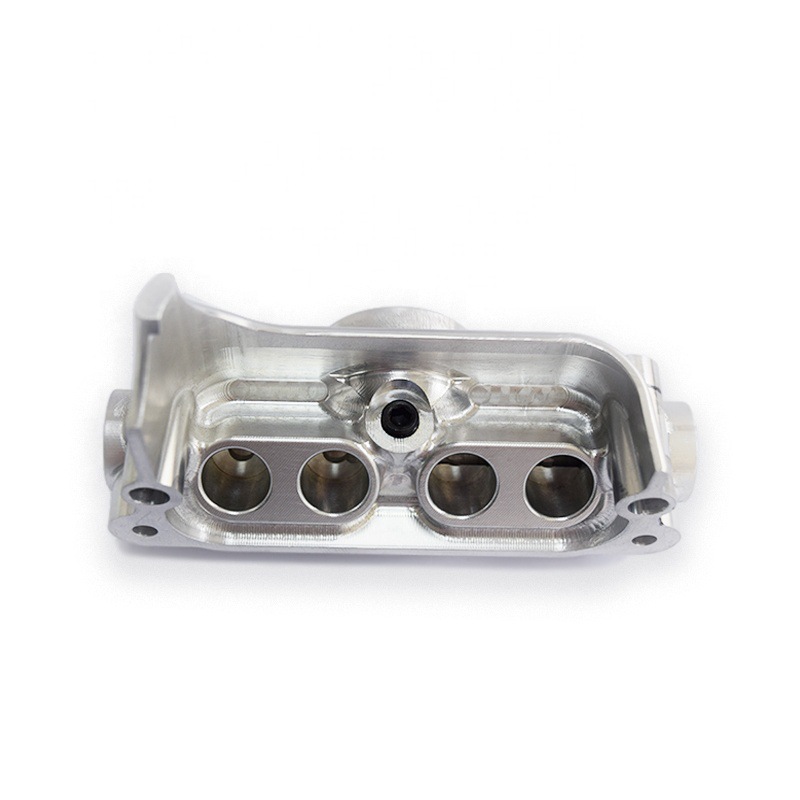
Engine components: Cylinder heads with complex port geometries for air-fuel mixture flow. Engines with components machined using multiaxis technology show 10–15% fuel efficiency improvements compared to conventionally machined engines.
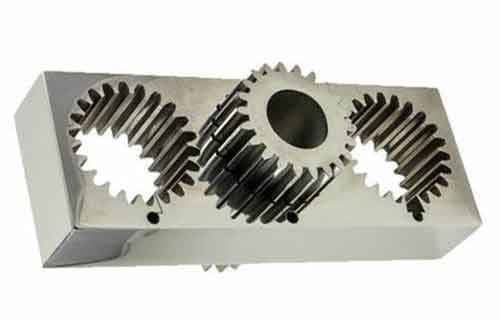
Transmission parts: Gears with complex tooth profiles for quiet operation and efficient power transfer. In high-performance sports cars, multiaxis-machined transmission components enhance acceleration and top speed capabilities.
Custom body panels: Complex aerodynamic shapes that reduce drag. Luxury manufacturers use multiaxis-machined panels to achieve distinctive styling while improving handling characteristics.
Medical Industry
Implants: Hip replacements, knee implants, and dental abutments must match patient anatomy precisely. Multiaxis machining creates biocompatible implants (titanium, PEEK) with complex geometries that promote osseointegration and reduce patient recovery time.
Surgical instruments: Forceps, scalpels, and endoscopes require sharp edges and precise geometries. Multiaxis machining produces instruments with ergonomic shapes and consistent cutting performance.
Custom devices: Prosthetics and orthotics personalized to individual patients. Multiaxis machining enables rapid production of custom-fit devices at reasonable cost.
Other Industries
Electronics: Heat sinks with complex fin structures for efficient thermal management. Multiaxis-machined heat sinks keep high-performance processors cool, improving system stability.
Consumer products: High-end watch cases, mobile phone casings, and premium consumer goods. Multiaxis machining produces smooth edges, complex curves, and distinctive styling.
Mold and die: Complex cavities and cores for injection molding. Precise molds reduce defects like warping and shrinkage in molded parts.
Precision machinery: Robot joints, links, and measuring instrument components. Tight tolerances ensure smooth, accurate movement in automated systems.
What Are the Costs and Considerations?
Initial Investment
Multiaxis machines cost more than 3-axis equivalents:
- 3-axis mill: $50,000–$100,000
- 4-axis mill: $75,000–$150,000
- 5-axis mill: $150,000–$500,000+
Operating Costs
Higher initial investment is offset by:
- Reduced setup labor (one setup vs. multiple)
- Faster cycle times (30–50% reduction)
- Lower tooling costs (longer tool life)
- Less scrap (fewer setup errors)
Example: A manufacturer producing complex aerospace parts reported that switching from 3-axis to 5-axis machining reduced overall production cost by 20–30% over one year, despite the higher machine cost.
Programming Complexity
Multiaxis programming requires:
- Advanced CAM software (typically $10,000–$20,000 per license)
- Skilled programmers with specialized training
- Simulation software to verify collision-free toolpaths
Skill Requirements
Operators and programmers need training beyond 3-axis experience. Many machine tool manufacturers offer certification programs. Expect 3–6 months for experienced 3-axis programmers to become proficient in 5-axis programming.
A Real-World Success Story
A medical device manufacturer produced titanium spinal implants. Original 3-axis process:
- 5 setups per part
- 8 hours total cycle time
- 12% scrap rate from alignment errors
- Extensive hand finishing
After switching to 5-axis machining:
- 1 setup per part
- 2.5 hours cycle time
- 3% scrap rate
- Hand finishing reduced by 80%
The company increased production capacity by 150% without adding floor space. The 5-axis machine paid for itself in 18 months.
Conclusion
Multiaxis machining represents a fundamental advance in manufacturing capability. By adding rotational axes to linear movements, it enables the production of parts with geometries that are impossible or impractical on 3-axis machines. The benefits extend beyond complexity: precision improves by an order of magnitude, production time drops by 30–50%, tool life doubles, and surface finishes require less post-processing. While the initial investment and programming complexity are higher, the long-term cost savings and expanded capability make multiaxis machining essential for industries demanding the highest performance—aerospace, medical, automotive, and precision manufacturing.
FAQs
What is the most significant benefit of multiaxis machining?
The most significant benefit is the ability to produce highly complex parts with high precision and efficiency in a single setup. By allowing simultaneous movement along multiple axes, multiaxis machining creates intricate geometries—undercuts, curved surfaces, deep cavities—that are difficult or impossible with 3-axis methods. This reduces production time, eliminates alignment errors, and improves part quality.
How do I choose the right multiaxis machine for my needs?
Consider four factors: (1) Part complexity—highly complex geometries may require 5-axis; simpler parts may be fine with 4-axis. (2) Precision requirements—different machines offer different tolerance capabilities. (3) Production volume—higher volumes justify greater investment. (4) Budget—balance capability against cost. Also consider whether you need simultaneous 5-axis or if 3+2 positioning is sufficient.
What industries benefit most from multiaxis machining?
Aerospace (turbine blades, engine components, structural frames), medical (implants, surgical instruments), automotive (engine and transmission components), mold and die manufacturing, electronics (heat sinks, enclosures), and precision machinery benefit most. Any industry requiring complex geometries, tight tolerances, or high-efficiency production can benefit.
Is multiaxis machining difficult to learn?
5-axis programming requires more training than 3-axis. Programmers must understand machine kinematics, tool orientation, and collision avoidance. CAM software with simulation is essential. Experienced 3-axis programmers typically require 3–6 months of focused training to become proficient in 5-axis programming. Machine operation also requires additional training.
Can multiaxis machines run 3-axis programs?
Yes. Most multiaxis machines can operate in 3-axis mode. This allows you to use the machine for simpler parts while building 5-axis capabilities. However, to realize the full benefits—complex geometries, single setups, reduced cycle times—you must use the machine’s multiaxis capabilities.
Contact Yigu Technology for Custom Manufacturing
At Yigu Technology, we leverage multiaxis machining—including 4-axis and 5-axis capabilities—to produce complex, precision components across aerospace, medical, and industrial sectors. Our machines complete parts in single setups, eliminating alignment errors and reducing cycle times. Our programming team uses advanced CAM software with full simulation to ensure collision-free toolpaths. We work with materials from aluminum and stainless steel to titanium, Inconel, and engineering plastics. Whether you need prototypes or production quantities, we deliver complex geometries with the precision your application demands. Contact us to discuss your multiaxis machining project.