Introduction
You have a design. It is not a standard part you can order from a catalog. It has unique features, tight tolerances, and specific material requirements. You need it made. But the traditional path—hard tooling, long lead times, high minimum quantities—does not fit your needs.
This is where custom CNC machining comes in. It is manufacturing designed around your part, not the other way around. There are no molds to build. No minimum orders to meet. No compromises on geometry because "the tooling cannot do that."
At Yigu Technology, custom CNC machining is what we do every day. We take customer designs—from CAD files, sketches, or even physical parts—and turn them into precision components. This guide explains what custom CNC machining is, how it works, and why it has become essential for modern manufacturing.
What Is Custom CNC Machining?
A Definition
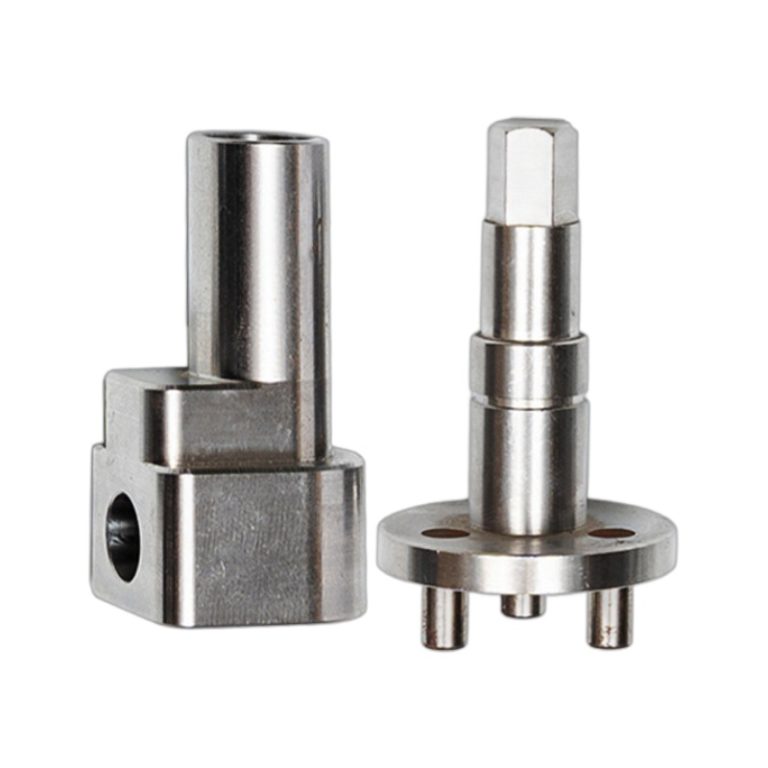
Custom CNC machining is the use of computer-controlled machine tools to create parts based on specific customer designs and requirements. Unlike mass production, which produces identical parts in huge quantities, custom machining is about making exactly what each customer needs—whether that is one prototype or a thousand production parts.
The "custom" part of the name means:
- The part is made to your specifications, not from a catalog
- The design can be unique; there are no standard tooling constraints
- Quantities can range from one to thousands
- Materials are chosen for your application
How It Works
The process follows a clear sequence:
- Design: A CAD model is created or provided
- Programming: CAM software generates toolpaths
- Setup: Material is loaded; tools are installed
- Machining: The CNC machine follows the program
- Inspection: Parts are verified against specifications
Each step is controlled by software and executed by machines capable of precision that manual methods cannot match.
How Does Custom CNC Machining Differ from Traditional Manufacturing?
| Aspect | Custom CNC Machining | Traditional Manufacturing |
|---|---|---|
| Tooling | No hard tooling required | Molds, dies, or fixtures needed |
| Setup time | Hours to days | Weeks to months |
| Minimum quantity | 1 part | Often thousands |
| Design changes | Quick; modify the CAD file | Expensive; modify or rebuild tooling |
| Lead time | Days to weeks | Weeks to months |
| Cost structure | Higher per-part cost; low upfront | Low per-part cost; high upfront |
The key difference: Custom CNC machining shifts cost from upfront tooling to per-part machining. This makes it economical for low volumes and prototypes, while traditional methods require high volumes to amortize tooling costs.
What Are the Key Benefits of Custom CNC Machining?
Precision and Accuracy
CNC machines follow programmed instructions exactly. They do not get tired. They do not have off days. They do not vary from part to part.
| Metric | Typical Capability |
|---|---|
| Standard tolerance | ±0.025 mm (±0.001 in) |
| High precision | ±0.005 mm (±0.0002 in) |
| Ultra-precision | ±0.001 mm (±0.00004 in) |
In aerospace and medical manufacturing, these tolerances are not optional. A fuel nozzle that is off by 0.01 mm affects engine performance. An implant that is off by the same amount may not fit.
Flexibility in Design
Custom CNC machining does not care if your part has:
- Complex curves that would require special tooling in other processes
- Undercuts that would be impossible with standard molds
- Internal cavities that would require complex cores
- Thin walls that would be difficult to cast
Design changes are simple. Modify the CAD file. Regenerate the toolpaths. The next part reflects the change. There is no waiting for new tooling.
Material Versatility
| Material Family | Examples | Applications |
|---|---|---|
| Metals | Aluminum, steel, stainless, titanium, brass | Aerospace, automotive, medical, industrial |
| Plastics | ABS, polycarbonate, PEEK, acetal, nylon | Electronics, medical, consumer products |
| Composites | Carbon fiber, fiberglass | Aerospace, automotive, sporting goods |
The same CNC machine can machine aluminum in the morning and PEEK in the afternoon. This versatility allows manufacturers to choose materials based on performance, not process constraints.
Efficiency for Small to Medium Production
Custom CNC machining is ideal for quantities that do not justify hard tooling.
| Volume | Cost Structure | Best Fit |
|---|---|---|
| 1–10 parts | Low setup; higher per-part | Prototypes, proof of concept |
| 10–100 parts | Moderate; setup spread across batch | Pilot production, custom parts |
| 100–1,000 parts | Setup cost fully amortized | Production runs, bridge tooling |
| 1,000+ parts | Tooling may become cost-effective | Mass production (consider alternatives) |
For quantities under 1,000 parts, CNC machining is often the most cost-effective manufacturing method.
Rapid Turnaround
Custom CNC machining can produce parts in days, not weeks or months. The process:
- No tooling to build
- No molds to wait for
- No minimum order quantities
A prototype can be designed, programmed, and machined in the same week. This speed accelerates product development and allows manufacturers to respond quickly to market changes.
What Industries Use Custom CNC Machining?
Aerospace and Defense
Aerospace demands components that are both precise and durable. Custom CNC machining produces:
- Engine components: Turbine blades, fuel nozzles, housings
- Structural parts: Wing brackets, fuselage components
- Landing gear: High-strength components with tight tolerances
- Missile and satellite parts: Complex geometries with exotic materials
Why it matters: A single failed part can ground an aircraft. CNC machining provides the reliability aerospace requires.
Automotive and Transportation
The automotive industry uses CNC machining for:
- Engine components: Cylinder heads, blocks, intake manifolds
- Transmission parts: Gears, shafts, housings
- Suspension components: Control arms, knuckles
- Custom parts: Race car components, restoration parts
CNC machining supports both low-volume custom work and high-volume production with automated cells.
Medical and Healthcare
Medical applications demand precision, biocompatibility, and regulatory compliance.
| Application | Requirements |
|---|---|
| Surgical instruments | Sharp edges, sterile surfaces, ergonomic design |
| Implants | Biocompatible materials, patient-specific geometry, tight tolerances |
| Diagnostic equipment | Consistent performance, clean surfaces, precise features |
Custom CNC machining enables the rapid development of new medical devices and the production of patient-specific implants.
Industrial Equipment and Machinery
Industrial applications require strength, precision, and durability.
| Component | Why CNC Machining |
|---|---|
| Gears | Precise tooth profiles; consistent performance |
| Bearings | Tight tolerances; smooth surfaces |
| Hydraulic components | Sealing surfaces; pressure integrity |
| Custom machinery parts | Unique designs; small quantities |
What Materials Can Be Used?
Metals
| Material | Properties | Applications |
|---|---|---|
| Aluminum | Lightweight, corrosion-resistant, machinable | Aerospace, automotive, electronics |
| Stainless steel | Corrosion-resistant, strong | Medical, food processing, marine |
| Steel | High strength, wear-resistant | Industrial machinery, gears, shafts |
| Titanium | Highest strength-to-weight, biocompatible | Aerospace, medical implants |
| Brass | Machinable, conductive, decorative | Electrical components, fittings |
Plastics and Polymers
| Material | Properties | Applications |
|---|---|---|
| ABS | Tough, impact-resistant | Enclosures, prototypes |
| Polycarbonate | Transparent, impact-resistant | Machine guards, optical parts |
| PEEK | High-temperature, chemical-resistant | Aerospace, medical, semiconductor |
| Acetal (Delrin) | Low friction, dimensionally stable | Gears, bushings, precision parts |
| Nylon | Wear-resistant, self-lubricating | Bearings, wear pads |
Composites
| Material | Properties | Applications |
|---|---|---|
| Carbon fiber | Very high strength-to-weight | Aerospace, automotive, sporting goods |
| Fiberglass | Strong, corrosion-resistant | Boat hulls, wind turbine blades |
What Services Do Custom CNC Machining Providers Offer?
Prototyping and Rapid Prototyping
Prototyping is one of the most common applications. Custom CNC machining produces functional prototypes that:
- Test form and fit
- Validate material choices
- Demonstrate function to stakeholders
- Support regulatory submissions
Lead time: 1–5 days for simple parts; 1–2 weeks for complex assemblies
Short to Medium Production Runs
For quantities from 10 to 10,000 parts, custom CNC machining offers:
- No tooling amortization
- Quick setup between jobs
- Consistent quality across the run
- Ability to make design changes between batches
Complex and Intricate Part Manufacturing
CNC machines produce geometries that other methods cannot:
| Feature | CNC Capability |
|---|---|
| 5-axis surfaces | Complex curves in one setup |
| Undercuts | Machined directly, no side actions needed |
| Internal cavities | Reached with specialized tools |
| Micro-features | Features as small as 0.1 mm |
| Thin walls | Walls down to 0.5 mm or less |
What Is the Custom CNC Machining Process?
Design Consultation and Specification Review
The process starts with understanding your needs. A good provider will ask:
- What is the part function?
- What are the critical tolerances?
- What material is required?
- What quantity is needed?
- What surface finish is required?
This consultation catches potential issues before machining begins.
Programming and Setup
Once the design is finalized:
- CAM software generates toolpaths
- Tools are selected for each operation
- Parameters (speed, feed, depth) are set
- Simulation verifies the program
Simulation catches collisions and inefficient toolpaths before metal is cut.
Machining and Fabrication
The machine follows the program. Operations may include:
- Milling for complex shapes
- Turning for cylindrical parts
- Drilling for holes
- Tapping for threads
Depending on complexity, parts may require multiple setups or be completed in one operation on a multi-axis machine.
Quality Control and Inspection
Every part is verified. Inspection may include:
- CMM (Coordinate Measuring Machine) for complex dimensions
- Optical comparator for profiles and edges
- Surface profilometer for finish
- Visual inspection for defects
For critical parts, inspection reports are provided with each shipment.
What Technological Advancements Are Shaping Custom CNC Machining?
High-Speed Machining
High-speed machining (HSM) uses:
- Higher spindle speeds (15,000–30,000+ RPM)
- Lighter depths of cut
- Faster feed rates
Benefits:
- Shorter cycle times
- Better surface finish
- Reduced cutting forces
- Longer tool life
Multi-Axis and 5-Axis Machining
5-axis machining allows the tool to approach the workpiece from any angle.
| Benefit | Impact |
|---|---|
| Fewer setups | One setup instead of multiple |
| Better accuracy | No repositioning errors |
| Complex geometries | Undercuts and curved surfaces in one operation |
| Shorter lead times | Less handling, faster completion |
Automation and Robotics Integration
Automation is transforming CNC machining:
- Robotic loading/unloading keeps machines running
- Pallet systems queue multiple jobs
- Automated tool changers swap tools without operator intervention
- In-process inspection verifies dimensions automatically
Result: Machines run lights-out, producing parts overnight and on weekends.
Yigu Technology's Perspective
At Yigu Technology, custom CNC machining is the core of our business. We serve clients who need parts that are not available off the shelf—prototypes, custom components, small production runs, and complex geometries that require the precision of CNC.
Our approach:
- Design collaboration: We work with you to optimize designs for manufacturability
- Material expertise: We help select the right material for your application
- Process capability: From 3-axis to 5-axis, we have the equipment
- Quality commitment: Every part is inspected; documentation is provided
- Flexible quantities: One part or one thousand; we do both
We believe custom CNC machining is not just about making parts. It is about solving problems. When you need a part that does not exist, we make it.
Conclusion
Custom CNC machining has changed how parts are made. It offers:
- Precision measured in microns, not millimeters
- Flexibility to create any geometry, in any material
- Efficiency for quantities from one to thousands
- Speed that accelerates product development
- Quality that meets the most demanding standards
For industries like aerospace, medical, automotive, and industrial equipment, custom CNC machining is not an option. It is essential. And as technology advances—with faster machines, more axes, and greater automation—its capabilities will only expand.
FAQ
What is the typical lead time for custom CNC machined parts?
Lead times vary based on complexity and quantity:
- Simple parts: 1–3 days
- Complex parts: 1–2 weeks
- High-volume runs: 2–4 weeks after setup
Rush services can shorten lead times for an additional cost. The fastest path is to provide complete CAD models, specify materials, and communicate critical tolerances upfront.
How does the cost of custom CNC machining compare to other manufacturing methods?
Custom CNC machining has a different cost structure than other methods:
| Method | Upfront Cost | Per-Part Cost | Best Volume |
|---|---|---|---|
| CNC machining | Low (no tooling) | Moderate | 1–1,000 parts |
| Injection molding | High (mold) | Low | 10,000+ parts |
| 3D printing | Very low | High (per part) | 1–100 parts |
| Casting | Moderate (patterns) | Moderate | 100–10,000 parts |
For quantities under 1,000 parts, CNC machining is often the most cost-effective option.
What is the minimum quantity for custom CNC machining?
There is no minimum. CNC machining can produce a single part as cost-effectively as a thousand. The setup time is the same for one part or one hundred. This makes CNC machining ideal for prototypes, custom parts, and low-volume production.
Can custom CNC machining produce complex geometries?
Yes. With 5-axis machining, CNC machines can produce:
- Curved surfaces (airfoils, molds)
- Undercuts (features that would require side actions in molding)
- Internal cavities
- Thin walls
- Compound angles
The only real limit is tool access. If a tool can reach the feature, CNC can machine it.
What file formats are needed for custom CNC machining?
The standard format is STEP (.stp) or IGES (.igs). These formats contain solid model data that CAM software can read. Other acceptable formats include:
- SolidWorks (.sldprt)
- Parasolid (.x_t)
- STL (for reference, but not ideal for precision work)
2D drawings (PDF, DXF) should include tolerances, surface finish requirements, and notes on critical features.
Contact Yigu Technology for Custom Manufacturing
At Yigu Technology, custom CNC machining is what we do. We take your designs—whether CAD files, sketches, or physical parts—and turn them into precision components.
Our capabilities:
- 3-axis and 5-axis CNC milling
- CNC turning (up to 200 mm diameter)
- Multi-process manufacturing
- Materials: Metals, plastics, composites
- Quality: CMM inspection; documentation provided
We serve the aerospace, medical, automotive, and industrial sectors. Whether you need a single prototype or a production run of thousands, we deliver precision, quality, and reliability.
Contact us today to discuss your custom CNC machining project. Let us turn your design into reality.