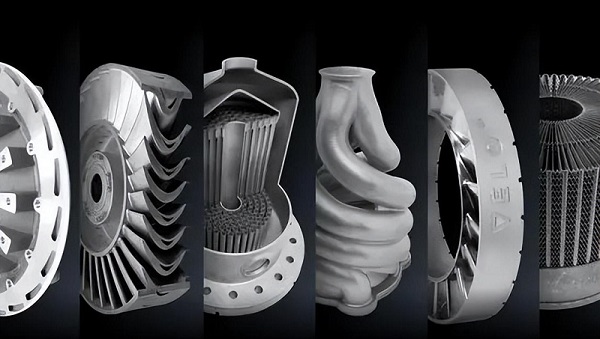
You have heard of 3D printing with plastic filaments. But what about printing in metal? Or creating parts so complex that machining them is impossible? Powder additive manufacturing (PAM) makes this possible. Instead of filament, it uses fine powders—metal, nylon, or ceramic—fused together by lasers or electron beams. The result is strong, dense parts with geometries that traditional methods cannot achieve. This guide explains how powder-based printing works, what technologies exist, and where they deliver the most value.
What Exactly Is Powder Additive Manufacturing?
Powder additive manufacturing is a family of 3D printing technologies that build parts from powdered materials. A laser or electron beam selectively fuses powder particles layer by layer. Excess powder supports the part during printing and is recycled for future use.
Unlike subtractive methods that cut away material, PAM adds material only where needed. This reduces waste and enables complex internal structures, lattices, and organic shapes that would be impossible to machine.
What Are the Main Powder-Based Technologies?
Three technologies dominate powder additive manufacturing. Each suits different materials and applications.
Selective Laser Sintering (SLS)
SLS uses a laser to sinter—or fuse—powder particles together without fully melting them. The powder bed is heated just below the melting point. A laser traces each layer, fusing particles into a solid structure.
Materials: Nylon, polyamide, glass-filled nylon, TPU
Best for: Durable functional parts, complex geometries, no supports needed
Selective Laser Melting (SLM)
SLM fully melts metal powder, creating dense, high-strength parts. A high-power laser melts particles completely, forming a fully consolidated structure with properties comparable to wrought metal.
Materials: Titanium, aluminum, stainless steel, Inconel, cobalt-chrome
Best for: Metal end-use parts, aerospace components, medical implants
Electron Beam Melting (EBM)
EBM uses an electron beam instead of a laser to melt metal powder. The beam operates in a vacuum, allowing for higher temperatures and reduced residual stress.
Materials: Titanium, cobalt-chrome, Inconel
Best for: Aerospace components, orthopedic implants, parts requiring high purity
| Technology | Heat Source | Materials | Part Density | Supports Needed |
|---|---|---|---|---|
| SLS | Laser (sintering) | Nylon, TPU, composites | Moderate (porous) | No |
| SLM | Laser (melting) | Metals | Fully dense | Yes |
| EBM | Electron beam | Metals | Fully dense | Yes |
How Does the Powder Process Work?
Despite different heat sources, the workflow follows a similar pattern across technologies.
Step 1: Design and Preparation
A 3D CAD model is created. Engineers optimize the design for additive manufacturing—adding lattice structures, internal channels, or organic forms that reduce weight while maintaining strength.
The model is sliced into thin layers (typically 0.03–0.1 mm). Slicing software generates toolpaths for the laser or electron beam.
Step 2: Powder Bed Preparation
A thin layer of powder is spread across the build platform. A roller or blade ensures even distribution. The powder bed is heated to just below the material’s melting point (for SLS) or maintained at controlled temperatures (for metal processes).
Step 3: Selective Fusion
The laser or electron beam traces the cross-section of the part, fusing powder particles. The platform lowers by one layer thickness. A new powder layer is spread. The process repeats until the part is complete.
Step 4: Cooling and Removal
After printing, the part cools inside the machine. The build chamber is opened, and the powder cake—the part surrounded by loose powder—is removed. Excess powder is sieved and recycled.
Step 5: Post-Processing
Most PAM parts require additional steps:
- Support removal: For metal parts, supports are cut or machined off
- Heat treatment: Relieves internal stresses and improves mechanical properties
- Surface finishing: Sanding, polishing, or machining to achieve desired surface quality
- Hot isostatic pressing (HIP): For critical aerospace parts, eliminates internal porosity
Real example: An aerospace manufacturer printed a fuel nozzle assembly using SLM. The traditional part was assembled from 20 machined components. The printed version was a single piece with internal cooling channels. Weight dropped by 25%. Production time fell from weeks to days.
What Materials Can Be Used?
Powder additive manufacturing supports a growing range of materials.
Polymers (SLS)
- Nylon (PA12): Most common. Strong, durable, slightly flexible. Used for functional parts, housings, connectors.
- Glass-filled nylon: Increased stiffness and heat resistance. Good for structural parts.
- TPU: Flexible, rubber-like. Used for seals, grips, wearable devices.
Metals (SLM, EBM)
- Titanium (Ti6Al4V): High strength-to-weight ratio, biocompatible. Aerospace and medical implants.
- Aluminum (AlSi10Mg): Lightweight, good thermal conductivity. Automotive and aerospace components.
- Stainless steel (316L, 17-4 PH): Corrosion-resistant, widely used. Industrial parts, tooling.
- Inconel: High-temperature superalloy. Turbine blades, rocket engines.
- Cobalt-chrome: Wear-resistant, biocompatible. Dental implants, orthopedic devices.
Data point: The global market for metal powder additive manufacturing reached $3.5 billion in 2023, with aerospace and medical accounting for over 60% of demand.
What Are the Key Advantages?
PAM offers capabilities that traditional manufacturing cannot match.
Design Freedom
Complex geometries become free. Internal cooling channels, lattice structures, and organic shapes are as easy to print as simple blocks. Engineers optimize for performance rather than manufacturability.
Material Efficiency
Traditional machining can waste 80–90% of raw material. PAM uses only the powder that becomes the part. Excess powder is recycled, reducing material costs and environmental impact.
Strength and Density
SLM and EBM produce fully dense metal parts with mechanical properties comparable to forged or cast materials. Porosity is minimal. Heat treatment further improves strength and fatigue resistance.
No Tooling Costs
Parts print directly from digital files. No molds, dies, or fixtures. This makes low-volume production and custom parts economical.
Lightweighting
Lattice structures remove material without compromising strength. Aerospace and automotive applications achieve weight reductions of 30–50% compared to machined parts.
What Are the Limitations?
PAM is powerful, but it has constraints that matter for adoption.
Equipment Cost
Industrial PAM machines cost $200,000 to $1.5 million. This limits access to well-funded organizations or service bureaus.
Production Speed
Layer-by-layer printing is slower than casting or forging for high volumes. A single metal part may take 12–72 hours to print. For mass production, traditional methods remain faster.
Post-Processing Requirements
Most PAM parts need significant post-processing:
- Support removal (for metal)
- Heat treatment
- Surface finishing
- Machining of critical surfaces
These steps add time and cost.
Material Certification
In regulated industries like aerospace and medical, materials and processes must be certified. Qualification takes time. Each new material or printer requires validation.
Powder Handling
Metal powders are hazardous. Fine particles can ignite or pose respiratory risks. Proper safety equipment and handling protocols are essential.
Where Is Powder Additive Manufacturing Used?
Different industries adopt PAM for different reasons. The common thread is complexity.
Aerospace
Aerospace was an early adopter. PAM produces:
- Turbine blades with internal cooling channels
- Fuel nozzles that replace multi-part assemblies
- Brackets and structural components with lattice structures for weight reduction
Airbus and Boeing use thousands of printed parts across their aircraft families.
Medical
PAM enables patient-specific implants. Titanium hip cups, cranial plates, and spinal cages are printed to match individual anatomy. Dental applications include custom crowns, bridges, and surgical guides.
Biocompatible materials like titanium and cobalt-chrome meet regulatory requirements for long-term implantation.
Automotive
Automakers use PAM for:
- Prototype parts for testing
- Performance components like exhaust manifolds and turbocharger housings
- Low-volume production for limited-edition vehicles
Weight reduction improves fuel efficiency and handling.
Industrial Tooling
PAM produces conformal cooling channels in injection molds—curved paths that follow the mold cavity. These cool parts faster and more evenly, reducing cycle times by 20–40%.
Real example: A medical device company needed a custom surgical instrument for a specialized procedure. Traditional machining would cost $15,000 and take 8 weeks. PAM produced the instrument in titanium for $4,000 in 10 days—with integrated features that machining could not achieve.
What Does the Future Hold?
PAM technology continues to evolve. Several trends will shape its adoption.
Faster Printing
Multi-laser systems now print 4–12 lasers simultaneously, dramatically increasing speed. New powder spreading methods reduce layer time.
Larger Build Volumes
Industrial printers now reach 800 x 800 x 1000 mm and larger, enabling bigger parts and higher throughput.
New Materials
Material development expands printable options. Copper alloys for thermal management. Refractory metals for extreme temperatures. Ceramics for specialized applications.
In-Process Monitoring
Sensors and AI monitor each layer, detecting defects in real time. This improves yield and enables certification of critical parts.
Lower Costs
As machines become more common and materials scale, per-part costs continue to decline. PAM is increasingly competitive with traditional manufacturing for complex, low-volume parts.
Yigu Technology’s Perspective
As a custom manufacturer, Yigu Technology uses powder additive manufacturing for applications where complexity and performance justify the technology. We offer SLS for nylon parts and SLM for metal components.
We recommend PAM when:
- Complex geometries make machining impossible or cost-prohibitive
- Low volumes (1–500 units) do not justify tooling
- Weight reduction is critical (aerospace, automotive)
- Customization per patient or user is required (medical)
For high-volume production, we transition clients to traditional methods. The hybrid approach—PAM for complexity and prototyping, traditional for scale—delivers the best results.
Conclusion
Powder additive manufacturing transforms how complex parts are made. By fusing metal or plastic powders layer by layer, it creates geometries that machining cannot achieve. It reduces waste, enables lightweight structures, and eliminates tooling costs for low-volume production.
The technology is not for everything. Equipment costs are high. Production speeds are slower than traditional methods for high volumes. But for aerospace, medical, and industrial applications where complexity and performance matter, PAM offers capabilities that no other manufacturing process can match.
FAQ
What are the main differences between Powder Additive Manufacturing and traditional manufacturing?
Traditional manufacturing like machining subtracts material from a solid block, creating waste. PAM adds material only where needed. This reduces waste, enables complex geometries, and eliminates tooling costs. Traditional methods remain faster and more cost-effective for high-volume production.
How does Powder Additive Manufacturing contribute to sustainability?
PAM minimizes material waste—excess powder is recycled. It enables lightweight designs that reduce fuel consumption in aerospace and automotive applications. On-demand production reduces inventory waste. However, energy consumption per part can be higher than traditional methods.
What materials can be used in powder additive manufacturing?
SLS uses polymers like nylon, glass-filled nylon, and TPU. SLM and EBM use metals including titanium, aluminum, stainless steel, Inconel, and cobalt-chrome. Material selection depends on mechanical requirements, temperature exposure, and application.
What are the main challenges of powder additive manufacturing?
Key challenges include high equipment costs, slower production speeds for high volumes, significant post-processing requirements, material certification in regulated industries, and safety considerations for handling metal powders.
Can powder additive manufacturing be used for mass production?
Currently, PAM is best suited for low to medium volumes (1–5,000 parts). For high-volume production (tens of thousands), traditional methods like casting, forging, or injection molding remain faster and more cost-effective. Multi-laser systems and process improvements are closing the gap.
Contact Yigu Technology for Custom Manufacturing
Yigu Technology specializes in non-standard plastic and metal custom manufacturing, including powder additive manufacturing for complex, low-volume parts. Whether you need SLS nylon prototypes or SLM metal production parts, our engineering team helps you select the right technology and materials. Contact us today to discuss your next project.