Introduction
In manufacturing, precision and efficiency drive success. AL5052 H32 aluminum alloy has emerged as a popular choice due to its unique combination of properties. It offers excellent corrosion resistance, good formability, and moderate strength. This guide covers every aspect of CNC machining AL5052 H32—material specification, machining processes, quality control, applications, technical parameters, tooling, surface finish, and industry standards. Whether you are an experienced engineer or new to the field, this comprehensive guide provides valuable insights to help you make informed decisions.
What Are the Material Specifications of AL5052 H32?
AL5052 is an aluminum alloy in the 5xxx series, known for high magnesium content. The H32 temper indicates strain hardening followed by stabilization—resulting in good mechanical strength and corrosion resistance.
Chemical Composition
| Element | Percentage |
|---|---|
| Magnesium (Mg) | 2.2 – 2.8% |
| Chromium (Cr) | 0.15 – 0.35% |
| Copper (Cu) | ≤ 0.10% |
| Iron (Fe) | ≤ 0.40% |
| Silicon (Si) | ≤ 0.25% |
| Others | Trace |
The magnesium content provides excellent corrosion resistance, especially in marine and coastal environments. Low copper content further enhances this property.
Mechanical Properties
| Property | Typical Value |
|---|---|
| Hardness | 60 – 75 HRB (Rockwell B) |
| Yield strength | 170 – 210 MPa |
| Tensile strength | 215 – 260 MPa |
| Elongation at break | 12 – 25% |
| Density | 2.68 g/cm³ |
| Thermal conductivity | 130 – 155 W/(m·K) |
AL5052 H32 is not heat-treatable. The H32 temper is achieved through strain hardening and stabilization, not through traditional heat treatment like solution treatment and precipitation hardening. However, it can be annealed to soften the material for forming operations.
How Do You Machine AL5052 H32 Effectively?
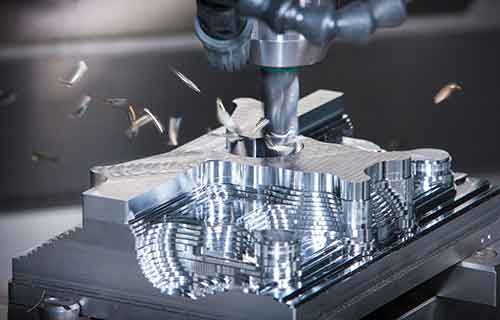
CNC machining AL5052 H32 requires careful consideration of tools, parameters, and techniques. The material is somewhat abrasive, and proper planning ensures efficient material removal without excessive tool wear or surface damage.
Tool Selection
| Tool Type | Recommendation | Reason |
|---|---|---|
| Cutting tools | Carbide tools preferred | Hardness and wear resistance handle abrasiveness |
| End mills | 2-flute or 3-flute for aluminum | Better chip evacuation; reduces built-up edge |
| Tool coating | TiAlN or ZrN | Reduces friction; extends tool life |
Machining Parameters
| Parameter | Typical Range | Notes |
|---|---|---|
| Cutting speed | 200 – 500 SFM (surface feet per minute) | Adjust based on tool diameter and operation type |
| Feed rate | 0.05 – 0.15 mm/tooth | Higher for roughing; lower for finishing |
| Depth of cut | 0.5 – 3 mm | Lighter cuts for finishing passes |
| Coolant | Flood coolant or mist | Specifically formulated for aluminum to prevent built-up edge |
Tool Path and Machining Sequence
Proper planning minimizes machining time and ensures consistent quality:
- Roughing: Remove bulk material quickly with deeper cuts and higher feed rates.
- Semi-finishing: Prepare surfaces for final passes.
- Finishing: Light cuts at slower feed rates to achieve tight tolerances and smooth surfaces.
What Quality Control Measures Are Essential?
Dimensional accuracy and surface roughness are key quality factors for AL5052 H32 parts.
Tolerance Levels
| Application | Typical Tolerance |
|---|---|
| General machining | ±0.01 – ±0.05 inches |
| Precision machining | ±0.001 – ±0.005 inches |
| Aerospace/medical | ±0.001 inches or tighter |
Inspection Methods
| Method | Purpose |
|---|---|
| CMM (Coordinate Measuring Machine) | Dimensional accuracy verification |
| Optical comparator | Profile and contour inspection |
| Profilometer | Surface roughness measurement (Ra 0.8–3.2 μm typical) |
| Ultrasonic testing | Internal defect detection (critical applications) |
| Eddy current testing | Surface crack detection |
Quality Standards
| Standard | Scope |
|---|---|
| ISO 9001 | Quality management system |
| AS9100 | Aerospace quality management |
| IATF 16949 | Automotive quality management |
Material certifications ensure the alloy meets specified standards. Non-destructive testing may be required for critical applications.
Where Is AL5052 H32 Used?
The unique properties of AL5052 H32 make it suitable for diverse applications across industries.
| Industry | Applications | Why AL5052 H32? |
|---|---|---|
| Automotive | Fuel tanks, radiators, body panels | Corrosion resistance; lightweight |
| Marine | Boat hulls, decking, fittings | Withstands harsh saltwater environment |
| Aerospace | Non-structural components | Corrosion resistance; weight savings |
| Electronics | Casings, enclosures | EMI shielding; corrosion protection |
| Industrial equipment | Housings, brackets | Durability; formability |
| Consumer products | Furniture, appliances | Aesthetic finish; corrosion resistance |
What Tooling and Equipment Are Required?
Effective machining of AL5052 H32 requires the right equipment and supporting systems.
Machine Tools
| Equipment | Purpose |
|---|---|
| CNC milling machines | 3-axis, 4-axis, or 5-axis for complex geometries |
| CNC lathes | Cylindrical parts and turning operations |
Tooling Requirements
| Component | Recommendation |
|---|---|
| End mills | High-quality carbide; polished flutes for chip evacuation |
| Tool holders | Rigid, accurate holders (hydraulic or shrink-fit) for minimal runout |
| Coolant system | High-pressure flood coolant or mist; formulated for aluminum |
| Workholding | Vises, vacuum fixtures, or custom fixturing to prevent distortion |
Proper coolant prevents built-up edge (BUE)—a common issue when machining aluminum. Coolant should be specifically formulated for aluminum to maintain surface finish and tool life.
How Do You Achieve the Desired Surface Finish?
Surface finish affects both appearance and performance. Several options are available for AL5052 H32 parts.
Surface Finish Options
| Method | Result | Applications |
|---|---|---|
| As-machined | Ra 0.8–3.2 μm | Functional parts; minimal post-processing |
| Polishing | Smooth, shiny surface | Decorative parts; consumer products |
| Anodizing | Enhanced corrosion resistance; colored finish | Aerospace, marine, electronics |
| Painting/coating | Additional protection; custom colors | Industrial equipment; consumer goods |
Anodizing Types
| Type | Thickness | Applications |
|---|---|---|
| Type II (sulfuric acid) | 5–25 μm | General corrosion protection; decorative colors |
| Type III (hard anodizing) | 25–75 μm | Wear-resistant surfaces; military, aerospace |
Surface roughness is measured using profilometry. Typical requirements range from Ra 0.8 μm for precision surfaces to Ra 3.2 μm for general applications.
What Industry Standards Apply?
Adhering to industry standards ensures consistency, quality, and compliance.
Material Standards
| Standard | Scope |
|---|---|
| ASTM B209 | Standard specification for aluminum sheet and plate |
| ASTM B221 | Standard specification for aluminum extruded bar and shapes |
| ISO 6361 | Wrought aluminum and aluminum alloys |
Testing Standards
| Standard | Purpose |
|---|---|
| ASTM E8 | Tensile testing |
| ASTM E18 | Rockwell hardness testing |
| ASTM E10 | Brinell hardness testing |
Quality Assurance
Material certifications verify that the alloy meets specified chemical and mechanical requirements. Quality assurance systems ensure consistent manufacturing processes. Regulatory compliance (e.g., REACH, RoHS) may be required for certain applications.
What Is Yigu Technology’s Perspective?
At Yigu Technology, we understand the importance of precision and quality in CNC machining AL5052 H32. Our state-of-the-art equipment includes 3-axis, 4-axis, and 5-axis CNC machines with advanced control systems. We use carbide tooling and specialized aluminum coolants to ensure efficient material removal and excellent surface finishes.
Our experienced engineers pay close attention to every detail—from material selection to final surface finish. We provide DFM feedback to optimize your designs for manufacturability. Whether you need a single prototype or large-scale production runs, we deliver high-quality custom parts that meet the strictest industry standards.
Conclusion
CNC machining AL5052 H32 requires understanding its material properties, selecting appropriate tools and parameters, and implementing rigorous quality control. The alloy offers excellent corrosion resistance, good formability, and moderate strength—making it suitable for automotive, marine, aerospace, electronics, and consumer applications. Key success factors include using carbide tools, optimizing cutting speeds (200–500 SFM), maintaining proper coolant flow, and achieving desired surface finishes through polishing, anodizing, or coating. With the right approach, AL5052 H32 delivers reliable, high-quality parts across demanding industries.
FAQs
What is the difference between AL5052 H32 and other aluminum alloys?
AL5052 H32 offers superior corrosion resistance due to its magnesium content (2.2–2.8%). Compared to 6061 aluminum, 5052 H32 has better corrosion resistance but lower tensile strength in some tempers. It is also more formable than 6061, making it ideal for applications requiring bending or drawing.
Can AL5052 H32 be heat-treated?
No, AL5052 H32 is not heat-treatable in the conventional sense. The H32 temper is achieved through strain hardening and stabilization, not through solution heat treatment and precipitation hardening. However, it can be annealed to soften the material for forming operations.
What are the common challenges in CNC machining AL5052 H32?
Common challenges include:
- Tool wear due to material abrasiveness
- Built-up edge (BUE) from improper coolant or speeds
- Surface defects from incorrect feed rates
- Tight tolerance achievement for complex geometries
These challenges are overcome through proper tool selection (carbide, polished flutes), optimized machining parameters, and effective coolant management.
Contact Yigu Technology for Custom Manufacturing
At Yigu Technology, we specialize in CNC machining AL5052 H32 and other aluminum alloys. Our capabilities include 3-axis, 4-axis, and 5-axis machining, with advanced coolant systems and rigid tooling to ensure precision and surface quality. We provide anodizing, polishing, and other finishing services to meet your specific requirements. From automotive and marine components to electronics enclosures, we deliver parts that meet the highest industry standards.
Ready to start your AL5052 H32 project? Contact Yigu Technology today for a free consultation and quote. Let us help you achieve precision and performance in every part.