Introduction
You have a great idea for a product. You've sketched it out, refined the concept, and now you need to see it—to hold it, test it, show it to others. In the past, that meant expensive tooling, weeks of waiting, and minimum orders that made no sense for a single prototype. 3D printing services near you change all that. They turn your digital designs into physical objects in days, at a fraction of the cost, with no tooling and no minimum quantities. From automotive giants like Volkswagen producing custom parts to medical facilities creating patient-specific implants, local 3D printing services are democratizing manufacturing. This guide explores how these services work, the technologies they use, the materials available, and how they can accelerate your product development from concept to reality.
What Are 3D Printing Services?
Definition and Core Concept
3D printing services are professional offerings that create three-dimensional objects from digital model files. Using additive manufacturing technology, they build parts layer by layer—directly from your CAD file, with no tooling, no molds, and no minimum orders.
The process is straightforward:
- You create a digital 3D model using CAD software or a 3D scanner
- You upload the file to a service provider
- They review the file for printability, select appropriate materials and technology
- The part is printed, post-processed, and shipped to you
This approach enables:
- Complex geometries: Internal cavities, lattice structures, organic shapes
- Quick iterations: Design changes cost nothing—just modify the file
- Customization: Each part can be unique without cost penalty
- No tooling: Economical for single parts and small batches
The Growing Importance of Local Services
Having a 3D printing service nearby offers distinct advantages:
- Faster turnaround: No shipping delays—sometimes same-day service
- Personal interaction: Discuss your project face-to-face
- Lower shipping costs: Pick up locally or pay minimal delivery
- Support local business: Keep manufacturing in your community
- See samples: Visit the facility, examine material options, assess quality
What 3D Printing Technologies Do Services Offer?
Different technologies suit different needs. Here are the most common:
| Technology | Material State | Resolution | Surface Finish | Supports | Cost | Ideal For |
|---|---|---|---|---|---|---|
| FDM (Fused Deposition Modeling) | Melted filament | Moderate | Rough (visible layers) | Often required | Low | Prototyping, simple parts, hobbyist projects |
| SLA (Stereolithography) | Liquid resin | High | Smooth | Required | High | Jewelry, dental models, high-detail prototypes |
| SLS (Selective Laser Sintering) | Powder | Moderate–High | Moderate | Usually not required | High | Functional parts, complex geometries, aerospace components |
FDM for Rapid Prototyping
How it works: Thermoplastic filament melts and extrudes through a nozzle, building parts layer by layer.
Strengths:
- Low cost—equipment and materials affordable
- Large build volumes possible
- Wide material selection
- Good for functional prototypes and jigs/fixtures
Limitations:
- Visible layer lines
- Lower detail resolution
- Supports needed for overhangs
Best for: Quick prototypes, large parts, low-cost iterations
SLA for High-Detail Models
How it works: UV laser cures liquid resin layer by layer, producing highly detailed parts with smooth surfaces.
Strengths:
- Exceptional detail—layer thickness down to 25 microns
- Smooth surface finish
- Captures fine textures and intricate features
Limitations:
- Higher cost
- Resin handling requires care
- Parts can be brittle
Best for: Jewelry patterns, dental models, visual prototypes, investment casting patterns
SLS for Functional Parts
How it works: Laser sinters powder particles together. Unsintered powder supports overhangs, eliminating support structures.
Strengths:
- No supports needed—complete design freedom
- Durable, functional parts
- Excellent mechanical properties
- Complex geometries possible
Limitations:
- Rough surface finish may need post-processing
- Equipment expensive
- Powder handling required
Best for: Functional prototypes, end-use parts, aerospace components, automotive parts
What Materials Are Available for Custom Designs?
The range of materials for 3D printing is constantly expanding, offering greater versatility.
Plastics
| Material | Properties | Typical Applications |
|---|---|---|
| PLA | Biodegradable, easy to print, low heat resistance | Consumer products, prototypes, environmentally-conscious projects |
| ABS | Strong, durable, heat resistant | Automotive parts, electronic enclosures, functional prototypes |
| Nylon | Strong, flexible, wear resistant | Gears, bearings, functional parts |
| PC (Polycarbonate) | High heat resistance, impact strength | Aerospace, automotive, engineering applications |
| TPU | Flexible, elastic | Shoe soles, phone cases, wearable devices |
PLA is popular for environmentally-conscious projects. Made from renewable resources, it's biodegradable under industrial conditions and offers good surface finish.
ABS provides mechanical strength for functional parts. Used in automotive components and electronic enclosures.
Nylon combines strength with flexibility. Excellent for parts that must withstand repeated stress—gears, bearings, living hinges.
TPU brings rubber-like elasticity. Perfect for parts that need to bend, stretch, or absorb shock.
Metals
| Material | Properties | Typical Applications |
|---|---|---|
| Aluminum | Lightweight, corrosion resistant | Aerospace, automotive components |
| Titanium | High strength-to-weight, biocompatible | Medical implants, aerospace |
| Stainless Steel | Strong, corrosion resistant | Industrial machinery, architecture, jewelry |
| Cobalt-Chrome | Wear resistant, biocompatible | Dental prosthetics, high-performance engine parts |
Titanium is prized for medical implants—hip and knee replacements, spinal cages—because of its biocompatibility and strength.
Aluminum enables lightweight parts for aerospace and automotive applications where every gram counts.
Stainless steel offers strength and corrosion resistance for a wide range of industrial applications.
Ceramics
| Material | Properties | Typical Applications |
|---|---|---|
| Alumina | High hardness, heat resistant, wear resistant | Cutting tools, furnace linings |
| Zirconia | Tough, biocompatible | Dental crowns, bridges |
| Porcelain | Smooth surface, can be glazed | Art objects, sculptures, decorative items |
Composites
| Material | Properties | Typical Applications |
|---|---|---|
| Carbon Fiber-Reinforced | High strength-to-weight ratio | Aerospace, automotive, high-performance parts |
| Glass Fiber-Reinforced | Strong, dimensionally stable | Consumer products, industrial parts |
| Metal-Matrix | Enhanced performance | High-speed machining, aerospace structures |
How Does 3D Printing Accelerate Rapid Prototyping?
Definition and Importance of Rapid Prototyping
Rapid prototyping is the fast creation of physical models from digital designs. These prototypes let designers, engineers, and stakeholders test form, fit, and function before full-scale production.
Why it matters:
Accelerates development cycles: A physical model can be produced in hours instead of weeks. Teams move quickly from idea to testing.
Enables real-time feedback: Users interact with prototypes. Their feedback drives improvements. Multiple iterations happen quickly.
Reduces costs: Design flaws caught early are cheap to fix. Mistakes found during production are expensive.
Explores multiple concepts: With low-cost prototyping, teams can explore design variations that would be too expensive with traditional methods.
How 3D Printing Speeds Prototyping
Direct from digital to physical: Traditional machining requires setup, programming, and multiple operations. 3D printing starts building immediately after file preparation. A part that takes days to machine can print in hours.
No tooling: Injection molding requires molds that take weeks and cost thousands. 3D printing has no tooling costs. Changes are free—just modify the file.
Complex geometries: Traditional methods struggle with internal cavities, undercuts, and organic shapes. 3D printing handles them easily. A heat exchanger with complex internal channels can be printed directly.
Multiple iterations: Design change → print overnight → test tomorrow. This rhythm enables rapid refinement. What once took months now takes days.
Cost-Effectiveness for Prototyping
Traditional manufacturing economics punish small batches. A mold costing $15,000 spread over 100 parts adds $150 per part. For prototypes, this is prohibitive.
3D printing economics are different:
| Cost Factor | Traditional Manufacturing | 3D Printing |
|---|---|---|
| Tooling | $5,000–$50,000+ per mold | $0 |
| Per-part cost (100 units) | $15–$150+ | $5–$50 |
| Design change cost | New tooling—$5,000+ | Modify file—free |
| Lead time | Weeks to months | Days |
Example: A plastic prototype that costs $1,500 with traditional methods (including tooling amortization) might cost $30 to print. And if it needs changes, the next iteration is another $30—not another $1,500.
What Are Real-World Examples of 3D Printing Success?
Automotive Industry
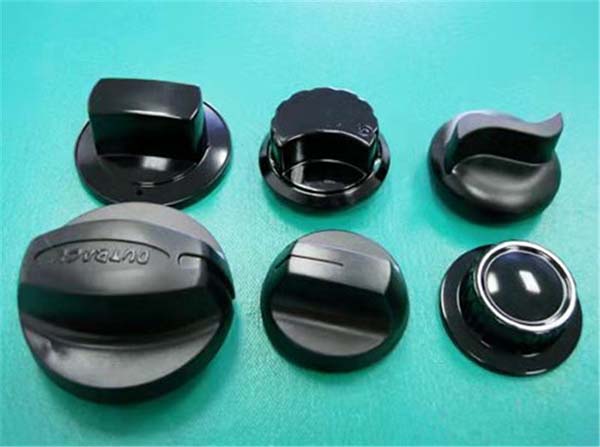
Volkswagen uses 3D printing for custom-designed, low-volume components. Interior parts like unique dashboard inserts or custom knobs print in hours instead of weeks. This reduces inventory costs and enables design flexibility.
Tesla integrated 3D printing into manufacturing of the Model Y. They combined 70 separate parts into one component for the rear chassis. This simplified production, reduced weight, and improved energy efficiency.
BMW used 3D printing for window guide rail parts in the i8 Roadster. Traditional methods would have taken months. 3D printing delivered parts quickly, accelerating development and time-to-market.
| Advantage | Example |
|---|---|
| Cost-effective low-volume production | Volkswagen custom interior components |
| Design integration and weight reduction | Tesla Model Y rear chassis consolidation |
| Accelerated R&D and time-to-market | BMW i8 Roadster window guide rails |
Healthcare
Custom prosthetics: A patient needing a prosthetic limb receives a device designed from their own 3D scan. Perfect fit, better comfort, lower cost. Traditional prosthetics cost $10,000–$50,000. 3D-printed versions can be produced for under $500.
Patient-specific implants: Hip replacements, spinal cages, and cranial plates printed from CT data. Perfect fit means faster recovery. Studies show 3D-printed implants achieve 30% higher osseointegration than traditional ones.
Surgical guides: Custom tools ensure precise implant placement. Surgeons plan and practice on 3D-printed models before operating. Complication rates drop.
Consumer Goods
Custom jewelry: Designs that would be impossible to cast become reality. Each piece can be unique without tooling costs.
Personalized products: Phone cases with your name, eyewear frames matched to your face, home decor tailored to your taste. 3D printing makes personalization affordable.
Small-batch manufacturing: Entrepreneurs test products with small runs before committing to mass production. Risk reduced, innovation accelerated.
How Do You Choose a Local 3D Printing Service?
Key Factors to Consider
Technology offered: Do they have the right printers for your needs? FDM for large parts? SLA for detail? SLS for durability? Metal for production?
Material options: Can they print in the material your project requires? Standard plastics? Engineering materials? Metals? Specialties like biocompatible or castable resins?
Quality and experience: Review their portfolio. Have they done similar projects? Do they understand your industry? Can they show examples of their work?
Turnaround time: How quickly can they deliver? Do they offer rush services for urgent projects?
Cost: Get quotes from multiple providers. Compare not just price but what's included—file review, post-processing, shipping.
Location: How close are they? Can you visit in person? What are pickup/delivery options?
Questions to Ask
- What 3D printing technologies do you use?
- What materials do you offer? Can you provide a material list with properties?
- Can you review my file before I commit?
- What post-processing options do you provide?
- What is your typical turnaround time?
- Can you provide examples of similar projects?
- What happens if the print fails or doesn't meet specifications?
How Does Yigu Technology Support Custom Designs and Prototyping?
As a non-standard plastic and metal products custom supplier, Yigu Technology offers 3D printing services as part of our broader manufacturing capabilities. We help clients from concept to production.
Our Experience in Action
Product designer: Needed multiple iterations of a complex enclosure. Each design change required a new prototype. We printed them overnight. The client tested, refined, and finalized in two weeks—months faster than traditional methods.
Medical device company: A startup needed patient-specific surgical guides. Each guide unique, each needed quickly. We printed them in biocompatible resin from CT data. Surgeons reported perfect fit and faster procedures.
Automotive engineer: Required functional prototypes of engine components for testing. Traditional fabrication weeks. We printed in aluminum overnight. Testing proceeded immediately. Design iterations daily.
Our Capabilities
We maintain multiple technologies:
- FDM for large parts and engineering materials
- SLA for high-detail models
- SLS for durable nylon components
- Metal printing for production-grade parts
- Material variety across plastics, resins, and metals
Our Commitment
- Clear communication: We'll tell you if your file needs work
- Quality assurance: Every part inspected before shipping
- Fair pricing: Transparent quotes with no hidden fees
- Fast turnaround: We respect your deadlines
Conclusion
3D printing services near you are transforming how products are designed, prototyped, and produced. They offer:
- Design freedom: Complex geometries, internal structures, organic shapes
- Rapid prototyping: Parts in days instead of weeks
- Cost-effectiveness: No tooling, economical for single parts
- Customization: Each part can be unique without cost penalty
- Material variety: From standard plastics to advanced metals
Real-world examples prove the value:
- Tesla consolidated 70 parts into one, reducing weight and improving efficiency
- Volkswagen produces custom components economically
- BMW accelerated development, bringing products to market faster
- Medical applications improve patient outcomes with custom implants
Whether you're an entrepreneur with a new product, an engineer needing functional prototypes, or a designer exploring creative possibilities, local 3D printing services put manufacturing power in your hands.
The technology is accessible. The tools are ready. The only limit is your imagination.
Frequently Asked Questions
Q1: What are the most common materials used in 3D printing for custom designs?
Common materials include plastics (PLA, ABS, nylon, TPU), metals (aluminum, titanium, stainless steel), ceramics (alumina, zirconia), and composites (carbon fiber-reinforced). Each offers different properties for different applications.
Q2: How much does it cost to use 3D printing services for rapid prototyping?
Costs vary by size, material, and complexity. Small plastic prototypes: $10–$100. Medium complex parts: $100–$500. Metal prototypes: $200–$2,000+. Always request quotes with your specific file.
Q3: Can 3D printing services handle large-scale production?
For appropriate applications—complex geometries, customization, low-to-medium volumes—yes. For extremely high volumes of simple parts, traditional methods remain more economical. Many companies use 3D printing for bridge production while tooling is developed.
Q4: How long does 3D printing take for prototypes?
Simple parts: hours. Complex parts: days. Your service provider can give an estimate based on your specific file and requirements.
Q5: What file formats do 3D printing services accept?
STL is most common. Many also accept OBJ, 3MF, and native CAD formats like STEP. Check with your provider.
Q6: Can I get design help if I only have a rough idea?
Yes. Many services offer design assistance. Their designers can help turn your sketches, descriptions, or rough concepts into printable 3D models.
Q7: What industries benefit most from 3D printing services?
Automotive (prototyping, custom parts), medical (implants, surgical guides), consumer goods (customized products), aerospace (lightweight components), and industrial manufacturing (tooling, replacement parts) all gain significant advantages.
Contact Yigu Technology for Custom Manufacturing
Ready to turn your ideas into reality with 3D printing services near you? At Yigu Technology, we combine printing expertise with broader manufacturing capabilities. Our team helps you select the right technology and materials, optimize designs for printability, and deliver quality parts on schedule.
Visit our website to see our capabilities. Contact us today for a free consultation and quote. Let's bring your custom designs to life.