Introduction
Walk into any modern factory, and you will likely see machines running quietly, guided by nothing more than lines of code. This is CNC manufacturing at work. It stands for Computer Numerical Control. In simple terms, it means machines that follow programmed instructions to cut, drill, shape, and finish materials with extreme accuracy.
Before CNC, machinists operated machines by hand. Every movement depended on skill and steady hands. That approach worked, but it had limits. Today, CNC manufacturing is the backbone of industries that demand precision, consistency, and speed.
At Yigu Technology, we have seen this shift firsthand. We work with clients across automotive, aerospace, and medical sectors. Every day, we see how CNC enables designs that were impossible just a few decades ago. This guide explains what CNC manufacturing really is, why it matters, and how it continues to shape the world around us.
What Is CNC Manufacturing and Where Did It Come From?
A Clear Definition
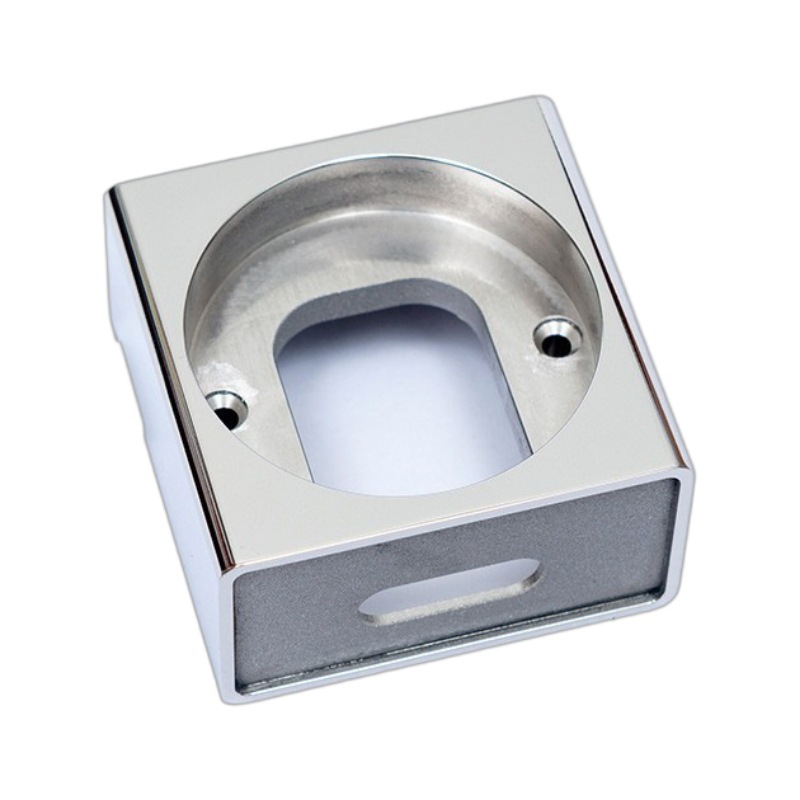
CNC manufacturing uses pre-programmed computer software to control machine tools. These tools include mills, lathes, routers, and grinders. The software dictates every movement: where the tool goes, how fast it moves, and how much material it removes.
The result is high precision and repeatability. Once a program is written, the machine can produce hundreds or thousands of identical parts with minimal variation.
A Brief History
The roots of CNC go back to the 1940s. Early numerical control (NC) systems used punched paper tapes to guide machine movements. These tapes were an improvement over manual operation, but they were rigid and difficult to modify.
The real breakthrough came in the 1970s. Computers became small and affordable enough to integrate directly into machine tools. This shift gave birth to modern CNC. Operators could now edit programs on the fly, store complex instructions, and achieve far greater accuracy.
Since then, CNC has evolved continuously. Today’s machines feature high-speed spindles, multi-axis capabilities, and real-time monitoring. They are faster, smarter, and more capable than ever before.
How Does CNC Manufacturing Compare to Traditional Methods?
Precision and Accuracy
Manual machining depends on operator skill. Even the best machinist has limits. CNC machines, by contrast, achieve tolerances as tight as ±0.005 mm (0.0002 inches). That level of precision is routine, not exceptional.
For industries like aerospace and medical devices, this accuracy is non-negotiable. A turbine blade that is off by a fraction of a millimeter can affect engine performance. A surgical implant with poor fit can compromise patient safety.
Efficiency and Speed
CNC machines run automatically. Once set up, they can operate 24 hours a day with minimal supervision. This reduces cycle times dramatically.
Consider a simple example. A manual machinist might take 45 minutes to produce a complex bracket. A CNC mill can do the same job in 12 minutes. Over a production run of 500 parts, the time savings add up to weeks.
Complexity and Design Freedom
Manual methods struggle with complex geometries. Curved surfaces, internal cavities, and undercuts are difficult or impossible to achieve by hand.
CNC machines, especially 5-axis models, can approach a part from multiple angles. This allows them to create intricate, three-dimensional shapes in a single setup. Designers are no longer constrained by what a human can reach with a tool.
Consistency Across Runs
A skilled machinist can produce one excellent part. But producing 10,000 identical parts is a different challenge. Fatigue, distraction, and natural variation all creep in.
CNC eliminates this problem. The same program produces the same results every time. Whether it is part number one or part number one thousand, the dimensions remain identical.
Cost-Effectiveness Over Time
The upfront cost of CNC equipment is significant. A high-end machining center can cost six figures. But the long-term savings are substantial:
- Reduced labor costs: One operator can run multiple machines
- Lower scrap rates: Consistent accuracy means fewer rejects
- Faster production: Higher output without adding shifts
- Less material waste: Optimized toolpaths use raw material efficiently
For most manufacturers, the return on investment justifies the initial expense.
Where Is CNC Manufacturing Used?
Automotive Industry
The automotive sector relies heavily on CNC. Every vehicle contains hundreds of precision-machined components.
| Component | Function | CNC Application |
|---|---|---|
| Engine blocks | Houses cylinders and pistons | Milling and boring critical surfaces |
| Cylinder heads | Controls airflow and combustion | Precision drilling and porting |
| Transmission housings | Contains gears and shafts | Complex milling and drilling |
| Brake components | Ensures stopping safety | Turning and milling to tight tolerances |
CNC also enables rapid prototyping. Automakers can test new designs in weeks rather than months. This speeds up innovation and reduces development costs.
Aerospace Industry
Aerospace demands the highest levels of precision. A single component failure can have catastrophic consequences. CNC helps meet these exacting standards.
Key applications include:
- Turbine blades: Complex airfoil shapes machined from nickel-based superalloys
- Landing gear: High-strength steel components with extreme load requirements
- Structural frames: Lightweight aluminum and titanium parts for airframes
- Engine components: Combustion chambers, compressor disks, and housings
Materials used in aerospace are often difficult to machine. Titanium, Inconel, and carbon composites require specialized tools and strategies. CNC provides the control needed to work with these advanced materials.
Medical Device Manufacturing
In medical manufacturing, precision is a matter of safety. CNC produces components that go inside the human body or are used in critical procedures.
Common applications:
- Surgical instruments: Scalpels, forceps, and retractors with sharp edges and fine finishes
- Orthopedic implants: Hip stems, knee components, and spinal hardware
- Dental implants: Custom abutments and frameworks
- Prosthetics: Lightweight, patient-specific structures
CNC also enables customization. A surgeon can request a patient-specific implant based on CT scan data. The CNC machine then produces a part that fits that individual’s anatomy perfectly.
Electronics Industry
Electronics manufacturing uses CNC for both enclosures and internal components.
- Heat sinks: Precision-machined aluminum for thermal management
- Connectors: High-tolerance contacts and housings
- Enclosures: Custom cases for consumer and industrial electronics
- PCB fixtures: Tooling for circuit board assembly
As electronic devices become smaller and more powerful, the demand for precision machining continues to grow.
What Are the Main Types of CNC Machines?
CNC Lathes
A CNC lathe rotates the workpiece while a stationary cutting tool removes material. This is ideal for cylindrical parts.
Common applications:
- Shafts and axles
- Spindles and bushings
- Pulleys and rollers
- Threaded components
Lathes can also perform drilling, boring, and threading operations. Modern multi-axis lathes can complete complex parts in a single setup.
CNC Mills
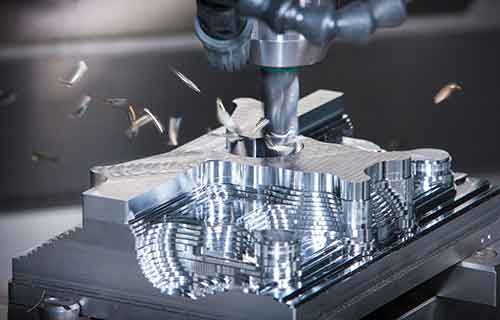
A CNC mill uses rotating cutting tools to remove material from a stationary workpiece. Mills are highly versatile.
They can perform:
- Face milling and contouring
- Drilling and tapping
- Slotting and pocketing
- 3D surface machining
3-axis mills handle most basic operations. 5-axis mills add rotational axes, allowing the tool to approach from multiple angles. This is essential for complex geometries like turbine blades or medical implants.
CNC Routers
CNC routers are similar to mills but are designed for softer materials.
Typical applications:
- Woodworking and cabinetry
- Plastic fabrication
- Sign making
- Composite panel cutting
Routers typically operate at higher speeds than mills but with lower cutting forces. They are common in woodworking shops, prototyping facilities, and specialty manufacturing.
Other CNC Machines
Beyond lathes, mills, and routers, CNC technology appears in many other forms:
| Machine Type | Primary Use |
|---|---|
| CNC grinders | Surface finishing and precision grinding |
| CNC EDM | Electrical discharge machining for hard materials |
| CNC plasma cutters | Cutting thick metal plates |
| CNC laser cutters | Precision cutting of sheet materials |
Each type serves a specific niche, but all share the same core principle: computer-controlled precision.
How Does the CNC Machining Process Work?
Step 1: Programming
Every CNC job starts with a digital design. Engineers create a 3D CAD model of the part. This model defines every dimension, feature, and surface.
The CAD file is then converted into G-code. G-code is the language that CNC machines understand. It contains instructions for:
- Tool movements (X, Y, Z coordinates)
- Spindle speed and direction
- Feed rates
- Coolant on/off
- Tool changes
Writing efficient G-code requires experience. Poorly optimized code can double cycle times or cause tool breakage.
Step 2: Material Selection
Material choice affects machinability, cost, and final performance. Common materials include:
Metals:
- Aluminum: Lightweight, easy to machine
- Steel: Strong, cost-effective
- Stainless steel: Corrosion-resistant
- Titanium: High strength-to-weight ratio
- Brass: Good machinability, decorative
Plastics:
- ABS: Tough, impact-resistant
- Polycarbonate: Transparent, durable
- Nylon: Wear-resistant
- PEEK: High-temperature performance
Composites:
- Carbon fiber: Lightweight, stiff
- Fiberglass: Cost-effective alternative to carbon
The right material balances mechanical requirements with machining costs.
Step 3: Setup and Machining
Once the program is ready and material is selected, the operator sets up the machine. This involves:
- Securing the workpiece in a vise or fixture
- Installing the required cutting tools
- Verifying tool offsets and work coordinates
- Running a dry run to check for collisions
After setup, the machine executes the program. Depending on complexity, a part may require multiple operations. A component might be milled first, then moved to a lathe for turning, then sent for finishing.
Step 4: Post-Processing
Machined parts rarely go straight to assembly. Most require post-processing to meet final specifications.
Common post-processing steps:
- Deburring: Removing sharp edges
- Polishing: Improving surface finish
- Heat treatment: Adjusting hardness and strength
- Coating: Adding corrosion resistance or aesthetics
- Inspection: Verifying dimensions against specifications
These steps ensure the part performs as intended in its final application.
What Does the Future Hold for CNC Technology?
Automation and Robotics
The next frontier for CNC is greater automation. Robotic arms are already handling tasks like:
- Loading and unloading raw material
- Changing tools
- Moving parts between machines
- Performing in-process inspection
These systems can run unattended for hours or even overnight. One operator can supervise multiple machine cells, dramatically reducing labor costs per part.
Smart Factories and IoT
The Internet of Things (IoT) is transforming manufacturing floors. CNC machines now come equipped with sensors that monitor:
- Spindle vibration
- Tool wear
- Temperature
- Power consumption
This data feeds into central systems for predictive maintenance. Instead of changing tools on a fixed schedule, operators replace them when sensors indicate they are nearing failure. This reduces downtime and extends tool life.
Sustainable Manufacturing
Sustainability is becoming a priority across industries. CNC manufacturing is adapting in several ways:
- Precision cutting reduces material waste
- Recycling programs capture scrap metal and chips
- Energy-efficient machines consume less power
- Minimum quantity lubrication (MQL) reduces coolant usage
- Eco-friendly coolants replace petroleum-based options
These practices not only benefit the environment but also reduce operating costs.
Artificial Intelligence
AI is beginning to influence CNC programming. Machine learning algorithms can:
- Analyze past jobs to optimize toolpaths
- Predict optimal cutting parameters for new materials
- Detect anomalies during machining
- Suggest design modifications for better manufacturability
While still emerging, AI-powered CNC promises to make machining faster, more efficient, and more accessible.
Conclusion
CNC manufacturing has transformed how we make things. It delivers precision, consistency, and efficiency that manual methods cannot match. From the engine in your car to the implant in a patient’s body, CNC touches nearly every aspect of modern life.
The technology continues to evolve. Automation, smart sensors, and artificial intelligence are making CNC machines more capable than ever. For manufacturers, staying current with these advances is not optional. It is essential for remaining competitive.
Whether you are producing thousands of parts or a single prototype, CNC offers the control and quality that today’s industries demand.
FAQ
What makes CNC manufacturing superior to traditional methods?
CNC offers unmatched precision, with tolerances as tight as ±0.005 mm. It also provides repeatability—the same program produces identical parts every time. CNC machines run automatically, reducing labor costs and human error. They can also handle complex geometries that would be impossible with manual machining.
How does CNC technology benefit small businesses?
CNC allows small businesses to produce high-quality parts without a large workforce. One operator can run multiple machines. This levels the playing field with larger competitors. CNC also makes it easier to scale production and offer customized products without significant additional cost.
Are there any limitations to using CNC machines?
The main limitations are initial investment and skill requirements. High-precision CNC machines cost tens of thousands to hundreds of thousands of dollars. Operating them requires specialized training. Regular maintenance is also necessary to avoid downtime. However, for most businesses, the benefits outweigh these challenges when planned properly.
Contact Yigu Technology for Custom Manufacturing
At Yigu Technology, we specialize in precision CNC machining for demanding industries. Our capabilities include 3-axis and 5-axis milling, CNC turning, and multi-process manufacturing. We work with metals, plastics, and composites to produce components that meet the tightest tolerances.
Whether you need prototypes, low-volume production, or full-scale manufacturing, our team delivers quality and reliability. We serve the automotive, aerospace, medical, and industrial sectors with a commitment to excellence.
Contact us today to discuss your next project.