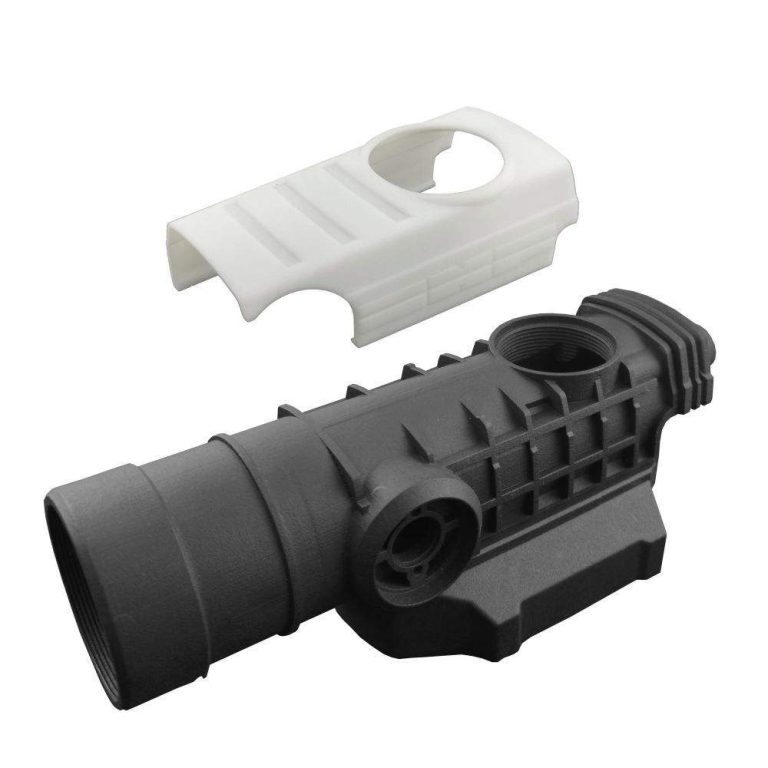
Sintering is the secret behind some of the most powerful 3D printing technologies. This guide explains what sintering is, how it works in additive manufacturing, and why it matters for creating strong, complex parts—from polymer prototypes to metal production components.
Introduction
If you've ever held a 3D printed part made from nylon or metal, chances are it was created through sintering. This process—heating powdered material to fuse particles together without fully melting—is fundamental to technologies like Selective Laser Sintering (SLS) and Direct Metal Laser Sintering (DMLS) .
I've spent years at Yigu Technology working with sintered parts across aerospace, medical, and automotive applications. The technology consistently delivers where other methods fall short: strong, durable parts with complex geometries and minimal support structures.
In this guide, I'll walk you through everything you need to know about sintering in 3D printing. You'll learn how it works, how it compares to other technologies, what materials work best, and where it's used in real-world applications.
What Exactly Is Sintering in 3D Printing?
Let's start with the fundamentals.
The Core Concept
Sintering is a process that bonds particles together using heat and sometimes pressure—but crucially, without melting the material completely. The temperature rises high enough that particles fuse at their contact points, but the material never becomes fully liquid.
Think of it like this: imagine a tray of ice cubes slightly warmed so they stick together at the edges while still keeping their cube shape. The cubes fuse where they touch, but they don't become a single block of water.
In 3D printing, this happens at microscopic scale. A laser selectively heats areas of a powder bed, fusing particles together exactly where the part should be solid.
How Does the Sintering Process Work in 3D Printing?
The process follows a consistent sequence:
Step 1: Model Creation
Design your part in CAD software. The digital model gets sliced into ultra-thin layers—typically 0.05mm to 0.3mm thick.
Step 2: Powder Bed Setup
A thin layer of fine powder spreads evenly across the build platform. For polymer sintering, this might be nylon. For metal, it could be titanium, stainless steel, or other alloys.
Step 3: Laser Application
A high-powered laser scans the powder surface, tracing the cross-section of your part. Where the laser hits, powder particles heat up and fuse together. The unsintered powder stays loose.
Step 4: Layer by Layer
The platform lowers by one layer thickness. Fresh powder spreads over the previous layer. The laser scans again, fusing new powder to the layer below. Repeat until the part is complete.
Step 5: Cooling and Removal
The entire powder bed cools slowly. Then the part is removed from the loose powder—which can be recycled for future prints.
Step 6: Post-Processing
Depending on requirements, parts may need cleaning, surface finishing, or heat treatment.
Why Is Sintering Important for 3D Printing?
Sintering matters because it enables:
- Complex geometries – The unsintered powder supports overhangs, so no additional support structures are needed
- Strong parts – Fused particles create solid material with excellent mechanical properties
- Material versatility – Works with polymers, metals, ceramics, and composites
- Functional parts – Sintered components can serve as end-use products, not just prototypes
How Does Sintering Compare to Other 3D Printing Technologies?
Understanding the differences helps you choose the right approach.
Sintering vs FDM (Fused Deposition Modeling)
| Aspect | Sintering (SLS) | FDM |
|---|---|---|
| Process | Laser fuses powder particles | Molten filament extruded through nozzle |
| Materials | Powders (nylon, TPU, metals) | Filaments (PLA, ABS, PETG) |
| Supports | None needed | Required for overhangs |
| Strength | High, nearly isotropic | Weaker between layers |
| Surface Finish | Matte, slightly rough | Visible layer lines |
| Complexity | Excellent for complex geometries | Limited by support removal |
| Cost | Higher equipment and material cost | Lower cost |
When sintering wins: You need strong, complex parts with engineering materials. The lack of supports means you can design freely without worrying about access for removal.
When FDM wins: Cost matters most, parts are simple, or you need very large components.
Sintering vs SLA (Stereolithography)
| Aspect | Sintering (SLS) | SLA |
|---|---|---|
| Process | Laser sinters powder | UV laser cures liquid resin |
| Materials | Powders (nylon, TPU, metals) | Liquid photopolymer resins |
| Surface Finish | Matte, slightly rough | Smooth, detailed |
| Strength | High, durable | Can be brittle |
| Supports | None needed | Required |
| Best For | Functional parts | Visual prototypes, detail |
When sintering wins: Parts need to be strong and functional. The material properties of nylon or metal suit your application.
When SLA wins: Surface finish and fine detail are critical. Visual prototypes need to look like the final product.
Sintering vs Selective Laser Melting (SLM)
This comparison matters for metal printing.
| Aspect | Sintering (DMLS) | Selective Laser Melting (SLM) |
|---|---|---|
| Process | Particles fuse without fully melting | Powder fully melts to liquid |
| Temperature | Below melting point | Above melting point |
| Density | High, but can have slight porosity | Fully dense (99.9%+) |
| Residual Stress | Lower | Higher (can cause warping) |
| Surface Finish | Similar | Similar |
| Applications | Wide range | Critical high-performance parts |
In practice: The terms are often used interchangeably, and many commercial systems blur the line. Both produce high-quality metal parts. SLM typically achieves slightly higher density at the cost of more thermal stress.
What Are the Main Sintering Technologies in 3D Printing?
Two technologies dominate: one for polymers, one for metals.
Selective Laser Sintering (SLS)
SLS is the most common sintering technology for polymers. It uses a laser to fuse powder particles—typically nylon, polycarbonate, or TPU.
Key characteristics:
- No supports needed – Unsintered powder supports the part
- Strong parts – Nylon SLS parts rival injection-molded plastics
- Good for complex geometries – Internal channels, lattices, organic shapes
- Matte surface finish – Characteristic slightly rough texture
- Recyclable powder – Unused powder can be reused
Typical applications:
- Functional prototypes
- Low-volume production parts
- Custom tooling and fixtures
- End-use components
Real example: A client needed 50 custom brackets for a specialized machine. Injection molding would cost $15,000 in tooling alone. SLS printed all 50 for $800, with each bracket identical and fully functional.
Direct Metal Laser Sintering (DMLS)
DMLS (also called Laser Powder Bed Fusion) applies the same principle to metals. A laser fuses metal powder particles layer by layer.
Key characteristics:
- Dense metal parts – Approaching 100% density
- Wide material range – Titanium, stainless steel, aluminum, cobalt-chrome, Inconel
- Complex geometries – Internal channels, lattice structures, organic shapes
- Support structures needed – Metal parts require supports anchored to the build plate
- Post-processing required – Heat treatment, support removal, often machining
Typical applications:
- Aerospace components
- Medical implants
- Custom surgical instruments
- High-performance automotive parts
- Tooling with conformal cooling
Real example: An aerospace company needed a bracket with internal cooling channels. Traditional machining couldn't create the curved internal passages. DMLS produced the part in titanium with perfect internal channels, 40% lighter than the original design.
What Materials Work With Sintering?
Material choice is critical for sintered parts.
Polymer Powders for SLS
| Material | Properties | Typical Applications |
|---|---|---|
| Nylon (PA12) | Strong, tough, chemical-resistant | Functional prototypes, housings, brackets |
| Nylon (PA11) | Bio-based, flexible, impact-resistant | Consumer goods, sports equipment |
| Nylon (filled) | Glass or carbon fiber reinforced | Stiffer parts, structural applications |
| TPU | Flexible, elastic, abrasion-resistant | Gaskets, seals, soft-touch components |
| Polycarbonate | High-impact strength, heat-resistant | Durable prototypes, tooling |
Nylon dominates SLS for good reason. It offers the best combination of strength, durability, and printability. For most functional prototypes, PA12 is the right starting point.
Metal Powders for DMLS
| Material | Properties | Typical Applications |
|---|---|---|
| Stainless Steel | Strong, corrosion-resistant | Tools, brackets, industrial parts |
| Titanium (Ti6Al4V) | Excellent strength-to-weight, biocompatible | Aerospace, medical implants |
| Aluminum (AlSi10Mg) | Lightweight, thermally conductive | Automotive, heat exchangers |
| Cobalt-Chrome | Wear-resistant, biocompatible | Dental implants, orthopedic implants |
| Inconel | Heat-resistant, corrosion-resistant | Jet engine parts, high-temp applications |
| Tool Steel | Hard, wear-resistant | Molds, dies, cutting tools |
How Material Properties Affect Sintered Parts
The sintering process and material choice determine final part properties:
- Strength – Metal parts exceed polymer parts, but nylon is surprisingly strong
- Density – Higher density means better mechanical properties
- Surface finish – All sintered parts have characteristic matte finish
- Post-processing – Can improve surface, add features, or change properties
What Are the Advantages of Sintering in 3D Printing?
The benefits explain why sintering is so widely used.
Complex Geometries Without Supports
This is sintering's superpower. Because unsintered powder surrounds the part during printing, it acts as natural support for overhangs, internal cavities, and complex shapes.
What this means:
- Design anything without worrying about support removal
- Create internal channels impossible to machine
- Nest parts closely in the build volume
- Reduce post-processing time
High-Strength Parts
Sintered parts are strong enough for real use:
- Nylon SLS parts handle mechanical testing, assembly, and low-stress production
- Metal DMLS parts rival wrought materials in strength
- Layer bonding is excellent, creating nearly isotropic properties
Material Versatility
From flexible TPU to high-temperature Inconel, sintering works with an expanding range of materials. This lets you match material properties to application requirements.
Functional Prototypes and End-Use Parts
The same technology produces prototypes for testing and production parts for actual use. This continuity simplifies development—what works in prototype translates directly to production.
What Are the Limitations?
No technology is perfect. Know sintering's constraints.
Surface Finish
Sintered parts come out with a matte, slightly rough surface. For many applications this is fine, but if you need glossy or mirror finishes, post-processing is required.
Solutions:
- Sanding and polishing
- Vapor smoothing (for polymers)
- Coating or plating
- Machining critical surfaces
Speed
Sintering is slower than some other methods. Each layer must be scanned by the laser, and large parts take many hours. Cooling adds additional time after printing.
Impact: Plan for longer lead times on large parts or dense builds.
Cost
Sintering equipment is expensive—industrial machines cost $50,000 to over $1 million. Materials, especially metal powders, are costly. For one-off parts or small batches, this is acceptable. For high volume, traditional methods often win.
Post-Processing Requirements
Most sintered parts need some post-processing:
- Cleaning to remove loose powder
- Support removal (for metal parts)
- Heat treatment (for metals)
- Surface finishing if required
Factor this into your timeline and budget.
Where Is Sintering Used in Industry?
Real-world applications show the technology's value.
Aerospace: Lightweight and Complex
Aerospace leads in adopting sintered parts. The combination of light weight, complex geometry, and high strength is unmatched.
Applications:
- Brackets and fittings – Optimized for minimal weight
- Ducting – Complex internal passages for airflow
- Turbine components – High-temperature alloys with cooling channels
- Tooling – Custom fixtures for composite layup
Impact: One aerospace manufacturer reported 40% weight reduction on a critical bracket compared to machined versions. On an aircraft, every kilogram saved saves fuel for decades.
Automotive: Faster Development, Better Parts
Car manufacturers use sintering for prototyping and production.
Prototyping applications:
- Engine components for testing
- Custom brackets and housings
- Fit-check parts before tooling
Production applications:
- Low-volume parts for specialty vehicles
- Custom interior components
- Tooling with conformal cooling
Real example: A racing team needed lightweight suspension components. Traditional machining would take weeks and waste expensive material. They sintered titanium parts in days, tested them on the track, and refined the design through multiple iterations.
Medical: Patient-Specific Solutions
Medicine might be sintering's most impactful application.
Applications:
- Custom implants – Hip, knee, and cranial implants tailored to patient anatomy
- Surgical guides – Patient-specific tools for precise procedures
- Dental restorations – Crowns, bridges, and implants
- Orthopedic devices – Custom braces and supports
Impact: Patients receiving custom implants recover faster and have fewer complications. Surgeons plan more accurately with patient-specific models.
Consumer Goods: Innovation and Customization
From eyewear to footwear, sintering enables new products.
Examples:
- Custom-fit bicycle saddles
- Personalized eyewear frames
- Limited-run fashion accessories
- Ergonomic product handles
What's the Future of Sintering in 3D Printing?
The technology continues to advance.
Faster Printing
Multi-laser systems now print with 2, 4, or even 8 lasers working simultaneously. This cuts build times dramatically—a part that took 24 hours now prints in 6 with four lasers.
Better Materials
New powders appear regularly:
- Higher-performance polymers
- Better metal alloys optimized for printing
- Composites with enhanced properties
- More sustainable options
Lower Costs
As machines improve and competition increases, prices drop. Desktop SLS systems under $10,000 now exist, making the technology accessible to more users.
Larger Build Volumes
Printer sizes keep growing. Machines with build volumes over 500mm in each dimension are now common, opening new applications for larger parts.
Conclusion
Sintering is fundamental to some of the most powerful 3D printing technologies available today. From polymer prototypes in nylon to production metal parts in titanium, sintering enables designs and applications that other methods can't touch.
The key points to remember:
- Sintering fuses powder particles without fully melting them
- No supports needed for polymer sintering enables complex geometries
- Material options range from flexible TPU to high-temperature metals
- Applications span aerospace, automotive, medical, and consumer goods
- Strengths include complexity, strength, and material versatility
- Limitations include surface finish, speed, and cost
At Yigu Technology, we've seen sintering transform how products are developed and manufactured. Parts that were impossible to make any other way now fly in aircraft, save lives in hospitals, and improve performance on race tracks.
If you're considering sintering for your next project, start with a clear understanding of what you need. Match those needs to the technology's strengths. And work with partners who have been there before—sintering has a learning curve, but the results are worth it.
Frequently Asked Questions
What materials can be used in the sintering process?
Sintering works with a wide range of materials. Polymer options include nylon (PA12, PA11), TPU, and polycarbonate. Metal options include stainless steel, titanium, aluminum, cobalt-chrome, and Inconel. Each offers different properties for specific applications.
How does sintering differ from other 3D printing techniques?
Sintering fuses powder particles without fully melting them, using a laser to selectively heat the material. Unlike FDM (which extrudes filament) or SLA (which cures liquid resin), sintering produces parts with high strength, complex geometries, and no need for supports in polymer printing.
What are the main benefits of using sintering in 3D printing?
The main benefits include the ability to create complex geometries without supports, high part strength suitable for functional use, material versatility across polymers and metals, and the capability to produce both prototypes and end-use parts.
Is sintering expensive?
Compared to FDM, yes. SLS and DMLS equipment costs more ($50,000 to over $1 million), and materials (especially metal powders) are expensive. However, for complex parts, short runs, and applications where performance matters, the cost is justified.
What surface finish do sintered parts have?
Sintered parts have a characteristic matte, slightly rough surface finish. This comes from the powder-based process. For applications requiring smooth surfaces, post-processing like sanding, polishing, or coating is needed.
Do sintered parts need support structures?
For polymer sintering (SLS), no—unsintered powder supports the part during printing. For metal sintering (DMLS), yes—supports are needed to anchor parts to the build plate and manage thermal stresses. Metal supports must be removed after printing.
Can sintering produce fully dense parts?
Metal sintering (DMLS) produces parts approaching 100% density—comparable to wrought materials. Polymer sintering produces slightly porous parts, but density is sufficient for most applications. For applications requiring maximum density, Selective Laser Melting (SLM) fully melts metal powder.
What industries use sintering most?
Aerospace leads in adoption, followed by medical, automotive, and industrial manufacturing. Each values different benefits—aerospace wants lightweight complexity, medical wants customization, automotive wants speed and performance.
Contact Yigu Technology for Custom Manufacturing
Need expert help with sintered parts for your next project? At Yigu Technology, we combine years of manufacturing experience with advanced SLS and DMLS capabilities. Whether you need functional prototypes, custom medical implants, or production metal components, our team delivers precision results with professional quality. [Contact us today] to discuss your project—we'll help you choose the right materials and approach for your specific needs.