Introduction
3D printing has changed how we make things. From airplane parts to phone cases, this technology builds objects layer by layer from digital files. But here's the thing most beginners don't realize—the material you choose matters just as much as the printer itself.
Pick the wrong material, and your part might break, melt, or just look terrible. Pick the right one, and suddenly your project works perfectly.
I've spent years helping clients at Yigu technology navigate exactly these choices. Whether you're printing a toy for your kid or a critical component for an aerospace client, understanding 3D printing materials makes all the difference.
This guide walks through the most common options—plastics, resins, metals, and ceramics—and gives you practical ways to choose what fits your project. By the end, you'll know exactly what to look for.
Why Does Material Choice Matter So Much?
Think of 3D printing like cooking. You can follow the same recipe, but using butter instead of oil changes everything. The taste, texture, even how long it lasts.
3D printing materials work the same way. They determine:
- How strong your part will be
- Whether it can handle heat
- What it looks like straight off the printer
- How much it costs
- What you can actually do with it
Different industries need different things. Aerospace wants lightweight but strong. Medical needs materials safe for the body. Hobbyists often just want something that looks cool and doesn't break the bank.
Knowing your options helps you match the material to the mission.
What Plastics Are Available for 3D Printing?
PLA: The Beginner's Best Friend
PLA (Polylactic Acid) is everywhere in the 3D printing world—and for good reason.
It comes from renewable sources like corn starch or sugarcane. That means it's biodegradable under the right conditions. For most home users, it's simply the easiest material to work with.
Key facts about PLA:
- Melting point: 180-220°C
- Prints easily on almost any machine
- Minimal odor during printing
- Smooth surface finish right off the printer
- Huge range of colors available
What PLA is great for:
- Decorative items and figurines
- Prototypes where strength isn't critical
- Educational models
- Light-duty phone cases
- Cosplay props
What PLA isn't great for:
- Anything that gets hot (like a phone mount in a car)
- Parts that need to handle stress
- Outdoor items (it degrades in sunlight)
A friend of mine prints amazing tabletop gaming miniatures with PLA. They look fantastic on the shelf. But he learned the hard way not to leave them in his car during summer—they warped into unrecognizable blobs.
Cost: $15-30 per kilogram. Very affordable.
ABS: The Durable Workhorse
ABS (Acrylonitrile Butadiene Styrene) is what Lego bricks are made from. It's tougher than PLA and handles heat better.
Key facts about ABS:
- Melting point: 220-250°C
- Heat deflection: 90-110°C
- Requires heated bed (90-110°C) to prevent warping
- Emits fumes during printing—ventilation needed
- Stronger and more durable than PLA
What ABS is great for:
- Functional prototypes
- Automotive parts (like dashboard components)
- Electronic enclosures
- Parts that need sanding or painting
- Items that might get warm
What ABS isn't great for:
- Printing without good ventilation
- Large flat parts that tend to warp
- Beginners who haven't dialed in their settings
I worked with a startup that made custom housings for electronics. They started with PLA for early prototypes, but switched to ABS for final testing because the devices got warm during use. PLA softened. ABS held strong.
Cost: $15-35 per kilogram. Similar to PLA.
PETG: The Best of Both Worlds
PETG sits between PLA and ABS. It's nearly as easy as PLA but stronger and more heat-resistant.
Key facts about PETG:
- Combines PLA's ease with ABS's durability
- Good layer adhesion
- Slightly flexible—less brittle than PLA
- Food-safe options available
- Resists moisture and chemicals
What PETG is great for:
- Mechanical parts
- Containers and food-related items
- Outdoor applications
- Anything needing durability without printing difficulty
Many manufacturers now use PETG for production parts. It's reliable, consistent, and doesn't need the special handling ABS requires.
What About Resins for High-Detail Printing?
Standard Resins: Detail Champions
Resins work with SLA and DLP printers. Instead of melting plastic, these machines use UV light to harden liquid resin layer by layer.
The results are stunning. Layer heights down to 0.025 mm mean surfaces come out smooth as glass. Details that would blur on an FDM printer stay crisp and sharp.
Key facts about standard resins:
- Cured by UV light, not heat
- Exceptional detail and surface finish
- Available in many colors and properties
- Requires post-processing: washing and curing
- Messier to handle than filament
What standard resins are great for:
- Jewelry patterns and prototypes
- Miniatures and detailed models
- Dental models and surgical guides
- Figurines and display pieces
A jeweler I know switched from wax carving to resin printing for his master patterns. What took days now takes hours. The details are actually better because he's not limited by hand tools.
Cost: $50-200 per liter. More expensive than filament.
Engineering Resins: Special Properties
Beyond standard resins, specialty formulations exist for specific needs:
- Tough resins that won't shatter when dropped
- Flexible resins for parts that need to bend
- High-temp resins that withstand heat
- Castable resins for jewelry investment casting
- Dental resins certified for medical use
These cost more but open applications standard resins can't handle.
How Do You Print with Metals?
Stainless Steel: Strong and Corrosion-Resistant
Metal 3D printing is a different world. Instead of extruding or curing, these machines use lasers or electron beams to melt metal powder together.
Stainless steel is the most common metal for 3D printing.
Key facts about stainless steel:
- High strength and durability
- Excellent corrosion resistance
- Can be sterilized (great for medical tools)
- Withstands high temperatures
- Requires industrial equipment
What stainless steel is great for:
- Aerospace components
- Surgical instruments
- Tooling and fixtures
- Custom mechanical parts
A medical device company I consulted for needed custom surgical guides. Traditional machining took weeks and cost thousands. 3D printing in stainless steel delivered the same parts in days at half the cost.
Cost: Several hundred dollars per kilogram for powder. Equipment runs $100,000+.
Titanium: Lightweight and Biocompatible
Titanium is the superstar of metal 3D printing. It's incredibly strong for its weight and completely compatible with the human body.
Key facts about titanium:
- Highest strength-to-weight ratio of common metals
- Excellent biocompatibility
- Corrosion-resistant
- Used in critical aerospace and medical applications
- About 70% of custom orthopedic implants now use 3D-printed titanium
What titanium is great for:
- Medical implants (hips, knees, spinal cages)
- Aerospace brackets and components
- High-performance automotive parts
- Custom surgical tools
Real numbers: Aircraft manufacturers have reduced component weight by 30-50% using titanium 3D printing. Every kilogram saved on a plane saves thousands in fuel over its lifetime.
Cost: $300-1,200 per kilogram for powder. Not cheap—but worth it for the right applications.
What About Ceramics and Other Materials?
Ceramics: Heat and Beauty
Ceramic 3D printing combines ancient materials with modern technology. The results handle extreme heat and look beautiful doing it.
Key facts about ceramics:
- Withstand temperatures up to 1000-1600°C
- Chemically stable and inert
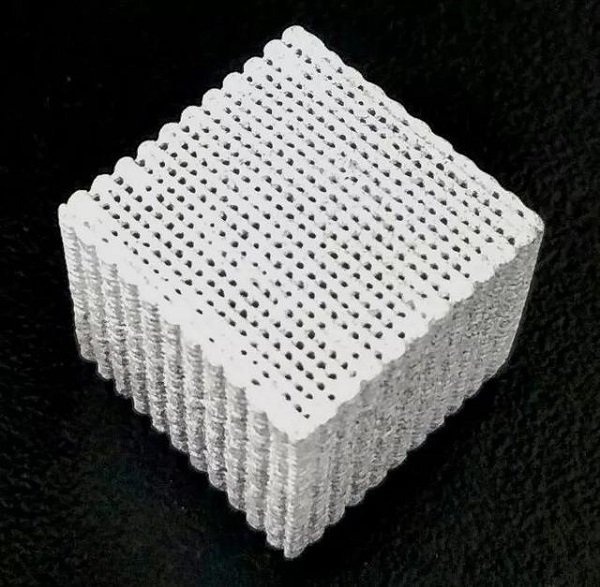
- Can create complex shapes impossible with traditional pottery
- Usually require sintering after printing
- Available in various clay-like formulations
What ceramics are great for:
- High-temperature industrial parts (furnace linings)
- Art pieces and sculptures
- Custom pottery
- Dental crowns and bridges
- Investment casting cores
An artist I know creates sculptures with internal channels and lattice work that would collapse on a potter's wheel. 3D printing lets her design forms that exist only in her imagination.
Cost: Varies widely based on material and process.
Composites: Mixing for Strength
Composite filaments combine plastic with other materials for enhanced properties:
- Carbon fiber filled: Stiffer, lighter, dimensionally stable
- Glass fiber filled: Stronger, more durable
- Wood filled: Looks and smells like real wood
- Metal filled: Heavier, can be polished to look like metal
These give you some benefits of advanced materials while printing on standard FDM machines. The trade-off is increased nozzle wear—carbon fiber is abrasive.
How Do You Compare Materials Side by Side?
| Material | Strength | Heat Resistance | Ease of Printing | Cost | Best For |
|---|---|---|---|---|---|
| PLA | Low | Low (60°C) | Very easy | Low ($15-30/kg) | Decorative, prototypes |
| ABS | Medium | Medium (100°C) | Moderate | Low ($15-35/kg) | Functional parts, enclosures |
| PETG | Medium | Medium (80°C) | Easy | Low ($20-40/kg) | Mechanical parts, containers |
| Standard Resin | Low-Medium | Low (50°C) | Moderate (post-processing) | Medium ($50-200/L) | Detailed models, jewelry |
| Engineering Resin | Medium-High | Medium-High | Moderate (post-processing) | High ($150-400/L) | Tough prototypes, medical |
| Stainless Steel | High | High (800°C+) | Industrial only | High ($200-500/kg) | Aerospace, medical tools |
| Titanium | Very High | High (1000°C+) | Industrial only | Very High ($300-1200/kg) | Implants, aerospace |
| Ceramics | Medium | Very High (1600°C) | Specialized | Variable | High-temp parts, art |
What Factors Should Guide Your Choice?
Consider the End Use First
Always start with what the part needs to do:
Will it be handled? A ring you wear needs durability. A display piece just needs to look good.
Will it get hot? Phone mounts in cars, engine bay parts, kitchen tools—these need heat resistance.
Will it carry load? Mechanical parts need strength. Decorative items don't.
Will it touch skin? Wearables and medical items need biocompatibility.
A client once asked me to print a replacement gear for a small machine. He'd tried PLA three times. Each gear stripped within days. We switched to ABS, then to nylon. The nylon gear lasted years. The material was the problem, not the design.
Match to Your Printer
Not every printer handles every material:
- FDM printers: Plastics only (PLA, ABS, PETG, composites)
- SLA/DLP printers: Resins only
- Industrial powder printers: Metals and ceramics
If you have a desktop FDM machine, you're limited to plastics. That's fine—most projects only need plastics anyway.
Balance Cost Against Requirements
Metal printing is expensive. But if you need metal properties, it's the only way. Sometimes the right choice costs more upfront but saves money long-term.
For one-off prototypes, PLA or resin often makes sense even if the final product will be metal. You validate the design cheaply before committing to expensive production.
Yigu Technology's Perspective
At Yigu technology, we've helped clients across industries choose the right 3D printing materials for their projects. Here's what we've learned:
Start with requirements, not preferences. List what the part must do, then find materials that meet those needs. Don't fall in love with a material and try to make it work.
Test before committing. Print small samples to check fit, finish, and strength. Material data sheets tell you what's possible, but actual prints reveal what's practical.
Consider the whole process. Some materials need post-processing—sanding, painting, curing, sintering. Factor that time and cost into your decision.
For plastic parts, we often recommend PETG as a starting point. It's forgiving enough for beginners but strong enough for real use. For metal parts, we guide clients through the trade-offs between stainless steel, titanium, and other alloys based on their specific application.
Custom manufacturing is what we do. Matching materials to projects is how we do it well.
Conclusion
Choosing 3D printing materials doesn't have to be overwhelming. Start with what your part needs to do, then match those needs to material properties.
PLA is great for easy, attractive prints that don't need to be tough. ABS handles heat and stress better but requires more careful printing. PETG splits the difference. Resins deliver stunning detail for display pieces and jewelry. Metals bring industrial strength to critical applications. Ceramics handle heat and create beautiful objects.
The right material transforms a good print into a great part. Take time to understand your options. Test when you can. And when you need help, reach out to people who do this every day.
3D printing is amazing technology. But it's the materials that make it useful.
FAQ
How do I choose the right 3D printing material for my project?
Start by asking what the part needs to do. Will it be handled? Does it need to withstand heat? Will it carry weight? Does it need to look perfect straight off the printer? Match these requirements to material properties. For decorative items, PLA or resin works. For functional parts, consider ABS, PETG, or nylon. For industrial applications, look at metals. For high heat, ceramics.
Are 3D printed metal parts as strong as traditionally manufactured metal parts?
Yes, in many cases they are comparable or even better for specific applications. 3D printed metals can achieve similar strength to cast or forged parts. The microstructure is different—sometimes more uniform, sometimes with different grain structures. For aerospace applications, 3D printed titanium parts have been certified and flown successfully. Post-processing like heat treatment often improves strength further.
Can I mix different 3D printing materials?
In a single print, not typically with consumer printers. Each material has different melting points, shrinkage rates, and layer adhesion properties. Mixing them usually causes delamination or print failure. However, some advanced printers have multiple extruders for different materials. And you can certainly combine printed parts from different materials after printing—like a metal base with a plastic handle.
What's the cheapest 3D printing material?
PLA is generally the most affordable, at $15-30 per kilogram. It's widely available, prints easily, and works for many projects. For very large prints, PLA keeps costs low. Just remember that cheap material isn't a bargain if it doesn't meet your part's requirements.
Can I 3D print food-safe items?
Yes, with the right materials. PETG is available in food-safe formulations. Some resins are certified for food contact. Ceramics can be food-safe after proper glazing and firing. However, the printing process itself creates layer lines where bacteria can hide. For truly food-safe items, smooth surfaces that can be thoroughly cleaned are essential. Consider coatings or post-processing to seal surfaces.
How do I know if a material is biocompatible?
Look for certifications. Medical-grade materials have documentation showing they pass ISO 10993 or similar standards for biocompatibility. For titanium, this is well-established—about 70% of custom orthopedic implants use 3D printed titanium. For plastics and resins, check manufacturer specifications. Never assume a standard material is safe for medical use without verification.
Contact Yigu Technology for Custom Manufacturing
Need help choosing the right 3D printing material for your project? Yigu technology specializes in custom manufacturing with plastics and metals. We've guided hundreds of clients through material selection and delivered quality parts for every application.
Whether you need:
- PLA prototypes to test form and fit
- ABS functional parts for real-world use
- Resin prints with stunning detail
- Stainless steel or titanium components for critical applications
We're here to help. Contact us to discuss your project requirements. Tell us what you're making. We'll recommend the best material and process to get it done right.