Introduction
You have a design. You have tested 3D printed prototypes. Now you need parts that behave like the final product—made from the same material, with the same manufacturing process. But traditional production molds cost tens of thousands of dollars and take months to build. What if you could produce injection-molded prototype parts in weeks instead of months? This is the promise of prototype tooling. It bridges the gap between additive prototypes and mass production, enabling functional testing, material validation, and design iteration without the time and cost of hard tooling. At Yigu Technology, we use prototype tooling daily to help clients validate designs before committing to production. This article explains what prototype tooling is, how it works, and why it is essential for modern product development.
What Is Prototype Tooling?
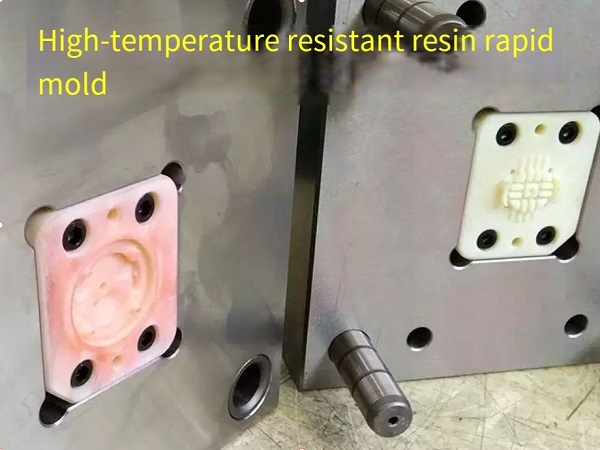
Prototype tooling, also known as rapid tooling or soft tooling, is the creation of molds for producing prototype parts using faster, more cost-effective methods than traditional production tooling.
Unlike hard tooling—which uses hardened steel molds designed for millions of cycles—prototype tooling uses materials like aluminum, soft steel, or silicone to create molds that are built quickly and at lower cost. These molds are used to produce parts via injection molding, casting, or other processes, yielding prototypes that closely mimic production parts in material and properties.
How Does It Work?
Prototype tooling operates on a simple principle: create a mold quickly using rapid manufacturing technologies, then use that mold to produce prototype parts.
The mold material and method depend on:
- Part complexity
- Required durability (number of parts needed)
- Material being molded (thermoplastic, thermoset, metal)
- Timeline and budget
Direct vs. Indirect Tooling
Two primary approaches exist: direct and indirect prototype tooling.
| Aspect | Direct Tooling | Indirect Tooling |
|---|---|---|
| Process | Mold created directly from CAD via CNC or 3D printing | Master model created first; mold cast from master |
| Speed | Hours to days | Days to weeks (requires master creation) |
| Cost | Higher upfront (advanced equipment) | Generally lower (cheaper master materials) |
| Complexity | Excellent for intricate geometries | Good, but may require extra steps |
| Durability | Varies by material; aluminum molds last 1,000–10,000 parts | Silicone molds last 10–100 parts; soft steel lasts longer |
| Redesign flexibility | Quick—modify CAD and remake | Slower—requires new master |
Direct tooling example: A CNC machine cuts an aluminum mold directly from a solid block. The mold is ready in 1–2 weeks and can produce thousands of prototype parts.
Indirect tooling example: An SLA printer creates a master pattern. Silicone is poured around it to create a mold. The mold is used to cast polyurethane parts. This method is ideal for 10–50 parts with complex geometries.
What Are the Advantages?
Cost-Effectiveness
Traditional hard tooling for mass production can cost $20,000–$100,000 and take 12–20 weeks. Prototype tooling reduces both dramatically.
| Tooling Type | Typical Cost | Lead Time | Part Volume |
|---|---|---|---|
| Hard steel mold | $20,000–$100,000 | 12–20 weeks | 100,000–1,000,000+ |
| Soft steel mold | $5,000–$15,000 | 6–10 weeks | 10,000–50,000 |
| Aluminum mold | $3,000–$8,000 | 3–5 weeks | 1,000–10,000 |
| Silicone mold | $500–$2,000 | 1–2 weeks | 10–100 |
A consumer electronics startup needed 500 housings for market testing. Hard tooling would have cost $25,000 and taken 14 weeks. An aluminum mold cost $5,000 and was ready in 4 weeks. The company validated demand and secured funding before investing in production tooling.
Accelerated Time-to-Market
Every week saved in development is a week of revenue gained. Prototype tooling compresses the timeline from design to production-ready parts.
A medical device company reduced their development cycle from 18 months to 9 months by using prototype tooling for functional testing. They identified and fixed design flaws early, avoiding costly production delays.
Material Validation
3D printed prototypes often use materials that differ from production materials. A part that works in ABS-like resin may fail when injection molded in polycarbonate.
Prototype tooling allows testing with the actual production material. Engineers can validate:
- Mechanical properties (strength, flexibility, impact resistance)
- Thermal performance (heat deflection, cold temperature behavior)
- Chemical resistance (exposure to oils, solvents, cleaners)
- Regulatory compliance (biocompatibility, flammability)
An automotive supplier used an aluminum mold to produce prototype parts in the same glass-filled nylon used for production. Testing revealed a cracking issue that was corrected before hard tooling was built.
Functional Testing
Prototype tooling produces parts with production-like properties, enabling realistic functional testing.
- Automotive: Door handles tested for thousands of cycles
- Medical: Surgical instruments sterilized and used in simulated procedures
- Consumer goods: Electronic enclosures tested for drop resistance
- Aerospace: Brackets subjected to vibration and load testing
A power tool manufacturer used prototype tooling to produce 100 handles for durability testing. The handles were dropped, twisted, and exposed to extreme temperatures. A design flaw was discovered and fixed before production tooling began—saving an estimated $150,000 in potential recalls.
Design Iteration
Prototype tooling allows multiple design iterations without the cost of hard tooling. Each iteration can be tested, refined, and retested quickly.
A furniture company created three iterations of a chair armrest using aluminum molds:
- First mold: Basic shape, tested for comfort
- Second mold: Refined ergonomics, tested for assembly
- Third mold: Final design with integrated features
Each mold cost $4,000 and took 3 weeks. The final design had 95% user satisfaction—up from 70% on the first iteration.
What Are the Industrial Applications?
Aerospace
Aerospace components are complex, expensive, and produced in low volumes. Prototype tooling enables cost-effective development.
Application: Turbine engine parts, structural brackets, interior components
Benefits: Reduced cost for low-volume parts; ability to test with production materials
An aerospace manufacturer used prototype tooling to produce 50 prototype brackets in the same titanium alloy used for production. Testing validated the design before committing to hard tooling.
Automotive
The automotive industry constantly introduces new designs and features. Prototype tooling accelerates development.
Application: Bumpers, dashboards, door handles, lighting components
Benefits: Functional testing, material validation, rapid iteration
A car manufacturer used prototype tooling to produce functional prototypes of a new bumper design. Aerodynamic testing revealed improvements that increased fuel efficiency by 3%. The design was refined before production tooling began.
Medical
Medical devices must meet strict regulatory standards. Prototype tooling enables thorough testing and validation.
Application: Surgical instruments, implantable devices, diagnostic equipment housings
Benefits: Testing with biocompatible materials; regulatory validation; patient-specific customization
A medical device company used prototype tooling to produce 200 surgical instrument handles for ergonomic testing. Surgeon feedback led to design improvements that reduced procedure time by 15%.
Consumer Goods
The consumer goods market demands rapid innovation. Prototype tooling allows companies to test and iterate quickly.
Application: Electronic housings, kitchen appliances, toys, packaging
Benefits: Market testing, aesthetic evaluation, functional validation
A consumer electronics company used prototype tooling to produce 1,000 smart speaker housings for a limited launch. The feedback from early users informed final design refinements before mass production.
How Do You Choose the Right Tooling Method?
Selecting the right prototype tooling approach depends on your project requirements.
| Factor | Consideration |
|---|---|
| Part volume | 10–100 parts: Silicone molding. 100–1,000: Aluminum mold. 1,000–10,000: Soft steel. 10,000+: Hard steel. |
| Material | Standard thermoplastics: Aluminum or soft steel. High-temperature or abrasive materials: Hard steel. |
| Part complexity | Highly complex: Direct tooling (CNC or 3D printed). Simple to moderate: Indirect tooling. |
| Timeline | 1–2 weeks: Silicone molding. 3–5 weeks: Aluminum mold. 6–10 weeks: Soft steel. |
| Budget | Limited: Silicone molding. Moderate: Aluminum mold. Production-ready: Soft or hard steel. |
What Should You Look for in a Service Provider?
Choosing the right partner is critical. Consider:
| Factor | What to Look For |
|---|---|
| Experience | Proven track record with your industry and materials |
| Capabilities | Access to CNC machining, 3D printing, mold-making expertise |
| Material expertise | Knowledge of thermoplastics, metals, and specialty materials |
| Design support | Design for manufacturing (DFM) feedback to optimize for moldability |
| Turnaround | Ability to meet your timeline without compromising quality |
| Quality control | Inspection capabilities (CMM, optical measurement) |
Yigu Technology's Perspective
As a custom manufacturer of plastic and metal parts, Yigu Technology uses prototype tooling extensively. We see its value daily.
What we have learned:
- Match tooling to the stage: Use silicone molds for early iterations. Use aluminum molds for functional validation. Use soft steel for pilot production.
- Plan for iteration: Budget for at least two tooling iterations. The first reveals issues; the second validates fixes.
- Consider the final process: Design prototype molds with production in mind. Features that work in a prototype mold should transfer to hard tooling.
- Document everything: Keep records of mold designs, processing parameters, and test results. This knowledge accelerates future projects.
We encourage clients to view prototype tooling not as an added expense, but as an investment that reduces risk and accelerates time-to-market.
Conclusion
Prototype tooling revolutionizes product development by bridging the gap between additive prototypes and mass production. It enables functional testing with production materials, accelerates time-to-market, and reduces risk—all at a fraction of the cost of hard tooling.
Whether you are developing a medical device that requires biocompatible materials, an automotive component that must withstand real-world conditions, or a consumer product that needs market validation, prototype tooling offers a practical path from design to production. The key is choosing the right method for your volume, material, and timeline—and partnering with an experienced provider who can guide you through the process.
Frequently Asked Questions
What is the difference between prototype tooling and traditional tooling?
Prototype tooling uses faster, less expensive methods to create molds for prototyping—typically aluminum, soft steel, or silicone. Traditional tooling (hard tooling) uses hardened steel molds designed for millions of production cycles. Prototype tooling prioritizes speed and cost; traditional tooling prioritizes durability and per-part cost at high volumes.
Can prototype tooling be used for high-volume production?
Prototype tooling is designed for low to medium volumes. Aluminum molds typically last 1,000–10,000 cycles. Soft steel molds can last 10,000–50,000 cycles. For high-volume production (100,000+ parts), traditional hard steel tooling is more cost-effective per part.
What materials can be used with prototype tooling?
A wide range: thermoplastics (ABS, polycarbonate, nylon, polypropylene), thermosets, silicones, and some metals. The choice depends on the mold material and process. Aluminum molds work with most standard thermoplastics. Silicone molds are used for casting polyurethanes and epoxies.
How long does prototype tooling take?
Silicone molds: 1–2 weeks. Aluminum molds: 3–5 weeks. Soft steel molds: 6–10 weeks. Timelines vary based on part complexity and provider workload. Compare with hard tooling at 12–20 weeks.
What is the cost of prototype tooling?
Silicone molds: $500–$2,000. Aluminum molds: $3,000–$8,000. Soft steel molds: $5,000–$15,000. Hard steel molds: $20,000–$100,000+. Costs depend on part size, complexity, and material.
Contact Yigu Technology for Custom Manufacturing
At Yigu Technology, we specialize in prototype tooling and custom manufacturing. Our capabilities include aluminum and soft steel molds, silicone molding, CNC machining, and 3D printing. We serve aerospace, automotive, medical, and consumer goods industries.
If you are ready to move beyond additive prototypes and validate your design with production materials, contact our engineering team. Let us help you choose the right tooling approach for your project and accelerate your path to market.