Introduction
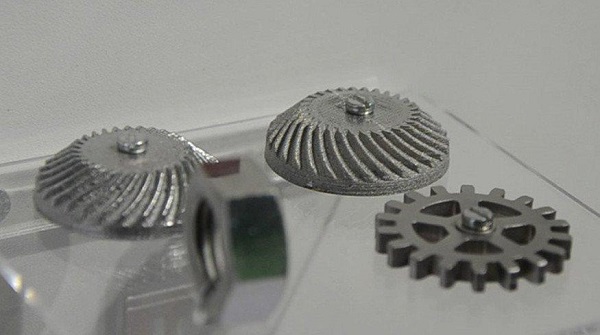
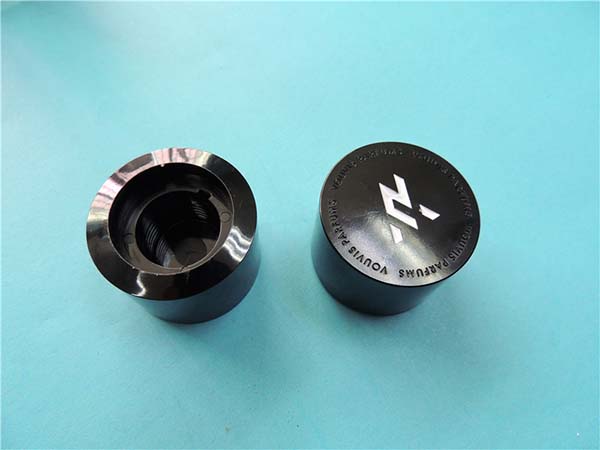
Custom parts are everywhere. They are in the medical implant tailored to your body. They are in the race car bracket designed for maximum strength with minimum weight. They are in the prototype that turns an idea into a physical product.
Traditional manufacturing struggles with custom parts. Molds are expensive. Tooling takes weeks. Minimum order quantities force you to buy more than you need.
3D printing custom parts solves these problems. It builds objects layer by layer from digital files. No molds. No minimum orders. Just the part you need, when you need it.
In this guide, we will cover everything you need to know. You will learn how the technology works, what materials are available, and how to choose the right approach for your project.
How Does 3D Printing Custom Parts Work?
The Additive Process
3D printing is additive manufacturing. It builds objects by adding material layer by layer. This is the opposite of traditional machining, which removes material.
The process has four main stages.
| Stage | Description |
|---|---|
| CAD Design | Create a 3D model using software like SolidWorks or Fusion 360 |
| Slicing | Cut the model into thin layers (0.05–0.5 mm thick) |
| Printing | Build the part layer by layer using the chosen technology |
| Post-Processing | Clean, cure, or finish the part as needed |
Key fact: A part that would take weeks to cast or machine can often be printed in hours or days. This speed is why 3D printing is the go-to tool for prototyping and custom production.
Layer by Layer
Think of 3D printing like building a loaf of bread, one slice at a time. But instead of bread, the printer uses plastic, metal, resin, or other materials.
Each layer bonds to the one below it. Overhangs may require support structures that are removed after printing. Internal channels and complex cavities print without special tooling.
What Technologies Are Used for Custom Parts?
Choosing the Right Process
Different technologies suit different needs. The table below summarizes the most common options.
| Technology | How It Works | Best For | Typical Accuracy |
|---|---|---|---|
| FDM | Melts and extrudes plastic filament | Large parts, functional prototypes | ±0.2–0.5 mm |
| SLA | Laser cures liquid resin | High-detail parts, smooth surfaces | ±0.05–0.1 mm |
| SLS | Laser sinters powder | Durable, complex functional parts | ±0.1–0.3 mm |
| SLM/DMLS | Laser melts metal powder | Metal parts, aerospace, medical | ±0.05–0.1 mm |
| Binder Jetting | Binder binds powder, then sintering | Medium-volume metal parts | ±0.1–0.2 mm |
FDM: The Workhorse
Fused Deposition Modeling (FDM) is the most common 3D printing technology. It melts plastic filament and deposits it through a nozzle. The nozzle moves in X and Y directions while the build platform lowers.
Real-world example: An automotive shop needed a custom bracket to mount a sensor on a test vehicle. They designed the part in CAD and printed it in ABS using FDM. The part was ready in four hours and held the sensor securely through weeks of testing.
SLA: The Detail Specialist
Stereolithography (SLA) uses a laser to cure liquid resin. It produces parts with smooth surfaces and fine details. This makes it ideal for visual prototypes, jewelry, and dental applications.
Key fact: SLA can achieve layer heights as low as 25 microns. That is thinner than a human hair.
SLS: The Functional Part Maker
Selective Laser Sintering (SLS) uses a laser to fuse nylon powder. The powder bed acts as its own support, so no support structures are needed. Parts are durable and can be used as functional components.
Real-world example: A medical device company needed a custom surgical guide. SLS printed the part in nylon with complex curves that matched the patient's anatomy. The guide was sterilized and used in surgery.
Metal Printing: SLM and DMLS
Laser Powder Bed Fusion (LPBF) goes by several names: SLM (Selective Laser Melting) and DMLS (Direct Metal Laser Sintering). It melts metal powder layer by layer to create dense, strong parts.
Key fact: Metal 3D printed parts can achieve 99.5 percent density, making them nearly as strong as forged metal.
What Materials Can You Use?
Plastics
Plastics are the most common materials for 3D printed custom parts. Each has different properties.
| Material | Key Properties | Best For |
|---|---|---|
| PLA | Biodegradable, easy to print, low strength | Prototypes, decorative items |
| ABS | Tough, heat resistant, impact resistant | Functional prototypes, automotive parts |
| PETG | Strong, flexible, chemical resistant | Mechanical parts, containers |
| Nylon (PA12) | Strong, durable, slightly flexible | Gears, hinges, functional parts |
| PC | Very strong, heat resistant, transparent | Structural parts, lenses |
| PEEK | High temperature, chemical resistant | Aerospace, medical implants |
Key fact: PLA is derived from renewable resources like corn starch. It is biodegradable under industrial composting conditions.
Metals
Metal 3D printing is used for high-performance applications.
| Material | Key Properties | Best For |
|---|---|---|
| Titanium (Ti-6Al-4V) | High strength-to-weight, biocompatible | Aerospace, medical implants |
| Aluminum (AlSi10Mg) | Lightweight, good thermal conductivity | Heat exchangers, automotive parts |
| Stainless Steel (17-4 PH, 316L) | Corrosion resistant, high strength | Industrial parts, tools |
| Inconel (718, 625) | High temperature, oxidation resistant | Turbine blades, exhaust components |
Real-world example: A medical device company needed a custom titanium implant for a patient with a unique bone defect. They printed the implant in Ti-6Al-4V. The part matched the patient's anatomy exactly and was approved for surgical use.
Other Materials
Ceramics – Used for high-temperature applications like heat shields and electronic substrates.
Composites – Materials like carbon-fiber reinforced nylon offer high strength with low weight. Used in drones, sports equipment, and automotive parts.
Elastomers – Flexible materials like TPU (thermoplastic polyurethane) are used for seals, gaskets, and soft-touch components.
What Makes 3D Printing Ideal for Custom Parts?
No Tooling Costs
Traditional custom parts often require molds or fixtures. A simple injection mold can cost $5,000 to $50,000. A complex mold can exceed $100,000.
With 3D printing, there are no molds. The cost is the same whether you print one part or one hundred.
Design Freedom
Traditional manufacturing imposes constraints. A machined part must have tool access. A cast part must be removable from the mold.
3D printing removes these constraints. You can create:
- Internal channels that curve and branch
- Lattice structures that reduce weight
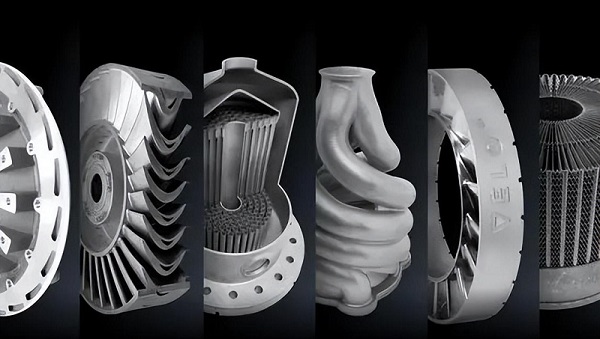
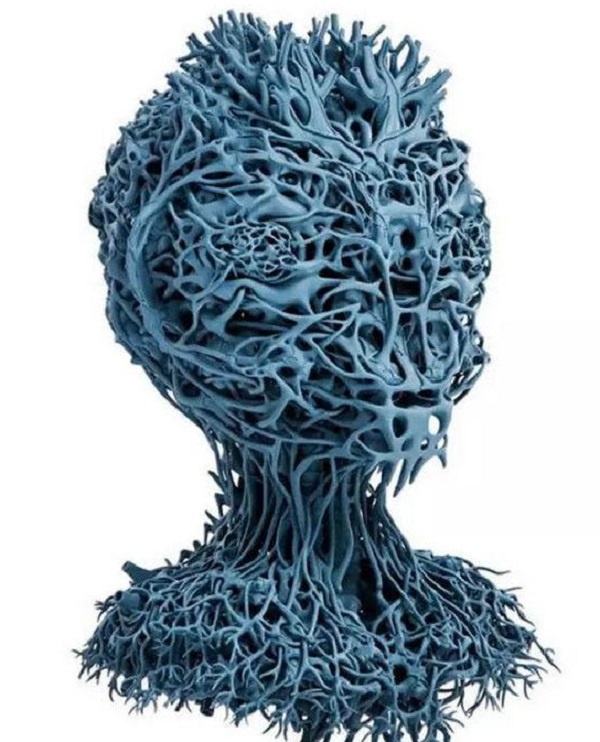
- Organic shapes that follow natural forms
- Part consolidation – replacing assemblies with single components
Real-world example: A hydraulic manifold traditionally required multiple machined blocks bolted together with seals. A 3D printed version consolidated everything into one piece. The new design eliminated 12 seals and 30 fasteners while reducing weight by 60 percent.
On-Demand Production
With 3D printing, you print parts when you need them. No inventory. No forecasting. No obsolete stock.
Key fact: A study by the U.S. Department of Defense found that 3D printing spare parts on demand reduced inventory costs by 50 to 70 percent for certain components.
Rapid Iteration
Designing a custom part is rarely perfect on the first try. With traditional methods, each iteration costs time and money. New molds must be made. New setups must be performed.
With 3D printing, you update the CAD file and print a new version. A design cycle that took months can now take days.
What Are the Limitations?
Speed for Volume
3D printing is fast for one part. It is slow for thousands. A part that prints in 10 hours takes 1,000 hours to print 100 copies.
For high-volume production, traditional methods like injection molding are still faster and cheaper.
Material Constraints
Not all materials are available for 3D printing. Some exotic alloys or specialized plastics may still require traditional processing.
Post-Processing Requirements
Most 3D printed parts require finishing. Supports must be removed. Surfaces may need sanding or polishing. Metal parts often require heat treatment.
Size Limits
Build volumes vary by machine. A desktop FDM printer may max out at 300 mm. Industrial systems can go larger, but very large parts may need to be printed in sections and assembled.
How Much Does 3D Printing Custom Parts Cost?
Factors That Influence Cost
| Factor | Impact |
|---|---|
| Part size | Larger parts use more material and take longer to print |
| Material | PLA is cheap; titanium is expensive |
| Technology | FDM is lowest cost; metal printing is highest |
| Quantity | Per-part cost drops as quantity increases (but less dramatically than with molding) |
| Post-processing | Sanding, polishing, and heat treatment add cost |
Cost Comparison
| Technology | Typical Cost per Part (small to medium) | Best Volume |
|---|---|---|
| FDM | $5–$50 | 1–100 parts |
| SLA | $10–$100 | 1–50 parts |
| SLS | $20–$200 | 1–100 parts |
| Metal (SLM) | $50–$500+ | 1–20 parts |
Key fact: For quantities under 100 units, 3D printing is often more cost-effective than injection molding. The break-even point varies by part complexity and material.
Yigu Technology’s View
At Yigu Technology, we specialize in 3D printing custom parts for clients across industries. Our approach combines technical expertise with a focus on practical solutions.
Case Study: Custom Fixture for Assembly Line
A manufacturer needed a custom fixture to hold a complex part during assembly. Traditional machining would have taken three weeks and cost $2,500.
We printed the fixture in ABS using FDM. The part was ready in three days at $400. The fixture held the part securely and lasted through thousands of cycles.
Case Study: Medical Prototype
A medical startup was developing a new surgical tool. They needed ergonomic handles that fit a surgeon's hand perfectly.
We printed multiple handle designs in SLA resin. The surgeon tested each design and provided feedback. After three iterations, the final design was approved. The entire process took two weeks. Traditional prototyping would have taken two months.
Case Study: Drone Component
A drone manufacturer needed a lightweight camera mount with complex geometry. The design included integrated cable channels and vibration-damping features.
We printed the part in carbon-fiber reinforced nylon using SLS. The part was 40 percent lighter than the machined aluminum version and eliminated separate cable clips. The client moved to production with the 3D printed design.
Our Approach
We believe the best custom part is the one that fits your exact need. Sometimes that means FDM for low cost. Sometimes it means metal printing for strength. Sometimes it means combining 3D printing with traditional machining.
We guide clients through the decision. We ask about the intended use, the required strength, the surface finish, and the budget. Then we recommend the right technology.
Conclusion
3D printing custom parts offers unmatched flexibility. No tooling costs. No minimum orders. Unlimited design freedom. It is ideal for prototypes, custom components, and low-volume production.
The technology is not a replacement for all manufacturing. It is a new tool in the toolbox. Use it when you need complex geometries, rapid iteration, or on-demand production. Use traditional methods when volume justifies the tooling.
For custom parts, 3D printing is often the best choice. It turns digital designs into physical objects faster and more affordably than ever before.
FAQ
What types of designs are suitable for 3D printing custom parts?
Complex designs with internal channels, lattice structures, organic shapes, or undercuts are ideal for 3D printing. Parts that would require multiple setups or complex tooling in traditional manufacturing are often easier to print. Highly personalized items like custom-fit prosthetics or ergonomic handles are also excellent candidates.
How accurate are 3D printed custom parts?
Accuracy depends on the technology. FDM typically achieves ±0.2–0.5 mm. SLA and SLS achieve ±0.05–0.1 mm. Metal printing achieves ±0.05–0.1 mm. High-end systems can reach ±0.01 mm on small features. For most applications, these accuracies are sufficient without secondary machining.
Can I use 3D printed custom parts for mass production?
For small to medium volumes (1–1,000 units), 3D printing is often cost-effective. For high-volume mass production (10,000+ units), traditional methods like injection molding are faster and cheaper. Many manufacturers use a hybrid approach: 3D printing for prototypes and low-volume custom parts, traditional methods for high-volume production.
Contact Yigu Technology for Custom Manufacturing
Need custom 3D printed parts? Yigu Technology offers professional additive manufacturing services. We work with plastics, metals, and advanced materials. Our team helps you choose the right technology and guides you from design to finished part.
Contact us today to discuss your project. Whether you need one prototype or a hundred custom parts, we deliver quality and reliability.