Introduction
In the world of engineering materials, bakelite round bars occupy a unique position. They are neither metal nor wood—yet they often outperform both in specific applications. Invented over a century ago, bakelite remains relevant today because of its exceptional combination of properties: heat resistance, electrical insulation, mechanical strength, and chemical durability. This guide covers everything you need to know—from material composition and properties to manufacturing methods and selection criteria—so you can confidently specify bakelite round bars for your projects.
What Is a Bakelite Round Bar?
Definition and Composition
A bakelite round bar is a cylindrical component made from bakelite—a thermosetting plastic. Bakelite forms through a chemical reaction between phenol and formaldehyde under heat and pressure. This reaction creates a cross-linked polymer structure that, once set, cannot be remelted.
The round bar shape is produced through molding or extrusion. Bars are available in various diameters and lengths to suit different applications.
Fillers are often added to modify properties:
| Filler | Purpose |
|---|---|
| Wood flour | Improves machinability; reduces cost |
| Cotton fibers | Increases impact resistance |
| Glass fibers | Enhances strength and heat resistance |
Historical Significance
Leo Baekeland invented bakelite in 1907—the world's first fully synthetic plastic. It marked the beginning of the modern plastics industry. Bakelite round bars quickly found applications in electrical equipment, mechanical components, and consumer goods. They replaced traditional materials like wood and metal in many cases, offering new possibilities in design and durability.
What Properties Do Bakelite Round Bars Offer?
Mechanical Properties
Tensile Strength
Tensile strength measures resistance to pulling forces. Bakelite round bars perform well in this category.
| Material | Tensile Strength (MPa) |
|---|---|
| Bakelite (wood-flour filled) | 30–50 |
| Bakelite (glass-fiber reinforced) | 80–120 |
| Softwood | 10–20 |
Glass-fiber reinforcement can increase tensile strength by more than double, making bakelite suitable for applications with moderate to high tensile loads.
Compressive Strength
Compressive strength—resistance to pushing or crushing forces—is another strong point. A typical bakelite round bar achieves 100–150 MPa. For comparison, low-density polyethylene manages only 10–20 MPa. This high compressive strength makes bakelite ideal for supports, spacers, and structural components under compression.
Flexural Strength
Flexural strength determines resistance to bending. Bakelite round bars typically offer 50–80 MPa in this category. This property matters when the bar serves as a shaft or component subjected to bending moments.
Thermal Properties
Heat Resistance
Bakelite round bars withstand 150–200°C without significant softening or degradation. This is a key advantage over many common plastics. Polypropylene, for example, has a heat deflection temperature of only 100–130°C.
This heat resistance enables applications in:
- Electric motors (where heat builds up during operation)
- Appliance components near heating elements
- High-temperature industrial equipment
Thermal Conductivity
Bakelite has low thermal conductivity—typically 0.1–0.3 W/(m·K) . This makes it an effective thermal insulator. In applications like tool handles or insulating components, this property prevents heat transfer and protects users or adjacent components.
Electrical Properties
Insulating Properties
Bakelite round bars are excellent electrical insulators. Their volume resistivity ranges from 10¹² to 10¹⁴ ohm-cm. This property makes them invaluable in electrical switches, circuit breakers, and transformers where preventing current flow between components is critical.
Dielectric Strength
Dielectric strength—the ability to withstand high voltage without breaking down—is also high. Bakelite typically achieves 10–30 kV/mm. In high-voltage power transmission systems, bakelite round bars serve as insulating supports for electrical conductors.
Chemical Properties
Chemical Resistance
Bakelite resists many common chemicals, including:
- Dilute acids (hydrochloric, sulfuric)
- Alkalis (sodium hydroxide)
- Many solvents
However, strong oxidizing agents like concentrated sulfuric or nitric acid can degrade bakelite over time. For applications with chemical exposure, consider the specific environment and select accordingly.
Summary Table
| Property | Value Range | Key Benefit |
|---|---|---|
| Tensile Strength | 30–120 MPa | Withstands pulling forces |
| Compressive Strength | 100–150 MPa | Resists crushing |
| Flexural Strength | 50–80 MPa | Resists bending |
| Heat Resistance | 150–200°C | Maintains properties at high temperatures |
| Thermal Conductivity | 0.1–0.3 W/(m·K) | Excellent insulator |
| Volume Resistivity | 10¹²–10¹⁴ ohm-cm | Electrical insulation |
| Dielectric Strength | 10–30 kV/mm | Withstands high voltage |
How Are Bakelite Round Bars Manufactured?
Step 1: Raw Material Preparation
Phenol and formaldehyde are measured in precise ratios. Fillers—wood flour, cotton fibers, or glass fibers—are prepared based on the desired properties. For high-strength applications, glass fibers are selected. For cost-sensitive, machinable parts, wood flour may be preferred.
Step 2: Resin Synthesis
The phenol and formaldehyde mixture reacts in the presence of a catalyst. The reaction is exothermic (releases heat) and requires careful temperature control. The resulting resin is initially liquid or semi-liquid, with a characteristic brown color.
Step 3: Molding or Extrusion
The resin is combined with fillers, then shaped into round bars through one of two processes:
- Compression molding: The mixture is placed in a mold with a circular cavity. High pressure and heat compact the material and cure the resin, forming a rigid bar.
- Extrusion: The mixture is forced through a circular die. This continuous process produces long, uniform bars efficiently.
Step 4: Finishing Operations
After forming, bars may undergo:
- Cutting to specified lengths
- Surface machining for smoothness and dimensional accuracy
- Drilling or threading for assembly
Where Are Bakelite Round Bars Used?
Electrical and Electronics Industry
Insulators: Bakelite round bars separate live electrical contacts in switches and circuit breakers. In high-voltage systems, they serve as insulating supports for conductors.
Motor components: Used as shafts or housing components in electric motors. Heat resistance allows them to withstand operating temperatures, while mechanical strength handles rotational forces.
Mechanical and Industrial Applications
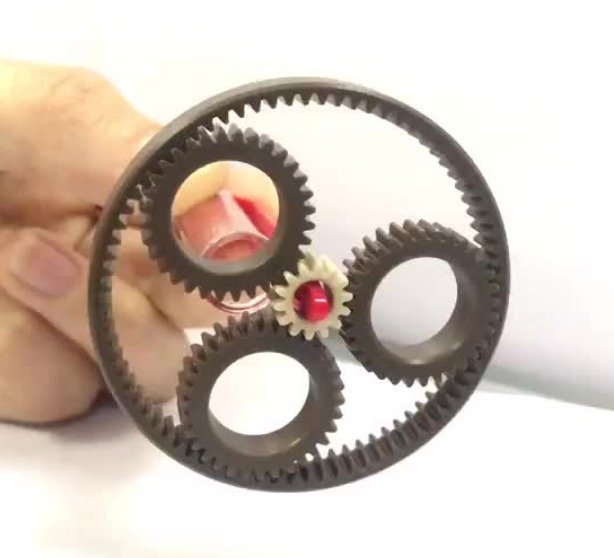
Machinery components: Gears, pulleys, bearings, and rollers. Bakelite's self-lubricating properties and wear resistance make it suitable for moving parts. In conveyor systems, bakelite rollers support conveyed materials without deforming under load.
Tool handles: Low thermal conductivity keeps handles cool to the touch, even when tools are used in hot environments.
Chemical Processing Equipment
Bakelite round bars serve as rods, supports, and spacers in tanks, pipes, and reactors containing corrosive chemicals. Their chemical resistance extends equipment lifespan and reduces maintenance costs.
Consumer Goods
Appliance handles: Stoves, ovens, toasters. Heat resistance ensures handles remain safe to touch. Mechanical strength withstands gripping forces.
Musical instruments: Components in tuning mechanisms for guitars and other instruments. Bakelite's dimensional stability and machinability allow precise, reliable parts.
How Do You Choose the Right Bakelite Round Bar?
Step 1: Define Application Requirements
Start with a clear specification of:
- Mechanical loads: Tensile, compressive, or bending forces
- Temperature range: Maximum operating temperature
- Chemical exposure: Which chemicals the bar will contact
- Electrical requirements: Voltage levels, insulation needs
For a high-temperature, high-stress industrial application, glass-fiber reinforced bakelite is likely the best choice. For general-purpose electrical insulation, standard wood-flour filled material may suffice.
Step 2: Evaluate Material Quality
Look for suppliers who can provide:
- Test reports for tensile strength, heat resistance, and electrical properties
- Certifications (ISO, UL, etc.) as applicable to your industry
Inspect bars for visible defects:
- Cracks or voids
- Uneven surfaces
- Inconsistent color or texture
High-quality bakelite should have uniform appearance and feel throughout.
Step 3: Consider Cost-Effectiveness
Bakelite round bars are generally cost-effective compared to high-performance engineering plastics. However, prices vary based on:
- Filler type (glass fibers cost more than wood flour)
- Manufacturing process (precision molding adds cost)
- Supplier and volume
Consider lifecycle cost—not just purchase price. A slightly more expensive, high-quality bar may last longer and perform better, reducing replacement costs.
What Are the Limitations?
Brittleness
Bakelite is rigid but brittle. It does not flex under impact. Thin sections or sharp corners can chip or crack if subjected to sudden force. Design accordingly—avoid sharp internal corners and ensure adequate wall thickness.
Moisture Absorption
While bakelite resists many chemicals, it can absorb moisture over time. In high-humidity environments, this may cause slight dimensional changes. For precision applications, consider this factor in design tolerances.
Limited Color Options
Bakelite's natural color is brown. While dyes can be added, the color range is narrower than modern thermoplastics. For applications where appearance is critical, confirm color availability.
Yigu Technology's Perspective
At Yigu Technology, we have worked with bakelite round bars across diverse applications—from electrical insulators to industrial machinery components. Our experience confirms that bakelite remains a valuable material where heat resistance, electrical insulation, and mechanical strength are required.
A recent project involved a custom transformer manufacturer needing insulating rods for high-voltage equipment. The requirements were demanding:
- Continuous operation at 160°C
- Dielectric strength above 20 kV/mm
- Dimensional stability under load
We supplied glass-fiber reinforced bakelite round bars machined to precise tolerances. The material met all electrical and thermal requirements, and the client reported successful integration with no field failures after 18 months of operation.
We believe bakelite's value lies in its predictable performance. In applications where failure is not an option—electrical safety, high-temperature environments—bakelite delivers reliability that many modern plastics cannot match.
Conclusion
Bakelite round bars combine mechanical strength, heat resistance, electrical insulation, and chemical durability in a single material. They serve industries ranging from electrical and electronics to mechanical engineering and consumer goods. Understanding their properties—tensile and compressive strength, thermal limits, electrical characteristics—helps you select the right grade for your application. While bakelite has limitations in impact resistance and moisture sensitivity, its strengths make it indispensable where reliability under heat and electrical stress is required. When specified correctly, bakelite round bars deliver decades of dependable service.
FAQ About Bakelite Round Bars
What is a bakelite round bar used for?
Bakelite round bars are used as electrical insulators in switches and transformers, mechanical components like gears and rollers, tool handles, appliance components, and chemical processing equipment where heat and chemical resistance are required.
What is the temperature limit for bakelite round bars?
Standard bakelite round bars withstand continuous temperatures up to 150–200°C. Glass-fiber reinforced grades perform at the higher end of this range. Beyond these temperatures, the material may soften or degrade.
Are bakelite round bars waterproof?
Bakelite resists moisture better than many materials but can absorb small amounts over prolonged exposure. In high-humidity environments, consider this factor for precision applications. For continuous water immersion, alternative materials may be more suitable.
Can bakelite round bars be machined?
Yes. Bakelite machines well using standard metalworking equipment. Use sharp tools and avoid excessive speeds to prevent heat buildup. Wood-flour filled grades machine more easily than glass-fiber reinforced grades.
Contact Yigu Technology for Custom Manufacturing
Need bakelite round bars tailored to your specifications? Yigu Technology provides custom machining and fabrication of bakelite and other engineered materials. From electrical insulators to industrial components, we help you select the right material and produce parts that meet your performance requirements. Contact us today to discuss your project.