Introduction
You pick up your smartphone. The camera focuses instantly. You press print. Paper feeds smoothly. You drive your car. The window rolls down quietly. Behind each of these actions, small plastic gear wheels are at work.
These miniature components—often just a few millimeters to a few centimeters in diameter—transfer motion and power in countless devices. They adjust speed. They multiply torque. They ensure precision.
Unlike metal gears, plastic gears offer unique advantages. They are lightweight, quiet, corrosion-resistant, and often self-lubricating. They can be molded into complex shapes at low cost. And they perform reliably for years in demanding applications.
But not all plastic gears are the same. Different materials suit different needs. This article covers the types, applications, and selection criteria for small plastic gear wheels. You will learn how to choose the right gear for your project.
What Are Small Plastic Gear Wheels?
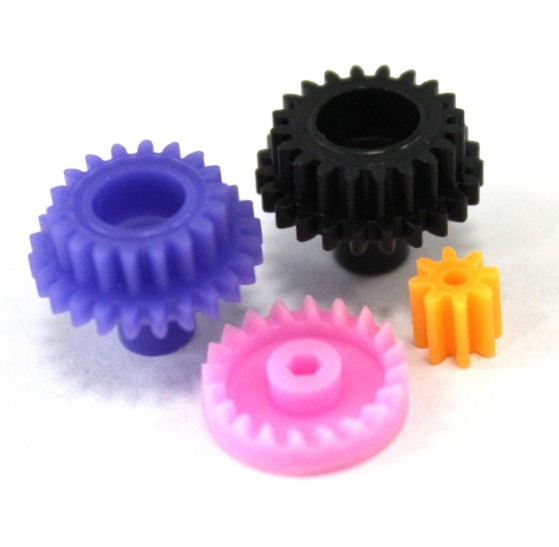
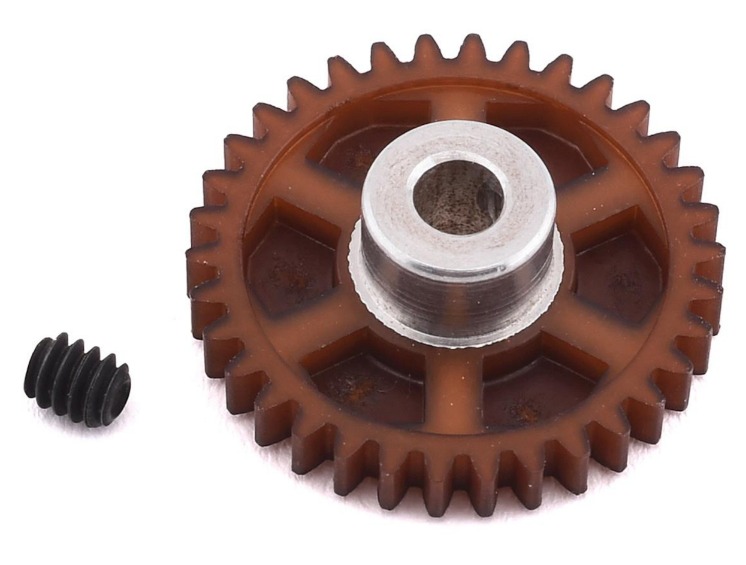
Small plastic gear wheels are toothed mechanical components made from engineered polymers. They mesh with other gears to transmit rotational motion and power.
Their size typically ranges from a few millimeters to several centimeters in diameter. This small scale makes them ideal for applications where space is limited.
Common characteristics:
- Lightweight: Much lighter than metal equivalents
- Corrosion-resistant: Do not rust
- Low friction: Many are self-lubricating
- Quiet operation: Plastic dampens vibration
- Cost-effective: Injection molding enables high-volume production
What Types of Small Plastic Gear Wheels Exist?
POM Plastic Gears
Polyoxymethylene (POM) , also known as acetal, is one of the most widely used gear materials.
| Property | Benefit |
|---|---|
| Excellent wear resistance | Long-term operation with minimal tooth wear |
| Outstanding dimensional stability | Maintains accurate tooth profiles under temperature and humidity changes |
| Low friction | Smooth, efficient operation |
In automotive power window mechanisms, POM gears ensure quiet, reliable operation over thousands of cycles. In printers, they enable precise print head carriage movement for high-quality output.
Limitation: Slightly sensitive to high temperatures compared to some alternatives.
PBT Plastic Gears
Polybutylene terephthalate (PBT) is valued for high-temperature resistance.
| Property | Benefit |
|---|---|
| Withstands up to 150°C | Suitable for hot environments like engine compartments |
| High strength and toughness | Handles moderate to high loads |
| Good chemical resistance | Performs in demanding industrial settings |
In automotive transmission components, PBT gears transfer power reliably. In industrial pumps and compressors, they operate under demanding conditions.
Limitation: Less impact-resistant than nylon.
Nylon Resin Plastic Gears
Nylon (polyamide) offers high toughness and self-lubricating properties.
| Property | Benefit |
|---|---|
| High toughness | Absorbs shock and impact without breaking |
| Self-lubricating | Operates with little or no external lubrication |
| Good wear resistance | Long service life |
In power tools, nylon gears absorb the sudden loads and vibrations of operation. In washing machines, they help rotate the drum reliably. In conveyor systems, they drive belts with minimal maintenance.
Limitation: Lower dimensional stability than POM; absorbs moisture.
PET Plastic Gears
Polyethylene terephthalate (PET) offers transparency and barrier properties.
| Property | Benefit |
|---|---|
| High transparency | Allows visual inspection of gear operation |
| Excellent barrier properties | Resists moisture and chemicals |
| Good dimensional stability | Consistent performance |
In packaging machines, PET gears let operators monitor movement while resisting humid conditions. In medical devices, they provide clean, moisture-resistant operation.
Limitation: Lower mechanical strength than other engineering plastics.
PC Plastic Gears
Polycarbonate (PC) delivers high strength and outstanding impact resistance.
| Property | Benefit |
|---|---|
| High impact strength | Withstands sudden forces without cracking |
| Good dimensional stability | Maintains accuracy under load |
| Transparent options available | Allows visual monitoring |
In automotive safety systems like airbag deployment mechanisms, PC gears function reliably in high-stress situations. In laptop cooling fans, they operate smoothly even if the device is dropped.
Limitation: Prone to scratching; can be sensitive to certain chemicals.
High-Performance Plastic Gears
High-performance plastics are engineered for extreme conditions.
| Property | Benefit |
|---|---|
| Exceptional chemical resistance | Performs in aggressive chemical environments |
| Wide temperature range | Operates from cryogenic to high temperatures |
| High strength-to-weight ratio | Ideal for demanding applications |
In aerospace applications, these gears withstand low temperatures and pressure differentials. In deep-sea exploration equipment, they resist seawater corrosion.
Limitation: Higher cost than standard engineering plastics.
How Do Different Gear Types Compare?
| Gear Type | Key Properties | Advantages | Limitations | Typical Applications | Relative Cost |
|---|---|---|---|---|---|
| POM | High wear resistance, dimensional stability | Long-lasting, accurate | Slightly sensitive to high temperatures | Automotive, electronics | Medium |
| PBT | High-temperature resistance, good mechanical properties | Suitable for high-heat, strong | Less impact-resistant | Engine components, industrial machinery | Medium-High |
| Nylon | High toughness, self-lubricating | Shock-absorbing, low maintenance | Lower dimensional stability | Power tools, appliances | Low-Medium |
| PET | Transparency, barrier properties | Visible operation, moisture-resistant | Lower mechanical strength | Packaging, medical devices | Low |
| PC | High strength, impact-resistant | Durable in high-stress | Prone to scratching | Safety systems, electronics | Medium-High |
| High-Performance | Chemical resistance, wide temperature range | Suitable for extreme conditions | High cost | Aerospace, deep-sea equipment | High |
Where Are Small Plastic Gear Wheels Used?
In the Automotive Industry
Window-lifting systems rely on small plastic gears for smooth, quiet operation. POM gears in window regulators transfer motor rotation to linear motion. They operate reliably for thousands of cycles with self-lubricating properties.
Windshield wiper mechanisms use plastic gears to control speed and movement. Different wiping frequencies—slow for light rain, fast for heavy downpours—are achieved through gear ratios. These gears withstand vibrations and temperature variations in the engine compartment.
In Consumer Electronics
Printers depend on small plastic gears for paper feeding and print head movement. POM gears in paper-feeding mechanisms grip and move paper precisely. In print head carriages, gears enable even ink distribution across the page.
Digital cameras use small plastic gears in autofocus and zoom mechanisms. Nylon gears drive lens movement during autofocus, positioning lens elements with high precision. Zoom gears change focal length for wide-angle or telephoto shots.
Electric toys rely on small plastic gears for movement. In remote-controlled cars, gears transmit motor power to wheels, changing speed and direction. Inexpensive yet durable plastics like PP or PE meet toy safety standards.
In Medical Devices
Infusion pumps use small plastic gears to precisely control fluid flow rates. These gears drive pistons or peristaltic mechanisms. Accuracy is critical—even small deviations can affect patient safety. Biocompatible plastics withstand sterilization processes.
Surgical instruments use small plastic gears in micro-motors. In dental handpieces, gears help achieve high-speed rotation of drill bits. Lightweight yet strong materials handle the torque required for surgical procedures.
In Industrial Equipment
Conveyor systems use small plastic gears to drive rollers. PBT gears handle continuous operation and moderate loads. They resist dust and debris common in industrial environments.
Small motors in industrial machinery use plastic gears for speed reduction and torque multiplication. In robotic arms, gear sets convert high-speed, low-torque motor output into low-speed, high-torque motion for precise arm movement.
How Do You Choose the Right Small Plastic Gear?
What Application Factors Matter?
Application scenario: Medical devices require biocompatible materials. High-speed applications need low inertia and high wear resistance.
Load and torque: Calculate maximum load. High loads may require stronger plastics like PBT or glass-filled nylon.
Operating speed: High-speed applications demand smooth operation and low vibration. POM excels here.
Environmental conditions: Temperature, humidity, and chemical exposure all affect material selection.
| Condition | Recommended Materials |
|---|---|
| High temperature | PBT, high-performance plastics |
| Moisture/humidity | PET, POM |
| Chemical exposure | High-performance plastics, PBT |
| Impact risk | Nylon, PC |
| Precision required | POM |
What Manufacturing Considerations Matter?
Injection molding is the primary process for small plastic gears. It allows:
- High-volume production
- Complex tooth geometries
- Tight dimensional tolerances
- Consistent quality
For custom gears, work with suppliers who understand material properties and can achieve required precision.
What Does Yigu Technology Offer?
Yigu Technology specializes in custom small plastic gear wheels. We combine advanced manufacturing with strict quality control.
Our approach:
- Material selection: We help you choose the right plastic for your application
- Precision manufacturing: Accurate tooth profiles ensure smooth operation
- Quality assurance: Each gear meets your specifications
- Customization: Unique designs, sizes, and materials
We serve automotive, electronics, medical device, and industrial equipment industries.
Conclusion
Small plastic gear wheels are essential components in countless devices. Their light weight, quiet operation, corrosion resistance, and cost-effectiveness make them superior to metal in many applications.
Material selection is critical:
- POM: Wear resistance and dimensional stability for precision applications
- PBT: High-temperature resistance for demanding environments
- Nylon: Toughness and self-lubrication for shock-prone applications
- PET: Transparency for visual monitoring
- PC: Impact strength for high-stress situations
- High-performance plastics: Extreme conditions
Match the material to your application requirements. Consider load, speed, temperature, and environment. Choose a manufacturing partner with expertise in precision gear production.
With the right material and design, small plastic gear wheels deliver reliable, long-lasting performance across industries.
FAQ
Can small plastic gears replace metal gears in all applications?
No. Metal gears have higher strength and withstand higher loads and torques. In heavy-duty industrial machinery, metal is essential. Metal also has better heat resistance for high-temperature environments like automotive engines. However, plastic gears offer advantages in lightweight, low friction, corrosion resistance, and quiet operation—making them the preferred choice for many applications where these properties are critical.
How to choose the right small plastic gear for my project?
Consider application scenario—medical devices need biocompatible materials. Consider load and torque—higher loads may require PBT or glass-filled materials. Consider operating speed—high speeds favor POM for smooth operation. Consider environmental conditions—temperature, humidity, and chemical exposure all affect material choice. Calculate your requirements and match them to material properties.
What is the most common material for small plastic gears?
POM (acetal) is one of the most common materials due to its excellent balance of wear resistance, dimensional stability, and low friction. It works well in automotive, electronics, and precision applications. Nylon is also widely used for its toughness and self-lubricating properties, especially in power tools and appliances.
Contact Yigu Technology for Custom Manufacturing
Need custom small plastic gear wheels for your application? Yigu Technology specializes in precision gear manufacturing. We work with POM, nylon, PBT, PET, PC, and high-performance plastics. Our team helps you select the right material and achieve the precision you need. Contact us today to discuss your project requirements.