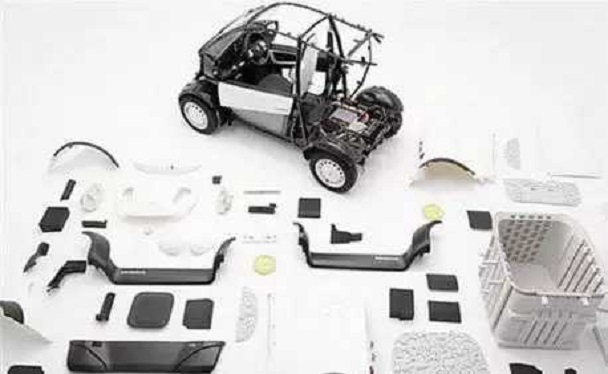
From aerospace to healthcare, 3D printing is transforming how products are made. This guide introduces the leading companies driving this revolution—and what makes them essential partners for modern manufacturing.
Introduction
The 3D printing industry has exploded over the past decade. What started as a tool for quick prototypes now produces end-use parts for airplanes, medical implants, and customized consumer goods. But with hundreds of companies in the space, which ones actually matter?
I've spent years at Yigu Technology watching this industry evolve, partnering with key players, and helping clients navigate the complex world of additive manufacturing. The companies profiled here aren't just successful—they're shaping where the entire industry goes next.
This guide covers the top 3D printing companies you need to know, what makes each unique, and how they're driving innovation, efficiency, and new manufacturing possibilities.
Why Does 3D Printing Matter in Manufacturing?
Before diving into specific companies, let's understand why 3D printing has become essential.
What Makes 3D Printing Different?
3D printing (or additive manufacturing) builds objects layer by layer from digital files. This contrasts sharply with subtractive manufacturing—methods like CNC machining that cut away material from solid blocks.
The differences matter:
- Less waste – Additive uses only the material needed for the part
- More complexity – Internal channels, lattices, and organic shapes become possible
- No tooling – No molds, dies, or fixtures needed for most parts
- Customization – Each part can be different at no extra cost
A part that might take months to tool up for injection molding can print tomorrow.
How Is It Changing Manufacturing?
The impact goes beyond just making parts differently:
Production flexibility – Companies can run small batches economically. No need to order thousands of parts to justify tooling costs.
Supply chain resilience – Print parts where they're needed instead of shipping from low-cost countries. During the pandemic, this kept production lines running when traditional supply chains failed.
Sustainability – Less waste, lighter parts (saving fuel in transportation), and local production reduce environmental impact.
Speed to market – Prototype today, test tomorrow, iterate next week. Development cycles shrink from months to days.
What Makes a 3D Printing Company "Top"?
Not all 3D printing companies are created equal. The ones shaping manufacturing share certain traits:
- Technology leadership – They develop the core technologies others use
- Market reach – They serve major industries with real production needs
- Innovation track record – They consistently push what's possible
- Material capabilities – They work with engineering materials, not just hobbyist plastics
- Production focus – They address manufacturing, not just prototyping
The companies below meet these criteria. Each has shaped the industry in meaningful ways.
Stratasys Ltd.: The Pioneer That Keeps Innovating
Who Are They?
Stratasys Ltd. is one of the oldest and most established names in 3D printing. Founded in 1989, they've been at this longer than almost anyone. They're headquartered in both Minnesota (USA) and Israel—a testament to their global reach.
What Technologies Do They Lead?
Stratasys dominates two key technologies:
Fused Deposition Modeling (FDM) – This is the technology most people know: plastic filament melts and deposits layer by layer. But Stratasys's FDM machines are a far cry from desktop hobby printers. Their industrial systems use engineering-grade thermoplastics that produce parts tough enough for real use.
PolyJet Technology – Think of this as inkjet printing for 3D objects. It jets tiny droplets of photopolymer resin and cures them instantly with UV light. The results? Incredibly detailed parts with smooth surfaces. You can even print multiple materials and colors in a single part.
Where Do They Excel?
Material variety – Stratasys offers hundreds of materials, from standard plastics to high-temperature composites to biocompatible medical grades. Need a part that simulates the flexibility of rubber? They have it. Need something that withstands auto assembly line heat? They have that too.
Precision and reliability – Their machines are workhorses. When you need parts that are accurate and consistent run after run, Stratasys delivers.
Industry focus – They've deeply integrated into aerospace, automotive, medical, and consumer goods. Their customers include Boeing, Ford, Medtronic, and countless others.
Real-World Impact
A medical device company needed to produce surgical guides for a new procedure. Each guide had to fit a specific patient's anatomy perfectly. Traditional methods would require custom machining for every guide—prohibitively expensive.
Using Stratasys's PolyJet technology, they now print patient-specific guides directly from CT scan data. Each guide costs a fraction of machined versions, and patients get better-fitting, more effective treatment.
Why They're Top
Stratasys combines longevity with continuous innovation. They didn't rest on early success—they kept developing new technologies, acquiring complementary companies, and expanding what's possible. For manufacturers who need reliable, production-ready 3D printing, Stratasys remains a go-to choice.
3D Systems Corporation: The Original Innovator
Who Are They?
3D Systems Corporation has an even longer history than Stratasys—founded in 1986 by Chuck Hull, who invented stereolithography (SLA). If anyone can claim to have started the 3D printing industry, it's this company.
What Technologies Do They Lead?
3D Systems offers an unusually broad portfolio:
Stereolithography (SLA) – Their founding technology uses UV lasers to cure liquid resin into solid parts. SLA produces incredibly detailed parts with smooth surfaces—perfect for applications where appearance matters.
Selective Laser Sintering (SLS) – They offer industrial SLS systems that fuse powder materials into strong, functional parts without needing supports.
Metal Printing – Their direct metal printers produce dense, high-performance parts for aerospace, medical, and industrial applications.
Figure 4 Technology – This newer approach uses projection imaging to cure entire layers at once. It's dramatically faster than traditional SLA, opening new possibilities for production volumes.
Where Do They Excel?
Integrated solutions – 3D Systems doesn't just sell printers. They offer software, materials, and services that cover the entire workflow from design to production.
Healthcare focus – They've built deep expertise in medical applications, from surgical planning models to custom implants to dental restorations. Their work with FDA-approved materials and validated processes matters in regulated industries.
Material science – They develop their own materials optimized for specific applications, not just generic plastics.
Real-World Impact
An aerospace supplier needed to produce complex ducting for a new aircraft. Traditional fabrication required multiple parts welded together—heavy and prone to leak points. Using 3D Systems' metal printing technology, they now produce the duct as a single piece. It's 40% lighter, has no welds to fail, and meets all performance requirements.
Why They're Top
3D Systems combines historical significance with ongoing innovation. They're not living on past glory—they continue developing new technologies and expanding into production applications. Their breadth of offerings means manufacturers can often find multiple solutions within their portfolio, simplifying vendor management.
Desktop Metal Inc.: The Metal Printing Disruptor
Who Are They?
Desktop Metal Inc. is the newcomer on this list, founded in 2015. But they've disrupted metal 3D printing in ways that make them impossible to ignore.
What Technologies Do They Lead?
Binder Jetting is their core technology. Here's how it works:
- A roller spreads thin layer of metal powder
- Inkjet printheads deposit binder material in the shape of the part
- Another powder layer spreads, and the process repeats
- The "green" part goes to a furnace where binder burns out and metal particles sinter together
This approach offers several advantages:
- Speed – Much faster than laser-based metal printing
- Cost – Lower equipment and material costs
- Quality – Dense parts with good mechanical properties
- Scale – They've designed systems for mass production, not just prototypes
Where Do They Excel?
Production volume – While most metal printing targets low volumes, Desktop Metal aims for thousands or tens of thousands of parts. Their production systems run continuously, outputting parts by the trayful.
Material range – They offer stainless steels, tool steels, titanium, copper, and more. New materials continue to expand their capabilities.
Accessibility – They've worked hard to make metal printing more accessible, from office-friendly systems to lower-cost entry points.
Real-World Impact
An automotive supplier needed thousands of small metal brackets for a new vehicle program. Traditional machining would waste significant material and require multiple operations. Investment casting would require expensive tooling and long lead times.
Desktop Metal's binder jetting produced the brackets at volumes the supplier needed, with minimal waste and no tooling investment. The parts met all specifications at a lower cost than either alternative.
Why They're Top
Desktop Metal recognized that metal printing's biggest limitation was speed. By tackling this head-on with binder jetting technology, they've opened metal additive manufacturing to higher-volume applications. Their focus on production rather than prototyping positions them perfectly as 3D printing moves into mainstream manufacturing.
How Do These Companies Compare?
| Company | Founded | Key Technologies | Strengths | Best For |
|---|---|---|---|---|
| Stratasys | 1989 | FDM, PolyJet | Material variety, reliability | Plastic parts, multi-material, production |
| 3D Systems | 1986 | SLA, SLS, Metal, Figure 4 | Breadth, healthcare expertise | Detailed parts, medical, integrated solutions |
| Desktop Metal | 2015 | Binder Jetting | Speed, volume, cost | Metal parts at production scale |
What Other Companies Deserve Mention?
While these three lead the pack, several others shape the industry.
HP Inc.
HP entered 3D printing with their Multi Jet Fusion technology, which uses arrays of printheads to deposit fusing and detailing agents across powder beds. The result? Fast printing with excellent material properties. HP's scale and distribution power make them a major force.
Markforged
Markforged specializes in continuous fiber reinforcement—embedding carbon fiber, fiberglass, or Kevlar into plastic parts. The resulting parts rival metal in strength at a fraction of the weight. They've made industrial-strength composite printing accessible.
EOS
EOS (Electro Optical Systems) has been in industrial 3D printing since 1989. They focus on high-end polymer and metal laser sintering for demanding applications. If you need production-quality parts for aerospace or medical, EOS machines deliver.
Formlabs
Formlabs brought desktop SLA to the masses with their Form series printers. They've expanded into SLS and material development, making professional-quality printing accessible to smaller businesses and designers.
How Do You Choose the Right Partner?
With so many options, how do you decide?
Match Technology to Application
Different problems need different tools:
- Detailed plastic parts – SLA (3D Systems, Formlabs)
- Strong functional plastics – FDM (Stratasys) or SLS (3D Systems, EOS)
- Multi-material or color – PolyJet (Stratasys)
- Production metal parts – Binder Jetting (Desktop Metal) or laser sintering (3D Systems, EOS)
- Composite parts – Continuous fiber (Markforged)
Consider Your Volume
How many parts do you need?
- Prototypes (1-10) – Almost any technology works
- Short runs (10-100) – Laser-based methods are cost-effective
- Production (100-10,000+) – Binder jetting or Multi Jet Fusion start to make sense
Evaluate Total Cost
Printer price tells only part of the story. Consider:
- Material costs per part
- Post-processing time and equipment
- Labor for operation and finishing
- Facility requirements (ventilation, power, space)
Think About Support
The best technology fails without good support. Evaluate:
- Training offered
- Technical support availability
- Service network in your region
- User community for shared knowledge
What Does the Future Hold?
The companies profiled here will shape where 3D printing goes next.
Faster Production
All three companies push for speed. Desktop Metal's binder jetting, 3D Systems' Figure 4, and Stratasys's continuous improvements all aim to make additive manufacturing competitive with traditional methods on throughput.
Better Materials
Material development accelerates. Expect more engineering materials, better composites, and materials designed specifically for additive processes rather than adapted from other uses.
Larger Volumes
The line between prototyping and production blurs. As speeds increase and costs decrease, more companies will use 3D printing for production runs, not just one-offs.
Industry Integration
3D printing becomes just another manufacturing process, integrated into factories alongside CNC machines, injection molding, and casting. The question won't be "should we 3D print this?" but "which process makes most sense for this part?"
Conclusion
The top 3D printing companies aren't just selling machines—they're reshaping how manufacturing works. Stratasys brings decades of experience and material expertise to plastic applications. 3D Systems combines historical leadership with ongoing innovation across multiple technologies. Desktop Metal tackles metal printing's biggest limitation—speed—opening new possibilities for production volumes.
Each has earned their place through technology leadership, market impact, and commitment to advancing what's possible. For manufacturers looking to adopt or expand additive manufacturing, these companies offer proven solutions backed by real expertise.
The broader industry includes other important players—HP, Markforged, EOS, Formlabs—each contributing unique capabilities. The right choice depends on your specific needs: materials, volumes, part complexity, and budget all matter.
What's clear is that 3D printing has moved beyond prototyping. It's now a production technology that's transforming industries. The companies leading this transformation will continue shaping manufacturing for years to come.
At Yigu Technology, we've worked with many of these companies and helped clients navigate the options. The key insight? Start with your application, not the technology. Define what you need to make, then find the partner and process that delivers.
Frequently Asked Questions
What is 3D printing?
3D printing (additive manufacturing) creates objects by adding material layer by layer from digital files. Unlike traditional subtractive methods that cut away material, 3D printing uses only the material needed for the part, minimizing waste and enabling complex designs.
How does 3D printing impact manufacturing?
It streamlines production by eliminating tooling, reduces waste through material efficiency, enables rapid prototyping and customization, shortens supply chains through local production, and allows geometries impossible with traditional methods.
Which industries use 3D printing most?
Aerospace leads in adoption, followed by medical, automotive, and industrial manufacturing. Consumer goods, dental, and jewelry also use it extensively. Any industry needing complex, customized, or low-volume parts benefits.
What's the difference between FDM, SLA, and SLS?
FDM melts and deposits plastic filament—good for functional parts. SLA cures liquid resin with light—excellent for detail and surface finish. SLS fuses powder with laser—strong parts without supports. Each suits different applications.
Can 3D printing replace traditional manufacturing?
Not entirely—at least not yet. It excels for complex, customized, or low-volume parts. Traditional methods remain more cost-effective for simple, high-volume production. The future is hybrid—using each method where it makes sense.
Is metal 3D printing expensive?
Yes, compared to plastic printing. Equipment costs $100,000 to over $1 million. Materials run $50-500 per kilogram. But for complex parts, short runs, or applications where weight savings justify cost, it can be economical.
What's binder jetting?
Binder jetting deposits liquid binder onto powder layers, gluing particles together. The "green" part then goes to a furnace where binder burns out and metal sinters into solid form. It's faster than laser-based metal printing and suits higher volumes.
How do I choose between these companies?
Match their strengths to your needs. Stratasys excels at plastic parts with material variety. 3D Systems offers breadth across technologies and healthcare expertise. Desktop Metal leads in production-scale metal printing. Consider your application, volumes, and budget.
Contact Yigu Technology for Custom Manufacturing
Need help navigating the 3D printing landscape? At Yigu Technology, we combine deep industry knowledge with practical manufacturing experience. Whether you're exploring which technology fits your needs, need help with design optimization, or want a partner for production runs, we're here to help. [Contact us today] to discuss your project—we'll help you choose the right approach and deliver parts that meet your specifications.