Introduction
Imagine a house built in 24 hours. Walls rising layer by layer, no crew of dozens, no mountains of waste. Just a printer, following a digital design, extruding concrete exactly where needed.
This isn't science fiction. It's happening now.
3D printing in construction—also called additive manufacturing for buildings—uses massive printers to create structures from digital models. Companies like ICON in Texas have already printed dozens of homes. China has printed bridges. The Netherlands has printed office buildings.
But is this really the future? Or just a cool technology looking for problems to solve?
At Yigu technology, we've watched construction 3D printing evolve. This guide explores how it works, where it's being used, and whether it will transform how we build.
What Is 3D Printing Technology in Construction?
The Basic Idea: Printing Buildings Like Products
3D printing in construction applies the same principles as desktop 3D printing, but at building scale.
The process is straightforward:
- Design a building in CAD software—every wall, every curve, every opening
- Send the digital model to a construction-scale printer
- Print the structure layer by layer, extruding concrete or other materials
- Finish with traditional elements—roof, windows, doors, utilities
Layer thickness typically ranges from a few millimeters to several centimeters, depending on the printer and material.
How Construction Printers Are Different
Construction 3D printers aren't just bigger desktop machines. They're completely different:
- Scale: Printers that span entire building footprints or robotic arms on tracks
- Materials: Concrete-like mixtures, not plastic filament or resin
- Speed: Designed to build fast—walls in hours, not days
- Environment: Operate outdoors, in weather, on actual construction sites
Some systems use gantry-style printers—a frame that moves across the build area. Others use robotic arms on tracks, able to reach any point in the structure.
From Digital Model to Physical Building
The workflow mirrors other 3D printing:
Design phase: Architects create detailed 3D models using specialized software. Every curve, opening, and structural element is defined digitally.
Preparation: The model is sliced into layers. Toolpaths are generated for the printer. Material mixtures are prepared.
Printing: The printer extrudes material layer by layer. Walls rise. Complex geometries form. The structure emerges.
Finishing: After printing, traditional construction completes the building—roofing, windows, doors, electrical, plumbing.
Where Is 3D Printing Being Used in Construction?
Residential Construction: Homes in Days
Residential is where 3D printing has made the biggest splash.
ICON, based in Texas, has printed dozens of homes. Their approach:
- Print walls in 24-48 hours
- Use a proprietary concrete mixture
- Create affordable housing for communities in need
- Reduce construction time from months to weeks
A single-family home that traditionally takes 4-6 months can be printed in a matter of days. The shell goes up fast. Finishing work continues at normal pace, but the overall timeline shrinks dramatically.
Benefits for housing:
- Speed: Get families into homes faster
- Cost: Reduce labor and material waste
- Design flexibility: Curved walls, organic shapes at no extra cost
- Durability: Printed concrete is strong and long-lasting
Commercial Construction: Offices and Retail
Commercial projects push the technology further.
In the Netherlands, the "3D-Printed Building" project created office spaces with complex, organic designs impossible with traditional methods. Interior walls curve. Facades flow. Spaces feel unique.
Advantages for commercial construction:
- Customization: Each space can be different without cost penalty
- Speed: Faster completion means earlier occupancy
- Aesthetics: Designs that stand out attract tenants and customers
Infrastructure: Bridges and Roads
Infrastructure applications focus on efficiency and durability.
In China, several cities have printed pedestrian bridges. The process:
- Print bridge components off-site
- Transport to location
- Assemble on-site with minimal disruption
Road construction experiments use 3D-printed concrete for custom drainage channels and skid-resistant surfaces.
Benefits:
- Minimal traffic disruption during construction
- Optimized structures for load and durability
- Reduced waste compared to traditional methods
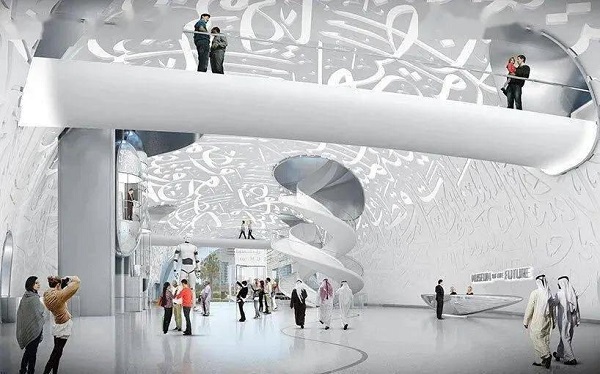
Artistic and Cultural Buildings
3D printing enables architectural expression impossible with conventional techniques.
Museums with intricate patterned walls. Cultural centers that reflect local heritage through organic forms. Art installations that push structural boundaries.
The technology frees architects from the constraints of straight lines and right angles. If you can model it, you can print it.
What Are the Advantages of 3D Printed Construction?
Speed That Changes Everything
Traditional construction is slow. Framing, sheathing, insulating, drywall—each step takes time and labor.
3D printing compresses the timeline dramatically:
- Walls that take weeks to frame can print in hours
- A house shell that takes months can print in days
- Complex curved walls that require custom formwork print as easily as straight ones
Real example: ICON's 3D-printed homes go from bare slab to finished walls in 24-48 hours. The same project with traditional methods would take weeks just for framing.
Cost Savings Through Efficiency
Construction costs keep rising. Labor is expensive. Materials are wasted. Schedules slip.
3D printing addresses all three:
- Labor: One printer with a small crew replaces dozens of workers
- Materials: Only what's needed gets used—no waste from cut studs, excess concrete, or mistakes
- Schedule: Faster completion means lower carrying costs
For affordable housing projects, these savings can make the difference between feasible and impossible.
Design Freedom Without Cost Penalty
In traditional construction, curves cost extra. Complex geometry requires skilled labor, custom formwork, and expensive materials.
With 3D printing, complexity is free. A curved wall takes the same time and cost as a straight one. Organic shapes, intricate patterns, flowing forms—all emerge from the digital design without added expense.
This opens new possibilities for:
- Architectural expression without budget constraints
- Site-specific designs that respond to context
- Custom homes tailored to individual preferences
Sustainability and Reduced Waste
Construction waste is a massive problem—30% of landfill material in some estimates. Traditional methods generate waste from cut materials, packaging, and mistakes.
3D printing is inherently more sustainable:
- Exact material usage: Only what's needed gets used
- Less waste: No cut-offs, no excess orders
- Local materials: Many printers use locally-sourced mixtures
- Less transport: Print on-site, eliminate delivery of pre-fabricated components
For environmentally conscious projects, these benefits matter.
Strength and Durability
Printed concrete structures are strong. Really strong.
The continuous extrusion and layer bonding creates monolithic structures with no weak joints. Reinforcement can be added during printing—rebar placed as walls rise. The result is a building that lasts.
Testing shows 3D-printed walls can withstand significant loads. For housing, this means safe, durable homes.
What Are the Challenges?
Regulatory Hurdles
Building codes weren't written for 3D-printed structures. Every project requires approvals that can take longer than the construction itself.
Key questions regulators ask:
- How do you verify structural integrity?
- What about fire resistance?
- How do you inspect hidden features?
- Does the material meet standards?
Until codes catch up, each project faces case-by-case review.
Material Limitations
Current materials are mostly concrete-based. While this works for walls, it doesn't address:
- Roofs (still need traditional construction)
- Openings (windows and doors need framing)
- Finishes (printed surfaces are rough)
- Insulation (may need separate installation)
Research continues on new materials—insulating foams, fiber-reinforced mixtures, sustainable alternatives. But for now, printed structures still need traditional finishing.
Size and Transportation
Construction printers are massive. Moving them between sites takes planning. Some systems are designed to be disassembled and reassembled. Others are built on-site and stay there.
For widespread adoption, printers need to become more portable or more projects need to cluster.
Skilled Workforce
Operating construction 3D printers requires new skills:
- Digital modeling and file preparation
- Printer operation and troubleshooting
- Material science for concrete mixtures
- Quality control for printed structures
The workforce doesn't exist yet. It must be trained.
Cost of Equipment
Construction-scale printers aren't cheap. Industrial systems run hundreds of thousands to millions of dollars. For most construction companies, this means partnering with specialists rather than buying their own.
As with all technology, costs will drop. But for now, it's a significant barrier.
How Does 3D Printed Construction Compare to Traditional?
| Factor | 3D Printed Construction | Traditional Construction |
|---|---|---|
| Speed | Walls in hours, shell in days | Weeks to months |
| Labor | Minimal on-site crew | Large crews needed |
| Material waste | Very low (exact usage) | High (cut-offs, mistakes) |
| Design complexity | Free—curves cost nothing | Curves cost extra |
| Regulatory path | Case-by-case, uncertain | Well-established |
| Material options | Limited (mostly concrete) | Extensive |
| Finishing required | Significant (roof, windows, utilities) | Part of process |
| Equipment cost | Very high | Spread across projects |
| Workforce | New skills needed | Existing trained workers |
3D printing wins on speed, labor, waste, and design freedom. Traditional methods win on established processes, material variety, and regulatory clarity.
What Does the Future Hold?
Technology Advancements
Printers will get:
- Faster: Higher deposition rates
- Larger: Capable of bigger structures
- More precise: Better surface finish
- More portable: Easier to move between sites
New Materials
Research focuses on:
- Insulating materials that print and insulate
- Fiber-reinforced mixtures for extra strength
- Sustainable materials using recycled content
- Self-healing concretes that repair cracks
- Multi-material printing combining structure and finish
Integration with Smart Building
3D-printed structures could embed:
- Sensors to monitor structural health
- IoT devices for smart building functions
- Utilities within printed walls
- Energy systems integrated into structure
Buildings that monitor themselves, adjust to conditions, and report problems before they fail.
Global Application Expansion
As costs drop and familiarity grows:
- Affordable housing in developing nations
- Disaster relief structures printed quickly
- Remote locations where traditional construction is difficult
- Custom homes for individual clients
- Commercial buildings with unique designs
Yigu Technology's Viewpoint
At Yigu technology, we see 3D printing in construction as a natural extension of the additive manufacturing principles we use every day. The same benefits—design freedom, material efficiency, customization—apply at building scale.
Where we see opportunity:
Material innovation: Construction needs materials that print well and perform. Our experience with plastics and metals positions us to collaborate on specialized mixtures—maybe composites that combine strength with insulation, or materials with unique properties.
Custom components: Even in printed buildings, some elements need precision manufacturing. We can produce custom fixtures, connection points, and architectural details that integrate with printed structures.
Hybrid approaches: The future isn't all-printed or all-traditional. It's combining both—printed shells with traditional interiors, printed components with conventional assembly, printed structures with prefabricated modules.
We're watching this space closely. Construction accounts for a huge portion of global resource use and waste. If 3D printing can make it faster, cheaper, and more sustainable, the impact will be enormous.
Conclusion
3D printing in construction offers compelling advantages:
- Speed: Walls in hours, shells in days
- Cost: Less labor, less waste, faster completion
- Design freedom: Complex geometries without extra cost
- Sustainability: Exact material usage, minimal waste
- Strength: Continuous, monolithic structures
Applications across residential, commercial, infrastructure, and cultural projects prove the technology works. Homes are already printed and occupied. Bridges carry pedestrians. Offices welcome workers.
Challenges remain—regulatory approval, material limitations, equipment cost, workforce training. But each year brings progress.
Is 3D printing the future of construction? Partially, yes. It won't replace all traditional methods. But for the right projects—affordable housing, complex designs, remote locations—it's already the best option.
The future isn't all-printed. It's hybrid—combining the best of both worlds. And that future is arriving faster than most people realize.
FAQ
What are the main materials used in 3D printing for construction?
Concrete is the most common—specially formulated mixtures that flow through printers but set quickly enough to support subsequent layers. Plastics (ABS, PLA) are used for smaller components and architectural details. Metals (stainless steel, aluminum, titanium) are used for high-strength applications like structural connections or custom fixtures. Research continues on sustainable materials using recycled content.
How does 3D printing technology ensure the structural integrity of buildings?
Several ways:
- Digital simulation before printing tests designs against loads
- Precise layer deposition ensures consistent material placement
- Continuous extrusion creates monolithic structures with no weak joints
- Reinforcement can be added during printing
- Post-print testing verifies strength
For critical applications, printed structures undergo the same engineering review as traditional buildings.
What is the future development trend of 3D printing technology in construction?
Key trends include:
- Faster, larger, more precise printers
- New materials (insulating, sustainable, self-healing)
- Smart building integration with embedded sensors
- Regulatory evolution as codes catch up
- Cost reduction making technology accessible
- Global expansion into developing markets
- Hybrid approaches combining printing with traditional methods
How much does a 3D-printed house cost?
Costs vary widely based on size, design, location, and finishing requirements. ICON's 3D-printed homes in Texas have been built for as little as $4,000 for the printed shell in their most affordable models. Complete homes with finishing, utilities, and interior work range from $100,000 to $300,000—comparable to or slightly less than traditional construction for equivalent size. Savings come primarily from speed and reduced labor, not from cheaper materials.
Can 3D printing build multi-story structures?
Yes, with some limitations. Single-story buildings are most common. Two and three-story structures have been demonstrated. Higher buildings require careful engineering for load distribution and may need traditional structural elements for upper floors. The technology is advancing—expect taller buildings over time.
Is 3D-printed construction environmentally friendly?
Generally, yes. Benefits include:
- Reduced material waste (exact usage, no cut-offs)
- Less transportation (print on-site with local materials)
- Lower energy in construction (faster, less equipment)
- Potential for sustainable materials (recycled content, low-carbon mixtures)
However, concrete production itself has environmental impact. The net benefit depends on specific materials and methods. Overall, 3D printing offers significant sustainability advantages over traditional construction.
Contact Yigu Technology for Custom Manufacturing
Interested in custom components for 3D-printed construction projects? Yigu technology specializes in precision manufacturing with plastics and metals.
We can help with:
- Custom fixtures and connection points
- Architectural details that integrate with printed structures
- Specialized components for unique requirements
- Prototype development for new construction applications
Contact us to discuss your project. Tell us what you're building and what you need. We'll help bring your vision to life.