Introduction
Walk into any modern factory or design studio today, and you will likely spot a 3D printer humming away in the corner. These machines produce objects that look like they came from science fiction—complex shapes, lightweight structures, and customized parts impossible to make any other way. But beyond the cool factor, 3D printed pieces are solving real problems across industries. From saving lives in hospitals to launching rockets into space, these additively manufactured parts are changing how we design and build things. This article explores what 3D printed pieces are, the materials that make them, and how different industries put them to work.
What Exactly Are 3D Printed Pieces?
Definition and Basic Principle
3D printed pieces are physical objects built layer by layer from a digital model. Unlike traditional manufacturing that cuts away material from a solid block, additive manufacturing adds material only where needed. Think of it like building a structure with LEGO bricks, one layer at a time, following a detailed blueprint.
The process starts with a CAD (Computer-Aided Design) file. Specialized software slices this digital model into hundreds or thousands of thin cross-sections. The 3D printer then reads these slices and deposits material accordingly. A typical FDM (Fused Deposition Modeling) printer melts plastic filament and extrudes it through a nozzle. The nozzle moves in X, Y, and Z directions, laying down each layer exactly where it belongs. Once a layer finishes, the build platform drops slightly, and the next layer begins. This repeats until the complete object emerges.
Materials Used in 3D Printing
The material you choose determines what your printed piece can do. Here are the main categories:
| Material Type | Common Examples | Key Properties | Typical Applications |
|---|---|---|---|
| Plastics | PLA, ABS, PETG | Lightweight, low cost, easy to print | Prototypes, consumer goods, toys |
| Engineering Plastics | Nylon, Polycarbonate | Strong, durable, heat resistant | Functional parts, tools, enclosures |
| Metals | Titanium, Aluminum, Stainless Steel | High strength, heat resistant, biocompatible | Aerospace components, medical implants, automotive parts |
| Ceramics | Alumina, Zirconia | Hard, heat resistant, chemically stable | High-temperature components, dental restorations, art pieces |
| Composites | Carbon fiber reinforced plastic | Extremely strong, lightweight | Sports equipment, high-performance automotive parts |
PLA (Polylactic Acid) deserves special mention. Made from renewable resources like corn starch, it is biodegradable and prints easily at low temperatures. Hobbyists love it for prototypes and decorative items. ABS (Acrylonitrile Butadiene Styrene) offers more durability and heat resistance. You will find it in functional parts like electronics housings and automotive components.
For demanding applications, metal 3D printing shines. Selective Laser Melting (SLM) uses a high-power laser to fuse metal powder particles together. Electron Beam Melting (EBM) does the same but inside a vacuum. These methods produce dense, fully solid metal parts ready for real-world use.
How Are 3D Printed Pieces Transforming Healthcare?
Custom Prosthetics That Actually Fit
Traditional prosthetics follow a one-size-fits-most approach. Patients often endure discomfort because sockets do not match their unique anatomy perfectly. 3D printed prosthetics change this entirely.
Consider a child named Sarah who needed a prosthetic arm. Children outgrow traditional prosthetics quickly, forcing families to buy expensive replacements every year. With 3D printing, clinicians scanned Sarah's residual limb, created a digital model, and printed a custom socket in days. When she grew, they simply scanned again and printed a new one at minimal cost. The result? Better comfort, improved function, and happy parents.
Non-profit organizations like e-NABLE take this further. They connect volunteers with 3D printers to children needing prosthetic hands. These devices cost under $50 in materials, compared to thousands for conventional versions.
Implants Designed for Your Body
3D printed implants represent another healthcare breakthrough. Traditional implants come in standard sizes. Surgeons sometimes compromise, choosing the closest fit rather than the perfect one.
With 3D printing, implants match the patient's exact anatomy. Take hip replacements. A patient needing a new hip joint receives a CT scan. Engineers convert this data into a 3D model of the pelvis and femur. They design an implant that fits perfectly, then print it in titanium using EBM technology.
The magic lies in the surface structure. 3D printed implants can include porous architectures that mimic natural bone. Bone cells grow into these pores, creating a biological bond between implant and body. Studies show patients with 3D printed porous hip implants recover 30% faster than those with traditional implants. The implant becomes part of the patient, not just a foreign object inside them.
Surgical Models That Save Lives
Before a complex surgery, would you want your surgeon to practice first? 3D printed surgical models make this possible.
Surgeons at a children's hospital faced a challenging case: a baby born with a rare heart defect. The anatomy was so unusual that standard surgical plans might fail. They printed a 3D model of the baby's heart using flexible materials that mimicked real tissue. The surgical team studied it, practiced incisions, and planned their approach. During the actual surgery, they completed the procedure in half the expected time. The baby recovered fully.
These models cost a few hundred dollars to print—cheap compared to the cost of surgical errors or prolonged operating room time.
Why Does Aerospace Rely on 3D Printed Pieces?
Lighter Parts Mean Better Fuel Efficiency
Every kilogram matters on an aircraft. Remove one kilogram, and an airline saves thousands in fuel over the plane's lifetime. 3D printed aerospace components achieve weight savings impossible with traditional methods.
Consider a bracket that holds hydraulic lines inside an aircraft wing. Traditionally, machinists carve it from solid aluminum, removing up to 90% of the material. With 3D printing, designers create organic shapes that place material only where stresses occur. The result? A bracket 40% lighter yet equally strong.
GE Aviation pioneered this with their LEAP engine fuel nozzle. Previously, nozzles required welding multiple parts together. The 3D printed version comes as a single piece, weighs 25% less, and is five times more durable. GE has printed over 100,000 of these nozzles, proving the technology at scale.
SpaceX and Rapid Iteration
SpaceX builds rockets faster than anyone else. A key reason? 3D printing.
The Raptor engine powering Starship contains numerous 3D printed components. Traditionally, casting a complex engine part takes months and requires expensive molds. If the design changes, you scrap the mold and start over. With 3D printing, engineers modify the CAD file and print a new version overnight.
SpaceX reduced production time for certain engine components by half. This speed lets them test, learn, and improve continuously. While competitors spend years developing an engine, SpaceX iterates in weeks.
Satellite Components That Maximize Payload
Small satellites called CubeSats must pack maximum function into minimum weight and volume. 3D printed satellite brackets and structures help achieve this.
A typical CubeSat bracket might combine multiple functions: mounting electronics, providing thermal paths, and withstanding launch vibrations. Designers optimize the shape to serve all purposes with minimal material. Some CubeSats now consist of 3D printed frames with embedded wiring channels, reducing assembly time and weight simultaneously.
How Does the Automotive Industry Use 3D Printed Pieces?
Custom Parts for Enthusiasts
Car culture thrives on personalization. Owners want their vehicles to stand out. 3D printed automotive parts deliver customization without breaking the bank.
A Porsche enthusiast wanted a unique intake manifold for his classic 911. Traditional fabrication would require machining from billet aluminum—expensive and wasteful. Instead, designers 3D printed the complex shape in aluminum using SLM technology. The resulting part featured internal channels optimized for airflow, boosting engine performance while looking spectacular.
Aftermarket companies now offer 3D printed components ranging from shift knobs to custom grilles. Small production runs become economical because 3D printing requires no tooling.
Rapid Prototyping That Speeds Development
Car manufacturers face intense pressure to launch new models faster. Rapid prototyping with 3D printing compresses development timelines dramatically.
Ford Motor Company uses 3D printing extensively in their product development process. Designers create prototypes of new parts in days instead of weeks. They test fit and function immediately, identify issues, and refine designs. A single prototype might go through five iterations in the time traditional methods would complete one.
This speed extends to wind tunnel testing. Scale models of new car designs print overnight and test the next day. Engineers analyze airflow, spot aerodynamic problems, and modify designs before committing to expensive production tooling.
Lightweighting for Electric Vehicles
Electric vehicles (EVs) battle range anxiety. Every kilogram saved extends range. 3D printed lightweight components help EV manufacturers achieve their targets.
A Tesla Model S contains numerous 3D printed brackets and mounts. These parts feature lattice structures—internal frameworks that provide strength without solid material. Weight savings add up across hundreds of components, contributing meaningfully to range.
Some manufacturers now experiment with 3D printed heat exchangers for battery cooling. The complex internal channels possible with additive manufacturing improve cooling efficiency, allowing batteries to operate at optimal temperatures longer.
What About Consumer and Industrial Products?
Customized Consumer Goods
From eyewear to footwear, 3D printed consumer products offer personalization at scale.
Adidas produced sneakers with 3D printed midsoles customized to each runner's foot. Sensors captured pressure data during running, and algorithms generated a midsole design optimized for that individual. While production costs limited this to premium products initially, prices continue dropping.
Hearing aids represent a quieter success story. Today, nearly all hearing aids contain 3D printed shells. Audiologists scan ear canals, designers create perfect-fit models, and printers produce them in biocompatible materials. Millions of people enjoy better comfort and sound quality because of 3D printing.
Industrial Tooling and Fixtures
Factories use countless jigs, fixtures, and tools. Traditionally, these require machining or outsourcing. 3D printed industrial tools save time and money.
A BMW assembly line needed a special tool for installing door seals. Machining it would take two weeks and cost thousands. They designed and printed it overnight for under $100. The tool worked perfectly and cost virtually nothing to replace if damaged.
This on-demand tooling extends to replacement parts for aging machinery. When a 30-year-old machine breaks a plastic handle, finding replacements proves difficult. 3D printing recreates the part from a digital scan, keeping production running.
What Challenges Limit 3D Printing Today?
Speed and Scale
3D printing excels at complexity but struggles with speed. Printing a single part might take hours. Mass production still favors traditional methods like injection molding, which produce parts in seconds once tooling exists.
However, hybrid approaches emerge. Some manufacturers print near-net shapes, then finish with high-speed machining. Others use 3D printing for tooling that enables traditional production.
Material Costs and Properties
Metal powders for 3D printing cost significantly more than raw metal stock. Titanium powder runs $300 to $600 per kilogram, while titanium bar stock costs under $100. This premium limits adoption to applications where 3D printing's advantages justify the cost.
Material properties also vary. While well-controlled processes produce parts matching wrought properties, inconsistencies can occur. Quality control requires rigorous testing and process monitoring.
Post-Processing Requirements
Most 3D printed pieces require finishing. Support structures need removal. Surfaces may need sanding or machining. Metal parts often require heat treatment to relieve stresses. These steps add time and cost.
How Does Yigu Technology Approach 3D Printed Pieces?
As a non-standard plastic and metal products custom supplier, Yigu Technology views 3D printing as one tool in a broader manufacturing toolbox. We match the process to the part, not the other way around.
Our Experience in Action
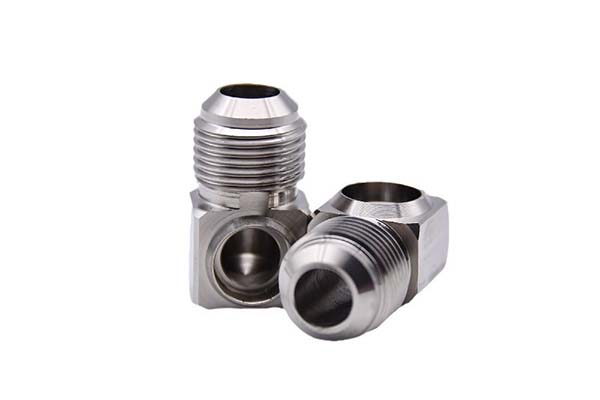
A client needed a complex manifold with internal channels for fluid distribution. Traditional machining would require drilling intersecting holes, then welding plugs—leak risks abounded. We proposed 3D printing the manifold as a single piece in stainless steel. The printed part passed pressure tests easily and cost 30% less than the machined version when accounting for assembly labor.
Another client required small batches of custom brackets for a limited production run. Rather than invest in injection molding tooling, we printed them in carbon fiber reinforced nylon. The brackets met all strength requirements and reached the client in one week instead of three months.
Material and Process Expertise
We guide clients through material selection based on their specific needs:
- Prototypes: PLA or resin for speed and surface finish
- Functional parts: Nylon or polycarbonate for durability
- High-performance applications: Titanium or Inconel for extreme conditions
- Aesthetic pieces: Multi-material or full-color printing
Continuous Innovation
We collaborate with research institutions and technology partners to stay current. Our team attends industry conferences, tests new materials, and refines processes continuously. This commitment ensures we offer clients the best solutions available.
Conclusion
3D printed pieces have moved beyond novelty into essential manufacturing tools. They save lives through custom medical implants and surgical models. They launch rockets by enabling lightweight, complex aerospace components. They speed car development and enable personalization. They transform factories with on-demand tooling.
Yet 3D printing complements rather than replaces traditional manufacturing. The smart approach matches each part to the optimal process—3D printing for complexity and customization, traditional methods for volume and economy.
Whether you need a single prototype, a custom medical device, or a production run of complex metal parts, understanding what 3D printed pieces can do helps you make better manufacturing decisions. The technology continues advancing, with faster machines, better materials, and lower costs appearing yearly. The question is no longer whether 3D printing works, but what you will create with it.
Frequently Asked Questions
Q1: How strong are 3D printed parts compared to machined parts?
Properly processed 3D printed metal parts match or exceed wrought material strength. Plastic parts approach injection molded strength but may vary by layer orientation. Design and post-processing significantly affect final properties.
Q2: What is the largest object that can be 3D printed?
Industrial printers now produce parts several meters long. Some companies print rocket stages and boat hulls. However, most service bureaus offer build volumes under one cubic meter. Large parts often print in sections and assemble.
Q3: How much does 3D printing cost per part?
Costs vary wildly by material, size, and complexity. Small plastic parts run $10–$100. Medium metal parts cost $500–$5,000. Complex aerospace components reach $10,000+. Always request quotes with clear specifications.
Q4: Can I 3D print moving assemblies?
Yes. Some printers produce assembled mechanisms with moving parts in one build. Clearance between components must account for layer resolution. Post-processing may free stuck parts.
Q5: What finishes are possible on 3D printed pieces?
As-printed surfaces range from smooth (SLA resin) to textured (FDM). Post-processing options include sanding, vapor smoothing, painting, plating, and machining. Metal parts can achieve mirror finishes through polishing.
Q6: Is 3D printing environmentally friendly?
Compared to subtractive methods, 3D printing reduces waste significantly—sometimes by 90%. However, energy consumption can be high, and some materials prove difficult to recycle. The environmental impact depends heavily on application and material choice.
Contact Yigu Technology for Custom Manufacturing
Ready to bring your ideas to life with 3D printed pieces? At Yigu Technology, we combine manufacturing expertise with additive innovation. Our team helps you select the right materials, optimize designs for printability, and deliver quality parts on schedule.
Visit our website to explore our capabilities. Contact us today for a free consultation and quote. Let's build something remarkable together.