Introduction
3D printing has come a long way from its early days as a prototyping tool. Today, it's reshaping how products are designed, manufactured, and delivered across industries.
The numbers tell the story. The global 3D printing market is projected to grow from $15.3 billion in 2022 to $62.1 billion by 2027—a compound annual growth rate of 32.3% (MarketsandMarkets). This isn't a niche technology anymore. It's mainstream manufacturing.
But what's driving this growth? And how exactly are 3D printing manufacturers changing production?
At Yigu technology, we've watched this transformation firsthand. This guide explores the key ways additive manufacturing is shaping production's future—from customization to speed to entirely new design possibilities.
How Are 3D Printing Manufacturers Transforming Production?
Customization and Personalization
Consumers no longer want one-size-fits-all. They want products that fit their lives, their bodies, their styles.
3D printing makes this practical. Because there's no mold or tooling, each part can be different at no extra cost. The printer reads a different file and makes a different product.
Real-world examples:
Adidas partnered with Carbon to produce 3D-printed midsoles for running shoes. These midsoles are customized to each runner's gait, weight, and style. The result? Better cushioning, better performance, and shoes that actually fit individual feet.
Candid uses 3D printing for clear teeth aligners. Each aligner is tailored to a patient's unique dental structure. Traditional methods would require mass production of standard sizes. 3D printing delivers perfect fit for everyone.
Market data confirms the trend. The customized 3D printing market was valued at $3.8 billion in 2020 and is expected to grow at 24.5% CAGR through 2028 (Grand View Research).
What this means for manufacturers:
- Products can be tailored to individual customers
- Small-batch customization becomes economical
- Mass customization—making millions of unique items—becomes possible
- Customer satisfaction improves with better fit
Complex Design Realization
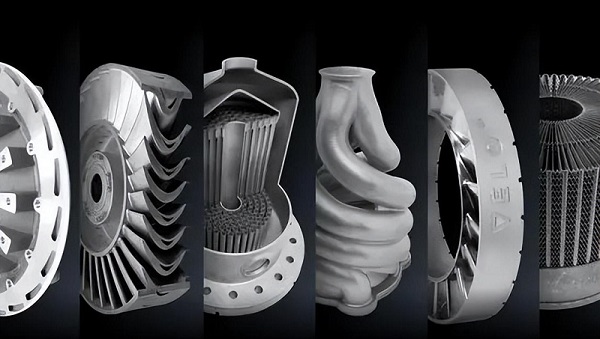
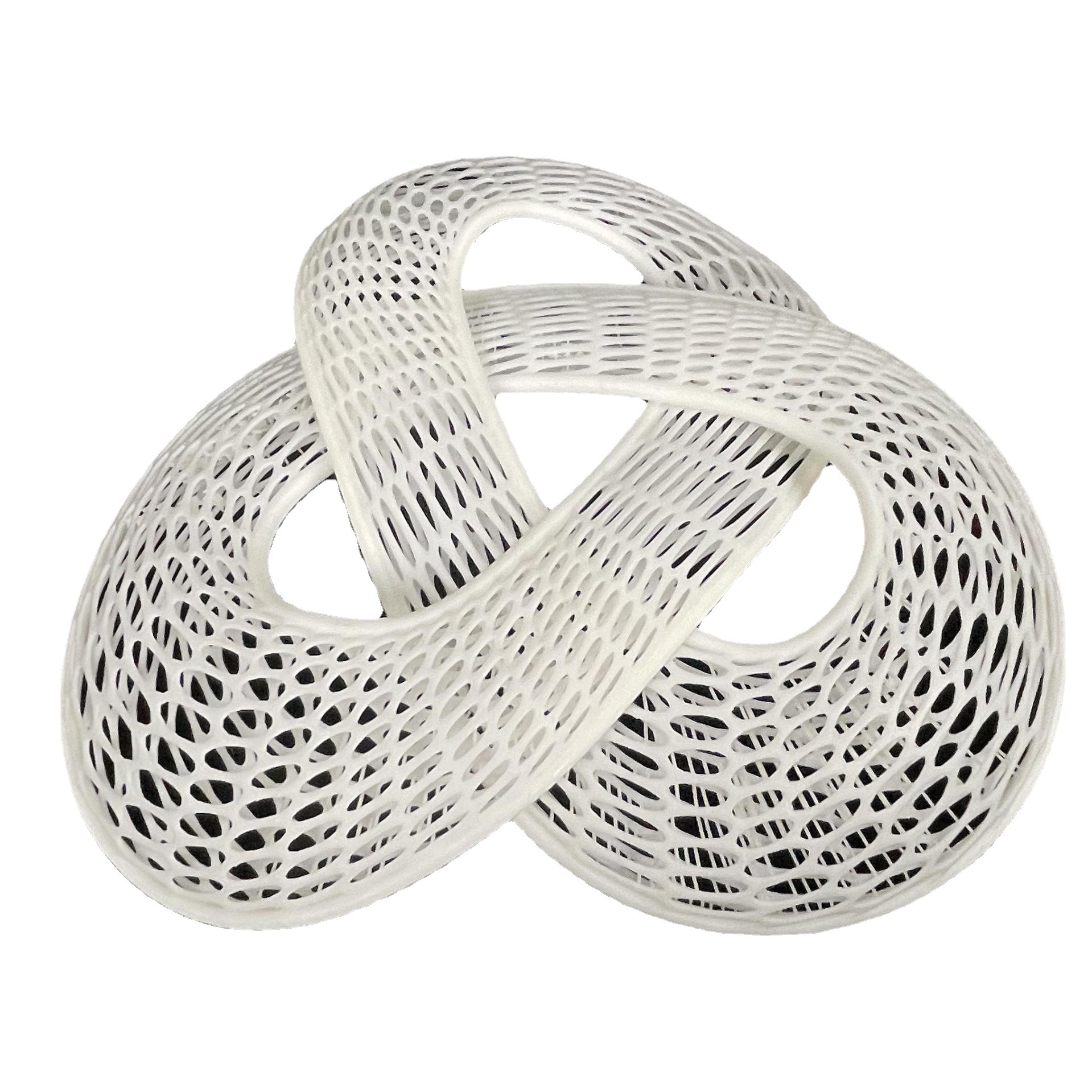
Some shapes are impossible to machine. Internal channels, lattice structures, organic forms—traditional methods struggle or fail.
3D printing doesn't care. If you can model it, you can print it.
Aerospace example: NASA studies show that 3D-printed rocket engine parts with complex internal cooling channels improve engine performance by up to 30% compared to traditionally manufactured components. Those channels follow ideal paths, cooling exactly where needed.
Automotive example: McLaren uses 3D printing for Formula 1 components. Engine parts and suspension pieces feature geometries impossible to machine—optimized for aerodynamics and performance.
Design software enables this complexity. Tools like Autodesk Fusion 360, SolidWorks, and Rhino 3D offer:
- Parametric design: Change parameters, model updates automatically
- Generative design: Algorithms generate optimal shapes based on constraints
- Simulation: Test performance before printing
The combination of advanced software and additive manufacturing frees designers from traditional constraints. If you can dream it, you can probably print it.
Cost-Efficiency in Small-Batch Production
Traditional manufacturing hates small runs. Molds cost thousands. Setup takes weeks. You need volume to justify the expense.
3D printing changes this math completely.
Consider a small electronics manufacturer needing 500 custom plastic housings:
| Manufacturing Method | Mold Cost | Unit Material Cost | Total Material Cost (500 units) | Total Cost |
|---|---|---|---|---|
| Traditional Injection Molding | $50,000 | $5 | $2,500 | $52,500 |
| 3D Printing (FDM with PLA) | $0 | $10 | $5,000 | $5,000 |
The difference is dramatic. For small batches, 3D printing costs 90% less.
Even with higher per-unit material costs, the absence of tooling makes additive the economical choice for quantities up to hundreds or low thousands.
Additional savings come from:
- No inventory costs: Print on demand instead of warehousing
- No minimum orders: Print exactly what you need
- Design flexibility: Modify without new tooling
- Reduced waste: Only material that becomes part gets used
Reducing Time-to-Market
Speed matters in business. The company that launches first often captures the market.
3D printing compresses timelines dramatically:
Traditional prototyping: Design, create tooling, manufacture prototype—weeks or months. If changes needed, repeat the cycle.
3D printing prototyping: Design, print overnight, test tomorrow. Iterate daily. Finalize design in days instead of months.
A study by McKinsey found that companies using 3D printing for production reduce time-to-market by up to 50%.
Real example: A consumer product company needed to validate a new design. Traditional methods would take 8 weeks for the first prototype. With 3D printing, they had a physical part in 3 days. They tested, found issues, revised, and printed again—all within the time traditional methods would have taken to deliver version one.
Production acceleration:
- No tooling lead time
- No minimum order quantities
- Distributed manufacturing possible (print at multiple locations)
- Rapid response to demand changes
Where Is 3D Printing Being Used Today?
Aerospace: Lightweight, Complex, Critical
Aerospace leads in additive manufacturing adoption because the benefits align perfectly with industry needs.
Engine components: SpaceX prints rocket engine parts—combustion chambers, injector heads—with complex internal cooling channels. These parts withstand extreme temperatures while saving weight. Part counts drop, simplifying assembly and improving reliability.
Aircraft interiors: 3D-printed cabin components—armrests, bins, vents—are lighter than traditional versions. Every kilogram saved reduces fuel burn over the aircraft's lifetime.
Structural parts: Brackets and supports with optimized geometries reduce weight by 30-50% while maintaining strength.
What matters: In aerospace, performance justifies cost. 3D printing delivers performance impossible any other way.
Automotive: Faster Development, Better Parts
Automotive uses 3D printing across the entire product lifecycle.
Component manufacturing: BMW prints aluminum alloy brake calipers. They're lighter than traditional calipers and perform better due to optimized internal structures.
Customization: Companies like Shapeways let customers design custom automotive accessories—shift knobs, trim pieces, body kits. Previously, customization meant high costs and long waits.
Replacement parts: For classic cars, parts no longer available can be scanned and printed. Owners keep vehicles running without searching junkyards.
Prototyping: Ford uses 3D printing for full-scale vehicle models. Aerodynamic testing, ergonomic evaluation, design review—all happen faster. A University of Michigan study found 3D printing reduces prototype time by up to 75%.
Healthcare: Personalized, Precise, Life-Changing
Healthcare may be where 3D printing has the most human impact.
Custom implants: Stryker prints patient-specific implants. A hip replacement designed from a patient's CT scan fits better than any standard size. Recovery improves. Complications drop.
Prosthetics: Organizations like e-NABLE provide affordable 3D-printed prosthetic hands. Costs can be as low as 10% of traditional prosthetics. Children who outgrow devices quickly get affordable replacements.
Surgical models: Surgeons practice on 3D-printed models before operating. A Journal of Neurosurgery study found this reduced surgical time by 30% and improved accuracy by 20%.
Drug development: Aprecia Pharmaceuticals prints pills with controlled-release properties. Customized dosage forms deliver medication exactly when and where needed.
Consumer Goods and Fashion: Creativity Unleashed
Fashion: Designer Iris van Herpen creates 3D-printed collections with complex geometries impossible to sew. Fashion becomes sculpture.
Eyewear: Companies like Warby Parker explore 3D-printed frames customized to individual face shapes. Perfect fit, endless style options.
Jewelry: Small designers print limited collections without tooling costs. Iterate quickly, test market demand, produce only what sells.
What's common: Personalization, complexity, and small-batch economics drive adoption.
What Challenges Remain?
Equipment Costs
Industrial 3D printers remain expensive. Metal systems run $500,000 to $1.5 million. Plastic systems for production are $50,000 to $500,000.
For many companies, using service bureaus makes more sense than buying.
Material Limitations
Material options expand constantly but still lag traditional manufacturing. Properties like heat resistance, strength, and durability improve yearly but don't yet match all engineering requirements.
Quality and Consistency
3D printing parts can vary between machines, between builds, even within a build. For critical applications, qualification adds time and cost.
Standards are evolving but not yet mature. Each application may need individual validation.
Intellectual Property Concerns
Digital files can be copied infinitely. Protecting designs becomes harder when production files exist.
New business models—selling files instead of products, encrypted printing, blockchain tracking—are emerging but not yet standard.
Speed for High Volumes
3D printing is fast for one part, slow for a million. Injection molding cycles in seconds. Additive takes hours.
The sweet spot is complexity, customization, and low-to-medium volumes. High-volume simple parts remain with traditional methods.
What Does the Future Hold?
Larger Build Volumes
Printer sizes keep growing. Entire car bodies, building components, and large industrial parts become printable.
Faster Printing
Multi-laser systems, continuous processes, and improved materials increase speed. The gap between additive and traditional narrows.
More Materials
New alloys, composites, and multi-material combinations expand applications. Printing with multiple materials in one part becomes routine.
Hybrid Manufacturing
Combining additive and subtractive in one machine becomes standard. Start with a forged base, add printed features, machine to finish—all in one setup.
Distributed Manufacturing
Print parts where they're needed instead of shipping from central factories. Reduce logistics costs, respond faster to demand, eliminate inventory.
Mass Customization
Making millions of unique items becomes practical. Every product tailored to its user, produced economically.
Yigu Technology's Perspective
At Yigu technology, we've seen 3D printing evolve from exotic technology to essential manufacturing tool. Here's what we've learned:
The technology isn't magic. It's another tool in the manufacturing toolbox. Use it where it fits.
It fits more places every year. Costs drop. Materials improve. Speed increases. Applications expand.
Start with the problem, not the technology. What are you trying to make? What does it need to do? Then choose the right process.
Design matters more than ever. Parts optimized for additive perform better than parts converted from traditional designs. Invest in design expertise.
Hybrid approaches often win. Combine 3D printing with machining, casting, or forging. Use each process for what it does best.
Custom manufacturing means matching process to purpose. 3D printing is one of our most versatile tools—but not the only one.
Conclusion
3D printing manufacturers are shaping production's future through:
- Customization: Products tailored to individuals
- Complexity: Designs impossible to machine
- Cost-efficiency: Economics that work for small batches
- Speed: Time-to-market reduced by up to 50%
Applications across aerospace, automotive, healthcare, and consumer goods prove the value. Rocket engine parts, custom implants, personalized shoes—3D printing makes them practical.
Challenges remain—cost, materials, consistency, speed. But each year brings progress. Build volumes grow. Materials improve. Processes accelerate.
The future isn't 3D printing replacing all manufacturing. It's 3D printing taking its place alongside traditional methods—doing what it does best, enabling what was impossible before.
For manufacturers, designers, and businesses, understanding additive manufacturing isn't optional anymore. It's essential.
FAQ
What are the main advantages of 3D printing in production?
The main advantages include customization and personalization (each part can be different at no extra cost), complex design realization (shapes impossible to machine become practical), cost-efficiency for small batches (no tooling costs), and reduced time-to-market (prototype and produce faster).
In which industries is 3D printing most commonly used?
Aerospace for lightweight, complex components. Automotive for prototyping, custom parts, and low-volume production. Healthcare for patient-specific implants, prosthetics, and surgical models. Consumer goods for personalized products and small-batch manufacturing. Each industry leverages different advantages of the technology.
What challenges does 3D printing face in widespread adoption?
Key challenges include high equipment costs (industrial printers remain expensive), limited material options compared to traditional manufacturing, quality consistency (parts can vary between builds), intellectual property concerns (digital files can be copied), and speed for high volumes (slower than injection molding for mass production). Ongoing development addresses each challenge.
How does 3D printing compare to injection molding for production?
3D printing wins for: low volumes (no tooling cost), complex geometries, customization, and rapid iteration. Injection molding wins for: high volumes (low per-part cost), consistent quality, and materials optimized for molding. The breakeven point varies but typically favors printing for quantities under hundreds or low thousands.
Can 3D printed parts be as strong as traditionally manufactured ones?
Yes, for many applications. SLS nylon parts approach injection-molded properties. Metal 3D printing can match or exceed cast properties. Studies show LMD-produced titanium achieves 98% of forged tensile strength. Strength depends on material, process, and design—but for non-critical loads, printed parts often perform excellently.
Is 3D printing environmentally friendly?
It can be. Additive manufacturing produces minimal waste compared to subtractive methods—only material that becomes the part gets used. PLA is biodegradable. However, some processes are energy-intensive, and not all materials are recyclable. Overall, it's generally more efficient for small volumes, less so for mass production.
Contact Yigu Technology for Custom Manufacturing
Ready to leverage 3D printing for your production needs? Yigu technology specializes in custom manufacturing with all major technologies and materials.
We help with:
- Design for additive manufacturing—optimizing your parts for success
- Technology selection—matching process to requirements
- Material choice—finding the right properties
- Printing—on industrial equipment
- Post-processing—finishing to specifications
- Production runs—from prototypes to small batches
Contact us to discuss your project. Tell us what you're making and what it needs to do. We'll recommend the best approach and deliver quality parts that perform.