Introduction
You have a part to make. It needs to be strong. It needs to be precise. It needs to be cost-effective. But which manufacturing method do you choose?
The answer is not always obvious. Subtractive manufacturing—machining, milling, turning—has been around for centuries. It is reliable. It is precise. It is proven.
Additive manufacturing—3D printing—is newer. It builds parts layer by layer. It offers design freedom that machining cannot match. It reduces waste. It enables customization.
Each method has strengths. Each has weaknesses. The right choice depends on your part, your volume, your material, and your timeline.
In this guide, we will compare subtractive and additive manufacturing across key factors. You will learn when to use each—and when to use both.
What Is Subtractive Manufacturing?
Definition and Processes
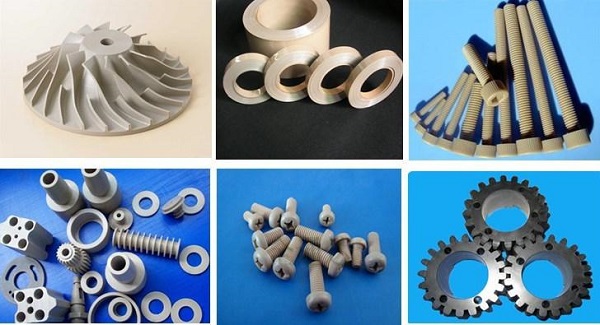
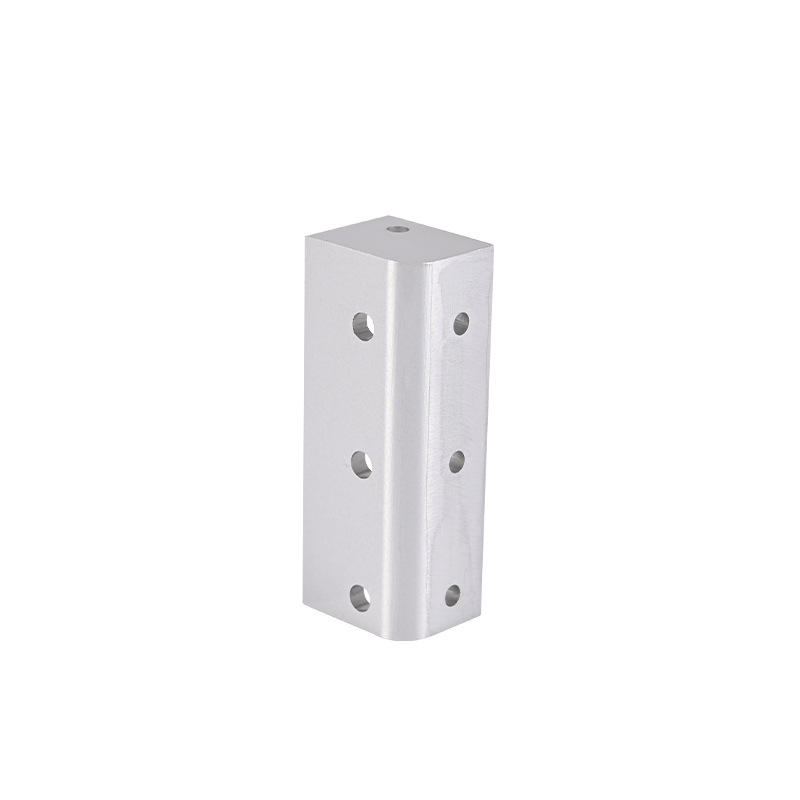
Subtractive manufacturing removes material from a larger block to create the desired shape. It is the traditional approach to making parts.
Common processes:
| Process | Description | Typical Applications |
|---|---|---|
| Milling | Rotating cutter removes material | Complex shapes, slots, pockets |
| Turning | Workpiece rotates against cutter | Cylindrical parts, shafts |
| Drilling | Creates holes | Holes for fasteners, passages |
| Grinding | Abrasive wheel removes small amounts | Precision surfaces, finishing |
| EDM | Electrical discharges remove material | Hard metals, complex cavities |
Key fact: Subtractive manufacturing has been used for over 200 years and is the foundation of modern industrial production.
Advantages
High Precision
Subtractive manufacturing achieves tight tolerances. CNC machining can hold ±0.01–0.05 mm consistently. This precision is essential for aerospace, medical, and automotive applications.
Excellent Surface Finish
Machined parts have smooth surfaces. A well-tuned CNC machine can achieve surface finishes of Ra 0.4–1.6 μm, often requiring no additional finishing.
High-Volume Efficiency
Once tooling and programming are set, subtractive manufacturing produces parts quickly. A CNC machine can run unattended for hours, producing hundreds of identical parts.
Wide Material Choice
Almost any material can be machined: metals, plastics, wood, composites. Material form is simple—solid blocks, bars, or sheets.
Disadvantages
Material Waste
Subtractive manufacturing removes material. A complex part machined from a solid block may waste 70–90 percent of the raw material. For expensive materials like titanium, this waste is costly.
Design Constraints
Machining requires tool access. Internal cavities, undercuts, and complex geometries are difficult or impossible to machine. Designers must work around tool limitations.
Setup Time
Each part requires fixturing and programming. For small batches, setup time dominates cost.
What Is Additive Manufacturing?
Definition and Processes
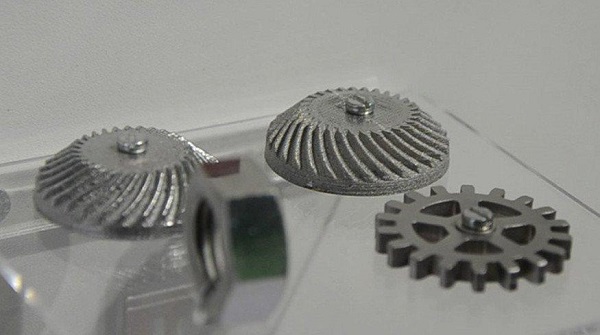
Additive manufacturing builds parts layer by layer from a digital model. Material is added only where needed.
Common processes:
| Technology | Process | Materials |
|---|---|---|
| FDM | Extrudes melted filament | Plastics (PLA, ABS, nylon) |
| SLA | Laser cures liquid resin | Resins |
| SLS | Laser sinters powder | Nylon, TPU |
| SLM/DMLS | Laser melts metal powder | Titanium, steel, aluminum |
| Binder Jetting | Binder bonds powder, then sintering | Metals, sand |
Key fact: Additive manufacturing emerged in the 1980s and has grown rapidly. The global market is projected to reach $51 billion by 2026.
Advantages
Design Freedom
Additive manufacturing removes design constraints. You can create:
- Internal channels
- Lattice structures
- Organic shapes
- Part consolidation (multiple parts into one)
Reduced Material Waste
Additive manufacturing uses only the material that becomes the part. Waste is typically under 5 percent. Unused powder can often be recycled.
Rapid Prototyping
A CAD model can become a physical part in hours. Design iterations happen in days, not weeks.
Customization
Each part can be unique without additional cost. This is transformative for medical implants, custom tools, and personalized products.
Disadvantages
Slower for High Volume
Additive manufacturing is slow for large quantities. A part that prints in 10 hours takes 1,000 hours to print 100 copies.
Variable Mechanical Properties
Layer interfaces can create weak points. Properties may vary with build orientation. Post-processing (heat treatment, HIP) is often required.
Material Limitations
Not all materials are available for 3D printing. Some alloys and composites still require traditional processing.
Surface Finish
Raw 3D prints often have visible layer lines. Post-processing (sanding, polishing) is required for smooth finishes.
How Do They Compare?
| Aspect | Subtractive Manufacturing | Additive Manufacturing |
|---|---|---|
| Material waste | 30–90% | 5–15% |
| Design freedom | Limited by tool access | Almost unlimited |
| Precision | ±0.01–0.05 mm | ±0.05–0.2 mm |
| Surface finish | Ra 0.4–1.6 μm | Ra 5–20 μm (as-printed) |
| Setup cost | High (tooling, fixturing) | Low (digital file) |
| Per-part cost (low volume) | High | Low to moderate |
| Per-part cost (high volume) | Low | Moderate to high |
| Material range | Very wide | Growing, but limited |
| Internal features | Difficult | Easy |
When Should You Choose Subtractive Manufacturing?
High Precision Requirements
If your part needs tolerances below ±0.05 mm, subtractive manufacturing is the reliable choice. Aerospace bearings, medical instruments, and precision molds fall into this category.
High Volume Production
For thousands or millions of parts, subtractive manufacturing (combined with casting or forging) is faster and cheaper. The setup cost is amortized over many units.
Simple Geometries
If your part is a shaft, a flat plate, or a simple housing, machining is straightforward and efficient. 3D printing adds no value.
Proven Materials
When you need a specific alloy or material with decades of proven performance, subtractive manufacturing is the safe choice.
Real-world example: An engine crankshaft requires high strength, tight tolerances, and proven material properties. Machining from forged steel is the standard. 3D printing would be slower, more expensive, and unproven.
When Should You Choose Additive Manufacturing?
Complex Geometries
If your part has internal channels, lattice structures, or organic shapes, additive manufacturing is the only practical option.
Real-world example: A hydraulic manifold with internal passages. Machining would require multiple blocks, seals, and fasteners. 3D printing produces one piece with no leak paths.
Low Volume Production
For 1–100 units, additive manufacturing often wins. No tooling cost. No setup time. Each part can be different.
Real-world example: A racing team needs 10 custom titanium brackets. 3D printing cost: $1,000. Machining cost: $5,000 (setup + labor).
Customization
When each part needs to be unique, additive manufacturing excels. Medical implants, dental devices, and custom prosthetics are ideal applications.
Rapid Iteration
When you need to test multiple design variations quickly, 3D printing delivers. A new design can print overnight.
Real-world example: A product designer tests five ergonomic handle shapes in two weeks. Each iteration prints in hours. Machining would take weeks per iteration.
Lightweighting
When weight reduction is critical, additive manufacturing enables lattice structures and topology optimization. Aerospace and automotive applications benefit.
What About Hybrid Manufacturing?
Combining the Best of Both
Hybrid manufacturing combines additive and subtractive processes in one workflow. The benefits are compelling.
| Approach | Process | Benefits |
|---|---|---|
| Additive then subtractive | Print near-net shape, then machine critical surfaces | Combines design freedom with precision finishes |
| Subtractive then additive | Machine base, then add features by printing | Repair worn parts, add custom features |
| Integrated hybrid machines | Print and machine in one setup | No refixturing, higher accuracy |
Real-world example: An injection mold is printed with conformal cooling channels (additive), then machined on critical surfaces (subtractive). The result: faster cooling (additive advantage) with precise fit (subtractive advantage).
How Do You Decide?
Decision Framework
Ask these questions in order:
- What is the part geometry?
Complex internal features? → Additive
Simple shapes? → Subtractive - What quantity do you need?
1–100 units? → Additive often wins
1,000+ units? → Subtractive often wins - What precision is required?
Tolerances below ±0.05 mm? → Subtractive
Tolerances above ±0.1 mm? → Additive works - What material is required?
Standard alloy with proven properties? → Both work
Specialty material not available for 3D printing? → Subtractive - What is your timeline?
Need parts in days? → Additive
Can wait weeks for tooling? → Subtractive for high volume
Quick Selection Guide
| Project Type | Recommended Method |
|---|---|
| Complex geometry, low volume | Additive |
| Simple geometry, high volume | Subtractive |
| Custom, each part unique | Additive |
| Tight tolerances (<±0.05 mm) | Subtractive (or hybrid) |
| Rapid prototypes | Additive |
| Large metal parts | Subtractive or hybrid |
| Weight-critical structures | Additive |
Yigu Technology’s View
At Yigu Technology, we use both subtractive and additive manufacturing. We do not have a bias toward one. We recommend what fits.
Case Study: Aerospace Bracket (Additive)
A client needed a titanium bracket with internal lattice structures. Machining was impossible. We used SLM to print the bracket. The part was 45 percent lighter than the original design and passed all tests.
Case Study: Precision Shaft (Subtractive)
A client needed a high-precision steel shaft for a medical device. Tolerance: ±0.01 mm. We machined the shaft on a CNC lathe. The part met all specifications.
Case Study: Injection Mold (Hybrid)
A client needed a mold with conformal cooling channels. We printed the mold near-net shape using binder jetting, then machined critical surfaces. The mold reduced cycle time by 30 percent and cost 40 percent less than a fully machined mold.
Our Approach
We evaluate each project:
- Geometry – Can it be machined? Should it be printed?
- Volume – How many parts?
- Material – What properties are required?
- Precision – What tolerances must be held?
- Timeline – When are parts needed?
Then we recommend the method—or combination—that delivers the best result.
Conclusion
Subtractive and additive manufacturing are not competitors. They are complementary tools.
Subtractive manufacturing excels at:
- High precision
- High volume
- Simple geometries
- Proven materials
Additive manufacturing excels at:
- Complex geometries
- Low volume
- Customization
- Rapid iteration
- Lightweighting
Hybrid manufacturing combines the strengths of both.
The right choice depends on your project. Understand your requirements. Evaluate the trade-offs. Choose the method—or combination—that delivers the best result.
FAQ
What is the main difference between subtractive and additive manufacturing?
Subtractive manufacturing removes material from a larger block to create the final shape (milling, turning, drilling). Additive manufacturing builds parts layer by layer from a digital model (3D printing). Subtractive is older, more precise, and better for high volume. Additive offers design freedom, less waste, and is ideal for complex geometries and low volume.
Which manufacturing method is more cost-effective for small batches?
For small batches (1–100 units) , additive manufacturing is typically more cost-effective because it requires no tooling and has no setup costs. For large volumes (1,000+ units), subtractive manufacturing (especially with casting or forging) has lower per-unit costs.
Can subtractive and additive manufacturing be used together?
Yes. Hybrid manufacturing combines both methods. Common approaches include:
- Additive then subtractive – Print near-net shape, then machine critical surfaces
- Subtractive then additive – Machine base, then add features by printing
- Integrated hybrid machines – Print and machine in one setup
This combination leverages the design freedom of additive with the precision of subtractive.
Contact Yigu Technology for Custom Manufacturing
Need help choosing the right manufacturing method? Yigu Technology offers both subtractive and additive services. We help you select the best approach for your project.
Contact us today to discuss your requirements. From prototypes to production, we deliver quality parts.