Introduction
You have a design ready. You know exactly what you want to print. But when you start getting quotes, the prices vary wildly—from $50 to $500 for what seems like the same part. Why? 3D printing service pricing is not one-size-fits-all. It depends on technology, material, complexity, and dozens of other factors. Understanding how these factors influence cost helps you make informed decisions, avoid overpaying, and get the best value for your project. This article breaks down everything that affects 3D printing prices, compares different pricing models, and gives you practical tips for choosing the right service at the right price.
What Determines the Cost of 3D Printing Services?
The Core Factors
Several key factors drive 3D printing costs. Understanding each helps you see why quotes vary.
| Factor | Impact on Price | Why It Matters |
|---|---|---|
| Technology | Different printers have different operating costs | Industrial machines cost more per hour than desktop printers |
| Material | Specialty materials cost 10–100x more than standard | Metal powder vs. PLA filament |
| Part Size | Larger parts use more material and take longer | Doubling size can more than double cost |
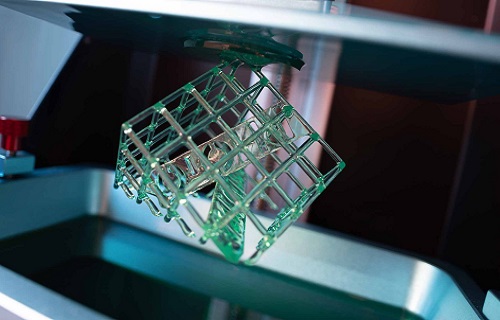
| Complexity | Intricate designs need more time and supports | Internal channels, lattices, fine details add cost |
| Quantity | Setup costs spread across multiple parts | Per-unit price drops as quantity increases |
| Post-Processing | Additional finishing adds labor and time | Sanding, painting, heat treatment all add cost |
| Turnaround | Rush jobs command premium prices | Expedited printing disrupts normal schedules |
Let's explore each factor in detail.
How Do Different 3D Printing Technologies Affect Price?
Each technology has different equipment costs, operating expenses, and capabilities. These differences directly impact pricing.
FDM (Fused Deposition Modeling)
How it works: Thermoplastic filament melts and extrudes through a nozzle, building parts layer by layer.
Cost characteristics:
- Equipment: Low to moderate ($200–$250,000 depending on industrial grade)
- Materials: Inexpensive ($20–$50 per kg for standard filaments)
- Labor: Minimal—parts often run unattended
- Post-processing: Usually minimal—support removal, maybe light sanding
Typical price range: $10–$200 for most parts
Best for: Large parts, functional prototypes, low-cost production
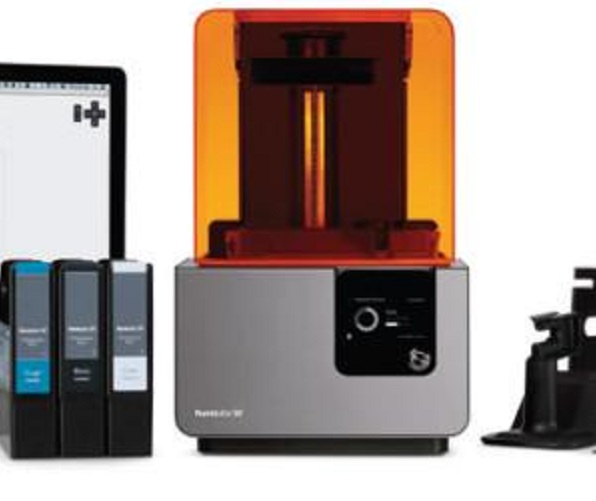
SLA (Stereolithography)
How it works: UV laser cures liquid resin layer by layer, producing highly detailed parts with smooth surfaces.
Cost characteristics:
- Equipment: Moderate to high ($3,000–$500,000)
- Materials: Moderate ($50–$150 per liter for standard resins)
- Labor: More involved—resin handling, cleaning, post-curing
- Post-processing: Required—cleaning, support removal, UV curing
Typical price range: $30–$400 for most parts
Best for: High-detail models, jewelry, dental applications, visual prototypes
SLS (Selective Laser Sintering)
How it works: Laser sinters powder particles together. Unsintered powder supports overhangs, eliminating support structures.
Cost characteristics:
- Equipment: High ($100,000–$700,000)
- Materials: Moderate to high ($50–$100 per kg for nylon)
- Labor: Powder handling, cleaning, sometimes media blasting
- Post-processing: Powder removal, sometimes dyeing or sealing
Typical price range: $50–$500 for most parts
Best for: Durable functional parts, complex geometries, no-support designs
Metal 3D Printing (SLM, DED, Binder Jetting)
How it works: Various technologies melt or sinter metal powder to create dense metal parts.
Cost characteristics:
- Equipment: Very high ($500,000–$2,000,000+)
- Materials: High ($100–$300 per kg for common alloys, more for exotics)
- Labor: Highly skilled operators, extensive quality control
- Post-processing: Heat treatment, support removal, often machining
Typical price range: $200–$2,000+ per part
Best for: Production-grade metal components, aerospace, medical implants
How Do Material Choices Impact Price?
Material costs vary dramatically. Here's a comparison:
| Material Type | Examples | Typical Cost | Notes |
|---|---|---|---|
| Standard Plastics | PLA, ABS, PETG | $20–$50 per kg | Inexpensive, widely available |
| Engineering Plastics | Nylon, Polycarbonate | $50–$100 per kg | Stronger, more durable |
| Standard Resins | Generic photopolymer | $50–$80 per liter | Good for general use |
| Specialty Resins | Tough, flexible, castable | $100–$300 per liter | Enhanced properties |
| Dental/Medical Resins | Biocompatible | $200–$400 per liter | Certified for medical use |
| Stainless Steel | 316L, 17-4PH | $80–$150 per kg | Common metal alloy |
| Aluminum | AlSi10Mg | $100–$200 per kg | Lightweight, conductive |
| Titanium | Ti-6Al-4V | $300–$600 per kg | High strength-to-weight |
| Inconel | 625, 718 | $200–$400 per kg | High-temperature alloy |
| PEEK | High-performance polymer | $300–$500 per kg | Extreme properties |
Material cost factors:
- Raw material price: Some materials are inherently expensive
- Waste: Some processes waste material, others recycle
- Availability: Exotic materials may require special ordering
- Certification: Medical and aerospace grades cost more
How Does Part Size and Complexity Affect Price?
Size Matters
Larger parts use more material and take longer to print. But the relationship isn't linear—doubling size can more than double cost because:
- Volume increases cubically: A 200 mm cube uses 8x the material of a 100 mm cube
- Print time increases: More layers, more passes
- Machine constraints: Large parts may require industrial machines with higher hourly rates
Typical size-based pricing:
- Tiny (under 10 cm³): $10–$50
- Small (10–100 cm³): $50–$200
- Medium (100–1,000 cm³): $200–$800
- Large (1,000–10,000 cm³): $800–$3,000
- Very large (over 10,000 cm³): $3,000+
Complexity Adds Cost
Complex designs increase cost through:
Increased print time: Intricate paths take longer to trace. A simple cube might print in an hour. A detailed sculpture with the same bounding box might take 10 hours.
Support structures: Overhangs need supports. Supports use extra material and require removal time. Complex geometries may need extensive supports.
Higher resolution: Fine details require thinner layers. Thinner layers mean more layers total. A part with 0.05 mm layers takes twice as long as the same part with 0.1 mm layers.
Post-processing difficulty: Hard-to-reach areas complicate support removal and finishing.
Example: Two parts with the same bounding box (100 x 100 x 100 mm):
- Simple cube: 4 hours print time, no supports, minimal post-processing
- Intricate lattice structure: 12 hours print time, supports needed, careful removal
Cost difference: 3x or more for the same material volume.
How Does Quantity Affect Per-Unit Price?
3D printing has no tooling costs, so per-unit pricing behaves differently than traditional manufacturing.
| Quantity | Per-Unit Cost Behavior | Typical Savings |
|---|---|---|
| 1 | Full price—setup costs covered by single part | Baseline |
| 10 | Some sharing of setup, but each part still prints individually | 10–20% discount |
| 50 | Batch printing possible, reduced per-part handling | 20–40% discount |
| 100 | Significant economies of scale, optimized nesting | 40–60% discount |
| 1,000+ | Production runs, dedicated machine time | 60–80% discount |
Why per-unit cost drops:
- Nesting: Multiple parts arranged in the build volume use space efficiently
- Setup amortization: File preparation, machine calibration spread across many parts
- Reduced handling: Batch post-processing more efficient
- Material purchasing: Bulk material discounts passed to customer
Real-world example:
- 1 part: $100 each
- 10 parts: $80 each ($800 total)
- 100 parts: $50 each ($5,000 total)
- 1,000 parts: $30 each ($30,000 total)
The 1000-part order costs 30x more total but 70% less per part.
How Does Post-Processing Affect Price?
Printed parts rarely go straight to use. Post-processing adds cost:
| Post-Processing | Typical Added Cost | When Needed |
|---|---|---|
| Support removal | $10–$50 | Most FDM, SLA, metal prints with overhangs |
| Cleaning | $5–$20 | Resin prints, powder removal from SLS |
| Sanding/polishing | $20–$100+ per hour | When smooth surfaces required |
| Painting | $30–$200+ | Aesthetic finishes, color matching |
| Heat treatment | $50–$300 | Metal parts, stress relief, annealing |
| Assembly | $20–$100+ | Multi-part prints needing joining |
| Inspection | $20–$200+ | Dimensional verification, CT scanning |
Example: A metal bracket might cost $200 to print and another $150 for heat treatment, support removal, and light machining—total $350.
How Does Turnaround Time Affect Price?
Time is money in 3D printing. Rush jobs command premiums.
| Turnaround | Typical Premium | When Available |
|---|---|---|
| Standard (5–10 days) | Baseline | Most services |
| Expedited (2–4 days) | +25–50% | Often available |
| Rush (24–48 hours) | +50–100% | Limited availability |
| Emergency (same-day) | +100–200%+ | Rare, only for simple parts |
Why rush costs more:
- Disrupts normal scheduling
- May require dedicated machine time
- Overtime labor for post-processing
- Prioritization over other customers' jobs
What Pricing Models Do Services Use?
Per-Unit Pricing
Most common for individual orders. Price based on:
- Material usage (grams or volume)
- Print time (machine hours)
- Setup fees (file preparation)
- Post-processing (as needed)
Best for: One-off parts, prototypes, small batches
Subscription Pricing
Some services offer monthly subscriptions:
- Pay fixed monthly fee for certain volume or print time
- Tiered plans (basic, pro, enterprise)
- Often includes design support, priority service
Best for: Businesses with regular printing needs, frequent prototyping
Volume Discounts
Negotiated pricing for larger quantities:
- Per-unit price drops as quantity increases
- May include dedicated machine time
- Often requires contract or long-term commitment
Best for: Production runs, large batches
Material-Based Pricing
Some services price primarily by material:
- Cost per gram/cm³ for each material type
- Plus setup fees and post-processing
Best for: Simple comparisons across different part geometries
How to Compare 3D Printing Service Providers?
What to Look For
Don't just compare base prices. Consider:
Included services:
- Is file review included?
- What post-processing is standard?
- Are supports removed automatically?
Quality:
- What resolution can they achieve?
- Do they have quality control processes?
- Can they show samples of similar work?
Material options:
- Do they offer the materials you need?
- Are specialty materials available?
Turnaround:
- What are typical lead times?
- How much extra for rush service?
Communication:
- Are they responsive?
- Do they answer questions clearly?
Reviews:
- What do previous customers say?
- Are there complaints about quality or delays?
Requesting Quotes
Get quotes from multiple providers. Provide:
- 3D model file (STL or preferred format)
- Material preference (or ask for recommendations)
- Quantity needed
- Desired finish (as-printed, sanded, painted, etc.)
- Timeline
- Any special requirements (biocompatibility, certifications)
Compare not just price but what's included. A slightly higher quote might include post-processing that another charges extra for.
How Can You Reduce 3D Printing Costs?
Design Optimization
- Simplify where possible: Remove unnecessary details that don't affect function
- Reduce supports: Design self-supporting angles (overhangs <45°)
- Hollow parts: Use shells instead of solid, with appropriate wall thickness
- Optimize orientation: Reduce height to minimize layers
Material Selection
- Use standard materials when possible: PLA instead of nylon, standard resin instead of specialty
- Match material to requirements: Don't over-specify—if PLA works, use it
- Ask for recommendations: Services may suggest cost-effective alternatives
Quantity Planning
- Batch similar parts: Combine multiple items in one order
- Plan ahead: Avoid rush charges by ordering early
- Consider inventory: If you'll need more later, order all at once for volume discount
Choose the Right Technology
- FDM for large, simple parts
- SLA for detailed, small parts
- SLS for durable, complex parts without supports
- Metal only when necessary
Ask About Discounts
- First-time customer discounts: Some services offer promotions
- Volume discounts: Always ask for better pricing on larger orders
- Student/nonprofit rates: Some services offer reduced pricing
What Are Typical Price Ranges for Common Items?
| Item | Typical Size | Technology | Material | Price Range |
|---|---|---|---|---|
| Phone case | 150 x 80 x 10 mm | FDM or SLA | PLA or standard resin | $20–$50 |
| Small figurine | 100 mm tall | SLA | Standard resin | $30–$80 |
| Functional bracket | 100 x 100 x 50 mm | FDM or SLS | ABS or nylon | $50–$150 |
| Jewelry master | 20 x 20 x 5 mm | SLA | Castable resin | $20–$60 |
| Dental model | Arch form | SLA | Dental resin | $50–$120 |
| Large prototype | 300 x 200 x 100 mm | FDM | PLA or ABS | $200–$600 |
| Metal bracket | 100 x 100 x 50 mm | SLM | Aluminum or stainless | $300–$800 |
| Complex assembly | Multiple parts | Various | Various | $500–$2,000+ |
These are estimates. Actual prices vary by service, location, and specific requirements.
How Does Yigu Technology Approach Pricing?
As a non-standard plastic and metal products custom supplier, Yigu Technology believes in transparent, fair pricing based on actual costs.
Our Pricing Factors
We consider:
- Technology required (FDM, SLA, SLS, metal)
- Material selected (standard or specialty)
- Part size and complexity
- Quantity
- Post-processing needs
- Timeline
Our Commitment
- Transparent quotes: We break down costs so you understand what you're paying for
- No hidden fees: What we quote is what you pay
- Design review: We check your file and suggest optimizations that could reduce cost
- Material guidance: We recommend cost-effective options that still meet your requirements
Getting a Quote
Send us your file, quantity, and requirements. We'll respond with a detailed quote and estimated timeline. Questions? We're happy to discuss options.
Conclusion
3D printing service prices vary widely because the technology itself varies widely. A simple FDM print in PLA costs a fraction of a complex metal part printed on industrial equipment. Understanding the factors that drive cost helps you:
- Make informed decisions: Choose the right technology and material for your needs
- Avoid overpaying: Don't specify requirements you don't actually need
- Get accurate quotes: Provide the information services need to price accurately
- Compare effectively: Look beyond base price to value and included services
Key takeaways:
- Technology, material, size, and complexity are primary cost drivers
- Quantity discounts can significantly reduce per-unit cost
- Post-processing adds cost but may be necessary for your application
- Rush jobs command premiums—plan ahead when possible
- The cheapest quote isn't always the best value—consider quality and reliability
Whether you're prototyping a new product, manufacturing custom parts, or creating a one-off gift, understanding pricing helps you get the best results for your budget.
Frequently Asked Questions
Q1: What is the cheapest material used in 3D printing?
PLA (Polylactic Acid) is typically the cheapest material. It costs $20–$50 per kilogram, is easy to print, and works well for prototypes and non-functional parts. For resin printing, standard resins are the most economical option.
Q2: Can I negotiate the price with 3D printing service providers?
Yes, especially for larger orders or ongoing relationships. Many providers are open to negotiation on volume discounts, long-term contracts, or simplified designs that reduce their costs. It never hurts to ask.
Q3: How does the complexity of my design affect the cost of 3D printing?
Complex designs increase cost through:
- Longer print times (intricate paths take longer)
- Support structures (extra material and removal labor)
- Higher resolution requirements (more layers)
- Post-processing difficulty (hard-to-reach areas)
A complex part can cost 2–5x more than a simple part of the same size and material.
Q4: Why do quotes from different providers vary so much?
Providers may use different:
- Equipment (industrial vs. desktop)
- Pricing models (per-gram, per-hour, flat rate)
- Included services (post-processing, file review)
- Overhead structures (location, volume)
- Quality standards (inspection, certification)
Always compare what's included, not just the bottom line.
Q5: How much does metal 3D printing cost?
Metal 3D printing typically ranges from $200 to $2,000+ per part depending on size, complexity, and material. Small, simple parts in stainless steel might start around $200. Large, complex parts in titanium or Inconel can exceed $2,000.
Q6: Is it cheaper to buy my own 3D printer or use a service?
For occasional use, services are almost always cheaper. A $300 desktop printer might seem affordable, but when you factor in learning time, failed prints, materials, and maintenance, services offer better value for low volumes. For frequent printing (multiple times per week), owning a printer may become economical.
Q7: How can I get an accurate quote for my project?
Provide:
- Your 3D model file (STL preferred)
- Material requirements (or ask for recommendations)
- Quantity needed
- Desired finish (as-printed, sanded, painted, etc.)
- Timeline
- Any special requirements (certifications, tolerances)
The more information you provide, the more accurate the quote.
Contact Yigu Technology for Custom Manufacturing
Ready to get a quote for your 3D printing project? At Yigu Technology, we provide transparent pricing and quality parts. Our team helps you select the right technology and materials for your needs, and we'll work with you to find cost-effective solutions.
Visit our website to see our capabilities. Contact us today for a free consultation and detailed quote. Let's bring your designs to life at a fair price.