You have a design ready. You need it printed. But where do you go? Local services may be convenient, but costs can be high. Overseas options might offer lower prices, but lead times stretch. China 3D printing services have emerged as a compelling alternative. They combine cost advantages with industrial-scale capabilities, diverse material options, and fast turnaround. But what makes them different? This guide explores the benefits, considerations, and real-world results of choosing China for your 3D printing needs.
What Is Driving the Growth of 3D Printing in China?
China has become a global hub for 3D printing. The market reached over 2.5 billion yuan in 2020 and continues to grow at more than 20% annually. Several factors drive this expansion.
Government Support
The Chinese government actively promotes high-tech industries, including additive manufacturing. Policies provide financial support, research funding, and infrastructure development. This creates an environment where 3D printing companies can scale.
Industrial Demand
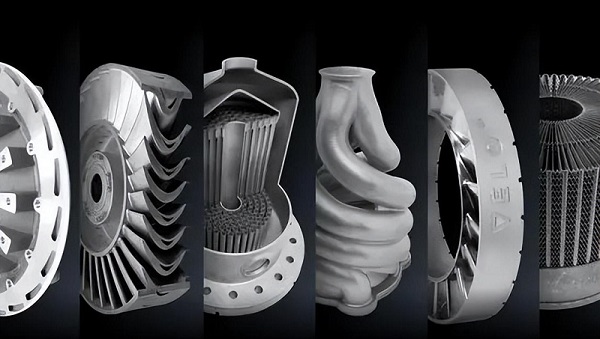
Aerospace, automotive, healthcare, and consumer electronics sectors in China have adopted 3D printing for production—not just prototyping. For example, aerospace manufacturers print complex engine components. Medical device companies produce patient-specific implants.
Manufacturing Ecosystem
China’s existing manufacturing infrastructure supports 3D printing. Supply chains for materials, components, and post-processing are mature. This integration reduces costs and accelerates delivery.
What Are the Cost Advantages?
Cost is often the deciding factor. China 3D printing services offer significant savings.
Equipment and Material Costs
Industrial 3D printers in China cost 50–60% less than comparable machines in Western countries. Materials follow a similar pattern.
| Cost Item | China | Western Country (e.g., US) |
|---|---|---|
| Industrial 3D Printer | $50,000–200,000 | $100,000–500,000 |
| PLA Filament (per kg) | $20–50 | $50–100 |
| Nylon Powder (per kg) | $50–100 | $100–200 |
| Metal Powder (per kg) | $100–300 | $200–600 |
| Labor Cost (per hour) | $5–15 | $20–50 |
Lower Overhead
Manufacturing facilities in China benefit from economies of scale. Large production volumes of printers and materials reduce unit costs. Lower labor costs also contribute to competitive pricing.
Cost-Effective for Small and Medium Businesses
For startups and SMEs, these savings matter. A prototype that costs $500 in China might cost $1,200 locally. For a company producing multiple iterations, the difference adds up.
Real example: A US-based hardware startup needed 50 custom enclosures for a product launch. Local quotes averaged $85 per unit with 3-week lead time. A China-based service delivered the same parts for $42 per unit with 10-day lead time—including shipping. Total savings: $2,150.
How Is Quality Maintained?
Lower cost does not mean lower quality. China 3D printing services have invested heavily in precision, materials, and quality control.
Precision and Accuracy
Industrial 3D printers in China achieve accuracy of 0.01–0.1 mm, depending on technology. High-end SLA and DLP systems reach below 0.05 mm. This meets the requirements of aerospace, medical, and automotive applications.
Surface Finish
Post-processing capabilities have advanced significantly. Polishing, coating, and vapor smoothing reduce surface roughness to meet demanding specifications. Parts can be finished to match injection-molded quality.
Industry Certifications
Many China-based service bureaus hold ISO 9001, AS9100 (aerospace), and ISO 13485 (medical) certifications. These ensure consistent quality and traceability.
Material Quality
China produces a wide range of high-quality 3D printing materials. Filaments, resins, and metal powders meet international standards. For critical applications, materials can be sourced from certified suppliers with batch traceability.
Real example: A medical device company required titanium spinal implants with ISO 13485 certification. A China 3D printing service provided fully certified parts with material traceability and post-processing documentation—at 40% lower cost than domestic suppliers.
What Material Options Are Available?
China 3D printing services offer an extensive range of materials, often at lower cost than Western providers.
Plastics
| Material | Characteristics | Applications |
|---|---|---|
| PLA | Biodegradable, easy to print | Prototypes, educational models |
| ABS | Strong, heat-resistant | Automotive parts, electronics enclosures |
| PETG | Tough, chemical-resistant | Mechanical parts, outdoor use |
| Nylon (PA12) | Wear-resistant, slightly flexible | Gears, functional prototypes |
| Carbon Fiber Nylon | Stiff, lightweight | Structural components, tooling |
| PEEK / PEKK | High-temperature, biocompatible | Aerospace, medical implants |
Metals
| Material | Characteristics | Applications |
|---|---|---|
| Aluminum (AlSi10Mg) | Lightweight, good thermal conductivity | Aerospace brackets, automotive parts |
| Titanium (Ti6Al4V) | High strength-to-weight, biocompatible | Medical implants, aerospace components |
| Stainless Steel (316L, 17-4 PH) | Corrosion-resistant, strong | Industrial parts, tooling |
| Inconel | High-temperature resistance | Turbine blades, rocket engines |
| Cobalt-Chrome | Wear-resistant, biocompatible | Dental implants, orthopedic devices |
Other Materials
- Ceramics: Alumina, zirconia for electronics and thermal protection
- Resins: Standard, tough, high-temp, castable for dental and jewelry
- Composites: Glass-filled, carbon-filled for enhanced properties
How Fast Is Turnaround?
Speed is another advantage. China’s manufacturing infrastructure enables fast turnaround without sacrificing quality.
Typical Lead Times
| Project Type | Traditional Manufacturing | China 3D Printing |
|---|---|---|
| Simple prototype | 2–3 weeks | 2–5 days |
| Complex prototype | 4–8 weeks | 5–10 days |
| Small batch (100 parts) | 3–6 months (tooling) | 3–7 days |
| Custom single part | 2–4 weeks | 3–7 days |
Accelerated Development
A product development cycle that takes months with traditional methods can be compressed to weeks. Companies can iterate designs, test, and refine much faster.
Real example: A consumer electronics company needed to test three design variations of a smartwatch case. China 3D printing service delivered all three versions in 5 days. The company selected the optimal design and moved to production within 3 weeks—a process that previously took 3 months.
What Are the Considerations?
Choosing China 3D printing services comes with factors to consider. Planning ahead mitigates risks.
Communication and Time Zones
Language barriers and time differences can slow communication. Choose services with English-speaking project managers and clear communication protocols.
Intellectual Property Protection
IP concerns are valid. Work with established service bureaus that have non-disclosure agreements (NDAs) and clear IP policies. Avoid sharing sensitive designs with unverified providers.
Shipping and Logistics
International shipping adds 3–7 days and customs clearance. Factor this into timelines. Reputable services handle shipping logistics and provide tracking.
Quality Consistency
For large batches, request sample parts before full production. Established services provide quality reports and can adjust processes based on feedback.
How Do You Choose a China 3D Printing Service?
Not all services are equal. Here is what to look for.
Criteria for Selection
| Factor | What to Check |
|---|---|
| Technology Range | FDM, SLA, SLS, DMLS, binder jetting—more options mean flexibility |
| Material Availability | Does the service offer the materials you need? |
| Certifications | ISO 9001, AS9100, ISO 13485 for regulated industries |
| Quality Control | Inspection processes, reporting, traceability |
| Communication | English-speaking support, responsiveness |
| References | Client testimonials, case studies |
Start with a Test Project
Before committing large orders, send a small test part. Evaluate quality, communication, and turnaround. This builds confidence and establishes the working relationship.
Yigu Technology’s Perspective
As a non-standard plastic and metal products custom supplier, Yigu Technology operates within China’s 3D printing ecosystem. We see the advantages firsthand.
Cost-effectiveness allows us to offer competitive pricing to clients worldwide. Material diversity means we can match the right material to each application—from basic PLA prototypes to titanium medical implants. Fast turnaround enables rapid product development cycles.
We work with clients to navigate considerations like IP protection and quality assurance. Our facilities hold relevant certifications. We provide NDAs, quality reports, and clear communication channels.
In our experience, China 3D printing services succeed when clients:
- Define clear requirements
- Use established service providers
- Allow time for shipping in their schedules
- Start with test projects before scaling
The combination of cost, quality, and speed makes China a compelling choice for companies seeking 3D printing services.
Conclusion
China 3D printing services offer a powerful combination of cost-effectiveness, quality output, diverse materials, and fast turnaround. Government support, industrial demand, and a mature manufacturing ecosystem have created a competitive environment. For businesses looking to prototype, produce low-volume parts, or access advanced materials at reasonable cost, China is a strong option.
Success requires choosing established service providers, protecting IP, and planning for logistics. With the right partner, China 3D printing services deliver value that local providers often cannot match.
FAQ
What materials can be used for 3D printing in China?
A wide range: plastics (PLA, ABS, PETG, nylon, PEEK), metals (aluminum, titanium, stainless steel, Inconel), ceramics (alumina, zirconia), resins (standard, tough, high-temp, castable), and composites (carbon fiber, glass-filled). Material availability varies by service provider.
How long does it usually take to complete a 3D printing project in China?
Simple prototypes: 3–7 days. Complex prototypes: 5–10 days. Small batch production (100 parts): 3–7 days. Large or complex metal parts: 2–4 weeks. Add 3–7 days for international shipping.
What is the accuracy level of 3D printing services in China?
Typical accuracy: 0.1–0.2 mm for standard processes. High-precision technologies (SLA, DLP, DMLS) achieve 0.01–0.05 mm. Accuracy depends on technology, material, and part geometry.
How do I protect my intellectual property when using China 3D printing services?
Use established service bureaus with NDAs. Request IP protection clauses in contracts. Avoid sharing sensitive designs with unverified providers. Some companies use non-disclosure agreements and limit design access to necessary personnel.
Is China 3D printing quality comparable to Western providers?
Yes, for established providers. Many hold ISO 9001, AS9100, and ISO 13485 certifications. Industrial-grade equipment and materials meet international standards. Quality varies by provider—choose based on certifications, references, and test projects.
Contact Yigu Technology for Custom Manufacturing
Yigu Technology specializes in non-standard plastic and metal custom manufacturing using advanced 3D printing technologies. Based in China, we offer competitive pricing, diverse material options, and fast turnaround. Our facilities hold industry certifications, and we provide full quality documentation. Contact us today to discuss your 3D printing project.