You have heard about 3D printing with plastic. But metal? That is a different world. Metal 3D printing builds parts from titanium, stainless steel, and aluminum—materials that power aerospace engines, medical implants, and high-performance automotive components. In the UK, this technology is transforming industries from Rolls-Royce jet engines to custom orthopedic implants. This guide explains how metal 3D printing works, where it is used in the UK, and what you need to know to get started.
What Is 3D Metal Printing?
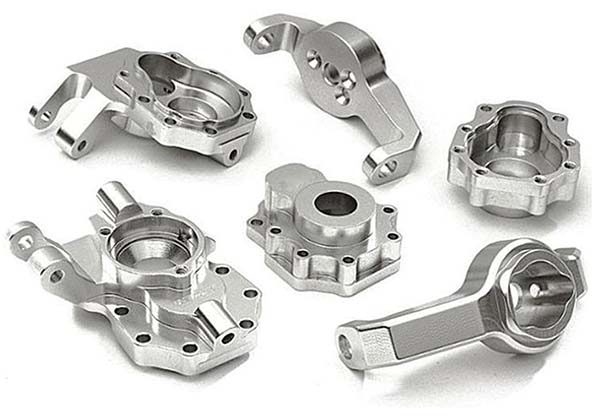
3D metal printing, also known as metal additive manufacturing, builds metal parts layer by layer from a digital file. Unlike traditional manufacturing—which cuts, mills, or drills material away—metal 3D printing adds material only where needed.
The process starts with a 3D CAD model. Specialized software slices the model into thin layers (typically 0.02–0.1 mm). A printer then fuses metal powder or wire layer by layer, using a laser or electron beam. The result is a fully dense metal part with properties comparable to forged or cast metal.
Common Metal Materials
| Material | Properties | UK Applications |
|---|---|---|
| Titanium (Ti6Al4V) | High strength-to-weight, biocompatible | Aerospace components, medical implants |
| Stainless Steel (316L, 17-4 PH) | Corrosion-resistant, strong | Industrial parts, food equipment, marine |
| Aluminum (AlSi10Mg) | Lightweight, good thermal conductivity | Automotive engine parts, heat sinks |
| Inconel | High-temperature resistance | Jet engine components, gas turbines |
| Cobalt-Chrome | Wear-resistant, biocompatible | Dental implants, orthopedic devices |
How Does Metal 3D Printing Work?
Several technologies are used for metal 3D printing. Each has strengths.
Powder Bed Fusion (PBF)
This is the most common method. A thin layer of metal powder is spread across a build platform. A laser or electron beam selectively fuses the powder. The platform lowers, a new powder layer is spread, and the process repeats.
Technologies:
- Direct Metal Laser Sintering (DMLS) : Laser fuses powder
- Selective Laser Melting (SLM) : Similar, fully melts powder
- Electron Beam Melting (EBM) : Uses electron beam in vacuum
Best for: Complex geometries, high-strength parts, aerospace and medical applications
Binder Jetting
A liquid binder is deposited onto metal powder, “gluing” layers together. The “green” part is then sintered in a furnace to achieve full density.
Best for: Medium-volume production, lower cost than PBF
Directed Energy Deposition (DED)
Metal powder or wire is fed into a laser or electron beam, melting as it deposits. Often used for repairing existing parts or adding features.
Best for: Large parts, repairs, hybrid manufacturing
What Are the Key UK Applications?
The UK has a strong tradition in aerospace, automotive, and medical technology. Metal 3D printing is advancing all three.
Aerospace Sector
The UK aerospace industry is a global leader. Companies like Rolls-Royce and Airbus use metal 3D printing for critical components.
Applications:
- Turbine blades with complex cooling channels
- Fuel nozzles that reduce weight and improve efficiency
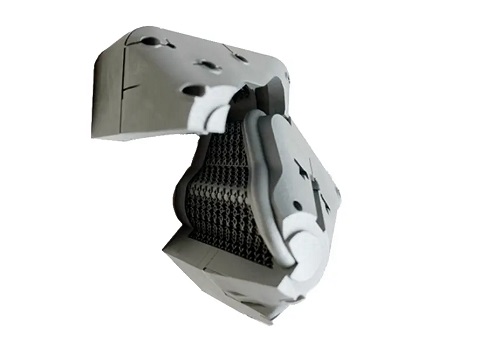
- Structural brackets with lattice structures
Example: Rolls-Royce uses 3D printed titanium components in its jet engines. The ability to create internal cooling channels allows engines to run hotter—improving fuel efficiency and reducing emissions.
Data point: The UK aerospace sector is projected to see 30% growth in metal additive manufacturing adoption by 2030.
Automotive Industry
UK automotive manufacturers—from high-performance brands like McLaren to specialist suppliers—use metal 3D printing for lightweighting and performance.
Applications:
- Intake manifolds with optimized airflow
- Engine components with complex internal geometries
- Lightweight structures that reduce vehicle weight
Example: McLaren has explored 3D printed metal components in its supercars. Replacing traditional parts with printed equivalents improves power-to-weight ratio, enhancing acceleration and handling.
Healthcare Field
The UK’s National Health Service (NHS) and private hospitals are adopting 3D printed metal implants and prosthetics.
Applications:
- Custom hip and knee implants matched to patient anatomy
- Cranial plates for skull reconstruction
- Dental implants and surgical guides
Example: The Royal National Orthopaedic Hospital uses 3D printed titanium implants for complex orthopedic procedures. Custom implants fit perfectly, reducing surgery time and improving patient recovery.
Data point: A study at a UK hospital found that using 3D printed surgical guides reduced operation time by 20–30% for complex joint replacements.
What Are the Advantages of Metal 3D Printing?
Metal 3D printing offers capabilities that traditional manufacturing cannot match.
Design Freedom
Complex geometries—internal channels, lattice structures, organic shapes—are as easy to print as simple blocks. Engineers optimize for performance, not manufacturability.
Lightweighting
Lattice structures remove material without compromising strength. Aerospace and automotive applications achieve 30–50% weight reduction compared to machined parts.
Part Consolidation
Multiple components can print as a single part. A fuel nozzle that once required 20 assembled parts now prints as one—eliminating assembly and potential failure points.
Material Efficiency
Traditional machining wastes 80–90% of raw material. Metal 3D printing uses 90–95% of the powder—excess is recycled.
Customization
Every part can be different at no extra cost. Medical implants tailored to individual patients. Automotive components optimized for specific performance requirements.
What Are the Challenges?
Metal 3D printing is powerful, but it has limitations.
High Cost
- Equipment: Industrial metal printers cost £200,000–£1,500,000
- Materials: Metal powders cost £100–£1,000 per kg
- Post-processing: Heat treatment, machining, and testing add 20–50% to costs
Slow Production Speed
Layer-by-layer printing is slow. A single metal part may take 12–72 hours. For high volumes, traditional methods are faster.
Post-Processing Requirements
Most metal prints require:
- Support removal (cutting or machining)
- Heat treatment (stress relief, annealing)
- Machining of critical surfaces
- Hot isostatic pressing (HIP) for critical parts
Quality Control
Ensuring consistent properties requires in-process monitoring, CT scanning, and mechanical testing. This adds time and cost.
Regulatory Approval
For aerospace and medical applications, parts must meet strict standards. Certification adds time and requires documented processes.
How to Choose a UK Metal 3D Printing Service?
The UK has a growing number of metal 3D printing service providers. Here is what to look for.
Technical Capability
| Factor | What to Check |
|---|---|
| Technology | DMLS, SLM, EBM, binder jetting—match to your application |
| Materials | Titanium, stainless steel, aluminum, Inconel, cobalt-chrome |
| Build Volume | Max part size without splitting |
| Precision | Claimed tolerances (typically ±0.05–0.1 mm) |
Certifications
For regulated industries, verify:
- ISO 9001 (quality management)
- AS9100 (aerospace)
- ISO 13485 (medical devices)
- ITAR (defense, if applicable)
Post-Processing Capabilities
Does the supplier offer:
- Heat treatment in-house?
- CNC machining for critical surfaces?
- Non-destructive testing (X-ray, CT)?
- Surface finishing (polishing, coating)?
UK-Specific Considerations
- Lead times: Domestic suppliers offer faster shipping
- Support: Local communication and technical support
- Compliance: UKCA marking for medical devices (post-Brexit)
Real example: A UK medical startup needed certified titanium implants. They selected a supplier with ISO 13485 certification, in-house heat treatment, and experience with MHRA (UK medical device regulator) submissions. The implants were approved and used in NHS hospitals.
What Does Metal 3D Printing Cost in the UK?
Costs vary by part complexity, material, and quantity.
| Part Type | Material | Estimated Cost (per part) |
|---|---|---|
| Small bracket (50 cm³) | Aluminum | £50–150 |
| Medium structural part (200 cm³) | Stainless steel | £200–500 |
| Complex aerospace component | Titanium | £500–2,000+ |
| Custom medical implant | Titanium | £1,000–5,000 |
Typical pricing factors:
- Material cost: Powder cost per kg
- Machine time: £50–200 per hour
- Setup and file preparation: £50–200 per job
- Post-processing: 20–50% of base cost
- Minimum order: Often £200–500
Real example: A UK engineering firm needed five titanium brackets for a prototype. Total cost: £2,500 (£500 each). Traditional machining would have required tooling and cost £8,000 for the same quantity.
Yigu Technology’s Perspective
As a custom manufacturer, Yigu Technology sees metal 3D printing as a complementary capability to traditional machining and casting. For UK clients, we offer:
- Titanium, stainless steel, and aluminum printing
- ISO 9001 quality systems
- In-house post-processing (heat treatment, machining)
- Export shipping to the UK with customs documentation
We recommend metal 3D printing when:
- Parts have complex geometries impossible to machine
- Low volumes (1–500 units) do not justify tooling
- Weight reduction is critical (aerospace, automotive)
- Customization per patient or user is required
For high-volume production, we advise transitioning to traditional methods. The goal is always to match the technology to the application.
Conclusion
3D print metal is transforming UK manufacturing. Aerospace companies print lighter, more efficient engine components. Automotive manufacturers produce high-performance parts. Hospitals implant custom titanium devices that fit patients perfectly.
The technology is not for every application—costs are high, speeds are slow, and post-processing is extensive. But for complex, low-volume, high-value parts, metal 3D printing offers capabilities that no other manufacturing process can match.
FAQ
What are the most common metals used in 3D printing in the UK?
The most common are titanium (Ti6Al4V) for aerospace and medical, stainless steel (316L, 17-4 PH) for industrial and marine, and aluminum (AlSi10Mg) for automotive and electronics. Nickel alloys (Inconel) are used for high-temperature applications.
How accurate is 3D metal printing in the UK?
Typical accuracy is ±0.05–0.1 mm for small to medium parts. High-end systems achieve ±0.05 mm. Larger parts may have slightly lower accuracy (±0.1 mm) due to thermal stress during printing. Always verify with your supplier.
What is the typical cost of 3D metal printing services in the UK?
Small aluminum parts start at £50–150. Stainless steel components range £200–500. Complex titanium parts can exceed £1,000–5,000. Costs include material, machine time, and basic post-processing. Volume discounts apply for larger quantities.
Can 3D printed metal parts be used in production aircraft?
Yes. Rolls-Royce and other aerospace companies use 3D printed metal components in production engines. Parts must meet strict certification requirements (AS9100, material traceability, non-destructive testing). Not all suppliers are approved for aerospace—verify certifications.
How do I find a reliable metal 3D printing service in the UK?
Look for suppliers with industry certifications (ISO 9001, AS9100, ISO 13485), in-house post-processing, and experience in your application. Request samples, check references, and start with a small test order. UK-based suppliers offer faster shipping and local support.
Contact Yigu Technology for Custom Manufacturing
Yigu Technology specializes in non-standard plastic and metal custom manufacturing, including metal 3D printing. We serve clients worldwide, including the UK, with titanium, stainless steel, and aluminum printing. Contact us today to discuss your metal 3D printing project.