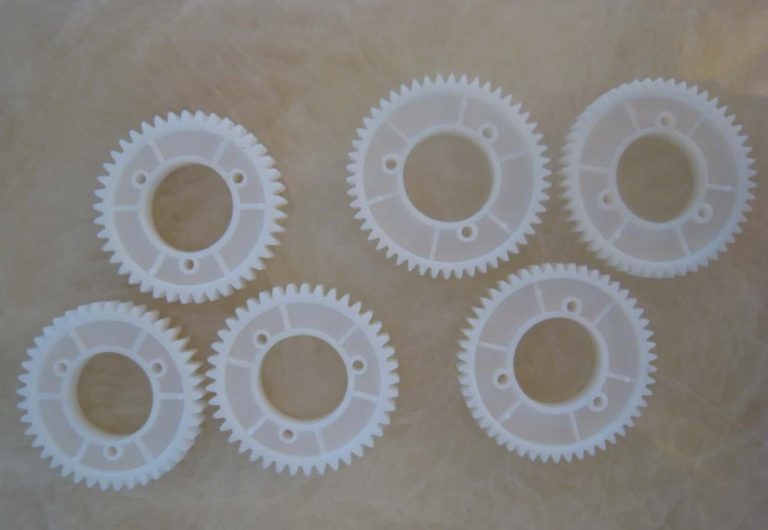
Rapid 3D printing turns digital designs into physical objects in hours instead of weeks—enabling faster prototyping, customization, and production. This article explains how it works, the key technologies, and how you can benefit from it.
Introduction: The Speed Revolution in Manufacturing
Imagine designing a part on your computer in the morning and holding it in your hands by afternoon. That's the promise of rapid 3D printing. This technology, also called additive manufacturing, has transformed how products are designed, prototyped, and produced.
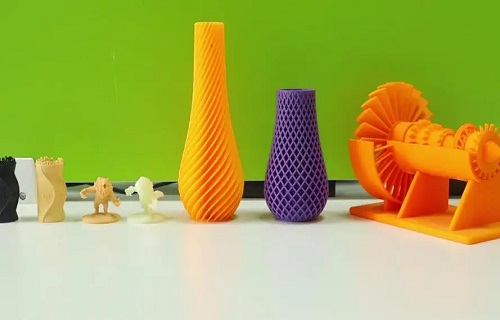
Unlike traditional methods that remove material from a larger block, rapid 3D printing builds objects layer by layer from digital files. This approach cuts production time from weeks to hours, enables complex geometries impossible to machine, and allows customization without extra cost.
From aerospace components to medical implants, rapid 3D printing is changing what's possible. This guide explains how it works, the different technologies available, and how you can put it to work for your projects.
What Exactly Is Rapid 3D Printing?
How does rapid 3D printing work?
Rapid 3D printing creates three-dimensional objects from a digital file by adding material layer upon layer. The process starts with a 3D model designed using computer-aided design (CAD) software or captured with a 3D scanner.
Specialized slicing software divides this digital model into thin cross-sections—sometimes hundreds or thousands of layers. The 3D printer reads these slices and deposits material precisely according to instructions.
Materials range from plastics like ABS and PLA to metals such as titanium and aluminum, and even ceramics and composites. Layer by layer, the object takes shape until complete.
For example, in aerospace, rapid 3D printing produces complex engine components with intricate internal structures. These would be extremely difficult and costly to manufacture traditionally. With 3D printing, they're created in a fraction of the time.
In medicine, custom prosthetics are rapidly produced to fit patients exactly. A body scan creates a 3D model, then a printer produces the prosthetic—ensuring perfect fit and potentially saving lives.
What makes it "rapid"?
The "rapid" in rapid 3D printing refers to speed compared to traditional methods. Consider:
- Traditional prototyping: Design, tooling, setup, machining—weeks to months
- Rapid 3D printing: Design, slice, print—hours to days
For complex parts, the time savings are dramatic. A bracket that might take eight weeks to machine can print overnight. This speed enables faster design iterations, quicker time-to-market, and more responsive manufacturing.
How Does Layer-by-Layer Construction Work?
What happens during printing?
At the core of rapid 3D printing is layer-by-layer construction. Think of building a house brick by brick, but in three dimensions with microscopic precision.
Each layer is a cross-section of the final object. Layer thickness varies by printer and desired detail. High-precision printers used in jewelry making can achieve layers as thin as 0.01 mm—enabling intricate, delicate designs.
The printer deposits material in precise patterns following digital instructions. In a fused deposition modeling (FDM) printer—the most common type—it melts plastic filament and extrudes it through a nozzle. The nozzle moves in X and Y directions on a flat bed, creating each layer's shape.
Once a layer completes, the build platform lowers (or the nozzle raises) by exactly one layer thickness. The next layer prints on top of the previous one, bonding to it. This continues until the entire object forms.
Why are digital models so important?
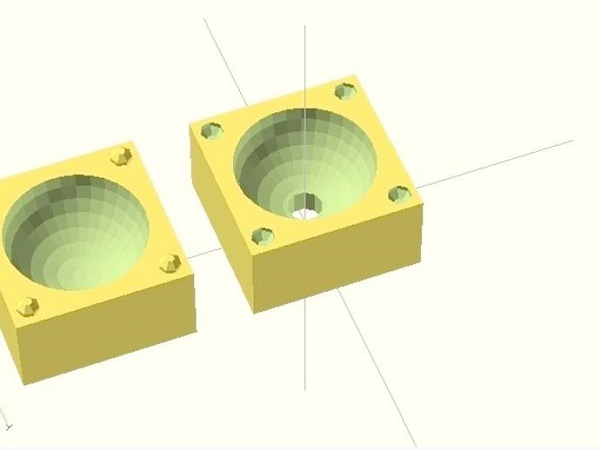
Digital models are the blueprints for 3D-printed objects. Created with CAD software or from 3D scanning, they're virtual representations where designers precisely define every dimension, curve, and feature.
When designing a custom mechanical part, an engineer uses CAD to specify exact tolerances, internal channels, and surface finishes. The digital model contains all this information.
Slicing software then divides the 3D model into 2D cross-sections and generates G-code—instructions the printer understands. G-code tells the printer how to move the nozzle, what temperature to set, and how fast to deposit material.
Without an accurate digital model, the printer wouldn't know what to build. The final product would not meet specifications. The quality of your digital model directly determines the quality of your printed part.
What Are the Main Rapid 3D Printing Technologies?
Fused Deposition Modeling (FDM)
Fused Deposition Modeling (FDM) is the most widely used 3D printing technology, especially for desktop printers. A spool of thermoplastic filament—like ABS or PLA—feeds into a heated extruder. The extruder melts the filament and pushes it through a nozzle.
The nozzle moves in X and Y directions according to digital instructions, depositing melted material layer by layer on a build platform. As material cools, it solidifies and bonds to the previous layer.
Advantages of FDM:
- Low cost: FDM printers are relatively affordable. A basic desktop model costs a few hundred dollars. Filament rolls run around $20.
- Material variety: Supports ABS, PLA, PETG, TPU, and more. Each material offers different properties—PLA is biodegradable and good for prototypes; ABS has better heat resistance for functional parts.
- Easy to use: FDM printers are user-friendly, popular among hobbyists, students, and small manufacturers. Many prints need minimal post-processing.
Stereolithography (SLA)
Stereolithography (SLA) is a high-precision technology. It uses a vat of liquid photopolymer resin and a UV light source. A UV laser or digital light processing (DLP) projector traces each layer's cross-section onto the resin surface.
Where UV light hits, it causes a photochemical reaction—curing the resin into solid plastic. After each layer cures, the build platform lowers slightly, and new resin spreads over the previous layer. The process repeats until the object completes.
Advantages of SLA:
- High precision: Achieves fine layer resolutions—often 0.025-0.1 mm. Ideal for highly detailed models like jewelry prototypes, dental models, and intricate mechanical parts.
- Smooth surface finish: Cured resin layers bond well, creating smooth surfaces with minimal visible layer lines. This reduces post-processing needs.
Selective Laser Sintering (SLS)
Selective Laser Sintering (SLS) creates functional, durable parts. A powder bed of material—plastic, metal, or ceramic powder—spreads evenly across a build platform. A high-power laser scans the powder surface according to the 3D model's cross-section.
The laser heats powder particles, causing them to sinter (fuse together) into a solid layer. After each layer, the platform lowers, new powder spreads, and the process repeats.
Advantages of SLS:
- Material versatility: Works with nylon, polycarbonate, metal alloys (titanium, aluminum), and some ceramics. Suitable for diverse applications from aerospace to consumer products.
- No support structures required: Unsintered powder supports the part during printing. No need to design and print additional supports—simplifying the process and reducing waste.
- Good mechanical properties: SLS parts often have excellent strength and durability, suitable for end-use applications.
Technology Comparison
| Technology | Best For | Layer Resolution | Material Cost | Equipment Cost |
|---|---|---|---|---|
| FDM | Prototypes, large parts, low-cost | 0.1-0.3mm | Low | Low |
| SLA | High-detail, smooth finish | 0.025-0.1mm | Moderate | Moderate |
| SLS | Functional parts, complex geometries | 0.07-0.15mm | High | High |
What Can You Create With Rapid 3D Printing?
Aerospace applications
Rapid 3D printing produces complex engine components with internal cooling channels impossible to machine. GE Aviation prints fuel nozzles as single parts instead of assembling them from 20 components—25% lighter and five times more durable.
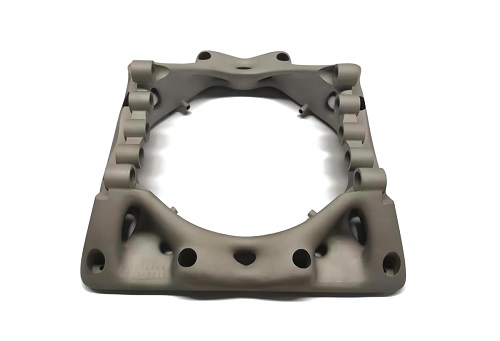
Brackets, housings, and structural elements print with lattice structures reducing weight while maintaining strength. Every kilogram saved in aerospace means significant fuel savings over an aircraft's lifetime.
Medical applications
Custom implants match patient anatomy exactly. Hip implants designed from CT scans fit perfectly, with studies showing 20% faster recovery compared to standard implants.
Surgical models print from patient scans, letting surgeons practice complex procedures before entering the operating room. Custom prosthetics, dental crowns, and surgical guides all benefit from rapid 3D printing's speed and customization.
Automotive applications
Prototypes print overnight instead of waiting weeks for tooling. Designers iterate quickly, testing multiple versions before committing to production.
Custom parts for high-performance vehicles—intake manifolds, brackets, housings—optimize weight and performance. Spare parts for classic vehicles print on demand, eliminating inventory costs.
Consumer products
Custom phone cases, jewelry, eyewear, and home decor—all personalized without extra cost. Entrepreneurs bring products to market faster, testing designs with small batches before scaling up.
What Are the Benefits for Your Projects?
Speed
Traditional prototyping takes weeks. Molds must be made, tooling set up, machines scheduled. Rapid 3D printing eliminates these steps. A part that would take eight weeks can print overnight.
This speed transforms product development. More iterations mean better designs. Faster time-to-market means competitive advantage. Quick responses to customer feedback mean happier clients.
Cost-effectiveness for small batches
Traditional manufacturing has high upfront costs—molds, tooling, setup. These costs spread across thousands of parts make sense for mass production. But for small batches, they're prohibitive.
Rapid 3D printing has no tooling costs. The same printer produces one part or one hundred with the same setup. For quantities under 1,000 units, it's often more economical than injection molding.
Design freedom
Traditional manufacturing constrains design. Machining requires tool access. Molding requires draft angles and parting lines. These constraints limit what you can create.
Rapid 3D printing removes these constraints. Internal channels, lattice structures, organic shapes—if you can model it, you can print it. This freedom enables innovations impossible with traditional methods.
Customization
With traditional manufacturing, each variant adds cost. Different molds, different setups, different programs. Customization becomes expensive quickly.
With rapid 3D printing, customization costs nothing. The same printer, same material, same setup—just a different digital file. Every part can be unique without extra cost. This enables mass customization—tailoring products to individual needs at near-mass-production economics.
Reduced waste
Subtractive manufacturing cuts away material, wasting 80-90% in some cases. Rapid 3D printing adds material only where needed. Waste drops to near zero.
For expensive materials like titanium, this matters enormously. Material savings often offset higher equipment costs, making 3D printing economical for complex, high-value parts.
Yigu Technology's Perspective
As a non-standard plastic and metal products custom supplier, Yigu Technology highly values rapid 3D printing. This technology lets us bring complex and innovative designs to life.
In the past, creating non-standard plastic parts with intricate internal channels or unique geometric shapes challenged traditional manufacturing. With rapid 3D printing, we directly translate these complex digital designs into physical products.
Rapid 3D printing significantly improves customization efficiency. We quickly produce prototypes for client review and adjustment—reducing time spent on back-and-forth communication and sample production.
It also enhances product quality through precise control over material deposition and the manufacturing process. Although initial equipment investment can be high, for small-batch and customized production, it reduces waste and overall costs by eliminating expensive molds.
Conclusion
Rapid 3D printing has revolutionized how products are designed and manufactured. Its ability to turn digital designs into physical objects in hours—with complex geometries, customization, and minimal waste—makes it invaluable across industries.
Key takeaways:
- Rapid 3D printing builds objects layer by layer from digital files
- FDM offers low-cost versatility, SLA provides high precision, SLS delivers functional parts
- Benefits include speed, cost-effectiveness for small batches, design freedom, customization, and reduced waste
- Applications span aerospace, medical, automotive, and consumer products
Whether you're prototyping a new product, manufacturing custom parts, or exploring what's possible, rapid 3D printing offers capabilities traditional methods cannot match.
FAQ
Q1: What materials can be used in rapid 3D printing?
A: Common materials include plastics like ABS (high strength, heat resistance), PLA (biodegradable, great for prototypes), PETG (transparency, stability), and TPU (elasticity). Metals such as titanium, aluminum, and stainless steel are used for high-strength applications. Ceramics offer high-temperature and wear resistance. Composites combine multiple material advantages, and specialty materials like food-grade options exist for edible items.
Q2: Is rapid 3D printing suitable for large-scale production?
A: Currently, rapid 3D printing has both advantages and limitations for mass production. It enables mass customization and reduces inventory through on-demand printing. However, slower speeds compared to traditional methods and higher equipment/material costs can be barriers. As technology improves, speed and cost-effectiveness continue increasing, making it more viable for larger volumes.
Q3: How accurate is rapid 3D printing?
A: Accuracy depends on multiple factors. High-end SLA printers achieve ±0.05 mm or better. Factors affecting accuracy include printer mechanical stability, nozzle quality (in FDM), material shrinkage rates, and printing parameters like layer thickness. For jewelry or micro-mechanical parts, high-precision printers with fine layer resolutions are essential. For large prototypes, lower precision may be acceptable.
Q4: What's the difference between FDM, SLA, and SLS?
A: FDM melts and extrudes plastic filament—low cost, easy to use, good for prototypes. SLA cures liquid resin with UV light—high precision, smooth finish, ideal for detailed parts. SLS sinters powder with a laser—functional parts, no supports needed, excellent mechanical properties.
Q5: How much does a 3D printer cost?
A: Desktop FDM printers start around $200-500 for hobbyist models. Professional FDM printers run $2,000-10,000. SLA printers range from $500 (desktop) to $10,000+ (professional). SLS and metal printers start at $50,000 and can exceed $500,000 for industrial systems.
Q6: Do I need special software for 3D printing?
A: You need CAD software for design (Fusion 360, SolidWorks, TinkerCAD—some free) and slicing software to prepare files (many free options like Cura, PrusaSlicer, Chitubox). Most printers include basic software.
Q7: How long does it take to learn 3D printing?
A: Basic operation can be learned in days. Mastering design for additive manufacturing—optimizing parts for printability and performance—takes months to years of practice. Start with simple projects and gradually increase complexity.
Contact Yigu Technology for Custom Manufacturing
Ready to leverage rapid 3D printing for your next project? At Yigu Technology, we combine deep expertise with state-of-the-art additive manufacturing capabilities. Whether you need prototypes, custom parts, or small-batch production, our team delivers precision results tailored to your specifications. Contact us today for a consultation—let's turn your designs into reality faster than you thought possible.