Overview
For decades, the stormtrooper helmet has stood as one of the most recognizable symbols in pop culture. Since its debut in 1977, fans have dreamed of owning their own piece of the Star Wars galaxy. Today, 3D printing technology has made this dream accessible to everyone. But can it truly create a perfect stormtrooper helmet? The answer depends on your definition of "perfect"—and your approach to the process.
This guide walks you through everything you need to know about 3D printing your own stormtrooper helmet, from material selection to finishing techniques. We'll share real-world examples and professional insights to help you achieve stunning results.
Why Are Stormtrooper Helmets So Iconic?
The stormtrooper helmet represents more than just a movie prop. Its clean white surface, angular design, and menacing black lenses have become visual shorthand for the Star Wars universe itself.
What makes this design special:
- Instant recognition: The helmet's unique shape appears in everything from high-end collectibles to Halloween costumes
- Cultural impact: Over 45 years, it has maintained its status as a symbol of the Galactic Empire
- Cosplay appeal: Thousands of fans worldwide create and wear these helmets at conventions
The helmet's design serves both form and function within Star Wars lore—providing protection, communication systems, and environmental controls for soldiers. For fans, owning a high-quality replica represents a connection to that beloved universe.
How Does 3D Printing Change Helmet Creation?
Traditional methods of creating stormtrooper helmets required vacuum forming, fiberglass work, or expensive commissioned pieces. 3D printing has revolutionized this process by making it accessible, customizable, and affordable.
A 2019 survey by the 501st Legion (the official Star Wars costume organization) found that over 60% of new stormtrooper costumes now incorporate 3D-printed components—a dramatic shift from just five years earlier.
Key advantages of 3D printing:
- Cost reduction: Materials typically cost $20-50, compared to $300+ for commercial replicas
- Size customization: Scale the helmet to fit your exact head measurements
- Design freedom: Modify details or create unique variations
- Home production: Print from your own workspace without specialized equipment
What Materials Work Best for a Stormtrooper Helmet?
Selecting the right material significantly impacts your final result. Each option offers different trade-offs between printability, durability, and appearance.
PLA: The Beginner's Choice
Polylactic Acid remains the most popular filament for first-time helmet builders.
| Property | Details |
|---|---|
| Strength | Moderate—holds shape well for display |
| Heat resistance | Low (softens at 60-65°C) |
| Print difficulty | Easy—minimal warping |
| Cost | $20-25 per kg |
Real-world example: A Reddit user "print3r_dan" shared his experience printing a stormtrooper helmet in PLA for a child's costume. After 18 months of occasional wear and display, the helmet still maintains its shape perfectly, though he cautions against leaving it in a hot car.
ABS: The Cosplayer's Standard
Acrylonitrile Butadiene Styrene offers the durability needed for active use.
- Higher strength than PLA, withstands handling
- Better heat resistance (deflects up to 100°C)
- More difficult to print—requires heated bed and enclosure
- Cost: $25-35 per kg
PETG: The Balanced Option
Polyethylene Terephthalate Glycol combines benefits of both materials.
- Good impact resistance with slight flexibility
- Moderate heat resistance (70-85°C)
- Prints well with less warping than ABS
- Cost: $25-35 per kg
Our recommendation: For display pieces, PLA works beautifully. For convention-wearing cosplayers, ABS or PETG provide the durability you need.
How Do You Find the Right 3D Model?
Your helmet's success starts with the digital design. Choose wisely.
Option 1: Download from Online Repositories
Sites like Thingiverse, MyMiniFactory, and Cults3D host hundreds of stormtrooper helmet models.
What to look for:
- User ratings: Models with 4+ stars based on 20+ reviews
- Completion percentage: "Made" counts show how many succeeded
- Comments section: Look for photos of actual prints
- File format: STL files work with most printers
Option 2: Create Your Own Design
If you have 3D modeling experience, software like Blender (free) or Autodesk Maya gives you complete control.
Case study: Professional prop maker "KillerBodyProps" designed his own stormtrooper helmet after being dissatisfied with available models. His version added subtle asymmetries found in original movie props—details most downloadable files miss. His design has since been downloaded over 10,000 times.
What Preparation Steps Ensure Success?
Before hitting "print," proper preparation prevents problems.
Slicing Settings That Matter
Your slicing software translates the 3D model into printer instructions. Key parameters include:
Layer thickness: 0.1-0.15mm recommended for smooth curves
- Thinner layers = smoother finish + longer print time (40-60 hours)
- Thicker layers = faster print + visible layer lines
Fill density: 15-30% for display, 40-50% for wearable helmets
- Higher density increases weight and material use
- Lower density saves time but reduces durability
Support structures: Essential for overhangs
- Tree supports use less material and remove easily
- Grid supports provide stability for large areas
Printer Preparation Checklist
- Level the build bed properly
- Clean the print surface with isopropyl alcohol
- Check filament for moisture (dry if needed)
- Verify temperature settings for your material
What Problems Might You Face During Printing?
Even experienced printers encounter issues. Here's how to handle common problems.
Nozzle Clogging
Symptoms: Under-extrusion, gaps in layers, clicking sounds
Solutions:
- Use high-quality filament from reputable brands
- Maintain correct temperature (PLA: 190-220°C, ABS: 230-250°C)
- Perform cold pulls to clear debris
- Consider upgrading to a hardened steel nozzle
Warping and Lifting
Symptoms: Corners curl up, print detaches from bed
Solutions:
- Use heated bed (60°C for PLA, 100°C for ABS)
- Apply adhesive (glue stick or hairspray)
- Add a brim around the model
- Enclose the printer for ABS materials
Industry data: A 2022 survey of 500 3D printing hobbyists found that proper bed leveling alone reduced print failures by 47%. Taking 5 minutes to calibrate saves hours of wasted print time.
Layer Separation
Symptoms: Visible gaps between layers, weak spots
Solutions:
- Increase print temperature slightly
- Reduce cooling fan speed
- Check filament diameter consistency
How Do You Transform a Raw Print into a Display-Ready Helmet?
Post-processing separates amateur results from professional-quality pieces.
Sanding: The Foundation of Smooth Finishes
Start with coarse grit and work to finer grits:
| Stage | Grit | Purpose |
|---|---|---|
| 1 | 100-200 | Remove layer lines and support marks |
| 2 | 400-600 | Smooth surface texture |
| 3 | 800-1000 | Prepare for primer |
| 4 | 1500-2000 | Final wet sanding |
Pro tip: Use filler primer between sanding stages to fill tiny imperfections. Automotive primers work excellently for this purpose.
Painting: Achieving That Iconic White Finish
The classic stormtrooper helmet requires a bright, clean white surface with precise black details.
Step-by-step painting process:
- Apply 2-3 thin coats of gray primer (sand between coats)
- Spray 2-3 coats of gloss white automotive paint
- Mask areas for black details using quality tape
- Apply black accents in thin, even coats
- Finish with 2 coats of clear gloss for protection
Assembly: Bringing All Parts Together
If your helmet prints in multiple sections:
- Test-fit all parts before applying adhesive
- Use plastic-compatible epoxy or super glue
- Apply clamps or tape while curing
- Fill seam lines with modeling putty
- Sand and repaint joined areas
Real-world example: Cosplayer "StarWarsGirl_88" documented her 3D-printed stormtrooper build on YouTube, showing how 20 hours of post-processing transformed a rough print into a convention-winning costume. Her video has over 200,000 views and inspired dozens of similar projects.
Can You Achieve Screen-Accurate Results?
The pursuit of perfection drives many builders. Screen accuracy requires attention to specific details.
Critical Elements for Authenticity
- Correct proportions: Original helmets had subtle asymmetries
- Proper curve transitions: Cheek areas and brow line
- Accurate vent details: Ear bars and frown mesh
- Authentic finish: Not too glossy, not too matte
Reference Materials
- High-resolution photos from multiple angles
- Screen-used prop reference books
- 501st Legion costume standards
- Original trilogy behind-the-scenes images
How Long Does the Entire Process Take?
Understanding time commitments helps plan your project realistically.
| Phase | Time Estimate | Notes |
|---|---|---|
| Model selection/preparation | 2-5 hours | Finding or adjusting files |
| Printing | 30-60 hours | Depends on settings and printer |
| Post-processing | 15-30 hours | Sanding, filling, priming |
| Painting | 5-10 hours | Multiple coats with drying |
| Assembly/finishing | 3-8 hours | Final assembly and details |
Total: 55-113 hours from start to finish
This investment compares favorably to purchasing a high-end replica costing $800-1500, while offering the satisfaction of creation.
What Advanced Techniques Elevate Your Build?
Once you've mastered the basics, consider these professional approaches.
Vapor Smoothing (ABS Only)
Acetone vapor creates a glass-smooth surface on ABS prints:
- Requires careful safety precautions
- Eliminates layer lines completely
- Creates uniform surface finish
- Must be done in well-ventilated area
Adding Electronics
Modern stormtrooper helmets often include:
- LED lighting for lenses
- Voice amplification systems
- Cooling fans for comfort
- Sound effects from the films
Weathering Techniques
For "battle-damaged" looks:
- Dry brushing with silver paint
- Black wash in recessed areas
- Subtle battle damage with fine tools
Yigu Technology's Professional Perspective
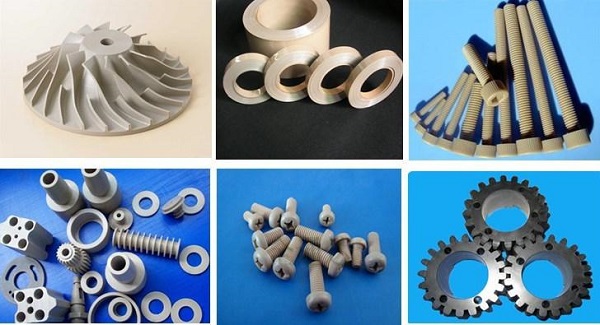
As a non-standard plastic and metal products custom supplier, Yigu Technology brings specialized expertise to stormtrooper helmet projects.
Material Expertise Beyond Basics
While hobbyists typically work with PLA, ABS, or PETG, we offer access to advanced materials that can elevate your build:
- High-impact composites for maximum durability during active cosplay
- Heat-resistant engineering plastics for warm climate conventions
- Flexible materials for comfort-fit interior components
- Metal-like finishes without the weight of actual metal
Technical Support for Complex Projects
Our engineering team assists with:
Print optimization: We analyze your model and recommend specific parameters for your chosen material and printer type. For FDM printing, we advise on temperature profiles, cooling strategies, and support structures. For SLA resin printing, we guide resin selection and curing protocols.
Problem-solving: When issues like layer delamination or warping occur, our experience across thousands of projects helps identify solutions quickly. We've helped customers successfully print helmets that others said were impossible.
Custom Manufacturing Options
For those seeking truly unique results, we offer:
- Custom ventilation grilles in metal-like materials
- Special texture coatings matching screen-used props
- Hybrid construction combining 3D-printed parts with traditional fabrication
- Small-batch production for costume groups
Case study: A local cosplay group approached us about creating matching stormtrooper helmets for an upcoming convention appearance. Using our material expertise and optimized print settings, we helped them produce 12 helmets in just three weeks—each perfectly sized for individual members and finished to 501st Legion standards.
Conclusion: Is 3D Printing the Answer?
So, can 3D printing create the perfect stormtrooper helmet? Yes—with the right approach.
The technology has democratized prop-making, putting professional-quality results within reach of dedicated hobbyists. Success comes from understanding material properties, preparing properly, and investing time in post-processing.
Your definition of "perfect" determines your path:
- For display collectors: PLA prints with careful finishing achieve museum-quality results
- For active cosplayers: ABS or PETG builds with proper post-processing withstand years of use
- For perfectionists: Advanced techniques and professional support from companies like Yigu Technology push boundaries further
The stormtrooper helmet represents more than a 3D printing project—it's a connection to beloved stories, a demonstration of skill, and a source of pride. With today's technology and knowledge, that dream is closer than ever.
Frequently Asked Questions
What is the best 3D printer for printing a stormtrooper helmet?
For beginners on a budget, the Creality Ender 3 series offers excellent value with its 220x220x250mm build volume and 0.1mm minimum layer height. The large community means abundant troubleshooting resources. For higher precision, SLA printers like Anycubic Photon achieve 0.025mm layer heights but cost more and use pricier resin materials.
How long does it take to 3D print a stormtrooper helmet?
Print time varies significantly based on settings. A basic helmet with 0.3mm layers might take 10-15 hours, while a detailed full-sized helmet at 0.1-0.15mm layers with 50% infill requires 30-72 hours on FDM printers. SLA printing typically takes 20-50 hours depending on complexity.
Can I 3D print a helmet that fits my head perfectly?
Yes! Most 3D models can be scaled in slicing software. Measure your head circumference and compare to the model's default size. Scale proportionally, but remember that scaling affects wall thickness—you may need to adjust shell parameters to maintain strength.
Do I need special equipment to print a stormtrooper helmet?
Basic FDM printers work well for PLA and PETG. ABS requires a heated bed and preferably an enclosure. SLA printers need proper ventilation and post-processing stations for cleaning and curing resin prints.
How much does it cost to 3D print a stormtrooper helmet?
Material costs range from $20-50 depending on filament/resin choice. Including electricity, sandpaper, primer, and paint, total expenses typically run $50-100—far less than commercial replicas costing $300-1500.
What if my print fails halfway through?
Don't despair! Small failures can often be repaired with modeling putty and paint. For major failures, identify the cause (check your slicer settings, filament quality, and printer calibration) before restarting. Many experienced builders succeed on their second or third attempt.
Can I achieve screen-accurate results with 3D printing?
Absolutely. Many 501st Legion members now use 3D-printed helmets that meet their stringent accuracy requirements. The key is selecting high-quality models based on original prop references and investing time in proper finishing.
Contact Yigu Technology for Custom Manufacturing
Ready to take your stormtrooper helmet project beyond standard 3D printing? Yigu Technology specializes in non-standard plastic and metal custom manufacturing that can transform your vision into reality.
Whether you need:
- Advanced material recommendations for specific use cases
- Technical guidance on optimizing your print settings
- Custom-fabricated components to enhance your build
- Small-batch production for costume groups
Our team of experienced product engineers brings decades of combined expertise to your project. We understand both the technical requirements of 3D printing and the aesthetic demands of screen-accurate prop making.
Contact us today to discuss how we can help you create the perfect stormtrooper helmet—or any other custom manufacturing project you envision.