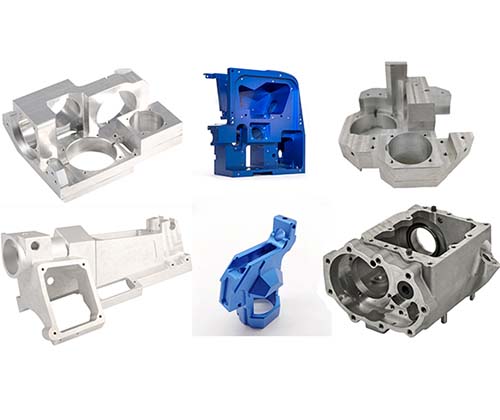
Selective Laser Melting (SLM) manufacturing uses high-powered lasers to melt metal powder into fully dense, complex parts—enabling innovations in aerospace, medical, and automotive industries that traditional methods cannot match.
Introduction: The Power of Metal 3D Printing
Imagine producing a jet engine fuel nozzle with internal cooling channels impossible to machine—as a single piece instead of 20 assembled components. Imagine a hip implant custom-designed from a patient's CT scan, promoting better bone integration and faster recovery. Imagine lightweight automotive brackets with lattice structures that reduce weight by 40% while maintaining strength.
This is SLM manufacturing—Selective Laser Melting—one of the most powerful metal 3D printing technologies available today.
SLM uses high-powered lasers to melt metal powder layer by layer, creating fully dense parts with mechanical properties matching or exceeding traditionally manufactured components. From aerospace to medicine, it's enabling designs and production methods that were simply impossible a decade ago.
This guide explains how SLM works, its key applications, the materials it uses, and what you need to know to leverage this transformative technology.
What Is SLM Manufacturing and How Does It Work?
What is the basic principle?
SLM manufacturing—short for Selective Laser Melting—is an advanced additive manufacturing technology. It uses a high-power laser beam to selectively melt metal powder layer by layer, solidifying it into a three-dimensional object based on a digital 3D model.
The process follows these steps:
Step 1: Powder Spreading
A thin layer of metal powder spreads evenly across the build platform. Layer thickness typically ranges from 20 to 100 micrometers (0.02-0.1mm)—about the width of a human hair. The exact thickness depends on the material and part requirements.
Step 2: Laser Scanning
A high-energy laser beam scans the powder layer according to cross-sectional data from the 3D model. Wherever the laser hits, metal powder melts and fuses together.
- Laser power: Few hundred watts to several kilowatts
- Scanning speed: Centimeters per second to several meters per second
- Settings optimized for specific materials and part complexity
Step 3: Layer-by-Layer Stacking
After one layer completes, the build platform lowers by exactly one layer thickness. A new powder layer spreads, and the laser scanning repeats. This layer-by-layer process continues until the entire 3D object is complete.
What are the key components of an SLM system?
Laser System: The core of any SLM machine. Fiber lasers are commonly used due to their:
- High energy efficiency
- Excellent beam quality
- High power output
A 400-watt fiber laser can effectively melt metal powders like titanium alloy, stainless steel, and aluminum alloy.
Scanning System: Includes galvanometer-based mirrors that precisely control laser beam movement across the powder bed. These mirrors change beam direction quickly and accurately, enabling high-speed scanning of complex geometries. High-end systems achieve scanning speeds up to 7 m/s.
Powder Supply System: Stores and supplies metal powder to the build area. Components include:
- Powder hoppers for storage
- Powder feeders ensuring stable, continuous supply
- Powder spreading mechanisms distributing thin, even layers
Forming Chamber: Provides a controlled environment for the SLM process. It's filled with inert gas—typically argon or nitrogen—to prevent oxidation of metal powder and molten metal during melting and solidification. Oxygen content is maintained below 100 ppm (parts per million).
What Materials Can Be Used in SLM Manufacturing?
Aluminum alloys
Properties: Lightweight, good corrosion resistance, high specific strength
Common alloy: AlSi10Mg
Applications:
- Aerospace: Wing components, structural parts
- Automotive: Engine components, suspension parts
- Consumer goods: Lightweight housings, heat exchangers
Why choose aluminum: Excellent strength-to-weight ratio and thermal conductivity. Parts can be up to 40% lighter than traditional cast versions.
Titanium alloys
Properties: Exceptional strength-to-weight ratio, high corrosion resistance, excellent biocompatibility
Common alloy: Ti-6Al-4V (the workhorse titanium alloy)
Applications:
- Aerospace: Engine components, structural brackets
- Medical: Custom implants (hip, knee, dental), surgical instruments
- Automotive: High-performance components
Why choose titanium: Unmatched combination of strength and biocompatibility. Implants show 30% fewer complications compared to standard versions.
Stainless steels
Properties: High strength, good corrosion resistance, relatively easy to process
Common alloy: 316L stainless steel
Applications:
- Food and beverage industry: Corrosion-resistant components
- Chemical industry: Valves, fittings
- Medical equipment: Surgical tools, instrument housings
- Industrial: Tooling, fixtures
Why choose stainless steel: Excellent corrosion resistance and mechanical properties at reasonable cost.
Nickel-based alloys (Inconel)
Properties: High-temperature strength, excellent corrosion resistance
Common alloys: Inconel 625, Inconel 718
Applications:
- Aerospace: Turbine blades, combustion chambers, exhaust components
- Energy: Heat exchangers, oil and gas components
- Automotive: Turbocharger parts
Why choose Inconel: Maintains strength at temperatures exceeding 1000°C—essential for high-heat applications.
| Material | Key Properties | Typical Applications | Advantages |
|---|---|---|---|
| Aluminum Alloys | Lightweight, good thermal conductivity | Aerospace structures, automotive parts | 40% weight reduction possible |
| Titanium Alloys | High strength-to-weight, biocompatible | Medical implants, aerospace components | 30% fewer implant complications |
| Stainless Steel | Corrosion resistant, strong | Medical tools, industrial components | Cost-effective, versatile |
| Inconel | High-temperature strength | Turbine blades, exhaust systems | Maintains strength above 1000°C |
What Are the Key Applications of SLM Manufacturing?
Aerospace industry
Engine Components: SLM produces critical engine parts like turbine blades and combustion chambers.
GE Aviation manufactures fuel nozzles for its LEAP engine using SLM. These nozzles feature complex internal channels for efficient fuel-air mixing. Traditional manufacturing required multiple assembled parts—increasing leakage risk and reducing efficiency. With SLM, each nozzle is a single, integrated part.
Results: Weight reduction up to 25% , improved fuel efficiency, reduced emissions.
Structural Components: SLM creates lightweight yet strong structural components.
Airbus uses SLM-made titanium alloy brackets and struts. Lattice structures significantly reduce weight while maintaining strength. Studies show weight reduction up to 40% compared to conventionally manufactured parts—directly contributing to lower fuel consumption and increased payload.
Medical field
Customized Implants: SLM enables highly personalized implants.
In dental applications, titanium dental implants precisely fit individual jawbone structures. Based on 3D scans of the patient's mouth, they ensure perfect fit and better osseointegration (bone growing into the implant).
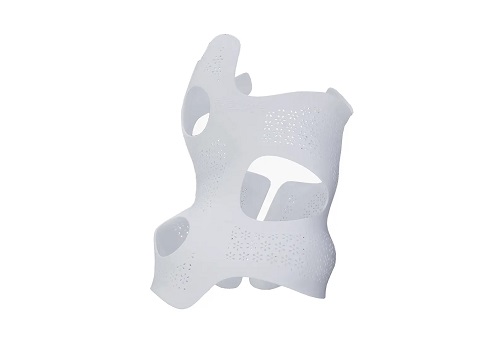
In orthopedics, hip and knee implants customized to patient anatomy reduce rejection risk and improve long-term stability. A clinical study showed SLM-made hip implants had 30% fewer implant-related complications compared to traditional implants.
Surgical Instruments: SLM manufactures instruments with complex geometries. Forceps, scalpels, and other tools feature:
- Ergonomic designs for better handling
- Textured grips for improved control
- Hollow structures reducing weight without sacrificing strength
Automotive industry
Lightweight Components: High-performance car manufacturers use SLM for aluminum alloy suspension components. Optimized geometries reduce weight by up to 30% compared to cast or forged parts. This improves:
- Fuel efficiency
- Vehicle handling performance
- Acceleration and responsiveness
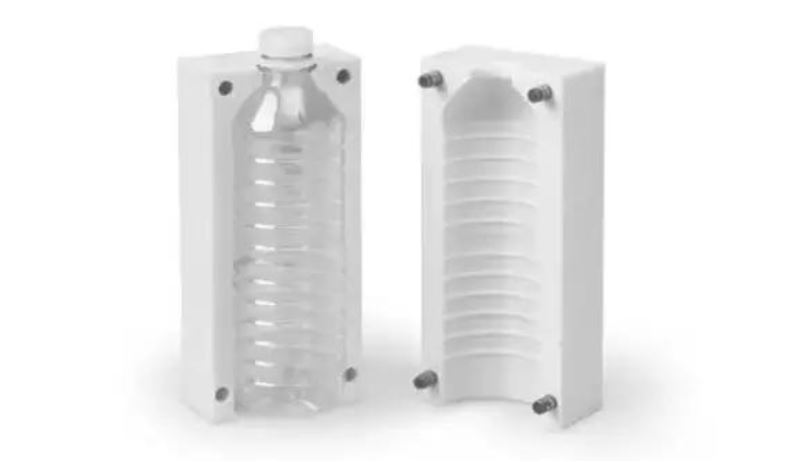
Complex Molds: SLM creates molds with intricate cooling channels and internal structures. These improve cooling efficiency during injection molding.
A case study showed SLM-made molds reduced cycle time for plastic automotive parts by 20% —directly increasing production efficiency.
Tooling and industrial
Conformal cooling channels: Molds with cooling channels that follow part contours reduce cycle times and improve part quality.
Lightweight fixtures: Industrial fixtures and jigs with optimized structures reduce operator fatigue while maintaining strength.
Replacement parts: Obsolete or hard-to-find parts printed on-demand, reducing downtime and inventory costs.
What Are the Advantages of SLM Manufacturing?
Design freedom
SLM removes geometric constraints of traditional manufacturing:
- Internal channels for cooling or fluid flow
- Lattice structures reducing weight while maintaining strength
- Organic shapes optimized for performance
- Consolidated assemblies replacing multi-part constructions
Material properties
SLM-produced parts achieve near 100% density—comparable to wrought materials. Mechanical properties often match or exceed traditionally manufactured components:
- Tensile strength comparable to forged materials
- Fatigue resistance optimized through process control
- Consistent microstructure throughout the part
Material efficiency
Traditional machining can waste 80-90% of expensive metal. SLM uses only what's needed—achieving 85-95% material utilization. For titanium and Inconel, this matters enormously.
Customization
Each part can be unique without cost penalty. Medical implants tailored to individual patients. Aerospace brackets optimized for specific load conditions. Custom tooling designed for particular operations.
Reduced lead times
For complex parts, SLM slashes development time:
- No tooling to design and manufacture
- Digital files print directly
- Design iterations in days instead of months
What Are the Limitations of SLM Manufacturing?
Speed
Layer-by-layer construction is relatively slow. Producing a large, complex part may take several days or even weeks—much slower than traditional mass-production methods like casting or forging.
Cost
- Equipment: Industrial SLM systems cost $500,000 to $1.5 million
- Materials: Metal powders are expensive (titanium: $200-400/kg)
- Post-processing: Heat treatment, support removal, surface finishing add cost
Build size
Build volumes limit maximum part size. Most SLM systems handle parts up to 200-400mm in each dimension. Larger parts require segmentation and welding.
Post-processing requirements
SLM parts rarely come out ready to use:
- Support removal (cutting away structures needed during printing)
- Heat treatment to relieve residual stresses
- Surface finishing (machining, polishing, blasting)
- Hot Isostatic Pressing (HIP) to eliminate internal porosity for critical applications
Quality assurance
Ensuring consistent quality requires:
- Precise control of equipment parameters
- Powder quality inspection
- Process monitoring during printing
- Post-production inspection (often non-destructive testing)
How Is Quality Ensured in SLM Manufacturing?
Equipment parameter control
Precise control of:
- Laser power: Too low → incomplete melting, porosity. Too high → over-melting, distortion.
- Scanning speed: Affects melt pool dynamics and solidification
- Layer thickness: Impacts resolution and build time
Powder quality inspection
Regular testing of:
- Particle size distribution: Consistent sizes ensure uniform melting
- Purity: Contaminants cause defects
- Flowability: Affects spreading and layer uniformity
Process monitoring
In-situ monitoring techniques:
- High-speed cameras observing melt pool
- Infrared sensors detecting temperature variations
- Optical tomography identifying defects during printing
These detect issues like powder splashing, lack of fusion, and porosity in real-time.
Post-processing
- Heat treatment: Relieves internal stress, improves mechanical properties
- Machining: Improves dimensional accuracy and surface quality
- Surface finishing: Polishing, blasting for required finish
- Non-destructive testing: X-ray CT scanning to detect internal defects
Is SLM Manufacturing Suitable for Mass Production?
Current limitations
Efficiency: Layer-by-layer process is relatively slow. Producing thousands of identical parts takes much longer than injection molding or forging.
Cost: High equipment and material costs make per-part economics challenging for high volumes.
Quality consistency: Maintaining uniform properties across many parts requires rigorous process control.
Future potential
Multi-laser systems: New machines with multiple lasers increase build speed significantly.
Larger build volumes: Bigger platforms enable more parts per build.
Automated post-processing: Streamlined support removal and finishing reduce labor costs.
Material cost reduction: As adoption grows and powder production scales, material costs decline.
For now, SLM excels for:
- Low-volume production (under 1,000 parts)
- Complex geometries impossible to machine
- Customized parts requiring personalization
- High-value applications where performance justifies cost
As technology advances, it will become increasingly viable for larger production runs.
Yigu Technology's View
As a non-standard plastic and metal products custom supplier, Yigu Technology highly values SLM manufacturing. This technology offers remarkable opportunities for customized production, allowing us to bring clients' most complex design ideas to life.
With SLM, we're no longer restricted by traditional manufacturing limitations. When clients have designs with intricate internal structures or unique geometries for metal components, SLM handles them with ease.
The technology enables us to produce parts with high precision, reducing the need for extensive post-processing. This saves time and cuts production costs in the long run.
SLM manufacturing has become an essential tool in our toolkit—helping us meet the diverse and ever-evolving needs of our clients across aerospace, medical, automotive, and industrial applications.
Conclusion
SLM manufacturing represents one of the most powerful metal 3D printing technologies available. Its ability to create fully dense, complex metal parts with excellent mechanical properties is transforming industries.
Key takeaways:
- SLM uses high-powered lasers to melt metal powder layer by layer
- Common materials: aluminum, titanium, stainless steel, Inconel
- Applications span aerospace (engine components), medical (custom implants), and automotive (lightweight parts)
- Advantages include design freedom, material properties, efficiency, customization, and reduced lead times
- Limitations include speed, cost, build size, and post-processing requirements
- Quality requires careful parameter control, powder quality, process monitoring, and post-processing
For complex, high-value metal parts where performance matters most, SLM delivers capabilities that traditional manufacturing simply cannot match.
FAQ
Q1: What types of materials can be used in SLM manufacturing?
A: Common materials include aluminum alloys (lightweight, good thermal conductivity), titanium alloys (high strength-to-weight, biocompatible), stainless steels (corrosion resistant, strong), and nickel-based alloys like Inconel (high-temperature strength). Each offers specific properties for different applications.
Q2: How to ensure the quality of SLM-manufactured parts?
A: Quality is ensured through: (1) Precise control of equipment parameters (laser power, scanning speed, layer thickness), (2) Powder quality inspection (particle size, purity, flowability), (3) In-situ process monitoring (cameras, sensors), and (4) Post-processing including heat treatment, machining, and non-destructive testing.
Q3: Is SLM manufacturing suitable for mass production?
A: Currently, SLM has limitations for mass production due to slower speeds and higher costs compared to traditional methods. However, it excels for low-volume production, complex geometries, customized parts, and high-value applications. Multi-laser systems and larger build volumes are improving viability for larger runs.
Q4: How accurate is SLM manufacturing?
A: SLM typically achieves dimensional accuracy of ±0.1-0.2mm for most features. Critical surfaces often require finish machining for tighter tolerances. Layer thickness as low as 20 microns enables excellent detail and surface finish.
Q5: What's the difference between SLM and DMLS?
A: They're very similar—both use lasers to melt metal powder. SLM (Selective Laser Melting) typically implies fully melting powder to achieve 100% density. DMLS (Direct Metal Laser Sintering) originally indicated sintering (not fully melting), but the terms are often used interchangeably today.
Q6: How much does SLM manufacturing cost?
A: Costs vary widely. Equipment: $500,000 to $1.5 million. Materials: $50-400/kg depending on metal. Part cost depends on size, complexity, and quantity. For complex, high-value parts, SLM is often economical compared to traditional methods with extensive machining.
Q7: Can SLM produce large parts?
A: Build volumes limit maximum size—typically 200-400mm in each dimension. Larger parts can be printed in sections and welded together. Industrial systems with larger build volumes are available but cost significantly more.
Contact Yigu Technology for Custom Manufacturing
Ready to explore how SLM manufacturing can advance your next metal part project? At Yigu Technology, we combine deep expertise with state-of-the-art selective laser melting capabilities. Whether you need aerospace components, medical implants, automotive parts, or specialized industrial components, our team delivers precision results tailored to your specifications. Contact us today for a consultation—let's turn your complex metal designs into reality with SLM technology.