Introduction
You have a project that requires sheet metal parts. You find dozens of fabrication shops, but how do you separate the exceptional from the average? A great factory delivers more than just parts. It provides precision, reliability, and partnership that makes your project succeed.
Sheet metal fabrication transforms flat sheets into finished products through cutting, bending, welding, and finishing. The process seems straightforward. But the gap between a good factory and a great one shows up in the details: consistent tolerances, on-time delivery, proactive problem-solving, and quality that lasts.
This guide explores what distinguishes top-tier sheet metal fabrication factories. You will learn what services to look for, what experience matters, and how to evaluate potential partners.
What Services Should a Great Factory Offer?
Laser Cutting: Precision and Versatility
Laser cutting is often the first step in fabrication. A great factory invests in modern fiber laser cutters that deliver:
- High precision: Tolerances as tight as ±0.05 mm. This matters for parts that must fit together—enclosures, brackets, and assemblies.
- Complex shapes: The laser follows any programmed path, enabling intricate geometries that traditional cutting cannot achieve.
- Minimal waste: Kerf width (the material removed) is only 0.1–0.3 mm. Narrow kerf means more parts per sheet and lower material cost.
| Cutting Method | Typical Tolerance | Kerf Width | Best For |
|---|---|---|---|
| Laser Cutting | ±0.05–0.1 mm | 0.1–0.3 mm | Precision, complex shapes |
| Plasma Cutting | ±0.5–1 mm | 1–2 mm | Thick materials, speed |
| Shearing | ±0.5 mm | Minimal | Straight cuts, high volume |
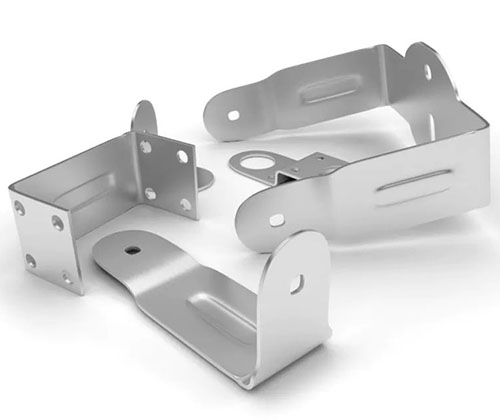
Real-World Example: A customer needed 500 small stainless steel brackets with alignment holes spaced 50 mm apart. A shop with older equipment delivered inconsistent hole placement—some parts did not assemble correctly. A great factory with calibrated laser cutters held ±0.05 mm tolerance across all 500 parts. Every bracket fit perfectly.
Bending and Forming: Accuracy in Three Dimensions
Bending transforms flat sheets into functional shapes. The best factories use CNC press brakes with:
- Angle accuracy: Within ±0.5° . Consistent angles ensure parts assemble correctly.
- Repeatability: The same bend, part after part, without drift.
- Complex sequences: Multi-bend parts require precise sequencing. A great factory programs bends in the correct order to avoid collisions and achieve final dimensions.
Key factors in quality bending:
- Tooling selection: Proper punch and die combinations for material thickness and bend radius
- Springback compensation: Adjusting for metal’s tendency to return toward its original shape
- Material grain direction: Forming across the grain reduces cracking risk
Welding and Assembly: Strength and Appearance
Welding joins separate components into complete products. A great factory offers multiple welding methods and rigorous quality control.
| Welding Method | Best For | Characteristics |
|---|---|---|
| TIG Welding | Thin materials, stainless steel, high-quality finish | Precise, clean, minimal spatter. Ideal for visible welds on appliances and medical equipment |
| MIG Welding | Thicker materials, high-volume production | Faster, higher deposition rates. Common in automotive and structural applications |
| Spot Welding | Overlapping thin sheets | Fast, no filler material. Used for enclosures and automotive panels |
Quality control after welding is critical. Great factories perform:
- Visual inspection for cracks, porosity, and bead consistency
- Non-destructive testing (ultrasonic, X-ray) for critical applications like aerospace or pressure vessels
- Dimensional verification to ensure welded assemblies meet specifications
What Materials Do Top Factories Work With?
A great fabrication factory handles a range of materials and understands their unique properties.
| Material | Properties | Common Applications | Industry Share |
|---|---|---|---|
| Steel (Low-Carbon) | Strong, formable, weldable | Automotive parts, machinery enclosures, construction | ~60% |
| Aluminum | Lightweight, corrosion-resistant, conductive | Aerospace, automotive panels, electronics | Growing at ~8% annually |
| Stainless Steel | Corrosion-resistant, hygienic | Food equipment, medical devices, architecture | ~15% of high-end manufacturing |
| Copper | Excellent conductivity, malleable | Electrical components, heat exchangers | Niche applications |
A great factory advises on material selection. They will ask:
- What environment will the part be in? (indoor, outdoor, coastal, chemical exposure)
- What are the strength requirements?
- Does weight matter?
- What is the budget?
Case Study: A food processing equipment manufacturer initially specified 304 stainless for all components. A great fabrication factory suggested using 304 stainless for food-contact surfaces and galvanized steel for non-contact structural frames. The change reduced material cost by 25% without compromising hygiene or durability.
What Experience and Expertise Matter?
Years in Business
Longevity indicates stability and accumulated knowledge. A factory with 10–20 years of experience has likely encountered a wide range of materials, complexities, and challenges. They have developed processes to handle unexpected issues and maintain quality.
Industry Specialization
A great factory serves multiple industries. Each industry demands different capabilities:
| Industry | Demands | Example |
|---|---|---|
| Automotive | High volume, consistency, structural integrity | Body panels, chassis components, brackets |
| Electronics | Tight tolerances, EMI shielding, precision | Enclosures, heat sinks, internal frames |
| Medical | Hygienic surfaces, corrosion resistance, documentation | Surgical instrument components, device housings |
| Aerospace | Lightweight, high strength, traceability | Structural components, panels, brackets |
Proven Track Record
Ask for examples of past work. A great factory shares case studies that demonstrate:
- Complexity: Did they handle intricate designs?
- Scale: Have they managed large production runs?
- Challenges: How did they solve problems?
- Results: Did they meet quality and delivery requirements?
Real-World Example: Yigu Technology undertook a project for an aerospace company requiring complex sheet metal components with extremely tight tolerances. The team used advanced CAD/CAM simulation to plan the manufacturing process. Laser cutting and precision bending equipment delivered the required accuracy. Every component passed rigorous inspection. The project was delivered on time, meeting all aerospace quality standards.
How Do Great Factories Ensure Quality?
Quality Management Systems
Look for ISO 9001 certification. This indicates documented quality management processes, regular audits, and continuous improvement. It covers everything from raw material inspection to final product testing.
Material Traceability
For critical applications, material certifications matter. A great factory provides mill test reports (MTRs) that verify:
- Chemical composition
- Mechanical properties
- Heat treatment history
This traceability ensures you receive exactly what you specified.
In-Process Inspection
Quality is built in, not inspected in at the end. Great factories perform checks at every stage:
- Raw material verification: Thickness, grade, surface condition
- First article inspection: The first part is measured against all specifications before production continues
- In-process sampling: Regular checks during production runs
- Final inspection: Dimensional verification, surface finish, and functional testing
Equipment Calibration
Precision equipment must be calibrated regularly. A great factory maintains calibration records for laser cutters, press brakes, welding equipment, and measuring tools. Uncalibrated equipment drifts—and so do your parts.
What Sets the Best Apart?
Proactive Communication
A great factory does not just take orders. They ask questions:
- How will this part be used?
- Are there any hidden requirements?
- Could we adjust the design to reduce cost or improve performance?
They flag potential issues before they become problems. If a design has a hole too close to a bend line, they tell you—before cutting starts.
Flexibility
The best factories adapt to changing needs. They handle:
- Small prototype runs alongside large production orders
- Design changes without excessive delays or costs
- Rush orders when necessary
Continuous Improvement
Great factories invest in new technology and training. They update equipment, adopt new software, and develop their people. This commitment to improvement translates to better quality, faster delivery, and lower costs for customers.
How Do You Evaluate a Potential Factory?
Visit or Call
If possible, visit the factory. Look for:
- Clean, organized workspace: Indicates pride and attention to detail
- Well-maintained equipment: Calibrated machines produce consistent parts
- Clear safety practices: A safe shop is usually a well-run shop
If a visit is not possible, schedule a call. Ask about:
- Their experience with your industry or application
- How they handle quality control
- Their typical lead times
- Their approach to design feedback
Request a Test Project
For long-term relationships, start with a small test project. This reveals:
- Quality of work
- Communication style
- Adherence to deadlines
- Problem-solving ability
A successful test project builds confidence for larger orders.
Check References
Ask for references from similar industries. Contact those references and ask:
- Did they meet your quality expectations?
- Were deliveries on time?
- How did they handle issues or changes?
- Would you work with them again?
Conclusion
A great sheet metal fabrication factory stands out through precision, reliability, and partnership. They offer:
- Advanced services: Laser cutting with tight tolerances, CNC bending with consistent angles, welding with rigorous quality control
- Material expertise: Guidance on selecting the right material for your application
- Proven experience: Years in business, industry specialization, and successful case studies
- Quality systems: ISO certification, material traceability, and in-process inspection
- Proactive communication: Asking questions, flagging issues, offering improvements
Choosing the right factory is not just about finding the lowest price. It is about finding a partner who helps your project succeed. Take the time to evaluate your options, and you will build a relationship that delivers quality parts, on time, every time.
FAQs
What is the minimum order quantity for sheet metal fabrication?
Minimum order quantity (MOQ) varies by factory and project complexity. For simple, common parts, MOQ may be 10–50 pieces. For complex, custom products, MOQ may be 100–500 pieces. Factors include setup costs, material availability, and production line complexity. Contact the factory directly for accurate MOQ information for your project.
How long does the sheet metal fabrication process usually take?
Lead times vary based on complexity and volume. Simple projects: 3–7 working days. Complex or high-volume projects: 2–4 weeks or longer. Factors include design approval, material procurement, production, and quality control. A great factory provides clear lead time estimates and communicates any delays proactively.
Can a sheet metal fabrication factory handle complex designs?
Yes. Professional factories use advanced CAD/CAM software to design and simulate complex parts before production. They employ skilled technicians and operate high-precision equipment—fiber lasers, multi-axis press brakes, and welding robots. Complex designs with tight tolerances, intricate internal features, and precise cutouts are routine for top-tier factories.
What certifications should I look for in a sheet metal factory?
ISO 9001 is the baseline for quality management systems. For specific industries, look for AS9100 (aerospace), ISO 13485 (medical devices), or IATF 16949 (automotive). For welding, AWS (American Welding Society) certifications indicate skilled welders. Material certifications (mill test reports) provide traceability for critical applications.
Contact Yigu Technology for Custom Manufacturing
At Yigu Technology, we are committed to the principles that set great fabrication factories apart. We combine advanced laser cutting, CNC bending, and welding capabilities with rigorous quality control and proactive customer communication. Our team serves automotive, electronics, medical, and industrial clients—from prototypes to production runs. Contact us to discuss your sheet metal fabrication needs. We will help you get the quality and reliability your project deserves.