Introduction
In today’s highly competitive industrial landscape, precise component manufacture has emerged as a cornerstone for the success of numerous industries. From aerospace marvels soaring through the skies to compact yet powerful electronics, from life-saving medical devices to high-performance automotive vehicles, the role of precisely manufactured components cannot be overstated. Precise Component Manufacture Ltd has been at the forefront of this domain, carving a niche with its unwavering commitment to quality, innovation, and precision. This guide explores how the company pioneers excellence through advanced manufacturing technologies, customized solutions, rigorous quality control, and real-world success stories across aerospace, automotive, and medical sectors.
Why Is Precision Critical Across Industries?
Aerospace Industry
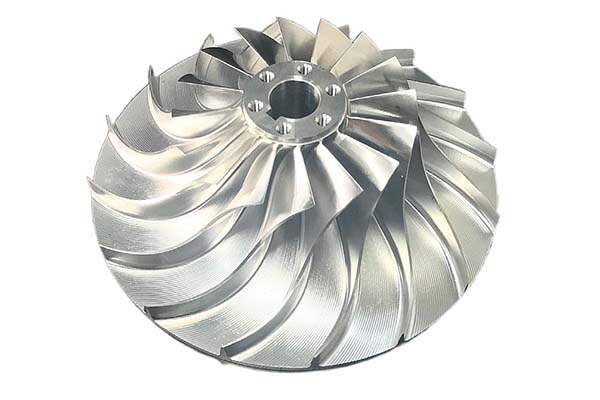
In aerospace, precision is a matter of life and death. Components in jet engines require extremely high accuracy—a single micron-level deviation in turbine blades can cause imbalances, reducing engine efficiency, increasing fuel consumption, and potentially causing catastrophic failures during flight.
| Metric | Impact |
|---|---|
| 1% improvement in component precision | 3–5% increase in fuel efficiency |
Medical Device Manufacturing
Precision is crucial for patient safety and treatment effectiveness. Insulin pumps must deliver insulin with utmost precision—within ±0.01 units in advanced models. Implantable devices (artificial joints) require perfect fit and surface finishes that promote tissue integration and long-term stability.
Automotive Sector
Precision components contribute to better performance, fuel efficiency, and safety. High-precision engine parts (pistons, crankshafts) improve combustion efficiency.
| Improvement | Impact |
|---|---|
| Precision-manufactured engine components | Up to 10% better fuel economy |
Braking systems and airbag deployment mechanisms rely on precise components for reliable operation in critical situations.
What Core Competencies and Services Does the Company Offer?
Advanced Manufacturing Technologies
CNC Machining
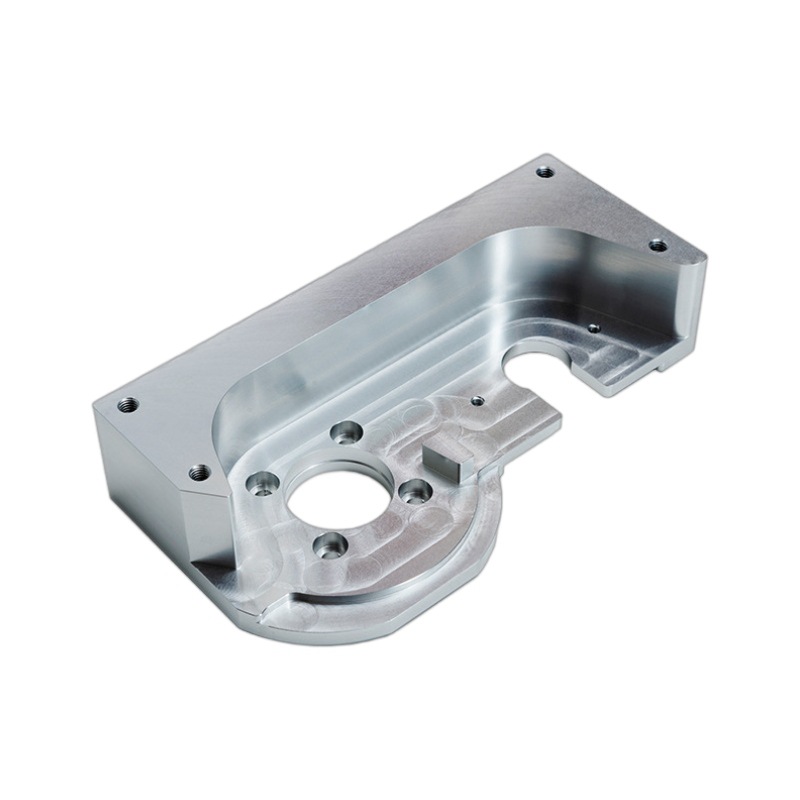
The company extensively uses Computer Numerical Control (CNC) machining, achieving positional accuracy of ±0.001 mm —critical for aerospace components.
| Process Step | Description |
|---|---|
| CAD design | Component created in CAD software |
| CAM conversion | Design converted to machine instructions |
| CNC execution | Machine precisely controls cutting tools |
Key advantages:
- Reduces human error
- Ensures consistent quality across batches
- Multi-axis machines perform milling, drilling, turning in single setup—saving significant production time
3D Printing (Additive Manufacturing)
3D printing creates complex geometries impossible with traditional methods—internal channels, lattice structures—built layer by layer.
| Advantage | Impact |
|---|---|
| Rapid prototyping | Concept to physical prototype in hours (vs. days/weeks) |
| Small-batch production | Cost-effective; reduces expensive tooling |
| Customization | Patient-specific medical implants tailored to individual anatomy |
Customized Component Solutions
In-Depth Requirement Analysis
When a client approaches for a customized component, the engineering team conducts comprehensive analysis—understanding application, performance requirements, environmental conditions, design constraints.
Example: Automotive engine component—team inquires about power output, operating temperatures, durability, regulatory requirements.
Tailored Design and Engineering
Based on analysis, the design team creates a detailed 3D model using advanced CAD/CAM software. Finite Element Analysis (FEA) simulates performance under various conditions—optimizing for strength, weight, thermal management.
| Optimization | Method |
|---|---|
| Stress concentration identification | FEA identifies high-stress areas; design reinforced accordingly |
Manufacturing and Quality Assurance
Leveraging advanced technologies (CNC machining, 3D printing) to produce components with highest precision. Regular inspections at various production stages using high-precision measuring instruments.
How Does the Company Ensure Quality Assurance and Control?
Rigorous Quality Standards
The company adheres to international standards like ISO 9001 —framework for quality management from design to delivery. Tailored standards meet specific industry requirements:
| Industry | Standard |
|---|---|
| Aerospace | FAA (Federal Aviation Administration) requirements—material quality, dimensional accuracy, fatigue resistance |
Comprehensive Quality Inspection Process
| Stage | Method |
|---|---|
| Incoming raw material | Chemical composition, mechanical properties testing |
| In-process production | In-line inspections at critical points; Automated Optical Inspection (AOI) for surface defects, dimensional accuracy |
| Final inspection | Dimensional verification, functional testing, environmental testing (thermal cycling for extreme temperature components) |
Advanced Quality Control Equipment
| Equipment | Purpose |
|---|---|
| CMM (Coordinate Measuring Machine) | Measures dimensions with micron-level accuracy; compares against design specifications |
| Non-Destructive Testing (NDT) | Ultrasonic testing, X-ray inspection—detects internal defects without damage; critical for aerospace, nuclear components |
What Industry Impact and Success Stories Demonstrate Excellence?
Automotive Sector
| Client | Leading automotive manufacturer |
|---|---|
| Challenge | Improve fuel efficiency of new-generation engines |
| Solution | High-precision piston rings (ultra-smooth surface finish, precise dimensions) and crankshafts (optimal weight distribution, high-strength materials) |
| Result | Improvement |
|---|---|
| Fuel efficiency | 12% improvement |
| Power output | 5% increase |
| Component lifespan | 20% increase |
Aerospace Industry
| Client | Major aerospace company developing new regional jet |
|---|---|
| Solution | Turbine blades using advanced 3D printing and CNC machining—complex internal cooling channels to withstand high-temperature environments |
| Result | Improvement |
|---|---|
| Engine thermal efficiency | 8% improvement |
| Component weight | 15% reduction (vs. traditional cast blades) |
| Reliability | Passed rigorous fatigue and stress tests |
Medical Device Industry
| Client | Medical technology startup developing next-generation insulin pump |
|---|---|
| Solution | Micro-precision components for dosing mechanism—miniature gears, valves with tight tolerances |
| Result | Improvement |
|---|---|
| Dosing accuracy | ±0.005 units (significant improvement over existing models) |
| Patient comfort | Smaller, more ergonomic pump design |
| Market success | 15% market share within first year; quick regulatory approval |
| Industry | Client | Solution | Key Results |
|---|---|---|---|
| Automotive | Leading automotive manufacturer | High-precision piston rings and crankshafts | 12% fuel efficiency, 5% power output, 20% longer lifespan |
| Aerospace | Major aerospace company | 3D-printed and CNC-machined turbine blades | 8% efficiency improvement, 15% weight reduction, high reliability |
| Medical | Medical technology startup | Micro-precision components for insulin pump | ±0.005 units dosing accuracy, ergonomic design, 15% market share |
What Are the Key Factors in Precise Component Manufacture?
| Factor | Consideration |
|---|---|
| Material selection | Mechanical properties—strength, hardness, thermal expansion; aerospace: titanium alloys (high strength-to-weight, heat resistance) |
| Precision requirements | Tolerance levels—micrometers to nanometers; medical implant: ±0.001 mm; high-end electronics: sub-millimeter |
| Manufacturing process selection | CNC machining for high-precision, complex shapes; 3D printing for intricate geometries, rapid prototyping |
How Can Quality of Precise Components Be Ensured?
| Step | Method |
|---|---|
| Incoming raw material inspection | Verify quality, compliance with specifications |
| In-process inspections | Automated Optical Inspection (AOI) for surface defects; catch defects early |
| Final inspection | Dimensional verification, functional testing, environmental testing (if applicable) |
| Quality standards adherence | ISO 9001 provides quality management framework |
| Advanced QC equipment | CMM for accurate dimensional measurements; NDT for internal defect detection |
Conclusion
Precise Component Manufacture Ltd pioneers excellence in engineering through advanced manufacturing technologies, customized solutions, and rigorous quality control. CNC machining achieves ±0.001 mm positional accuracy —critical for aerospace turbine blades where 1% precision improvement yields 3–5% fuel efficiency gain. 3D printing enables complex geometries—patient-specific medical implants, weight-reduced aerospace components (15% lighter than traditional cast blades). Customized solutions deliver measurable results: automotive—12% fuel efficiency improvement, 20% longer component lifespan; aerospace—8% engine thermal efficiency improvement; medical—±0.005 units dosing accuracy, 15% market share in first year. Quality assurance adheres to ISO 9001 and industry-specific standards (FAA for aerospace), with CMM inspection (micron-level accuracy) and NDT (ultrasonic, X-ray) for internal defect detection. From concept to delivery, the company’s commitment to precision drives innovation across industries.
FAQs
What are the key factors to consider in precise component manufacture?
Key factors include material selection (mechanical properties—strength, hardness, thermal expansion; aerospace: titanium alloys), precision requirements (tolerances from micrometers to nanometers; medical implant ±0.001 mm), and manufacturing process selection (CNC machining for high-precision complex shapes; 3D printing for intricate geometries, rapid prototyping).
How can we ensure the quality of precise components?
Quality is ensured through comprehensive quality inspection —incoming raw material testing, in-process inspections (Automated Optical Inspection for surface defects), final inspection (dimensional verification, functional testing, environmental testing). Adhering to international standards (ISO 9001) and using advanced QC equipment (CMM for dimensional accuracy, NDT for internal defect detection) is essential.
Contact Yigu Technology for Custom Manufacturing
At Yigu Technology , we share the same commitment to precision that drives industry leaders. Our 3-axis, 4-axis, and 5-axis CNC machines achieve positional accuracy as tight as ±0.001 mm . We combine advanced manufacturing technologies (CNC machining, 3D printing) with rigorous quality control (CMM inspection, ISO 9001) to deliver components for aerospace, automotive, medical, and industrial applications. From turbine blades to patient-specific medical implants, we provide DFM feedback to optimize your designs for manufacturability.
Ready to pioneer excellence in your next precision component project? Contact Yigu Technology today for a free consultation and quote. Let us help you achieve the precision, reliability, and performance your industry demands.