Introduction
You need an aluminum part that is strong enough for structural use, light enough for aerospace, and machines easily enough to keep costs reasonable. Many alloys promise one or two of these. Few deliver all three.
AL6061 T6 is that rare material that hits the sweet spot. It is strong. It is light. It machines beautifully. It resists corrosion. It welds. It takes anodizing. It is the most common aluminum alloy for a reason—it works for almost everything.
But "common" does not mean "simple." Getting the best from AL6061 T6 requires understanding its properties, selecting the right tools, optimizing parameters, and controlling quality. At Yigu Technology, we machine AL6061 T6 daily for aerospace, automotive, and industrial clients. This guide shares what we have learned.
What Makes AL6061 T6 So Popular?
A Precipitation-Hardened Alloy
AL6061 T6 is an aluminum-magnesium-silicon alloy that has been heat-treated to the T6 temper. The "T6" designation means it has been solution heat-treated and artificially aged to achieve maximum strength.
| Element | Composition | Role |
|---|---|---|
| Magnesium | 0.8–1.2% | Strengthening |
| Silicon | 0.4–0.8% | Strengthening; improves fluidity |
| Copper | 0.15–0.4% | Adds strength |
| Chromium | 0.04–0.35% | Corrosion resistance |
| Aluminum | Balance | Base material |
Mechanical Properties
| Property | Value | Implication |
|---|---|---|
| Tensile Strength | 310 MPa (45 ksi) | Strong enough for structural applications |
| Yield Strength | 276 MPa (40 ksi) | Good resistance to permanent deformation |
| Hardness | 95 HB | Moderate; machines well |
| Elongation | 12–17% | Ductile; forms without cracking |
| Modulus of Elasticity | 69 GPa | Stiff enough for most applications |
Why this matters: The strength-to-weight ratio of AL6061 T6 is excellent. It is about one-third the weight of steel with comparable strength for many applications.
Thermal and Physical Properties
| Property | Value | Benefit |
|---|---|---|
| Thermal Conductivity | 167 W/(m·K) | Excellent heat dissipation; good for electronics |
| Density | 2.70 g/cm³ | Lightweight |
| Melting Range | 580–650°C | Stable during machining |
| Electrical Conductivity | 40% IACS | Moderate conductivity |
The high thermal conductivity is a significant advantage during machining. Heat dissipates quickly from the cutting zone, allowing higher speeds and reducing the risk of thermal damage.
Corrosion Resistance
AL6061 T6 offers good corrosion resistance in most environments. It resists atmospheric corrosion, fresh water, and many chemicals. It is less resistant to saltwater than some 5xxx series alloys, but anodizing or coating can significantly improve performance in harsh environments.
How to Machine AL6061 T6 Effectively?
General Machining Characteristics
AL6061 T6 is considered one of the most machinable aluminum alloys. It produces short, broken chips that evacuate easily. It does not work-harden significantly. It cuts cleanly with sharp tools.
Machinability rating: 90–100% (relative to free-machining brass at 100%)
Milling
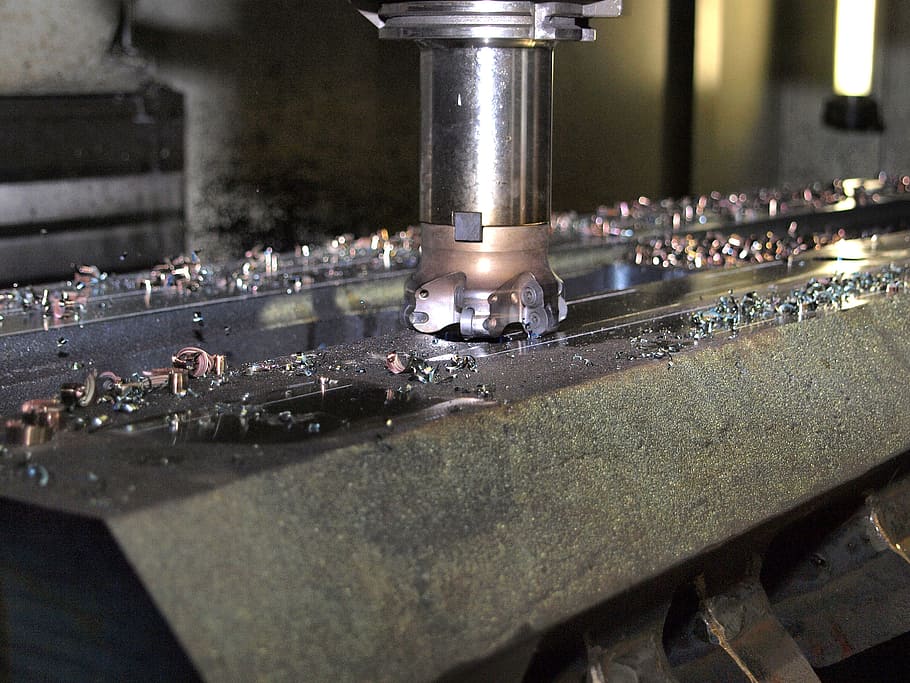
Milling is the most common operation for AL6061 T6. It handles complex shapes, pockets, and contours.
| Parameter | Recommended Range | Notes |
|---|---|---|
| Cutting speed (carbide) | 300–800 m/min | Higher speeds for finishing |
| Feed per tooth | 0.1–0.3 mm/tooth | 2-flute for roughing; 4-flute for finishing |
| Depth of cut (rough) | 1–5 mm | Aggressive roughing possible |
| Depth of cut (finish) | 0.1–0.5 mm | Light passes for surface finish |
Milling strategies:
- Climb milling is preferred—it reduces tool wear and improves surface finish
- High-speed machining (HSM) techniques work well—high speeds, light depths of cut
- Trochoidal milling maintains constant tool engagement, extending tool life
Turning
Turning is ideal for cylindrical parts like shafts, bushings, and threaded components.
| Parameter | Recommended Range | Notes |
|---|---|---|
| Cutting speed (carbide) | 400–1,000 m/min | High speeds possible |
| Feed rate | 0.1–0.3 mm/rev | Higher for roughing; lower for finishing |
| Depth of cut | 1–4 mm | Aggressive roughing possible |
Turning tips:
- Use positive rake inserts to reduce cutting forces
- Sharp edges prevent built-up edge formation
- High-pressure coolant improves chip evacuation
Drilling
Drilling AL6061 T6 is straightforward with proper technique.
| Parameter | Recommended Range | Notes |
|---|---|---|
| Cutting speed | 50–150 m/min | Higher speeds for carbide drills |
| Feed rate | 0.05–0.2 mm/rev | Reduce for deep holes |
| Peck depth | 2–3× diameter | Clear chips regularly |
Drilling tips:
- Use sharp, polished flutes to prevent chip packing
- Peck drilling is essential for deep holes
- Through-coolant drills improve chip evacuation
Tapping and Threading
AL6061 T6 taps easily, but proper technique prevents broken taps.
| Operation | Recommendation |
|---|---|
| Tapping | Form taps (roll taps) produce stronger threads without chips |
| Thread milling | Ideal for larger threads or when tap breakage is a concern |
| Lubrication | Use tapping fluid or cutting oil; avoid dry tapping |
What Tools Work Best for AL6061 T6?
Tool Materials
| Tool Material | Suitability | Notes |
|---|---|---|
| Carbide | Excellent for production | High speeds; long tool life |
| High-speed steel (HSS) | Good for low volume | Lower cost; acceptable for prototypes |
| Diamond (PCD) | Best for high-volume finishing | Mirror finishes; extended life |
Carbide tools are the standard for production runs. They maintain sharp edges at high speeds and resist the abrasive wear that can occur with aluminum (especially with silicon content).
Tool Geometry
| Feature | Recommendation | Why |
|---|---|---|
| Rake angle | High positive (15–20°) | Reduces cutting forces; prevents built-up edge |
| Helix angle | 30–45° | Smooth cutting; good chip evacuation |
| Flute count | 2-flute for roughing; 4-flute for finishing | Balance chip clearance and surface finish |
| Polished flutes | Highly recommended | Prevents aluminum from sticking to tool |
Built-up edge is a common issue when machining aluminum. The material can weld to the cutting edge, causing poor finish and tool damage. Polished flutes and high positive rake angles prevent this.
Tool Coatings
| Coating | Benefit | Best For |
|---|---|---|
| Uncoated carbide | Sharpest edge; lower cost | General machining |
| TiN (Titanium Nitride) | Reduces friction | High-volume production |
| DLC (Diamond-Like Carbon) | Very low friction; prevents built-up edge | Finishing; sticky alloys |
| ZrN (Zirconium Nitride) | Aluminum-specific; prevents adhesion | High-speed machining |
DLC coatings are particularly effective for AL6061 T6. They provide a smooth, low-friction surface that prevents aluminum from sticking to the tool.
What Parameters Deliver the Best Results?
Cutting Speed
Cutting speed has the greatest impact on productivity. AL6061 T6 allows high speeds.
| Operation | Recommended Speed |
|---|---|
| Rough milling (carbide) | 300–500 m/min |
| Finish milling (carbide) | 500–800 m/min |
| Turning (carbide) | 400–800 m/min |
| Drilling (carbide) | 80–150 m/min |
| Drilling (HSS) | 40–80 m/min |
High-speed machining (HSM) techniques use speeds at the upper end of these ranges with light depths of cut. The result is faster material removal and better surface finish.
Feed Rate
Feed rate balances material removal against tool life and surface finish.
| Operation | Recommended Feed |
|---|---|
| Milling (rough) | 0.15–0.3 mm/tooth |
| Milling (finish) | 0.05–0.15 mm/tooth |
| Turning (rough) | 0.2–0.4 mm/rev |
| Turning (finish) | 0.05–0.15 mm/rev |
| Drilling | 0.05–0.2 mm/rev |
Depth of Cut
AL6061 T6 can handle aggressive depths of cut, but balance with feed rate and tool rigidity.
| Operation | Recommended Depth |
|---|---|
| Rough milling | 1–5 mm |
| Finish milling | 0.1–0.5 mm |
| Turning rough | 1–4 mm |
| Turning finish | 0.1–0.5 mm |
Coolant Strategy
AL6061 T6 machines well with various coolant strategies.
| Strategy | Best For | Notes |
|---|---|---|
| Flood coolant | High-volume production | Best chip evacuation; cooling |
| Mist coolant | Finishing, open setups | Adequate for light cuts |
| Air blast | Dry machining with coated tools | Clean; no coolant disposal |
MQL (Minimum Quantity Lubrication) systems are popular for aluminum. They apply a fine mist of lubricant, providing enough lubrication for the cutting zone without the mess of flood coolant.
What Surface Finish and Tolerances Are Achievable?
Surface Finish
| Operation | Typical Ra | Best Achievable |
|---|---|---|
| Rough milling | 3.2–6.3 μm | — |
| Finish milling | 0.8–1.6 μm | 0.4 μm |
| Turning | 1.6–3.2 μm | 0.8 μm |
| Polished (post-machining) | 0.05–0.2 μm | Mirror finish |
AL6061 T6 responds well to polishing and buffing. The same properties that make it machine well also make it finish well.
Dimensional Tolerances
| Part Size | Typical Tolerance | Best Achievable |
|---|---|---|
| Small (<50 mm) | ±0.01–0.02 mm | ±0.005 mm |
| Medium (50–200 mm) | ±0.02–0.05 mm | ±0.01 mm |
| Large (>200 mm) | ±0.05–0.1 mm | ±0.02 mm |
AL6061 T6's dimensional stability and low cutting forces allow tight tolerances, especially with rigid setups and carbide tooling.
How to Control Quality?
Inspection Methods
| Method | Purpose | Typical Accuracy |
|---|---|---|
| CMM (Coordinate Measuring Machine) | Dimensional verification | ±0.001 mm |
| Profilometer | Surface roughness (Ra) | ±0.01 μm |
| Optical comparator | Edge profiles, threads | ±0.005 mm |
| Hardness tester | Verify T6 temper | ±2 HB |
Common Defects and Solutions
| Defect | Cause | Solution |
|---|---|---|
| Built-up edge | Sticking aluminum on tool | Increase speed; use coated tool; apply coolant |
| Burrs | Dull tool; excessive feed | Sharpen/replace tool; reduce feed |
| Poor surface finish | Dull tool; chatter | Replace tool; check setup rigidity |
| Dimensional drift | Tool wear; thermal expansion | Tool life management; temperature control |
Post-Machining Treatments
| Treatment | Purpose | Effect |
|---|---|---|
| Anodizing | Corrosion resistance; appearance | Adds protective oxide layer; can add color |
| Passivation | Surface cleaning | Removes free iron; improves corrosion resistance |
| Polishing | Surface finish | Improves appearance; reduces friction |
| Heat treatment | Restore properties after welding | Re-achieves T6 temper in heat-affected zone |
Where Is AL6061 T6 Used?
Aerospace Components
The aerospace industry demands lightweight strength. AL6061 T6 delivers.
| Application | Why AL6061 T6 |
|---|---|
| Aircraft frames | High strength-to-weight ratio |
| Wing parts | Good fatigue resistance |
| Structural brackets | Machinable; weldable |
| Fuselage components | Corrosion-resistant |
Automotive Parts
Automotive engineers use AL6061 T6 to reduce weight without sacrificing strength.
| Application | Why AL6061 T6 |
|---|---|
| Suspension components | Lightweight; strong |
| Wheels | Good fatigue resistance |
| Engine parts | Thermal conductivity; machinability |
| Chassis components | Structural strength |
Electronics Enclosures
Thermal conductivity makes AL6061 T6 ideal for electronics.
| Application | Why AL6061 T6 |
|---|---|
| Heat sinks | Excellent heat dissipation |
| Electronic housings | Lightweight; good finish |
| LED enclosures | Thermal management |
| Server components | Dimensional stability |
Mechanical Engineering
| Application | Why AL6061 T6 |
|---|---|
| Gears | Machinable; wear-resistant |
| Shafts | Good strength; low friction |
| Hydraulic manifolds | Corrosion-resistant; machinable |
| Machine frames | Rigid; lightweight |
Consumer Products
| Application | Why AL6061 T6 |
|---|---|
| Bike frames | Lightweight; strong |
| Furniture | Aesthetic; durable |
| Camera components | Dimensional stability |
| Sports equipment | Strength-to-weight |
How Does AL6061 T6 Compare to Other Alloys?
| Property | AL6061 T6 | AL7075 T6 | AL5052 H32 |
|---|---|---|---|
| Tensile Strength | 310 MPa | 570 MPa | 230 MPa |
| Yield Strength | 276 MPa | 505 MPa | 195 MPa |
| Machinability | Excellent | Good | Very Good |
| Corrosion Resistance | Good | Fair | Excellent |
| Weldability | Good | Poor | Excellent |
| Cost | Moderate | High | Moderate |
Choose AL6061 T6 when:
- You need a balance of strength, machinability, and cost
- Welding is required
- Corrosion resistance matters but not extreme
- The part will be anodized
Choose AL7075 T6 when:
- Maximum strength is required
- Machining is secondary to strength
- Welding is not needed
Choose AL5052 when:
- Maximum corrosion resistance is required (marine environments)
- Formability is more important than strength
- Cost is a primary concern
Yigu Technology's Perspective
At Yigu Technology, AL6061 T6 is one of our most frequently machined materials. Its combination of properties makes it the go-to choice for clients who need parts that are strong, light, and cost-effective.
Our standard practice:
- Carbide tooling with polished flutes for high-speed machining
- Cutting speeds: 300–800 m/min depending on operation
- Climb milling for better surface finish
- Flood coolant or MQL for chip evacuation
- 100% dimensional inspection for critical features
We recommend AL6061 T6 for:
- Aerospace and automotive structural components
- Electronics enclosures and heat sinks
- Custom machinery parts
- Any application requiring good strength-to-weight with excellent machinability
Conclusion
AL6061 T6 earns its reputation as the workhorse of aluminum alloys. It combines:
- Strength: 310 MPa tensile; 276 MPa yield
- Machinability: Short chips; high speeds; long tool life
- Corrosion resistance: Good; enhanced by anodizing
- Weldability: Excellent with proper technique
- Cost: Moderate; excellent value for performance
Success with AL6061 T6 comes from:
- Sharp carbide tools with polished flutes
- High cutting speeds (300–800 m/min)
- Positive rake geometries to prevent built-up edge
- Proper coolant (flood or MQL)
- Rigid setups to hold tolerances
When these practices are followed, AL6061 T6 machines consistently and reliably, delivering parts that meet the demanding requirements of aerospace, automotive, and industrial applications.
FAQ
How does AL6061 T6 compare to AL5052 in terms of machinability?
AL6061 T6 has better machinability than AL5052. Its lower magnesium content reduces tool wear and built-up edge. It allows higher cutting speeds (300–800 m/min vs 200–500 m/min) and more efficient production of complex parts. For high-volume machining, AL6061 T6 is generally the better choice.
Can AL6061 T6 be welded?
Yes, AL6061 T6 can be welded. However, welding reduces strength in the heat-affected zone. The T6 temper is lost in the weld area. Post-weld heat treatment (solution heat treatment followed by aging) can restore some of the strength. For applications where welding is necessary, AL6061 T6 is still a good choice, but design should account for reduced strength in welded areas.
What surface treatments are suitable for AL6061 T6 to improve corrosion resistance?
Anodizing is the most common surface treatment for AL6061 T6. It creates a hard, protective oxide layer that:
- Improves corrosion resistance significantly
- Provides a surface that can be dyed in various colors
- Increases surface hardness and wear resistance
Other options include:
- Painting or powder coating for color and protection
- Chemical conversion coating (e.g., Alodine) for electrical conductivity with corrosion resistance
- Polishing for aesthetic appearance (requires clear coating to prevent oxidation)
What is the best tool material for machining AL6061 T6?
For production runs, carbide tools with polished flutes are the best choice. They maintain sharp edges at high speeds and resist built-up edge. For high-volume finishing, PCD (polycrystalline diamond) tools offer the longest life and best surface finish. For low-volume or prototype work, high-speed steel (HSS) tools are acceptable but require slower speeds.
Can AL6061 T6 achieve tight tolerances?
Yes. AL6061 T6 can hold ±0.005 mm tolerances on small features with proper equipment and setup. Its low cutting forces and good dimensional stability make it suitable for precision applications. Factors affecting tolerance:
- Machine rigidity
- Tool sharpness
- Temperature control (AL6061 T6 expands 23.6 μm/m·K)
- Fixture stability
For critical tolerances, use carbide tooling, rigid workholding, and allow parts to stabilize before final measurement.
Contact Yigu Technology for Custom Manufacturing
At Yigu Technology, we specialize in CNC machining of AL6061 T6 and other aluminum alloys. Our capabilities include 3-axis and 5-axis milling, CNC turning, and multi-process manufacturing. We serve the aerospace, automotive, electronics, and industrial sectors with precision components.
Our AL6061 T6 machining expertise includes:
- Carbide tooling with polished flutes for high-speed machining
- Optimized cutting parameters for maximum productivity
- Rigorous quality control with CMM inspection
- Post-machining treatments including anodizing and finishing
Whether you need aerospace brackets, electronics enclosures, or custom mechanical components, we deliver AL6061 T6 parts that meet your specifications.
Contact us today to discuss your AL6061 T6 machining project.