Introduction
When a component demands high strength, good corrosion resistance, and reliable machinability, 15-5PH stainless steel often rises to the top. This precipitation-hardening (PH) alloy achieves tensile strength up to 1310 MPa after heat treatment—comparable to 17-4PH but with better machinability. However, machining 15-5PH still presents challenges. Its work hardening tendency, driven by copper and niobium content, accelerates tool wear. Its high strength generates cutting forces that demand rigid setups. And the timing of heat treatment relative to machining directly affects success. This guide provides proven strategies for CNC machining 15-5PH efficiently, managing its challenges, and delivering reliable parts for aerospace, medical, and industrial applications.
What Makes 15-5PH Unique?
A Precipitation-Hardening Alloy
15-5PH belongs to the family of precipitation-hardening stainless steels. Its strength comes from copper and niobium precipitates that form during controlled heat treatment. Unlike martensitic grades, it does not require quenching, which minimizes distortion.
Key properties:
- Tensile strength: 965–1310 MPa (annealed to fully heat-treated)
- Yield strength up to 1170 MPa
- Hardness after aging: 38–42 HRC
- Corrosion resistance similar to 304 stainless steel
- Moderately magnetic in all conditions
Work Hardening Tendency
The alloy’s composition—14–15% chromium, 3–5% nickel, 2.5–4.5% copper, and 0.15–0.45% niobium—makes it prone to work hardening. Cold working can increase localized hardness by 4–8 HRC. This creates a self-reinforcing problem: hardened areas are harder to cut, generating more heat and friction, leading to further hardening.
15-5PH vs. Other Stainless Steels
| Material | Tensile Strength (MPa) | Hardness (HRC) | Machinability | Corrosion Resistance |
|---|---|---|---|---|
| 15-5PH | 965–1310 | 25–42 | Good (75%) | Good |
| 17-4PH | 1030–1380 | 28–44 | Fair (70%) | Good |
| 304 Stainless | 515 | 18–22 | Very Good (90%) | Good |
| 316 Stainless | 515 | 18–22 | Good (70%) | Excellent |
Key advantage: 15-5PH offers 5–10% better machinability than 17-4PH while maintaining comparable strength. This makes it attractive for high-volume production of high-strength parts.
How Do You Machine 15-5PH Effectively?
Machine in the Annealed State
All significant machining should be performed in the solution-annealed condition (25–30 HRC). This state is soft enough for reasonable tool life and chip formation. Heat treatment comes after rough machining, followed by finish grinding on critical surfaces if required.
Recommended Cutting Parameters
| Operation | Cutting Speed (m/min) | Feed Rate (mm/rev) | Depth of Cut (mm) |
|---|---|---|---|
| Milling (carbide) | 70–130 | 0.09–0.16 | 0.6–2.2 |
| Turning (carbide) | 90–160 | 0.11–0.21 | 1.2–3.2 |
| Drilling (carbide) | 60–110 | 0.07–0.13 | 0.6–2.2 |
These speeds are 5–10% higher than those used for 17-4PH due to 15-5PH’s better machinability. However, they are still 20–30% lower than speeds for 304 stainless.
What Tools Work Best?
Carbide Is Essential
High-speed steel (HSS) tools are not suitable for production machining of 15-5PH. Fine-grain carbide (WC-Co with 6–8% cobalt) provides the necessary wear resistance and edge toughness.
Tool Coatings
TiAlN (titanium aluminum nitride) coatings are the best choice. They offer:
- Good heat resistance
- Tool life extension of 40–60% compared to uncoated carbide
- Lower cost than AlTiN while still effective for this alloy
Tool Geometry
Rake angles: Positive rake (6–10°) reduces cutting forces and minimizes work hardening.
Edge preparation: Sharp cutting edges are essential. Dull edges create friction and heat, accelerating work hardening.
Insert thickness: Use inserts 3 mm or thicker to withstand cutting forces without chipping.
Tool Holders and Coolant Delivery
Rigidity is critical. Use:
- Shrink-fit or hydraulic holders for milling
- Minimum tool overhang to reduce deflection
- High-pressure coolant (60–120 bar) delivered through the tool
Through-tool coolant directs cooling exactly where it is needed, reducing heat and flushing chips away from the cutting zone.
How Do You Control Work Hardening?
Avoid Rubbing and Re-Cutting
Work hardening occurs when the tool rubs against the material instead of cutting cleanly. Prevention strategies:
Climb milling: Always use climb milling rather than conventional milling. The tool enters with a thinner chip, reducing friction and heat.
Maintain chip load: Too light a feed causes rubbing. Too heavy a feed risks tool breakage. Target a chip load of 0.05–0.12 mm/tooth for milling.
Peck drilling: For holes deeper than 3× diameter, use peck cycles. Retract frequently to clear chips and prevent re-cutting of hardened material.
Avoid dwell: Do not let the tool linger in one spot. Any pause while in contact with the material creates a work-hardened zone.
Coolant Strategy
High-pressure coolant does more than cool. It also:
- Flushes chips away before they can be re-cut
- Lubricates the cutting interface, reducing friction
- Prevents built-up edge (BUE) formation
Recommended setup: Coolant pressure of 60–120 bar with water-soluble oil at 8–12% concentration.
What Surface Finish Can You Achieve?
In the Annealed State
Standard machining produces surface finishes of Ra 1.6–3.2 μm. Finishing passes with reduced feeds achieve Ra 0.8 μm.
After Heat Treatment
Critical surfaces that require tighter finishes or tolerances should be ground after aging. Achievable results:
- Surface grinding: Ra 0.4–0.8 μm
- Cylindrical grinding: Ra 0.2–0.4 μm
- Tolerances: ±0.01 mm on ground surfaces
Why Surface Finish Matters
Rough surfaces act as stress risers. In aerospace components, a rough surface can reduce fatigue strength by 10–15% compared to a polished surface under cyclic loading. For medical devices, smooth surfaces prevent bacterial adhesion and improve cleanability.
How Does Heat Treatment Work?
Two-Step Process
15-5PH achieves its final properties through a two-step heat treatment:
1. Solution annealing: Heat to 1040°C, then rapid cool (air or water). This softens the material to 25–30 HRC for machining.
2. Aging: Heat to 480–510°C for 1–4 hours. This precipitates copper-niobium particles that block dislocation movement, increasing strength.
Aging temperature trade-offs:
- 450–480°C: Maximum strength (1310 MPa), slightly lower toughness
- 510–550°C: Slightly lower strength (1030 MPa), better toughness
Distortion Control
Unlike martensitic grades that require quenching, 15-5PH’s precipitation hardening causes minimal distortion—typically ≤0.02 mm per meter. This allows critical dimensions to be machined before heat treatment, with only finish grinding needed afterward.
Stress Relief
For complex parts, consider stress relief annealing before aging. Heat to 315°C for 1–2 hours to relax residual machining stresses, reducing the risk of distortion during aging.
What Quality Control Measures Are Needed?
Inspection Before Heat Treatment
Perform dimensional inspection before aging. Hardened parts are difficult to measure accurately and cannot be re-machined.
Tools and methods:
- Coordinate measuring machines (CMM) for complex geometries
- Micrometers and bore gauges for critical diameters
- Surface profilometers for finish verification
Post-Heat Treatment Verification
Hardness testing: Verify final hardness on the Rockwell C scale (38–42 HRC target range for most applications).
Tensile testing: For critical applications, test samples from the same heat treatment batch to confirm strength meets specifications (ASTM A564).
Material Certification
For aerospace or medical applications, require certifications confirming:
- Chemical composition
- Heat treatment records (time and temperature)
- Mechanical properties
Where Is 15-5PH Used?
Aerospace Components
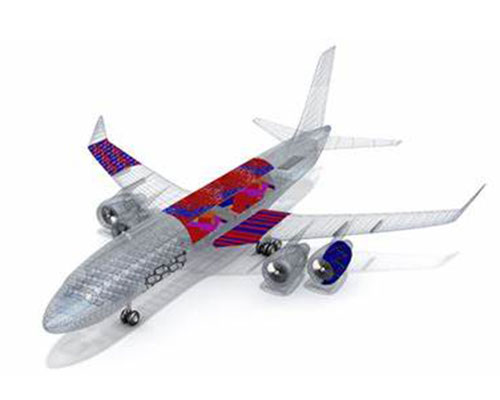
Aircraft fittings, gears, and structural parts rely on 15-5PH’s combination of strength and machinability. In fastener applications, it offers similar strength to 17-4PH with better machinability, reducing production costs.
Real-world example: An aerospace supplier producing 5,000 fittings per month switched from 17-4PH to 15-5PH. Tool life increased by 25%, cycle time decreased by 12%, and annual tooling costs dropped by $45,000.
Medical Devices
Surgical instruments and orthopedic implants use 15-5PH for its strength, corrosion resistance, and biocompatibility. The material withstands repeated sterilization cycles without degradation.
Industrial Machinery
High-pressure valves, pump components, and gears benefit from 15-5PH’s fatigue resistance. In continuous operation, it maintains dimensional stability under cyclic loading.
Chemical Processing Equipment
Fittings, mixers, and valve components combine strength with corrosion resistance to mild chemicals. 15-5PH performs well in environments where 304 stainless would be adequate but higher strength is required.
Automotive Performance Parts
Racing components and high-performance gears use 15-5PH where standard steels would yield or fail under extreme stress.
A Real-World Machining Case
A medical device manufacturer producing surgical instrument handles faced work hardening and inconsistent surface finish with 15-5PH. Initial parameters:
- Uncoated carbide tools
- 110 m/min cutting speed
- Flood coolant only
- 80 parts per edge tool life
- Surface finish Ra 1.4 μm
After process changes:
- Switched to TiAlN-coated carbide
- Reduced cutting speed to 90 m/min
- Added through-tool high-pressure coolant (80 bar)
- Implemented climb milling and peck drilling cycles
Results:
- Tool life increased to 160 parts per edge
- Work hardening eliminated
- Surface finish improved to Ra 0.6 μm
- Scrap rate dropped from 6% to 2%
How Does 15-5PH Compare to Alternatives?
15-5PH vs. 17-4PH
Strength: Comparable—15-5PH reaches 1310 MPa; 17-4PH reaches 1380 MPa.
Machinability: 15-5PH machines 5–10% faster with longer tool life. This makes it more cost-effective for high-volume production.
Corrosion resistance: 17-4PH has slightly better corrosion resistance in some environments.
Choose 15-5PH when machinability and cost are priorities. Choose 17-4PH when maximum corrosion resistance is required.
15-5PH vs. 304 Stainless
Strength: 15-5PH offers 2× higher tensile strength.
Machinability: 304 machines more easily but at lower strength.
Cost: 15-5PH costs more but allows thinner, lighter sections.
Choose 15-5PH for load-bearing applications where strength is critical. Choose 304 for corrosive environments with moderate strength requirements.
15-5PH vs. Titanium Ti-6Al-4V
Strength: Comparable.
Cost: 15-5PH costs significantly less—typically 50–60% of titanium’s price.
Machinability: 15-5PH machines more easily and faster than titanium.
Choose 15-5PH for ground-based high-strength applications. Choose titanium when weight reduction and maximum corrosion resistance justify the cost.
Conclusion
CNC machining 15-5PH stainless steel requires understanding its work hardening tendency and high strength. Success demands machining in the annealed state, using TiAlN-coated carbide tools, maintaining sharp cutting edges, applying high-pressure coolant, and avoiding conditions that create rubbing or re-cutting. Heat treatment after rough machining unlocks the material’s full strength with minimal distortion. Compared to 17-4PH, 15-5PH offers similar strength with better machinability—making it an excellent choice for high-volume production of high-strength components in aerospace, medical, and industrial applications.
FAQs
What makes 15-5PH good for aerospace applications?
15-5PH offers high strength (up to 1310 MPa) with good machinability and corrosion resistance. It handles high loads and temperature changes common in aircraft components. Its minimal distortion during heat treatment allows critical dimensions to be machined before aging, simplifying production.
How does 15-5PH’s machinability compare to 17-4PH?
15-5PH is easier to machine than 17-4PH. It has lower work hardening tendency and cutting forces, allowing 5–10% higher cutting speeds and longer tool life. This reduces production costs, especially for high-volume applications. Typical tool life is 20–30% longer with 15-5PH under similar conditions.
Can 15-5PH be machined after heat treatment?
Machining after heat treatment is possible but difficult. The material reaches 38–42 HRC after aging, making conventional cutting impractical except for light finishing. The standard approach is to machine in the annealed state (25–30 HRC), heat treat, then perform only finish grinding on critical surfaces. Aging causes minimal distortion (≤0.02 mm/m), so this sequence works well.
How do I prevent work hardening when machining 15-5PH?
Use sharp TiAlN-coated carbide tools, maintain consistent chip load (avoid light feeds that cause rubbing), use climb milling, apply high-pressure coolant (60–120 bar), and avoid dwelling the tool in any position. Peck drilling cycles prevent re-cutting of chips. Regular tool changes—before edge wear becomes significant—also help.
What heat treatment cycle should I use for 15-5PH?
The standard cycle is solution annealing at 1040°C followed by rapid cooling, then aging at 480–510°C for 1–4 hours. Lower aging temperatures (450–480°C) maximize strength (up to 1310 MPa). Higher temperatures (510–550°C) improve toughness but reduce strength to approximately 1030 MPa. No quenching is required, which minimizes distortion.
Contact Yigu Technology for Custom Manufacturing
At Yigu Technology, we specialize in CNC machining 15-5PH and other precipitation-hardening stainless steels. Our engineering team selects the right tooling, coatings, and cutting parameters to manage work hardening and maximize tool life. We machine in the annealed state, coordinate precise heat treatment with certified partners, and perform finish grinding on critical surfaces when required. Quality control includes CMM inspection, hardness verification, and material certification to meet aerospace and medical standards. Contact us to discuss your high-strength stainless steel project.