Introduction
In manufacturing, precision and efficiency are the cornerstones of success. When working with ADC12 as cast, CNC machining emerges as a powerful ally. However, this combination presents challenges. Manufacturers often grapple with achieving dimensional accuracy, ensuring flawless surface finish, and dealing with the unique characteristics of the ADC12 material. This comprehensive guide explores every aspect of CNC machining ADC12 as cast —from material properties to machining processes, applications, quality control, and surface treatment. You will learn how to overcome common pain points and harness the full potential of this manufacturing approach.
What Are the Key Material Properties of ADC12 As Cast?
ADC12 is a widely used die casting alloy within the aluminum-silicon family. Its composition is carefully balanced—typically containing 9–13% silicon , along with copper, magnesium, and iron. This blend imparts unique properties that make it suitable for a variety of applications.
Mechanical Properties
| Property | Typical Range | Machining Implication |
|---|---|---|
| Tensile strength | 220 – 310 MPa | Good strength for load-bearing applications |
| Hardness | Moderate | Requires careful tool selection to avoid excessive wear |
| Ductility | Moderate | Avoid pushing beyond limits to prevent cracking |
| Wear resistance | Inherent | Can contribute to tool wear; use high-quality tools |
| Thermal conductivity | Good (aluminum alloy) | Heat management critical during machining |
| Corrosion resistance | Moderate | May require surface treatments for harsh environments |
Key considerations:
- ADC12 as cast has moderate hardness—easier to machine than some steels, but dulls tools faster than very soft aluminum alloys.
- Its strength (220–310 MPa tensile) ensures components function properly under mechanical loads.
- Ductility limits require careful parameter control to avoid tearing or cracking during milling and drilling.
What CNC Machining Processes Work for ADC12 As Cast?
Milling ADC12 As Cast
| Factor | Recommendation |
|---|---|
| Cutting tools | Carbide-tipped tools preferred; high hardness and wear resistance |
| Rough milling | Larger-diameter end mills with fewer teeth for quick material removal |
| Finish milling | Smaller-diameter end mills with more teeth for smoother surface finish |
| Spindle speed | 1500 – 4000 RPM (depending on tool size and operation type) |
| Feed rate | 500 – 2000 mm/min |
| Depth of cut | 0.5 – 3 mm |
Turning Operations
| Factor | Recommendation |
|---|---|
| Tool selection | Single-point carbide tools; positive rake angle reduces cutting forces |
| Spindle speed | 1000 – 3000 RPM |
| Feed rate | 0.1 – 0.5 mm/rev |
| Depth of cut | 0.5 – 2 mm |
Drilling ADC12 As Cast
| Factor | Recommendation |
|---|---|
| Drill bits | HSS drill bits with carbide tips; 118–135° point angle for general-purpose drilling |
| Spindle speed | 800 – 2500 RPM |
| Feed rate | 0.05 – 0.2 mm/rev |
| Coolant | Proper coolant application crucial to reduce heat and prevent premature tool wear |
How Do Material Characteristics Affect Machining?
Hardness and Its Impact
The moderate hardness of ADC12 as cast means:
- It requires tools that withstand abrasiveness.
- Tool wear is a common issue—regular tool changes may be necessary to maintain precision and surface finish.
- In production runs, if tool wear is not monitored closely, it can lead to dimensional inaccuracies and rougher surface finish.
Strength Considerations
Higher-strength materials require more cutting force, putting additional stress on machines and tools. To counter this:
- Set appropriate machining parameters.
- Ensure proper machine maintenance.
- Consider pre-machining heat treatments to modify strength and improve machinability.
Ductility and Machinability
If the material is pushed too hard during machining, it can tear or crack—especially in milling and drilling operations where sudden cutting force changes occur. Control parameters carefully and use the right cutting tools to work within ductility limits.
Thermal Conductivity and Heat Management
Aluminum alloys, including ADC12, have good thermal conductivity. During CNC machining:
- Heat is generated and can affect dimensional accuracy and tool life.
- Effective heat management strategies —coolants and proper ventilation—dissipate heat and maintain a stable machining environment.
- High-speed machining without proper cooling can cause tool overheating.
Where Is ADC12 As Cast Used?
| Industry | Applications | Why ADC12? |
|---|---|---|
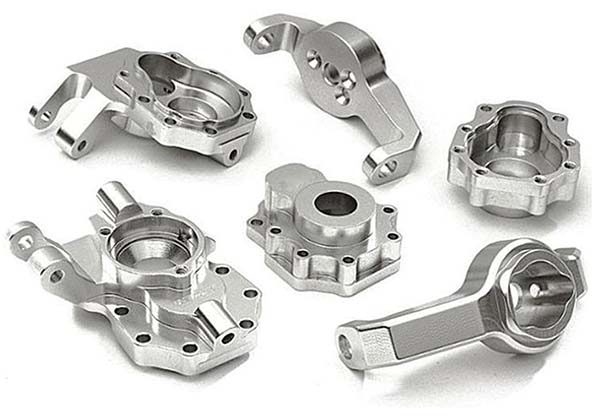
| Automotive | Engine blocks, cylinder heads, transmission housings | Strength, castability, relatively low cost; lightweight improves fuel efficiency |
| Industrial | Pump housings, valve bodies, brackets | Castability into complex shapes; good mechanical properties |
| Consumer electronics | Smartphone, tablet, laptop cases | Lightweight; machined to precise shapes; smooth surface finish |
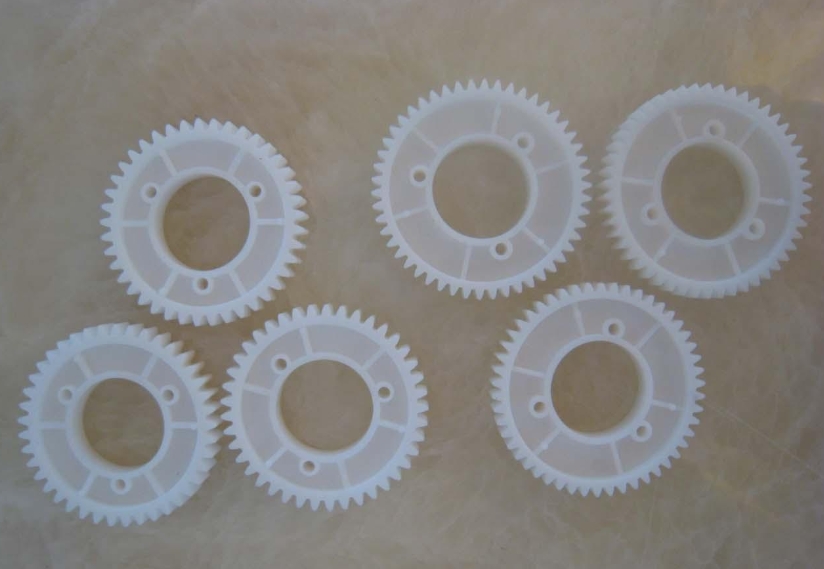
| Mechanical parts | Gears, pulleys, shafts | Strength and machinability; long service life |
| Structural components | Lightweight construction components | Strength; ability to form into different shapes |
How Is Quality Control Maintained?
Dimensional Accuracy
| Method | Purpose |
|---|---|
| Precision-calibrated CNC machines | Ensure machining accuracy |
| High-quality cutting tools | Maintain consistency |
| CMM (Coordinate Measuring Machine) | Regular inspection; measure diameters, verify tolerances |
Surface Finish
| Method | Purpose |
|---|---|
| Visual inspection | Identify visible defects |
| Surface roughness instruments | Quantify finish quality |
| Post-machining polishing | Achieve desired smoothness |
Tolerance Management
| Factor | Impact |
|---|---|
| Machining parameters | Affect final tolerance |
| Tool wear | Must be monitored |
| Machine accuracy | Regular calibration essential |
| CAD/CAM software | Set appropriate tolerances (e.g., ±0.05 mm) |
Defect Detection
| Defect | Detection Method |
|---|---|
| Cracks, porosity, internal voids | X-ray inspection; ultrasonic testing |
| Surface scratches, imperfections | Visual inspection; tactile inspection |
Quality Standards
| Standard | Scope |
|---|---|
| ISO 9001 | Quality management systems |
| Industry-specific standards | Automotive, aerospace requirements |
What Surface Treatments Enhance ADC12 Parts?
| Treatment | Benefits |
|---|---|
| Coating (zinc-based) | Electro-galvanizing, hot-dip galvanizing—enhance corrosion resistance |
| Powder coating | Improves aesthetics; adds scratch resistance |
| Painting | Acrylic, epoxy, polyurethane—adds color; improves appearance; durability for industrial applications |
| Plating | Nickel plating, chrome plating—improves wear resistance, corrosion resistance, electrical conductivity |
| Polishing | High-gloss finish; removes surface imperfections; elegant look for consumer products |
Corrosion protection in harsh environments: In marine applications, combine corrosion-resistant coating with smooth surface finish (polishing or plating) to protect against saltwater conditions.
What Is Yigu Technology’s Perspective?
At Yigu Technology, we specialize in CNC machining ADC12 as cast for demanding applications. Our expertise includes:
- Tool selection: Carbide-tipped tools optimized for ADC12’s moderate hardness and abrasiveness.
- Parameter optimization: Spindle speeds 1500–4000 RPM; feed rates 500–2000 mm/min; depth of cut 0.5–3 mm.
- Heat management: Coolant systems to dissipate heat and maintain dimensional stability.
- Quality control: CMM inspection, surface roughness measurement, non-destructive testing (X-ray, ultrasonic) for defect detection.
- Surface treatments: Polishing, painting, plating, and coating to enhance performance and aesthetics.
We deliver high-quality, precision-machined ADC12 components for automotive, industrial, electronics, and structural applications—meeting and exceeding industry standards.
Conclusion
CNC machining ADC12 as cast requires understanding its aluminum-silicon composition (9–13% silicon) and applying tailored strategies. ADC12 offers tensile strength 220–310 MPa , moderate hardness, and good castability. Optimal machining parameters include spindle speeds 1500–4000 RPM for milling, 1000–3000 RPM for turning, and carbide-tipped tools to manage abrasiveness. Coolant application is critical for heat management. Achievable tolerances require regular CMM inspection; surface finishes can be enhanced through polishing, painting, or plating. Applications span automotive (engine blocks, transmission housings), industrial components (pump housings), consumer electronics (cases), and structural parts. With proper tooling, parameter control, and quality assurance, ADC12 as cast delivers reliable, cost-effective precision components.
FAQs
What is the best cutting tool for CNC machining ADC12 as cast?
Carbide-tipped cutting tools are the best choice due to their high hardness and wear resistance. For milling, use carbide end mills ; for turning, single-point carbide tools ; for drilling, HSS drill bits with carbide tips . These tools effectively manage ADC12’s moderate abrasiveness.
How can I improve the surface finish of CNC-machined ADC12 as cast parts?
Improve surface finish by using lower feed rates and higher spindle speeds for finish machining. Use sharp cutting tools and proper coolant application. Post-machining operations like polishing or using finer grit abrasives further enhance surface quality.
What are the common defects in CNC machining ADC12 as cast, and how can I avoid them?
Common defects include tool wear, dimensional inaccuracies, surface roughness, and cracking. Avoid them by:
- Using high-quality cutting tools and proper parameters to minimize wear.
- Regularly calibrating CNC machines and monitoring tool wear to maintain dimensional accuracy.
- Optimizing parameters and using sharp tools to reduce surface roughness.
- Staying within ductility limits and managing heat to prevent cracking.
Contact Yigu Technology for Custom Manufacturing
At Yigu Technology, we combine deep material knowledge with advanced CNC machining to deliver precision ADC12 as cast components. Our 3-axis, 4-axis, and 5-axis CNC machines are equipped with carbide-tipped tools and coolant systems to handle ADC12’s unique properties. We provide DFM feedback to optimize your designs for manufacturability. From automotive engine blocks to consumer electronics cases, we deliver parts that meet your exact specifications with consistent quality.
Ready to machine your next ADC12 as cast project? Contact Yigu Technology today for a free consultation and quote. Let us help you achieve precision and performance in every component.