Introduction
Manufacturers operating in extreme thermal environments often turn to SS310S stainless steel for its exceptional heat resistance. As an austenitic stainless steel grade, it thrives in temperatures up to 1100°C, making it indispensable for furnace liners, exhaust systems, heat exchangers, and aerospace components.
But machining SS310S presents unique challenges. Its high chromium (24–26%) and nickel (19–22%) content—which enables high-temperature oxidation resistance—also increases work hardening and cutting forces, leading to rapid tool wear. Its low carbon content (0.08% max) reduces sensitization risk but amplifies ductility, making chip control difficult during high-speed operations.
This guide addresses these pain points. We will explore SS310S material fundamentals, optimal machining processes, tooling selection, cutting parameters, heat treatment, quality control, and real-world applications. Whether you are machining furnace nozzles or aerospace exhaust components, you will find proven strategies for efficiency, quality, and reliability.
What Makes SS310S Unique for High-Temperature Use?
Chemical Composition and Properties
SS310S is an austenitic stainless steel engineered for extreme heat and corrosion resistance. Its chemical composition includes:
- Chromium: 24–26%—forms a dense oxide layer for oxidation resistance up to 1100°C
- Nickel: 19–22%—stabilizes austenitic structure and enhances high-temperature strength
- Carbon: 0.08% max—low carbon prevents sensitization (carbide precipitation) during thermal cycling
- Trace amounts of manganese, silicon, and nitrogen
This composition enables high-temperature oxidation resistance that outperforms most austenitic grades. The material resists sulfidation up to 650°C, making it ideal for petrochemical furnace components.
Mechanical and Thermal Properties
Mechanical properties in the annealed state:
- Tensile strength: 515 MPa
- Yield strength: 205 MPa
- Elongation: 40%
- Density: 8.0 g/cm³
SS310S retains 60% of room-temperature strength at 800°C —a critical advantage for sustained high-heat applications.
Thermal properties:
- Thermal conductivity: 15 W/(m·K) at 100°C
- Coefficient of thermal expansion: 16.0 × 10⁻⁶/°C
- Specific heat: 500 J/(kg·K)
- Melting range: 1398–1454°C
These properties ensure dimensional stability during thermal cycling and minimize temperature-induced stress.
| Property | Value | Significance |
|---|---|---|
| Tensile Strength | 515 MPa | Good structural integrity at room temperature |
| High-Temperature Strength | 60% retained at 800°C | Reliable performance in sustained high heat |
| Oxidation Resistance | Up to 1100°C | Suitable for furnace liners, exhaust systems |
| Thermal Expansion | 16.0 × 10⁻⁶/°C | Predictable dimensional changes during cycling |
What Machining Processes Work Best for SS310S?
Turning
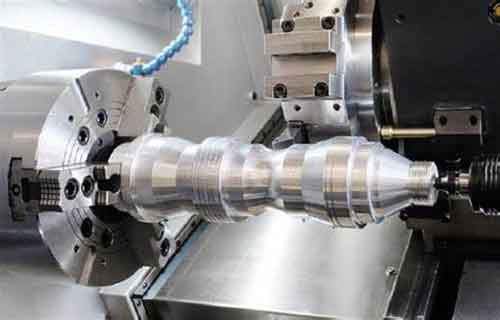
CNC turning SS310S is suitable for cylindrical parts like furnace nozzles, valve stems, and shafts. Optimal parameters include:
- Cutting speed: 80–120 m/min
- Feed rate: 0.1–0.2 mm/rev
- Depth of cut: 1–3 mm
Lower cutting speeds reduce heat-induced work hardening. Moderate feeds balance material removal with tool life. Using sharp, positive-rake tools minimizes cutting forces.
Milling
CNC milling stainless steel 310S is effective for shaping heat exchanger components, brackets, and complex geometries. Recommended parameters:
- Cutting speed: 70–100 m/min
- Feed rate: 0.08–0.15 mm/tooth
- Depth of cut: 1–2 mm
Climb milling—cutting with tool rotation—minimizes tool contact with work-hardened surfaces, reducing cutting forces by up to 15% .
5-Axis Machining
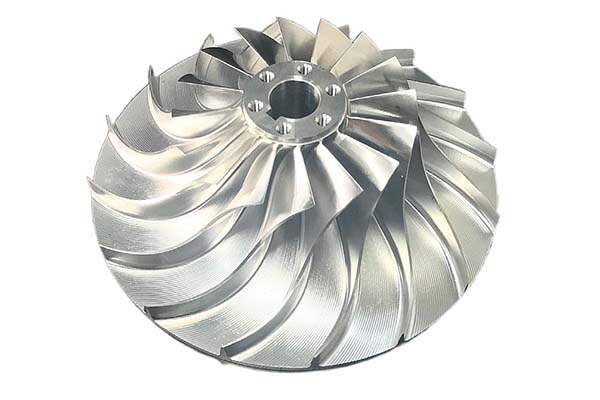
5-axis machining SS310S is ideal for complex aerospace exhaust parts and components with intricate geometries. Best practices include:
- Simultaneous axis movement to minimize tool deflection
- Rigid machine setups with high-torque spindles (≥40 Nm)
- Avoiding vibration that can cause surface defects
5-axis capability reduces setups, eliminating cumulative errors and improving precision.
| Operation | Cutting Speed | Feed Rate | Depth of Cut |
|---|---|---|---|
| Turning | 80–120 m/min | 0.1–0.2 mm/rev | 1–3 mm |
| Milling | 70–100 m/min | 0.08–0.15 mm/tooth | 1–2 mm |
| Drilling | 60–90 m/min | 0.05–0.1 mm/rev | 1–2 mm (peck) |
What Tooling and Cutting Parameters Optimize Results?
Tool Material and Coatings
Fine-grain carbide (WC-Co with 6–8% cobalt) offers the best performance for SS310S machining. The fine grain structure provides sharp cutting edges and excellent wear resistance.
Coated inserts with AlTiN (Aluminum Titanium Nitride) or TiAlN coatings are essential. These coatings withstand cutting temperatures up to 800°C , extending tool life by up to 50% compared to uncoated carbide.
Tool Geometry
Positive rake angles (5–10°) reduce cutting forces and minimize work hardening. Sharp edges cut cleanly rather than pushing material. Honed edges (0.02–0.05 mm) prevent edge chipping during high-force cutting.
Cutting Parameters
Cutting speeds for SS310S are 20–30% lower than for SS304 due to increased work hardening and ductility. Speeds of 80–120 m/min for turning and 70–100 m/min for milling are typical.
Feed rates of 0.1–0.2 mm/rev for turning and 0.08–0.15 mm/tooth for milling balance material removal with surface quality.
Depth of cut should be limited to 1–3 mm for turning and 1–2 mm for milling. Multiple shallow passes are preferred over single deep cuts.
Tool Life Management
Tool wear patterns in SS310S are dominated by abrasive wear due to high chromium content. Crater wear appears at cutting speeds above 120 m/min. Monitor flank wear—replace tools when wear reaches 0.3 mm to prevent surface finish degradation.
Tool life extension: Reducing cutting speed by 10% increases tool life by 20–30% —a worthwhile trade-off for high-precision parts. Minimum quantity lubrication (MQL) with vegetable-based oils reduces friction and extends tool life in eco-sensitive applications.
How Do You Manage Coolant and Chips?
Coolant Selection and Delivery
Emulsion coolants (5–10% concentration) are preferred for SS310S. They deliver high heat capacity and lubricity essential for controlling work hardening.
High-pressure delivery (70–100 bar) is critical. High-pressure coolant flushes chips from the cutting zone and reduces cutting zone temperature by 30–40% . Through-spindle coolant is particularly effective for drilling and deep cavity milling.
Chip Control
SS310S produces long, stringy chips that can entangle tools and fixtures. Tools with aggressive chip breakers break chips into manageable segments.
Intermittent cutting cycles—1–2 second pauses—prevent chip entanglement. For deep holes, peck drilling with full retraction clears chips and prevents packing.
Surface Finish Improvement
Achievable surface roughness ranges from Ra 1.6 μm (finish machining) to Ra 3.2 μm (roughing). For critical applications, polishing after machining can reduce Ra to 0.8 μm , enhancing corrosion resistance in high-heat environments.
What Heat Treatment and Post-Processing Are Required?
Solution Annealing
Solution annealing SS310S is essential for optimizing corrosion resistance and ductility. Heat to 1040–1150°C , hold for sufficient time to dissolve carbides, then water quench. This process should typically be performed before machining to ensure uniform material properties.
Stress Relieving
Stress relieving 310S stainless steel reduces machining-induced stresses that can cause distortion during thermal cycling. Heat to 300–500°C for 1–2 hours. This is particularly important for large parts like furnace liners.
Sensitization Prevention
SS310S’s low carbon content minimizes carbide precipitation risk. However, for welded components, post-weld annealing at 1060°C is recommended to restore corrosion resistance in the heat-affected zone.
Passivation
Post-machining passivation SS310S uses nitric acid treatment to enhance the chromium oxide layer. This improves corrosion resistance by up to 30% in humid high-heat environments.
Surface Hardening
For wear-prone components like valve stems, plasma nitriding (450–500°C) creates a 10–20 μm hardened layer (50–55 HRC) without compromising high-temperature performance.
How Do You Ensure Quality Control?
Dimensional Inspection
Achievable tolerances for SS310S machining are ±0.01 mm for small parts and ±0.05 mm for large components. Coordinate Measuring Machine (CMM) inspection verifies conformance to specifications, essential for aerospace and industrial standards.
Surface Roughness Verification
Profilometers confirm Ra values. Critical parts—sealing surfaces, components exposed to high-temperature oxidation—require Ra ≤ 1.6 μm to minimize heat-induced surface degradation.
Non-Destructive Testing
Ultrasonic testing detects subsurface defects in thick sections. Dye penetrant inspection identifies surface cracks in high-stress areas like weld joints.
Alloy Verification
X-ray fluorescence (XRF) confirms chromium and nickel content within specification. This is critical for ensuring high-temperature oxidation resistance.
Microstructure Analysis
Optical microscopy checks for carbide precipitation. Freedom from sensitization is essential for parts exposed to temperatures in the 425–815°C range.
Where Is SS310S Applied Across Industries?
Aerospace
Aerospace SS310S exhaust components—jet engine afterburners, exhaust liners—withstand gas temperatures exceeding 1000°C. A leading aerospace manufacturer reduced component failure rates by 40% by switching from Inconel 600 to SS310S, while cutting material costs by 25% .
Petrochemical and Energy
Heat exchanger CNC machining 310S produces components for petrochemical refineries handling 650°C hydrocarbon streams. SS310S’s sulfidation resistance extended service life from 18 to 36 months compared to lower-grade materials.
Power plant boiler SS310S nozzles withstand 700°C steam and combustion gases, outperforming carbon steel by 5× in service life.
Semiconductor
Semiconductor chamber SS310S fabrication produces high-purity vacuum chambers. SS310S’s low outgassing and oxidation resistance maintain cleanroom conditions during 800°C wafer processing.
What Are the Cost and Sustainability Considerations?
Material Cost
SS310S material cost is approximately $8–10/kg in 2025—30–40% higher than SS304 but 50% lower than Inconel 600. This cost-performance balance makes it attractive for high-temperature applications.
Lead Times
Lead time for SS310S bar stock is 4–6 weeks for standard sizes. Custom diameters require 8–10 weeks. Strategic stocking reduces production delays for critical parts.
Recycling
Recycling scrap SS310S swarf achieves 90% material recovery. Recycled SS310S retains 95% of virgin material properties , supporting sustainability goals.
Energy Efficiency
Energy-efficient machining using high-speed machining centers with regenerative drives reduces energy consumption by 15–20% compared to conventional machines.
Supplier Qualification
For aerospace applications, prioritize ISO 9001 and AS9100 certified suppliers. These certifications ensure traceability from raw material to finished part.
Conclusion
CNC machining SS310S requires a specialized approach that respects the material’s unique properties. Its high chromium and nickel content provides exceptional high-temperature oxidation resistance but increases work hardening and tool wear. Its ductility demands careful chip control. Its low carbon content prevents sensitization but requires precise heat treatment.
Success comes from integrating appropriate techniques across the entire process. Tool selection with fine-grain carbide and AlTiN coatings withstands high cutting temperatures. Cutting parameters balanced for speed, feed, and depth minimize work hardening. Coolant delivery with high pressure manages heat and chips. Heat treatment—solution annealing, stress relieving—optimizes material properties. Quality control with CMM inspection and non-destructive testing verifies conformance.
The applications span critical industries. Aerospace relies on SS310S for exhaust components that withstand extreme temperatures. Petrochemical refineries use it for heat exchangers handling corrosive hydrocarbon streams. Semiconductor manufacturing depends on its purity and oxidation resistance.
For manufacturers willing to invest in appropriate tooling, parameters, and processes, SS310S delivers exceptional value—combining high-temperature strength, corrosion resistance, and cost-effectiveness in a material that performs reliably in the most demanding environments.
FAQ
What makes SS310S ideal for high-temperature applications?
SS310S’s high chromium (24–26%) and nickel (19–22%) content forms a stable oxide layer, enabling high-temperature oxidation resistance up to 1100°C. Its low carbon content prevents sensitization, ensuring long-term corrosion resistance during thermal cycling. It retains 60% of room-temperature strength at 800°C.
How does SS310S machining differ from SS304?
SS310S requires 20–30% lower cutting speeds and higher coolant pressure due to increased work hardening and ductility. Carbide tools with AlTiN coatings are essential—they withstand higher cutting temperatures and extend tool life by 50% compared to SS304 machining. Chip control is more challenging due to stringy chips.
When should SS310S be chosen over Inconel 600?
SS310S is preferred for applications up to 1100°C where cost is a factor. It offers 50% lower material costs than Inconel 600 while maintaining sufficient high-temperature strength. Inconel 600 is better for temperatures exceeding 1100°C or extreme corrosion environments with aggressive chemical attack.
What coolant is best for machining SS310S?
Emulsion coolants (5–10% concentration) with high-pressure delivery (70–100 bar) are preferred. High-pressure coolant reduces cutting zone temperature by 30–40%, flushes chips effectively, and extends tool life. Through-spindle coolant is particularly effective for drilling and deep cavity operations.
What tolerances can be achieved when machining SS310S?
Achievable tolerances are ±0.01 mm for small parts and ±0.05 mm for large components. For critical applications like aerospace exhaust components and heat exchanger parts, 5-axis machining with rigid setups and CMM inspection achieves consistent results within these ranges.
Contact Yigu Technology for Custom Manufacturing
Need precision SS310S components for high-temperature applications? Yigu Technology specializes in CNC machining of austenitic stainless steels for aerospace, petrochemical, and industrial sectors. Our engineers select the right tooling, optimize cutting parameters, and implement rigorous quality controls to deliver reliable parts. Contact us today to discuss your project.