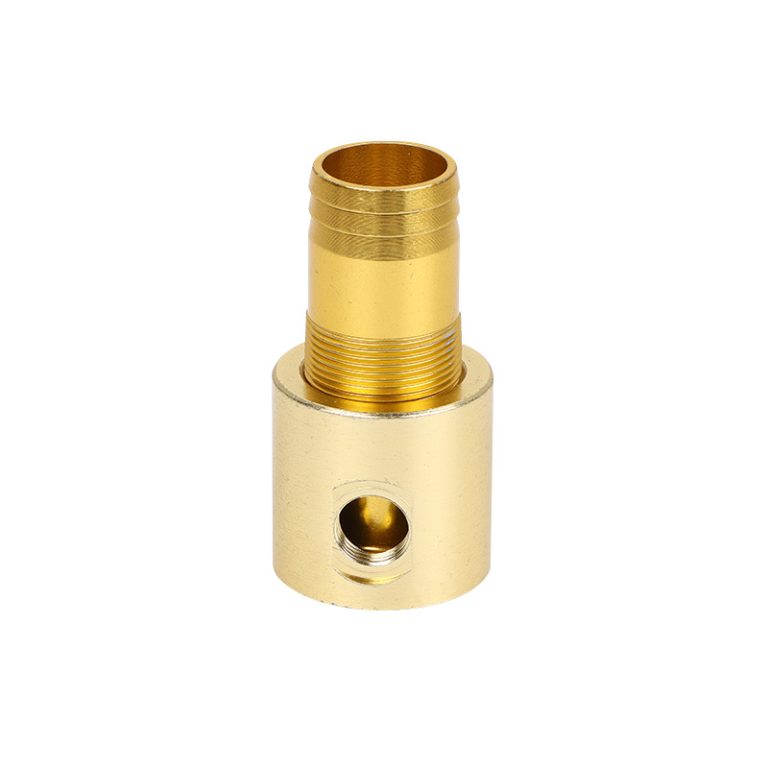
Introduction
C90300 bronze is a versatile alloy widely used in marine and industrial applications. With a composition of 88% copper, 8% tin, and 4% zinc, this high-density tin bronze offers superior corrosion resistance in seawater—surpassing many other copper alloys and even some stainless steels. It also provides excellent bearing and wear resistance, making it ideal for propeller shaft bearings, hydraulic cylinder bushings, and valve bodies.
But machining C90300 bronze requires careful handling of its ductility and unique properties. Its high tin content makes it prone to material adhesion on tools, leading to poor surface finishes and increased tool wear. This guide addresses these challenges, providing practical strategies to achieve precision and efficiency when machining C90300 bronze.
What Makes C90300 Bronze Unique?
Chemical Composition
| Element | Percentage | Function |
|---|---|---|
| Copper (Cu) | 88% | Base metal; corrosion resistance |
| Tin (Sn) | 8% | Wear resistance; strength |
| Zinc (Zn) | 4% | Strength; corrosion resistance |
Key Properties and Benefits
| Property | Benefit | Application Example |
|---|---|---|
| Superior seawater corrosion resistance | Longevity in marine environments | Propeller shaft bearings |
| Excellent wear resistance | Reduced maintenance needs | Hydraulic cylinder bushings |
| Moderate machinability (70–80%) | Lower production costs | Valve bodies |
| Good castability | Complex near-net shapes; less machining | Pump impellers |
What Machining Parameters Work Best for C90300 Bronze?
Cutting Speed, Feed Rate, and Depth of Cut
| Operation | Cutting Speed (m/min) | Feed Rate (mm/rev) | Depth of Cut (mm) |
|---|---|---|---|
| Roughing | 120–150 | 0.10–0.15 | 1–3 |
| Finishing | 150–180 | 0.05–0.08 | 0.5–1 |
Key principles:
- Lower feeds for finishing minimize surface imperfections
- Higher feeds for roughing maximize productivity
- Excessive depth in finishing causes tool deflection; poor dimensional accuracy
Coolant Selection and Chip Management
| Factor | Recommendation |
|---|---|
| Coolant type | Flood coolant preferred—better heat dissipation; flushes chips |
| Coolant concentration | Water-soluble; 5–10% concentration |
| Chip evacuation | Tools with chip breakers; proper coolant flow—breaks long, stringy chips |
Tool life impact: Following these parameters extends tool life by 20–30% compared to improper speeds and feeds.
What Tooling Works Best for C90300 Bronze?
Tool Materials and Coatings
| Tool | Best For | Advantage |
|---|---|---|
| K20 carbide inserts | General turning, milling | Hardness; wear resistance |
| Micro-grain carbide end mills | Precision work | Finer grain structure; superior edge retention |
| TiCN coating | Finishing operations | Reduces friction; prevents material adhesion |
| TiAlN coating | Higher-speed cutting | Handles higher temperatures |
Tool Geometry and Design
| Feature | Recommendation | Benefit |
|---|---|---|
| Flutes | Polished | Prevents material adhesion; reduces built-up edges |
| Rake angle | High-positive (10–15°) | Reduces cutting forces; improves chip flow |
| Wear monitoring | Replace when flank wear reaches 0.3 mm | Maintains surface finish; dimensional accuracy |
Common tool wear patterns: Flank wear, crater wear, built-up edges.
How Do You Achieve Desired Surface Finishes?
Surface Finish Targets
| Application | Target Ra |
|---|---|
| General finishing | 0.8–1.6 μm |
| High-precision finishing | 0.2–0.8 μm |
| Mirror finish | <0.2 μm (diamond polishing) |
Achieving Fine Finishes
| Strategy | Parameters |
|---|---|
| Finishing passes | Sharp tools; higher speeds (150–180 m/min); lower feeds (0.05–0.08 mm/rev) |
| Vibratory finishing | Ceramic media; 20–30% media fill rate; 60–120 minute cycles—deburring; improved surface texture |
| Diamond polishing | Polishing compounds—mirror-like surfaces |
Post-Machining Treatments
| Treatment | Purpose |
|---|---|
| Chemical passivation | Enhances corrosion resistance—creates protective layer; critical for marine environments |
| Ultrasonic cleaning | Removes coolant residue; debris—prepares for assembly or further treatments |
| Tumble deburring | Plastic or ceramic media; 25–30% load—burr-free edges without part damage |
Where Is C90300 Bronze Used?
Marine Industry
| Component | Requirement |
|---|---|
| Propeller shaft bearings | Corrosion resistance; wear properties—harsh underwater conditions |
| Pump impellers, housings | Withstands abrasive seawater |
Industrial Machinery
| Component | Requirement |
|---|---|
| Heavy-duty valve bodies | Strength; corrosion resistance—hydraulic, pneumatic systems |
| Hydraulic cylinder bushings | Wear resistance—high pressures; repeated motion |
Food Processing
| Component | Requirement |
|---|---|
| Wear plates | Corrosion resistance; easy cleaning—meets hygiene standards |
Power Transmission
| Component | Requirement |
|---|---|
| Thrust washers | Bearing properties—reduces friction; extends component life |
How Does C90300 Compare to C54400 Bronze?
| Property | C90300 | C54400 |
|---|---|---|
| Corrosion resistance (seawater) | Better | Good |
| Wear resistance | Good | Superior |
| Ductility | More ductile | Less ductile |
| Machinability | Slightly better (70–80%) | Good |
Selection guidance:
- C90300: Better for marine applications—superior seawater corrosion resistance
- C54400: Better for high-wear industrial components—superior wear resistance
Conclusion
CNC machining C90300 bronze requires understanding its unique properties and applying targeted strategies:
- Material properties: Cu 88%, Sn 8%, Zn 4%; superior seawater corrosion resistance; excellent wear resistance; moderate machinability (70–80%)
- Machining parameters: Roughing: 120–150 m/min, 0.10–0.15 mm/rev, 1–3 mm depth; Finishing: 150–180 m/min, 0.05–0.08 mm/rev, 0.5–1 mm depth
- Tooling: K20 carbide inserts; micro-grain carbide end mills; TiCN/TiAlN coatings; polished flutes; high-positive rake angles (10–15°); replace at 0.3 mm flank wear
- Coolant: Flood coolant (5–10% water-soluble)—better heat dissipation; chip evacuation
- Surface finish: Ra 0.2–0.8 μm achievable; finishing passes at higher speeds (150–180 m/min), lower feeds (0.05–0.08 mm/rev); vibratory finishing; diamond polishing
- Post-processing: Chemical passivation for marine service; ultrasonic cleaning; tumble deburring
- Applications: Marine (propeller shaft bearings, pump impellers); industrial (valve bodies, hydraulic bushings); food processing (wear plates); power transmission (thrust washers)
By following these strategies, manufacturers can achieve precision and efficiency—delivering C90300 bronze components with excellent surface finishes, dimensional accuracy, and corrosion resistance for demanding marine and industrial environments.
FAQs
How does C90300 bronze compare to C54400 bronze?
C90300 has better corrosion resistance in seawater, making it superior for marine applications. It is more ductile and has slightly better machinability (70–80%). C54400 offers superior wear resistance, making it better for high-wear industrial components.
What causes material adhesion on tools when machining C90300 bronze?
Its high ductility and tin content make it prone to sticking to tool surfaces. Prevention: Use polished flutes; TiCN coatings; proper coolant flow (flood coolant with 5–10% concentration); tools with chip breakers.
Is C90300 bronze suitable for food-processing equipment?
Yes. Its corrosion resistance and ease of cleaning make it suitable for food-grade applications. However, it should be properly passivated and cleaned to meet hygiene standards.
What surface finish can be achieved when machining C90300 bronze?
With proper tooling and parameters:
- General finishing: Ra 0.8–1.6 μm
- High-precision finishing: Ra 0.2–0.8 μm (sharp tools; higher speeds 150–180 m/min; lower feeds 0.05–0.08 mm/rev)
- Mirror finish: <0.2 μm (diamond polishing)
What coolant is best for machining C90300 bronze?
Flood coolant with water-soluble fluid (5–10% concentration) is preferred. It provides better heat dissipation and helps flush away chips—reducing material adhesion on tools. Flood coolant is generally better than MQL for this alloy due to its ductility and chip formation characteristics.
Contact Yigu Technology for Custom Manufacturing
At Yigu Technology, we specialize in CNC machining C90300 bronze for marine, industrial, and food-processing applications. With 15 years of experience, advanced CNC turning and milling capabilities, and ISO 9001 certification, we deliver precision components with tolerances to ±0.01 mm and surface finishes to Ra 0.2 μm.
Our expertise includes K20 carbide tooling, TiCN coatings, flood coolant strategies, and post-machining treatments (chemical passivation, ultrasonic cleaning). Contact us today to discuss your C90300 bronze machining project.