

Introduction
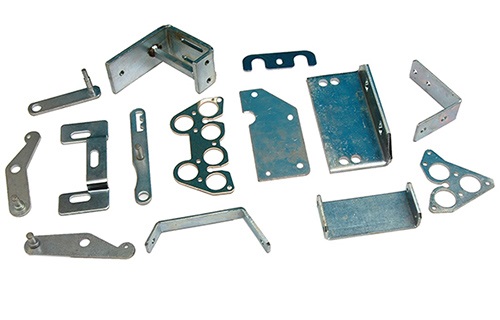
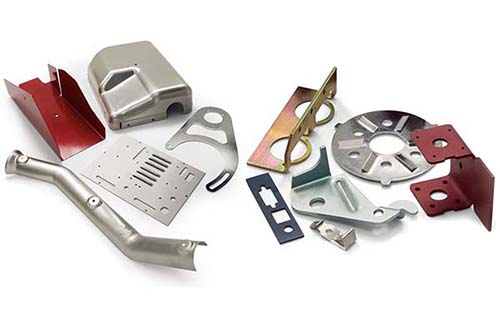
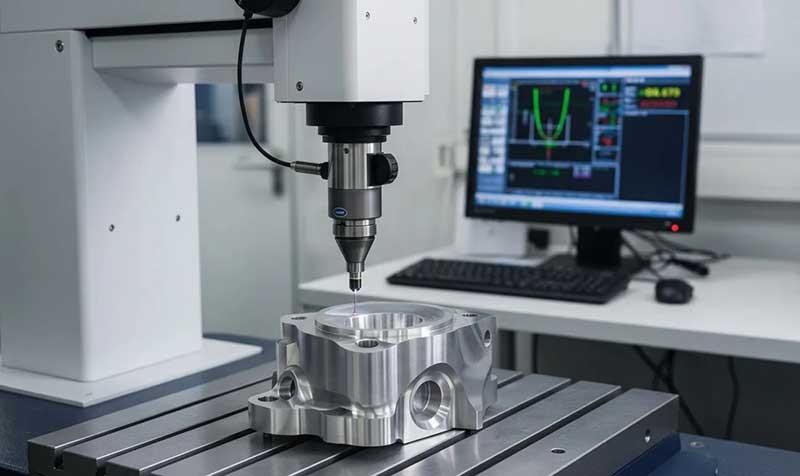
Magnesium Alloy ZK60A has gained traction in industries demanding lightweight yet strong materials. It offers an exceptional strength-to-weight ratio—ideal for aerospace, automotive, and medical applications. But machining it comes with unique challenges. Manufacturers often struggle with balancing its high strength and formability during CNC processes. Corrosion concerns and achieving precise dimensional control add further complexity. This guide dives into ZK60A’s material properties, optimal machining techniques, and key applications. You will learn how to overcome these hurdles and leverage the alloy’s full capabilities.
What Are the Key Material Properties of ZK60A?
ZK60A is a high-strength magnesium alloy. Its composition includes zinc and zirconium, which enhance strength through precipitation hardening. The grain size is typically 5–10 μm , contributing to its mechanical performance.
Lightweight and Strength-to-Weight Ratio
| Property | ZK60A | Aluminum (6061) | Steel (Mild) |
|---|---|---|---|
| Density | 1.83 g/cm³ | 2.7 g/cm³ | 7.8 g/cm³ |
| Tensile strength | 310 – 350 MPa | 240 – 310 MPa | 400 – 550 MPa |
| Yield strength | 240 – 280 MPa | 210 – 280 MPa | 250 – 350 MPa |
| Elongation | 6 – 10% | 12 – 17% | 15 – 25% |
| Hardness (Brinell) | 60 – 70 HB | 30 – 95 HB | 120 – 180 HB |
ZK60A’s density is 30% lower than aluminum and 77% lower than steel . Its tensile strength exceeds that of many aluminum alloys, making it ideal for weight-critical structural components.
Mechanical and Fatigue Properties
| Property | Value |
|---|---|
| Tensile strength | 310 – 350 MPa |
| Yield strength | 240 – 280 MPa |
| Elongation | 6 – 10% |
| Hardness | 60 – 70 HB |
| Fatigue resistance | Excellent; endures repeated stress cycles |
ZK60A offers moderate deformation capability (6–10% elongation), allowing for bending and forming operations. Its fatigue resistance makes it suitable for dynamic applications like automotive and aerospace components.
Corrosion Resistance and Microstructure
| Factor | Detail |
|---|---|
| Corrosion resistance | Better than some magnesium alloys; still requires protection in harsh environments |
| Microstructure | Fine-grained magnesium matrix with zinc and zirconium phases; Mg-Zn intermetallics strengthen the alloy |
| Surface treatments | Anodizing or protective coatings essential for long-term durability |
Thermal and Electrical Conductivity
| Property | Value |
|---|---|
| Thermal conductivity | ~120 W/(m·K) |
| Electrical conductivity | Moderate; suitable for non-critical electrical applications |
These properties make ZK60A valuable for electronic components where thermal management and weight reduction are key.
Casting Properties and Formability
| Property | Advantage |
|---|---|
| Casting properties | Good; allows complex shapes with precision |
| Formability | Notable, especially when heated; suitable for forging and rolling |
What CNC Machining Processes Work for ZK60A?
Tool Selection
| Tool Type | Recommendation | Why |
|---|---|---|
| Cutting tools | Carbide with sharp edges; positive rake angles | Minimizes tool wear; reduces cutting forces |
| Coatings | TiAlN (titanium aluminum nitride) | Reduces friction and heat; enhances performance |
| High-speed steel | Acceptable for low-speed operations | Wears faster; carbide preferred for long-term productivity |
Machining Parameters
| Operation | Spindle Speed (RPM) | Feed Rate (mm/rev) | Depth of Cut (mm) |
|---|---|---|---|
| High-speed machining | 8000 – 18,000 | 0.15 – 0.35 | — |
| Roughing | — | — | 1 – 3 |
| Finishing | — | — | 0.1 – 0.5 |
These parameters ensure efficient material removal without excessive heat generation, preserving dimensional accuracy.
Coolant, Lubrication, and Heat Management
| Factor | Best Practice | Why |
|---|---|---|
| Coolant | Water-based with fire-retardant additives | Flood cutting zone; dissipates heat; flushes chips; prevents fire risk |
| Lubrication | Reduces friction | Improves surface finish; extends tool life |
| Heat management | Good ventilation; avoid excessive temperatures | Prevents workpiece distortion; maintains dimensional accuracy |
Safety note: Magnesium alloys are flammable in fine chip form. Use fire-retardant coolants and ensure proper chip disposal.
Tool Path and Machining Strategy
| Strategy | Benefit |
|---|---|
| Climb milling | Reduces tool wear; improves surface finish |
| Layered approach (roughing → semi-finishing → finishing) | Ensures tight tolerances (±0.01 mm achievable) |
| Avoid abrupt tool movements | Minimizes chatter; preserves surface integrity |
| 3D machining with continuous tool contact | Enhances efficiency and accuracy for complex parts |
Surface Finish and Chip Formation
| Factor | Typical Value | Consideration |
|---|---|---|
| Surface finish | Ra 1.2 – 2.5 μm | Suitable for most precision applications |
| Chip formation | Continuous | Use tools with chip breakers; adequate coolant flow to prevent entanglement and fire hazards |
Where Is ZK60A Used?
| Industry | Applications | Benefits |
|---|---|---|
| Automotive | Engine components, transmission parts, wheel hubs | Reduces vehicle weight 10–15% vs. aluminum; improves fuel efficiency, reduces emissions |
| Aerospace | Seat frames, structural brackets, aircraft components | Lowers aircraft weight; increases payload capacity; high strength-to-weight ratio |
| Electronics | Electronic enclosures, heat sinks | Lightweight design; thermal conductivity (~120 W/(m·K)) |
| Medical | Medical implants, surgical tools (with biocompatible coatings) | Biocompatibility; strength; precision machining ensures perfect fit |
| Sporting goods | Bicycle frames, golf clubs, racing gear | Strength without added weight |
| Precision engineering | Lightweight structures, high-precision parts | Dimensional accuracy and stability; surface treatments enhance corrosion resistance |
What Is Yigu Technology’s Perspective?
At Yigu Technology, we specialize in CNC machining Magnesium Alloy ZK60A. Our expertise includes:
- Tool selection: Carbide tools with TiAlN coatings for reduced wear and heat.
- Parameter optimization: Spindle speeds 8000–18,000 RPM; feed rates 0.15–0.35 mm/rev; shallow finishing cuts (0.1–0.5 mm).
- Heat management: Fire-retardant water-based coolants flood cutting zones; good ventilation prevents heat buildup.
- Surface treatments: Anodizing and protective coatings enhance corrosion resistance for automotive, aerospace, and medical applications.
- Precision: Achieve tolerances as tight as ±0.01 mm with layered machining strategies.
We deliver high-quality ZK60A components with tight tolerances and superior surface finish—trusted by clients in demanding industries.
Conclusion
CNC machining Magnesium Alloy ZK60A unlocks its potential for lightweight, high-strength applications. ZK60A offers a density of 1.83 g/cm³ —30% lower than aluminum—with tensile strength 310–350 MPa and yield strength 240–280 MPa . Optimal machining parameters include carbide tools with TiAlN coatings, spindle speeds 8000–18,000 RPM, and fire-retardant water-based coolants to manage heat and fire risk. Achievable tolerances are ±0.01 mm with surface finishes Ra 1.2–2.5 μm . Applications span automotive (10–15% weight reduction vs. aluminum), aerospace (increased payload), electronics (thermal management), and medical devices (biocompatible coatings). With proper tooling, heat management, and surface treatments, ZK60A delivers exceptional performance in weight-critical precision components.
FAQs
How does ZK60A compare to AZ31B in terms of strength?
ZK60A has higher tensile and yield strengths (310–350 MPa vs. 240–260 MPa for AZ31B), making it better suited for high-load applications. It has slightly lower elongation (6–10% vs. 10–15%), so it is less ductile.
What surface treatments are best for ZK60A’s corrosion resistance?
Anodizing and protective coatings (e.g., epoxy-based) are effective. They form a barrier against moisture and chemicals, significantly enhancing durability in harsh environments.
Can ZK60A be used for medical implants?
Yes, with biocompatible coatings, ZK60A is suitable for medical implants. Its strength, lightweight nature, and machinability allow precision fabrication of implants that meet stringent medical requirements.
Contact Yigu Technology for Custom Manufacturing
At Yigu Technology, we combine deep material knowledge with advanced CNC machining to deliver precision ZK60A components. Our 3-axis, 4-axis, and 5-axis CNC machines are equipped with carbide TiAlN-coated tools and fire-retardant coolant systems to handle magnesium alloys safely and precisely. We provide DFM feedback to optimize your designs for manufacturability. From automotive brackets to aerospace structural parts, we deliver components that meet your exact specifications with consistent quality.
Ready to unlock the potential of ZK60A for your next project? Contact Yigu Technology today for a free consultation and quote. Let us help you achieve lightweight strength and precision in every component.


