Introduction
Biodegradable plastics are transforming the manufacturing landscape. As environmental concerns grow, demand for sustainable alternatives to traditional plastics has surged. Materials like Polylactic acid (PLA), Polyhydroxyalkanoates (PHA), and starch-based plastics offer the promise of products that break down after use—reducing plastic waste and reliance on fossil fuels.
But molding biodegradable plastics is not like molding polypropylene or ABS. They are moisture-sensitive. They have narrower processing windows. They degrade if overheated. Manufacturers face challenges with material selection, process control, and mold design.
This guide covers the properties, process parameters, mold design, quality control, and applications of injection molding biodegradable plastics.
What Are the Key Properties of Biodegradable Plastics?
Biodegradable plastics come in several types, each with distinct properties.
Polylactic Acid (PLA)
Derived from renewable resources—corn starch, sugarcane. Most common biodegradable plastic for injection molding.
| Property | Value |
|---|---|
| Tensile strength | 40 – 60 MPa |
| Elongation at break | 3 – 5% |
| Melting point | 150 – 170°C |
| Degradation | 3 – 6 months (industrial composting) |
PLA is rigid, transparent, and compostable under industrial conditions.
Polyhydroxyalkanoates (PHA)
Produced by microorganisms through fermentation. Offers better flexibility than PLA.
| Property | Value |
|---|---|
| Tensile strength | 20 – 40 MPa |
| Elongation at break | Up to 300% |
| Melting point | 180 – 200°C |
| Degradation | Varies; can degrade in home composting |
Starch-Based Plastics
Often blended with other polymers to improve properties.
| Property | Value |
|---|---|
| Tensile strength | 10 – 25 MPa |
| Elongation at break | 10 – 100% |
| Melting point | 160 – 190°C |
| Degradation | Weeks to months (home composting) |
Common Challenges
| Challenge | Impact |
|---|---|
| Moisture sensitivity | Absorbs moisture quickly; causes degradation during processing |
| Thermal stability | Narrow processing windows; overheating degrades material |
| Degradation rate | Varies by material and environmental conditions |
How Do You Injection Mold Biodegradable Plastics?
Key Process Parameters
Melt temperature:
| Material | Range |
|---|---|
| PLA | 180 – 210°C |
| PHA | 190 – 220°C |
| Starch-based | 160 – 190°C |
Exceeding these ranges causes degradation—reduced mechanical properties, discoloration.
Injection speed: Moderate—20 to 50 mm/s . Avoids excessive shear that causes degradation.
Injection pressure: 400 to 1000 bar. Complex parts need higher pressure.
Cooling time: 5 to 20 seconds. Biodegradable plastics have lower thermal conductivity—cool relatively quickly.
Cycle time: 15 to 45 seconds.
Material Handling and Drying
Drying is critical. Moisture causes degradation, voids, and reduced mechanical properties.
| Material | Drying Conditions | Target Moisture |
|---|---|---|
| PLA | 60 – 80°C for 4 – 6 hours | <0.02% |
| PHA | 70 – 90°C for 3 – 5 hours | <0.02% |
| Starch-based | 60 – 80°C for 3 – 5 hours | <0.02% |
Storage: Keep in sealed containers with desiccants. Maintain relative humidity below 40% to prevent moisture absorption.
The table below summarizes process parameters:
| Material | Melt Temp | Injection Pressure | Cooling Time | Drying |
|---|---|---|---|---|
| PLA | 180–210°C | 400–1000 bar | 5–20 s | 60–80°C, 4–6h |
| PHA | 190–220°C | 400–1000 bar | 5–20 s | 70–90°C, 3–5h |
| Starch-based | 160–190°C | 400–1000 bar | 5–20 s | 60–80°C, 3–5h |
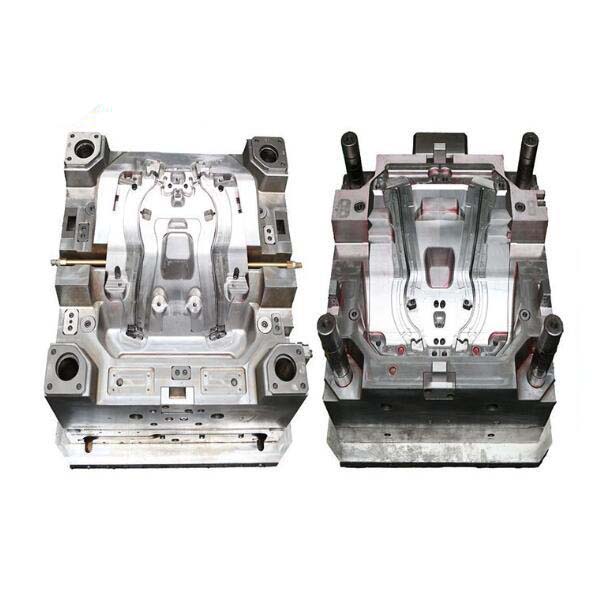
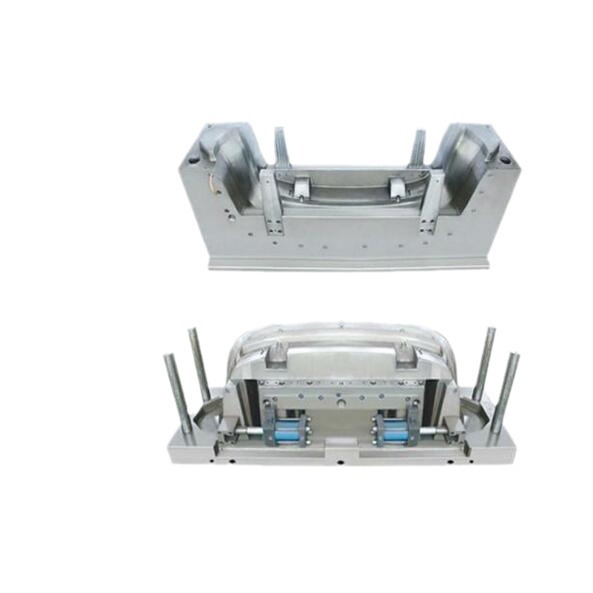
How Should Molds Be Designed for Biodegradable Plastics?
Venting
Biodegradable plastics can generate gases during processing. Proper venting prevents air traps and defects.
Vent depth: 0.01 to 0.03 mm
Vent width: 5 to 10 mm
Placement: At the end of flow paths
Cooling Channels
Efficient cooling prevents warpage. Place channels 8 to 12 mm from the cavity surface. Diameter: 6 to 10 mm . Turbulent flow (Reynolds number >3000) enhances heat transfer.
Draft Angles and Surface Finish
Draft angle: Minimum 1.5° per side for easy ejection.
Surface finish: Ra 0.8 μm or better to reduce sticking.
Mold Materials
P20 steel: General purpose.
H13 steel: For higher volume production.
Hot runner systems: Can be used but require careful temperature control to avoid degradation.
Moisture resistance: Proper sealing prevents moisture ingress into the mold.
What Defects Occur and How to Prevent Them?
| Defect | Cause | Solution |
|---|---|---|
| Warpage | Uneven cooling or material degradation | Optimize cooling channels; lower melt temperature slightly |
| Sink marks | Inadequate packing or thick sections | Increase packing pressure; design uniform wall thickness |
| Short shots | Insufficient flow or low melt temperature | Increase injection pressure; raise melt temperature |
| Voids | Moisture in material or poor venting | Improve drying; add more vents |
| Surface defects | Moisture or degradation | Dry material thoroughly; reduce melt temperature |
Quality Control Measures
Statistical Process Control (SPC): Monitor melt temperature, injection pressure. Keep variations within ±3% .
Degradation testing: Test samples for molecular weight changes after processing. Significant reduction indicates degradation.
Dimensional accuracy: Use CMMs. Tolerances typically ±0.15 mm for small parts.
Moisture testing: Verify moisture content before processing—critical for biodegradable plastics.
Where Are Biodegradable Plastics Used?
Packaging Materials
PLA is widely used for food packaging—clamshells, films. Transparency and compostability are key advantages.
Single-Use Products
Starch-based plastics are common for:
- Cutlery
- Straws
- Bags
These offer sustainable alternatives to traditional single-use plastics.
Medical Devices
Some PHA grades are biocompatible—used for:
- Sutures
- Drug delivery systems
Agricultural Applications
Biodegradable mulch films—PLA or starch-based—reduce plastic waste in farming. Films degrade after use, eliminating removal and disposal.
The table below summarizes applications:
| Industry | Applications | Materials | Key Properties |
|---|---|---|---|
| Packaging | Clamshells, films | PLA | Transparency, compostability |
| Single-use | Cutlery, straws, bags | Starch-based | Home compostability |
| Medical | Sutures, drug delivery | PHA | Biocompatibility, controlled degradation |
| Agriculture | Mulch films | PLA, starch-based | Degrades after use |
What Post-Processing Options Exist?
Painting and Coating
Use water-based paints compatible with biodegradable plastics. Clean surfaces with mild solvents before painting.
Ultrasonic Welding
Works well for PLA parts. Use 20 to 30 kHz frequencies. Proper joint design ensures strong bonds.
Machining and Trimming
Use sharp tools at low speeds—1000 to 2000 RPM —to avoid melting. PLA cuts and drills easily.
What Does a Real-World Example Look Like?
A food packaging manufacturer needed to produce 500,000 compostable clamshell containers annually. PLA was selected for its transparency and compostability.
Challenges:
- PLA moisture content was 0.05%—above the 0.02% target
- Cooling channels were not optimized, causing warpage
- Injection speed was too high, causing surface defects
Solutions:
- Drying: 70°C for 5 hours, reducing moisture to 0.015%
- Mold: Cooling channels redesigned for uniform cooling; draft angles increased to 2°
- Process: Melt temperature 200°C, injection pressure 600 bar, injection speed 30 mm/s
The result: containers with consistent dimensions (±0.1 mm), no warpage, and smooth surfaces. The containers passed compostability tests (ASTM D6400). Scrap rate dropped from 12% to under 3%.
Conclusion
Injection molding biodegradable plastics requires understanding their unique properties and adapting processes accordingly.
Material properties:
- PLA: Tensile strength 40–60 MPa, melting point 150–170°C
- PHA: Elongation up to 300%, melting point 180–200°C
- Starch-based: Tensile strength 10–25 MPa, home compostable
Process parameters:
- Melt temperature: PLA 180–210°C, PHA 190–220°C, starch-based 160–190°C
- Injection speed: 20–50 mm/s (moderate to avoid degradation)
- Drying: PLA 60–80°C for 4–6 hours; all materials to <0.02% moisture
Mold design:
- Vent depth: 0.01–0.03 mm
- Cooling channels: 8–12 mm from cavity
- Draft angles: Minimum 1.5°
- Surface finish: Ra 0.8 μm or better
Quality control:
- SPC monitoring (±3%)
- Moisture testing before processing
- Degradation testing (molecular weight)
Applications span packaging, single-use products, medical devices, and agriculture. When processed correctly, biodegradable plastics deliver sustainable, high-quality parts that meet environmental goals.
FAQ
Can biodegradable plastics be recycled with traditional plastics?
No. Most biodegradable plastics should not be recycled with traditional plastics. They can contaminate the recycling stream. They are designed for composting instead. Check local facilities—industrial composting is required for PLA; some starch-based plastics may degrade in home composting.
How does moisture affect biodegradable plastic injection molding?
Moisture causes degradation during processing. Water turns to steam at melt temperatures, creating voids and bubbles. It also breaks down polymer chains (hydrolysis), reducing molecular weight and mechanical properties. Proper drying to <0.02% moisture is essential before processing.
Are biodegradable plastics suitable for long-term use?
It depends on the type and application. PLA is best for single-use or short-lifespan products (months to a few years). Some PHA grades offer better durability for short to medium-term use (1–2 years). For long-term applications, traditional engineering plastics or stabilized biodegradable blends may be more appropriate. Always consider degradation rate under expected storage and use conditions.
What is the difference between PLA and PHA?
PLA is derived from corn starch or sugarcane. It has higher tensile strength (40–60 MPa) but lower elongation (3–5%)—more rigid. It degrades in industrial composting facilities (3–6 months). PHA is produced by microorganisms. It offers better flexibility (elongation up to 300%) and can degrade in home composting under some conditions. PHA has higher melting point (180–200°C) than PLA.
How do I prevent warpage in biodegradable plastic parts?
Optimize cooling channel layout for uniform heat extraction. Place channels 8–12 mm from cavity surface. Use turbulent flow (Reynolds number >3000) for better heat transfer. Lower melt temperature slightly if degradation is causing warpage. Ensure uniform wall thickness in part design. Increase draft angles (minimum 1.5°) for easier ejection.
Contact Yigu Technology for Custom Manufacturing
At Yigu Technology , we specialize in injection molding biodegradable plastics. We work with PLA, PHA, and starch-based materials. Our engineers understand the critical drying requirements—reducing moisture to <0.02% before processing.
We optimize melt temperature, injection speed, and cooling time for each material. Our molds feature proper venting, uniform cooling channels, and appropriate draft angles. Quality control includes moisture testing, SPC monitoring, and dimensional verification.
From compostable packaging to agricultural films, we deliver sustainable, high-quality parts.
Contact Yigu Technology today to discuss your biodegradable plastic injection molding project.