If you manufacture automotive parts, construction components, or appliances, you have likely faced the challenge of balancing formability, strength, and cost. SPHC hot rolled steel offers a solution. It is a low-carbon steel grade known for its excellent ductility and weldability. But its unique properties require careful handling during stamping to avoid issues like surface defects or dimensional inconsistencies. This guide covers material characteristics, stamping techniques, applications, and quality control to help you get the best results from SPHC.
What Makes SPHC Steel Unique?
Composition and Mechanical Properties
SPHC is a Japanese Industrial Standard (JIS) grade of hot rolled steel. Its low carbon content gives it exceptional formability and weldability.
| Element | Maximum Content | Role |
|---|---|---|
| Carbon | 0.12% | Keeps the steel ductile and easy to form |
| Manganese | 0.50% | Adds strength without sacrificing ductility |
| Phosphorus | 0.050% | Controlled to maintain formability |
| Sulfur | 0.050% | Controlled to prevent brittleness |
Mechanical Properties:
- Yield Strength: 215 MPa minimum
- Tensile Strength: 330–420 MPa
- Elongation: 30% minimum (for thickness up to 16mm)
Compared to cold rolled steel, SPHC has a coarser grain structure due to the hot rolling process. This gives it high ductility but slightly lower tensile strength. It is ideal for applications where formability matters more than maximum strength.
A Critical Limitation
SPHC lacks a protective coating. It is more susceptible to rust than galvanized or stainless steel. Manufacturers typically apply paints, oils, or other coatings after stamping, depending on the end-use environment.
How Do You Stamp SPHC Effectively?
Key Techniques and Adjustments
SPHC’s ductility influences every stage of stamping. Proper technique reduces waste and ensures precision.
Punching
SPHC punches cleanly with minimal burring. Use a punch-to-die clearance of 10–15% of material thickness. Control punch speed to avoid material deformation.
Bending
The material can bend to tight radii—as low as 1x the material thickness—without cracking. Account for springback of 2–5 degrees by over-bending slightly. Use bottoming dies for precise angles.
Drawing
SPHC excels in shallow to medium-depth drawing. Apply high-viscosity lubricants to reduce friction and prevent surface scratches. Limit draw ratios to avoid thinning.
Trimming
Precision trimming is achievable, but dull tools cause uneven edges. Regular tool maintenance is essential for dimensional accuracy.
Tooling and Equipment
- Die Design: Use rounded edges to minimize stress concentration. Carbide-tipped dies resist wear in high-volume production.
- Press Machines: Hydraulic presses apply consistent pressure, crucial for holding tolerances of ±0.05mm. Mechanical presses work but require careful speed control.
Where Is SPHC Steel Used?
Common Applications Across Industries
SPHC’s balance of formability, strength, and cost makes it a staple in several sectors.
| Industry | Application | Why SPHC Works |
|---|---|---|
| Automotive | Wheel wells, underbody components | High formability for complex shapes; cost-effective |
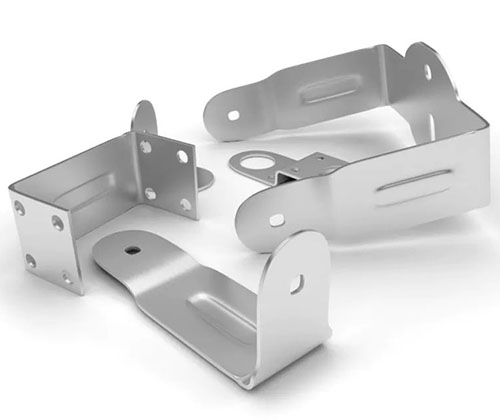
| Construction | Brackets, welded supports | Excellent weldability; good strength for structural parts |
| Appliances | Refrigerator panels, washer frames | Smooth surface finish; easy to paint |
| Machinery | Gears, levers, small components | Balances formability and moderate strength |
In automotive applications, SPHC allows manufacturers to create complex underbody shapes without cracking. In construction, its weldability simplifies on-site assembly. For appliances, its surface finish takes paint well, reducing post-processing work.
What Are the Key Grade Properties?
Specifications That Matter
SPHC is defined by strict standards that ensure consistency.
- Low Carbon: Below 0.12% carbon prevents brittleness. This allows cold forming even after hot rolling.
- Thickness Range: Available from 1.2mm to 16mm. Tighter tolerances (±0.1mm) for thinner sheets support precision stamping.
- Surface Finish: Hot rolled steel typically has a scaled surface. SPHC can be processed to achieve a smoother finish, reducing post-stamping polishing needs.
- Formability: Its fine grain structure and low carbon content allow uniform deformation, making it suitable for complex shapes.
How Do You Ensure Quality?
Manufacturing and Quality Control
Maintaining quality in SPHC stamping requires rigorous processes and adherence to standards.
Material Testing
Before stamping, test SPHC for tensile and yield strength per ASTM E8 standards. This ensures it meets project requirements.
Surface Inspection
Common issues include scale, rust, and scratches. Inspect incoming material with visual checks and ultrasonic testing. Use rust-inhibiting oils during storage.
Dimensional Accuracy
Use coordinate measuring machines (CMMs) to verify tolerances after stamping. This ensures parts fit into assemblies seamlessly.
Process Optimization
Regularly calibrate press machines and dies to maintain consistent pressure and alignment. This reduces waste from misformed parts.
Standards Compliance
Follow ISO 9001 to document processes from material inspection to final product testing. This ensures traceability and consistency.
Conclusion
SPHC hot rolled steel offers a strong combination of formability, weldability, and cost-effectiveness for metal stamping projects. Its low carbon content allows for tight bends, deep draws, and complex shapes without cracking. However, it lacks inherent corrosion resistance, so protective coatings are necessary for outdoor or harsh environments. Successful stamping requires proper tooling, lubricants, and press control. By following rigorous quality control and material testing, manufacturers can achieve consistent results across automotive, construction, appliance, and machinery applications.
FAQ
Is SPHC suitable for outdoor applications?
SPHC has limited corrosion resistance. It is not ideal for outdoor use without protective coatings like paint, oil, or galvanization. For marine or coastal environments, consider stainless steel or galvanized alternatives.
Can SPHC be used for high-strength applications?
SPHC has moderate strength with a tensile range of 330–420 MPa. It is not recommended for high-stress structural parts. For such applications, consider alloy steels with higher tensile strength.
What is the typical lead time for SPHC stamping projects?
Lead times vary by complexity. Custom manufacturers typically deliver SPHC stamping projects within 2–4 weeks, including material sourcing, stamping, and quality checks.
How does SPHC compare to cold rolled steel?
SPHC has a coarser grain structure and lower tensile strength than cold rolled steel. However, it offers higher ductility and is more cost-effective. Cold rolled steel is preferred when a smoother surface finish or tighter dimensional tolerances are required.
What coatings work best on stamped SPHC parts?
For rust protection, zinc-rich primers, powder coating, or e-coating are effective. For temporary protection during storage, rust-inhibiting oils work well. The choice depends on the end-use environment.
Contact Yigu Technology for Custom Manufacturing
Stamping SPHC hot rolled steel requires the right tooling, process control, and quality systems. At Yigu Technology, we specialize in custom metal stamping with SPHC for automotive, construction, appliance, and machinery clients. Our team optimizes die designs to leverage SPHC’s formability while maintaining tight tolerances.
We implement rigorous quality control, including pre-stamping material testing and post-stamping dimensional inspections. Whether you need complex underbody components or simple brackets, we deliver consistent, reliable results.
Contact Yigu Technology today to discuss your SPHC stamping project.