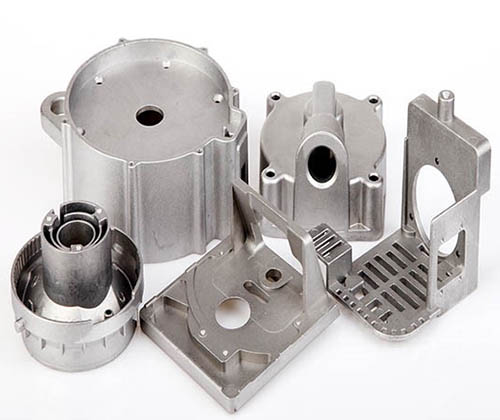
Manufacturers today face a clear challenge. Products must be lighter to improve fuel efficiency and portability. But they cannot sacrifice strength or durability. Traditional materials like steel add weight and increase costs. Aluminum alloys offer a solution. They weigh about one-third as much as steel while delivering strength that rivals mild steel in many applications. Stamping aluminum transforms flat sheets into complex, high-performance components efficiently. But stamping aluminum is not the same as stamping steel. It requires different techniques, different tooling, and a deep understanding of how each alloy behaves. This guide walks you through the properties, processes, and applications of stamped aluminum parts. You will learn how to select the right alloy, avoid common defects, and achieve consistent, high-quality results.
What Makes Aluminum Alloys Ideal for Stamping?
Aluminum offers a combination of properties that few other metals can match. Understanding these properties helps you choose the right alloy and process for your application.
Lightweight Nature
Aluminum weighs 2.7 g/cm³. Steel weighs 7.8 g/cm³. That is a 67% weight reduction for the same volume. In automotive applications, replacing steel with aluminum can cut vehicle weight by hundreds of kilograms. That translates directly to better fuel economy and lower emissions.
Strength-to-Weight Ratio
Aluminum delivers excellent strength relative to its weight. Some alloys, like 6061-T6, have tensile strengths up to 310 MPa. That is comparable to mild steel but at one-third the weight. For structural components, this ratio is critical.
Formability
Most aluminum alloys offer good ductility. 1100 and 3003 can achieve 30% to 40% elongation in their soft tempers. This allows deep draws, tight bends, and complex shapes without cracking.
Corrosion Resistance
Aluminum forms a natural oxide layer when exposed to air. This layer protects against rust and corrosion. Alloys like 5052 include magnesium to enhance this resistance further, making them suitable for marine and outdoor applications.
Thermal Conductivity
Aluminum conducts heat twice as well as steel. That is why it is the material of choice for heat sinks, cooling plates, and LED housings. Stamped aluminum parts can transfer heat away from sensitive components efficiently.
What Are the Common Aluminum Alloys for Stamping?
Choosing the right alloy is the first step to successful stamping. Each alloy has a specific balance of strength, formability, and corrosion resistance.
| Alloy | Key Properties | Typical Applications |
|---|---|---|
| 1100 | Ultra-soft, 99% pure, excellent ductility | Chemical equipment, reflectors, deep-drawn parts |
| 3003 | Good formability, moderate strength, corrosion-resistant | Food containers, decorative parts, general stamping |
| 5052 | High corrosion resistance, strong, weldable | Marine components, fuel tanks, electronics enclosures |
| 6061 | High strength, heat-treatable, good machinability | Structural parts, aerospace components, frames |
Best for Deep Drawing
1100 and 3003 are the top choices for deep drawing. Their high ductility allows draw ratios up to 3:1. A 100 mm blank can become a 300 mm deep part without tearing.
Best for Structural Parts
6061 offers the highest strength among common stamping alloys. It is heat-treatable to achieve even higher strength after forming. Use it for brackets, frames, and components that must carry loads.
Best for Corrosive Environments
5052 excels in marine and outdoor applications. Its magnesium content provides superior corrosion resistance. It is also weldable, making it useful for assemblies.
How Is Aluminum Stamped Differently from Steel?
Aluminum behaves differently under pressure. Its softness, lower modulus, and different springback characteristics require adjustments to every step of the stamping process.
Blanking and Piercing
Aluminum is softer than steel. That means dies wear more slowly, but the risk of burrs is higher if tools are not sharp.
Use sharp, polished dies with 5% to 8% clearance relative to material thickness. Too much clearance creates burrs. Too little causes excessive force and galling.
Bending
Aluminum has minimal springback—typically 1 to 2 degrees. This makes angle control easier than with steel. However, aluminum is more prone to cracking on the outside of bends.
Use a minimum bend radius of 1× material thickness. For a 1 mm sheet, use at least a 1 mm radius. Going tighter increases the risk of surface cracking.
Deep Drawing
Aluminum’s ductility makes it excellent for deep drawing. But it also has a tendency to wrinkle and tear if not controlled.
Use slow press speeds, typically 15 to 20 strokes per minute. Apply heavy lubrication to reduce friction. For 3003 and 1100, draw ratios up to 3:1 are achievable. For 5052, stay closer to 2:1.
Progressive Die Stamping
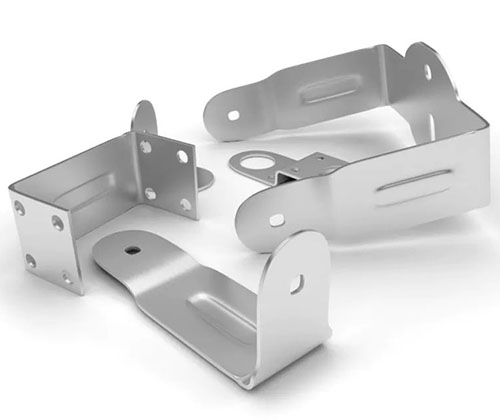
For high-volume parts like automotive brackets, progressive die stamping is efficient. A strip of aluminum moves through a series of stations. Each station performs an operation: blanking, piercing, bending, forming.
Ensure each station allows even material flow. Aluminum work-hardens less than steel, but it can still thin out if the process is not balanced.
What Tooling and Dies Do You Need?
Die Material
Use tool steel like D2 or A2 for durability. For very high volume runs, carbide inserts resist wear and maintain precision longer. Aluminum is less abrasive than steel, so tool life is generally longer.
Surface Finish
Polish die surfaces to Ra ≤ 0.4 μm. Smooth surfaces reduce friction and prevent galling—the transfer of aluminum to the die. Galling leaves rough spots on parts and wears tools faster.
Lubrication
Lubrication is critical for aluminum stamping. The material tends to stick to dies under pressure.
Apply lubricant evenly. Mineral oils and wax-based compounds work well. Too little lubricant causes scratching and galling. Too much leaves residues that may require cleaning.
A manufacturer stamping 5052 marine parts switched to a high-viscosity, extreme-pressure lubricant. Galling dropped by 80%, and die life doubled.
What Post-Stamping Treatments Enhance Aluminum Parts?
Anodizing
Anodizing creates a hard, porous oxide layer on the aluminum surface. This layer accepts dyes for color and improves corrosion resistance. It is common on consumer goods, electronics enclosures, and architectural parts.
Anodized finishes are durable but require a smooth starting surface. For best results, aim for surface roughness Ra ≤ 0.8 μm before anodizing.
Powder Coating
Powder coating adds a thick, durable finish. It resists chipping, UV damage, and corrosion. Outdoor equipment, automotive parts, and industrial components often use powder coating.
Polishing
Polishing achieves a mirror-like finish. It is common on decorative parts, reflectors, and architectural trim. However, polishing can slightly reduce corrosion resistance by removing the natural oxide layer. A clear protective coating may be needed afterward.
Conversion Coatings
Clear chromate or other conversion coatings add a thin layer of protection without changing appearance. They are often used as a base for painting or as a final finish for parts that need mild corrosion resistance.
What Quality Controls Ensure Consistent Results?
Dimensional Inspection
Use coordinate measuring machines (CMMs) to verify dimensions. Critical parts often require tolerances of ±0.02 mm or tighter. CMMs catch deviations before they become problems.
Tensile Testing
Confirm that the stamped material meets strength specifications. For 3003, tensile strength should be 110 to 145 MPa. For 6061, it can reach 310 MPa after heat treatment. Test sample parts regularly, especially when material batches change.
Surface Roughness Measurement
Surface finish affects appearance, coating adhesion, and corrosion resistance. For most applications, aim for Ra ≤ 1.6 μm. Anodized parts need Ra ≤ 0.8 μm for uniform coating.
Non-Destructive Testing
For critical applications like aerospace components, use ultrasonic testing to detect internal defects. This method finds voids or cracks that surface inspection misses.
Where Are Stamped Aluminum Parts Used?
Automotive
Aluminum stampings reduce vehicle weight, improving fuel efficiency and range. Common parts include:
- Hoods and door panels
- Heat shields
- Battery enclosures for electric vehicles
- Structural brackets
A typical electric vehicle uses hundreds of kilograms of stamped aluminum in its body structure and battery pack.
Aerospace
Aerospace components demand high strength and low weight. Stamped aluminum parts include:
- Structural brackets
- Interior components
- Access panels
6061 and 7075 are common choices. Their strength-to-weight ratio is critical for aircraft performance.
Electronics
Consumer electronics need lightweight, durable enclosures that also provide electromagnetic interference (EMI) shielding. Stamped aluminum parts appear in:
- Smartphone and laptop housings
- Server racks
- Industrial control enclosures
5052 and 6061 are often used for their balance of strength and formability.
Heat Sinks
Aluminum’s thermal conductivity makes it the standard for cooling electronics. Stamped heat sinks are common in:
- CPUs and GPUs
- LED lighting
- Power electronics
Stamped fins and base plates transfer heat away from sensitive components efficiently.
What Challenges Come with Stamping Aluminum?
| Challenge | Cause | Solution |
|---|---|---|
| Galling | Aluminum transfers to die | Polish dies, use proper lubricant |
| Cracking | Bend radius too tight | Use minimum radius of 1× thickness |
| Wrinkling | Insufficient blank holder pressure | Increase pressure, add beads |
| Springback | Elastic recovery | Minimal with aluminum, but account for 1–2 degrees |
| Surface scratches | Rough handling or debris | Use plastic interleaving, clean dies |
Conclusion
Metal stamping aluminum alloys offers a clear path to lighter, stronger components. The material’s one-third weight of steel, combined with its strength, formability, and corrosion resistance, makes it indispensable across industries. From automotive body panels that improve fuel economy to heat sinks that cool powerful electronics, stamped aluminum parts deliver performance that other materials cannot match.
Success depends on selecting the right alloy for the job. 1100 and 3003 excel at deep drawing. 5052 handles corrosive environments. 6061 delivers structural strength. Each requires specific stamping techniques—slower speeds, proper lubrication, polished dies—to prevent galling, cracking, and surface damage.
With the right processes and quality controls, aluminum stamping produces consistent, high-quality parts at scale. It is a proven solution for manufacturers who need to reduce weight without compromising durability.
FAQ About Metal Stamping Aluminum Alloys
Can aluminum alloys be stamped as thin as steel?
Yes. Aluminum can be stamped down to 0.01 mm thickness. However, thinner gauges require more precise tooling and careful process control to prevent wrinkling. The softness of thin aluminum makes it prone to folding under pressure.
Is aluminum stamping more expensive than steel stamping?
Aluminum material costs are higher than steel. But other factors often offset this difference. Dies wear slower on aluminum. Press speeds can be faster. Shipping costs are lower due to reduced weight. For high-volume runs, the per-part cost can be comparable or even lower.
How does aluminum’s corrosion resistance compare to stainless steel?
Aluminum resists rust well in most environments due to its natural oxide layer. However, it is vulnerable to strong acids and alkalis. Stainless steel outperforms aluminum in harsh chemical environments. But aluminum offers much better weight savings and thermal conductivity. Choose based on the specific application requirements.
What is the best aluminum alloy for deep drawing?
1100 and 3003 are the best choices for deep drawing. Both offer high ductility with elongation values of 30% to 40%. They can achieve draw ratios up to 3:1. For moderate draws, 5052 works well. For simple bends, 6061 is acceptable but has lower formability.
Do stamped aluminum parts need heat treatment?
Some alloys benefit from heat treatment after stamping. 6061 is commonly heat-treated to the T6 temper, which increases tensile strength to 310 MPa. Other alloys like 3003 and 1100 are used in their annealed (O) temper and do not require post-stamping heat treatment. Work-hardened tempers (H14, H16, etc.) achieve strength through cold working, not heat treatment.
Contact Yigu Technology for Custom Manufacturing
Stamping aluminum alloys requires precision, experience, and the right equipment. At Yigu Technology, we specialize in custom metal stamping for automotive, aerospace, electronics, and industrial clients. Our team helps you select the right alloy for your application. We design tooling that accounts for aluminum’s unique behavior. We run parts on modern presses with optimized speeds and lubrication. Our quality control includes dimensional inspection, tensile testing, and surface finish measurement to ensure every part meets your specifications. Whether you need high-volume production or complex prototypes, we have the capabilities to deliver. Contact us today to discuss your project.