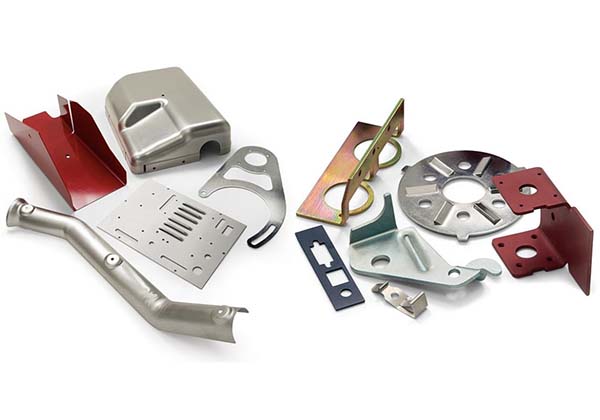
If you manufacture stamped metal components, you have likely encountered SPCC cold rolled steel. It is a staple material, but many manufacturers struggle with issues that hinder its full potential. Unclear material characteristics, misaligned processes, and quality challenges can cause production delays, increased costs, and subpar products. Metal Stamping with SPCC Cold Rolled Steel requires a clear understanding of its properties and the right techniques to overcome common hurdles. This guide covers material characteristics, manufacturing processes, quality control, and applications to help you achieve optimal performance.
What Is SPCC Cold Rolled Steel?
Material Characteristics You Need to Know
SPCC is a commercial quality cold rolled steel grade defined by Japanese Industrial Standards (JIS) . Its balanced properties make it a cost-effective choice for a wide range of stamping applications.
| Property | Value | Significance |
|---|---|---|
| Carbon Content | 0.12% max | Provides balanced strength and ductility |
| Tensile Strength | 270–410 MPa | Withstands stamping forces without breaking |
| Yield Strength | 170 MPa min | Offers enough flexibility for forming |
| Hardness | 60–80 HRB | Soft enough for forming; hard enough for structural use |
| Thickness Tolerance | ±0.02 mm (for thickness ≤1 mm) | Ensures even feeding into the press |
Surface Finish: SPCC has a smooth, uniform matte finish. This eliminates the need for extensive polishing, saving time and cost in post-processing.
Corrosion Resistance: Untreated SPCC has moderate corrosion resistance. It rusts in humid environments but readily accepts coatings like galvanization or painting.
Workability: SPCC can be easily punched, bent, and formed. It can be bent to angles as small as 90 degrees without cracking, making it suitable for complex geometries.
How Do You Stamp SPCC Effectively?
Manufacturing Process Considerations
Stamping SPCC involves a series of steps, each requiring careful execution to ensure quality.
Common Stamping Operations
- Blanking: Cutting large sheets into smaller blanks of required size.
- Punching: Creating holes or openings.
- Bending: Forming angles and curves.
- Forming: Shaping the material into 3D structures.
- Shearing: Trimming excess material to final contour.
Pressing Techniques
| Press Type | Speed | Best For |
|---|---|---|
| Mechanical Press | 200–500 strokes/min | Simple parts, high-volume production |
| Hydraulic Press | Variable, slower | Complex forming, controlled pressure |
Hydraulic presses offer slower, more controlled pressure, which is gentler on the material for complex forms.
Tooling Design
Tooling must account for SPCC’s workability. Key parameters include:
- Die Clearance: For a 1 mm thick sheet, use 10–15% of material thickness clearance. This prevents excessive friction and ensures clean cuts.
- Die Material: Use tool steel like SKD11 with hardness of HRC 58–62 after heat treatment to extend die life.
How Do You Ensure Quality?
Quality Control Measures
Quality control is vital to ensure stamped SPCC parts meet required standards.
Dimensional Accuracy
Use calipers, micrometers, and coordinate measuring machines (CMMs) to verify dimensions. For critical features, maintain tolerances as tight as ±0.01 mm. Regular in-process checks ensure parts remain within specifications.
Surface Defect Inspection
Inspect for scratches, dents, or rust spots using visual checks and light boxes. A defect rate of less than 0.5% is considered acceptable for most applications. Parts with significant surface defects are rejected.
Material Testing
- Tensile Tests: Verify tensile and yield strength on incoming sheet samples.
- Hardness Testing: Use the Rockwell B scale. SPCC typically measures 60–80 HRB.
Quality Assurance Standards
Adhere to standards like ISO 9001 to ensure the entire process—from material inspection to final packaging—is documented and controlled.
Where Is SPCC Stamped Parts Used?
Wide Applications Across Industries
SPCC’s combination of strength, formability, and cost-effectiveness makes it a versatile material.
| Industry | Typical Parts | Why SPCC Works |
|---|---|---|
| Automotive | Bracket holders, door hinges, fuel tank straps | Strength and formability for structural components |
| Electrical | Switch housings, terminal blocks, motor brackets | Smooth surface; good conductivity when coated |
| Consumer Electronics | Smartphone frames, laptop casings, TV backplates | Smooth finish enhances appearance |
| Industrial Equipment | Gear covers, conveyor brackets, machine guards | Durability in harsh environments |
| Household Appliances | Washing machine panels, refrigerator shelves, oven brackets | Cost-effective; easily shaped to fit designs |
| Architectural | Metal trim, partition brackets, window frames | Accepts coatings for indoor and outdoor use |
| Mechanical Devices | Pump housings, valve bodies | Workability for intricate shapes |
What Industry Standards Apply?
Compliance Requirements
Compliance with industry standards is non-negotiable when working with SPCC.
| Standard | Purpose |
|---|---|
| ASTM A1008 | Covers cold-rolled carbon steel sheet; specifies composition, properties, and tolerances |
| JIS G 3141 | Official Japanese standard defining SPCC grade |
| ISO 9001 | Quality management system for manufacturing processes |
| ISO 10111 | Guidelines for material selection based on intended use |
Safety and Environmental Compliance
- Safety: Operators must wear protective gear. Presses must have safety guards. Follow OSHA standards or local equivalents.
- Environmental: Manufacturing processes should minimize waste. Coatings applied to SPCC must comply with RoHS (free from lead, mercury, and other harmful substances).
Industry Best Practices
- Storage: Store SPCC sheets in dry, covered areas to prevent rust.
- Tool Maintenance: Regularly maintain stamping tools to ensure clean cuts and extend die life.
- Training: Provide employee training on proper handling and stamping techniques.
Conclusion
SPCC cold rolled steel is a versatile, cost-effective material for metal stamping. Its carbon content (0.12% max) provides balanced strength and ductility. Tensile strength ranges from 270–410 MPa, with yield strength of 170 MPa min. The smooth surface finish reduces post-processing work. Stamping requires proper die clearance—10–15% of material thickness—and tooling made from hardened steel like SKD11 (HRC 58–62). Quality control includes dimensional checks (tolerances to ±0.01 mm), surface inspection (defect rate <0.5%), and material testing. Applications span automotive, electronics, consumer goods, and industrial equipment. Compliance with ASTM A1008, JIS G 3141, and ISO 9001 ensures consistent quality and performance.
FAQ
Can SPCC cold rolled steel be welded?
Yes, SPCC can be welded using methods like arc welding. However, welding affects the material in the heat-affected zone, reducing ductility. Post-weld heat treatment can help restore some properties. For critical applications, consider mechanical fastening or adhesive bonding as alternatives.
What is the maximum thickness of SPCC that can be effectively stamped?
SPCC can be stamped effectively up to 3 mm thick. For thicker materials, more powerful presses and specialized tooling are required to ensure proper forming without defects. Pre-heating may also improve formability for thicker gauges.
How does SPCC compare to other cold rolled steel grades in terms of cost?
SPCC is generally more cost-effective than higher grades like SPCE (deep drawing quality). It offers a good balance of quality and price, making it popular for applications where high deep drawing performance is not required. For complex deep-drawn parts, SPCE may be worth the additional cost.
What coatings work best for SPCC to improve corrosion resistance?
Galvanization (zinc coating) and powder coating are effective for outdoor or humid environments. For indoor applications, phosphate coating or oil film provides temporary protection. Apply coatings after stamping to avoid damaging the finish during forming.
Why is die clearance important when stamping SPCC?
Proper die clearance—10–15% of material thickness—prevents excessive friction and ensures clean cuts. Too little clearance causes excessive wear and rough edges. Too much clearance creates burrs and reduces dimensional accuracy. Correct clearance extends tool life and improves part quality.
Contact Yigu Technology for Custom Manufacturing
Stamping SPCC cold rolled steel requires the right equipment, tooling, and process control. At Yigu Technology, we have extensive experience in metal stamping with SPCC for automotive, electronics, industrial, and consumer applications. Our facilities are equipped with advanced mechanical and hydraulic presses, allowing us to produce high-quality parts that meet strict industry standards.
We work closely with customers to provide custom solutions—from small-batch precision parts to high-volume production. Our quality system ensures consistent results, and our expertise in tooling design helps you optimize performance and cost.
Contact Yigu Technology today to discuss your SPCC stamping project.