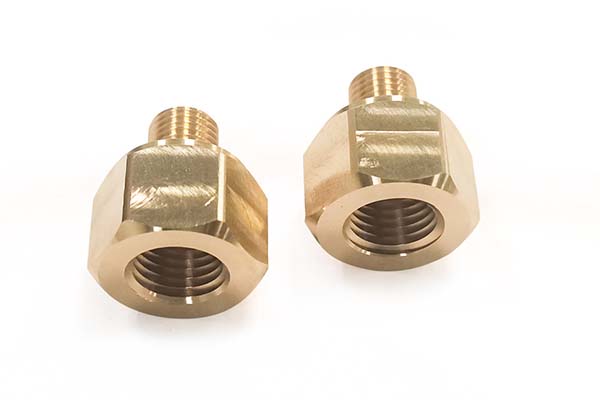
Manufacturers often face a frustrating trade-off. They need a material that is strong enough to hold its shape under stress. They also need it to be ductile enough to form into complex parts without cracking. Copper is ductile but soft. Steel is strong but harder to form. C2600 cartridge brass offers a middle path. It is a 70/30 copper-zinc alloy—70% copper, 30% zinc. This composition gives it a rare combination of strength, formability, and corrosion resistance. It is the standard choice for ammunition casings, electrical terminals, and plumbing fittings. But stamping C2600 requires understanding its unique behavior. It work-hardens. It can gall on dies. Its surface tarnishes if not handled properly. This guide covers C2600’s properties, stamping techniques, and applications. You will learn how to work with this versatile alloy effectively.
What Makes C2600 Cartridge Brass Different?
C2600 is often called cartridge brass because of its long history in ammunition manufacturing. The 70% copper, 30% zinc composition creates a material with excellent cold-working properties.
Mechanical Properties
| Condition | Tensile Strength | Elongation |
|---|---|---|
| Annealed (O) | 345 MPa | 60% |
| Half-hard (H2) | 450 MPa | 35% |
| Hard (H4) | 655 MPa | 15% |
C2600 can be cold-worked to a wide range of strengths while maintaining good ductility. This versatility allows manufacturers to tailor the material to specific applications. Annealed C2600 stretches like taffy. Hard C2600 approaches the strength of mild steel.
Formability
C2600 is among the most formable brass alloys. It can be:
- Bent to 0.5× material thickness radii without cracking
- Deep-drawn with draw ratios up to 2.5:1
- Stamped in progressive dies without intermediate annealing for many parts
This formability comes from the alloy’s face-centered cubic crystal structure, which allows extensive deformation before failure.
Corrosion Resistance
C2600 resists atmospheric corrosion and freshwater well. However, it is susceptible to dezincification in certain environments. Dezincification occurs when zinc selectively leaches out of the alloy, leaving porous, weakened copper behind. This is most common in:
- High-chloride environments (saltwater)
- Stagnant water with low oxygen
- Acidic conditions
For applications where dezincification is a concern, arsenic-alloyed brass (like C26000 with added arsenic) or protective coatings are used.
Electrical and Thermal Conductivity
C2600 offers 28% to 32% IACS conductivity. This is lower than pure copper but sufficient for many electrical applications. It is commonly used in connectors, terminals, and switches where moderate conductivity and good mechanical properties are needed.
How Does C2600 Compare to Other Copper Alloys?
| Alloy | Composition | Strength | Formability | Conductivity | Cost |
|---|---|---|---|---|---|
| C2600 | Cu 70%, Zn 30% | High | Excellent | Moderate | Moderate |
| C1100 | Cu 99.9% | Low | Excellent | Very high | High |
| C360 | Cu 60%, Zn 35%, Pb 3% | Moderate | Good | Moderate | Moderate |
| C280 | Cu 60%, Zn 40% | Very high | Moderate | Moderate | Low |
C2600 occupies a sweet spot. It is stronger than C1100. It is more formable than C280. It costs less than high-purity copper. For applications needing a balance of properties, C2600 is often the best choice.
How Do You Stamp C2600 Successfully?
Stamping C2600 requires techniques that leverage its formability while managing its tendency to gall and work-harden.
Blanking and Piercing
Use sharp dies with 7% to 9% clearance based on material thickness. Proper clearance is critical. Too little causes excessive force and die wear. Too much creates burrs and ragged edges.
For high-volume production, carbide dies resist wear better than tool steel. C2600’s zinc content makes it slightly abrasive. Carbide maintains edge sharpness longer.
Bending and Forming
C2600’s ductility allows minimum bend radii of 0.5× material thickness. A 1 mm sheet can bend around a 0.5 mm radius without cracking. This is significantly tighter than steel or aluminum.
Springback is minimal—typically 1 to 2 degrees. Over-bend slightly to compensate. For precise angles, bottoming dies ensure accuracy.
Deep Drawing
C2600 excels in deep drawing. Draw ratios up to 2.5:1 are achievable. A 100 mm blank can become a 250 mm deep part.
Use:
- Moderate press speeds: 15 to 20 strokes per minute
- Sulfurized oil lubricants: These reduce friction and prevent galling
- Polished dies: Ra ≤ 0.4 μm for smooth material flow
A manufacturer stamping deep-drawn electrical enclosures found that switching to sulfurized oil reduced galling by 70% and extended die life by 50%.
Progressive Die Stamping
Progressive dies are ideal for high-volume C2600 parts. The alloy’s excellent cold workability allows multiple forming steps without intermediate annealing for many parts.
Design progressive dies with:
- Gradual forming: Distribute work across stations
- Adequate carriers: Keep the strip stable
- Sharp cutting stations: Prevent burrs that can cause issues in later stations
Annealing and Stress Relief
While C2600 resists work hardening better than many alloys, intensive forming may require annealing. Heat to 500°C to 600°C for 30 to 60 minutes, then air-cool.
Annealing restores ductility and relieves residual stress. This is critical for:
- Parts that will undergo pressure testing (like cartridge cases)
- Components that require maximum ductility for subsequent operations
- Parts with thin sections that could crack under stress
What Tooling and Lubrication Work Best?
Tool Materials
| Volume | Recommended Tooling |
|---|---|
| Low to moderate | Tool steel (D2, A2), coated with TiN |
| High | Carbide inserts or solid carbide |
| Very high | Carbide with polished surfaces |
Die Surface Finish
Polish die surfaces to Ra ≤ 0.4 μm. Smooth surfaces reduce friction and prevent galling. For high-volume runs, consider chrome-plated dies to further resist brass adhesion.
Lubrication
Use anti-galling lubricants with sulfur or phosphorus additives. These create a protective film under pressure. Apply a thin, even layer. Excess lubricant can attract contaminants and affect surface finish.
Die Cleaning
Clean dies every 1,000 to 2,000 strokes to remove brass buildup. Buildup causes scratches and galling. Regular cleaning maintains part quality.
What Quality Controls Are Essential?
Dimensional Inspection
Use coordinate measuring machines (CMMs) to verify critical dimensions. C2600’s formability allows tight tolerances—typically ±0.02 mm or better for stamped features.
Surface Finish
Inspect for:
- Scratches and galling marks
- Burrs on edges
- Tarnish or discoloration
Surface finish affects both appearance and function. Burrs can interfere with assembly. Scratches can be stress risers.
Burr Control
For critical parts, add a deburring station after stamping. Burrs are common with C2600 if clearances are not optimized. Deburring ensures clean edges for assembly and prevents injury during handling.
Tarnish Prevention
C2600 tarnishes over time when exposed to air. For parts that will sit in inventory or be used in visible applications:
- Clean with mild detergent after stamping to remove lubricants
- Apply clear lacquer or chromate conversion coating to prevent tarnishing
- Store in dry, low-humidity environments
Where Is C2600 Stamping Used?
Cartridge Cases (Ammunition)
C2600 is the standard for ammunition casings. Its combination of strength and ductility allows it to:
- Withstand the pressure of firing
- Expand to seal the chamber
- Retract for extraction after firing
A single cartridge case undergoes multiple stamping operations: blanking, drawing, and trimming. C2600’s formability makes this possible without cracking.
Electrical Terminals and Connectors
C2600 balances conductivity with mechanical strength. It is used in:
- Wiring harness terminals
- Circuit breaker components
- Battery contacts
- Switch mechanisms
The alloy’s spring properties—especially in cold-worked tempers—maintain contact pressure over time.
Plumbing Fittings and Valves
C2600 resists corrosion in freshwater. It is common in:
- Faucet components
- Valve stems and seats
- Pipe fittings
- Water meter parts
For plumbing applications, dezincification-resistant grades are specified where water chemistry is aggressive.
Automotive Fuel System Parts
C2600 withstands exposure to gasoline and diesel. Applications include:
- Fuel line fittings
- Carburetor components
- Fuel injector parts
- Sensor housings
Musical Instrument Components
Brass instruments rely on C2600 for:
- Trumpet and trombone bells
- Valve casings
- Tuning slides
- Mouthpiece receivers
The alloy’s acoustic properties contribute to the characteristic sound of brass instruments.
What Challenges Come with Stamping C2600?
| Challenge | Cause | Solution |
|---|---|---|
| Galling | Brass adhesion to die | Polished dies, anti-galling lubricants |
| Burrs | Improper die clearance | 7–9% clearance, sharp tools |
| Edge cracking | Stress risers from blanking | Smooth edges, anneal after blanking |
| Tarnish | Surface oxidation | Clean, apply lacquer or coating |
| Work hardening | Cold working | Anneal for intensive forming |
Conclusion
C2600 cartridge brass occupies a unique position among stamping materials. It offers the strength of a structural metal with the formability of a pure copper. Its 70/30 copper-zinc composition gives it a balance of properties that few other alloys can match. It can be bent to tight radii, deep-drawn into complex shapes, and cold-worked to a range of strengths.
Success with C2600 requires understanding its tendencies. It galls on dies if lubrication or surface finish is inadequate. It work-hardens and may need annealing for intensive forming. Its surface tarnishes and requires protection for long-term appearance.
When these factors are managed, C2600 delivers reliable, high-quality parts for ammunition, electrical, plumbing, and musical applications. It is a material that has proven its value for over a century and will continue to be a staple in precision stamping.
FAQ About Metal Stamping C2600 Cartridge Brass
How does C2600 compare to C1100 copper for electrical parts?
C2600 offers higher strength but lower conductivity (28–32% IACS vs. 98–100% IACS for C1100). Use C2600 for connectors that need durability, spring properties, and moderate conductivity. Use C1100 for high-conductivity applications like PCB contacts and high-current terminals.
Can C2600 be used in marine environments?
C2600 is not ideal for saltwater exposure. The high chloride environment can cause dezincification—selective leaching of zinc that weakens the material. For marine applications, choose a dezincification-resistant brass (like C35300) or apply a protective coating such as clear lacquer or epoxy.
What is the maximum thickness for stamping C2600?
C2600 can be stamped up to 3 mm thickness in practical production. Thicker material—3 mm to 6 mm—requires heavier presses and may need pre-heating to 100°C to 150°C to improve formability. Above 6 mm, consider alternative processes like forging or machining.
Does C2600 need heat treatment after stamping?
C2600 work-hardens during forming. For simple bends and shallow draws, heat treatment is not needed. For deep drawing or complex progressive die parts, annealing at 500°C to 600°C for 30 to 60 minutes restores ductility and relieves residual stress. This is especially important for parts that will undergo pressure testing, like cartridge cases.
How do you prevent tarnishing on stamped C2600 parts?
Clean parts with a mild detergent after stamping to remove lubricants and contaminants. Then apply a clear lacquer or chromate conversion coating. Store finished parts in dry, low-humidity environments. For parts that will be used soon after production, tarnish is usually not a concern.
Contact Yigu Technology for Custom Manufacturing
Stamping C2600 cartridge brass requires precision, experience, and the right equipment. At Yigu Technology, we specialize in custom metal stamping for ammunition, electrical, plumbing, and industrial clients. Our team helps you select the right temper and thickness for your application. We design tooling with optimal clearances and polished surfaces to prevent galling and burrs. Our presses run at speeds that balance productivity with material flow. We offer annealing services for deep-drawn parts. Quality control includes dimensional inspection, surface finish verification, and tarnish prevention. Whether you need cartridge cases, electrical terminals, or plumbing components, we have the capabilities to deliver. Contact us today to discuss your project.