Introduction
Imagine an aerospace company that spends months designing a critical engine component. The design is perfect. The analysis is flawless. Then the part fails during testing—because the machining was off by 0.002 mm.
Or a medical device manufacturer whose implant does not fit properly. The design was right. The material was right. But inconsistent fabrication meant the final part did not match the design.
These scenarios are not hypothetical. They happen. And they highlight why precision machining and fabrication matter. When the stakes are high—safety, performance, reliability—there is no room for error. Every detail counts.
At Yigu Technology, we live in this world of microns and tolerances. This guide explores the technologies, processes, and best practices that make precision machining and fabrication indispensable in modern manufacturing.
What Technologies Enable Precision Machining?
CNC Machining: The Cornerstone
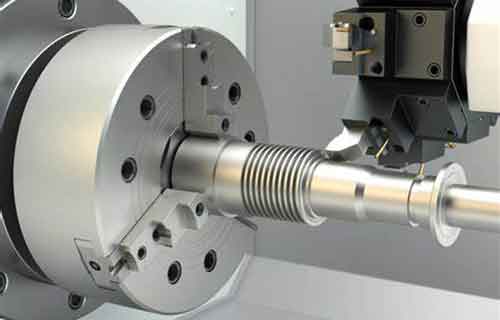
CNC machining is the foundation of precision manufacturing. It uses computer-controlled tools to remove material with accuracy that manual methods cannot match.
| Machine Type | Axes | Capability |
|---|---|---|
| 3-axis CNC | X, Y, Z | Simple parts, flat surfaces |
| 4-axis CNC | X, Y, Z + A | Parts requiring indexing around one axis |
| 5-axis CNC | X, Y, Z + A + C | Complex geometries, undercuts, curved surfaces |
Why multi-axis matters:
A 5-axis CNC mill can create a turbine blade with complex curves and undercuts in a single setup. The part is machined once, without repositioning. Each repositioning introduces potential error. By eliminating multiple setups, 5-axis machining reduces cumulative errors significantly.
EDM: Electrical Discharge Machining
EDM uses controlled electrical sparks to erode material. It is ideal for:
- Hard metals like tungsten or carbide
- Parts with microscale features (0.01 mm holes)
- Complex cavities that cannot be reached with traditional tools
Wire EDM, a type of EDM, can achieve tolerances as tight as ±0.0001 mm (0.1 microns). For reference, a human hair is about 50 microns thick. A tolerance of 0.1 microns is 500 times smaller.
Laser Cutting and Water Jet Cutting
Both offer non-contact precision, ideal for delicate materials or parts where heat from traditional cutting would cause distortion.
| Method | Best For | Thickness Range | Thermal Impact |
|---|---|---|---|
| Laser cutting | Thin metals, intricate shapes | Up to 25 mm | Minimal heat-affected zone |
| Water jet cutting | Thick materials, heat-sensitive materials | Up to 100 mm | No heat; no distortion |
Laser cutting excels at thin metals with intricate patterns. Water jet cutting handles thicker materials without thermal damage, making it ideal for materials that would warp or change properties under heat.
Micro-Machining
Micro-machining focuses on parts smaller than 1 mm. It uses:
- Specialized tools as small as 0.1 mm diameter
- High-speed spindles up to 100,000 RPM
- Advanced workholding to manage tiny parts
Applications include micro gears, connectors for electronics, and miniature medical components.
The Precision Advantage
A study by the Precision Machining Association found that parts produced with advanced precision technologies have a 99.9% first-pass yield, compared to 85% for parts made with conventional methods. Fewer rejects mean lower costs and faster delivery.
What Fabrication Processes Build Complete Products?
Welding: Joining with Precision
Welding joins metal components. In precision fabrication, not all welding is equal.
| Welding Type | Best For | Precision Characteristics |
|---|---|---|
| TIG welding | Aerospace, medical | Clean joints; minimal distortion |
| Laser welding | Thin materials, high precision | Minimal heat; zero distortion |
| Electron beam welding | Deep welds, vacuum applications | Extremely precise; deep penetration |
Real-World Example:
A satellite manufacturer needed to weld 0.3 mm thick aluminum sheets with zero distortion. Traditional welding would have warped the material. Laser welding delivered clean, precise joints without thermal damage.
Sheet Metal Fabrication: Bending and Forming
CNC press brakes bend flat metal into 3D shapes with remarkable accuracy.
| Capability | Typical Precision |
|---|---|
| Bend angle | ±0.1 degrees |
| Bend location | ±0.05 mm |
| Part flatness | Within 0.1 mm per meter |
This precision ensures that bent parts fit together without shimming or adjustment, reducing assembly time and improving final product quality.
Assembly: Bringing It Together
Precision machining and fabrication mean nothing if parts do not assemble correctly.
Automated assembly lines with robotic arms ensure that components fit together with the same precision they were machined. Robots:
- Position parts within 0.01 mm
- Apply consistent torque to fasteners
- Inspect assemblies with vision systems
Integrated Fabrication
What sets precision fabrication apart is the integration of processes. A custom industrial control panel might:
- Start as laser-cut sheet metal
- Be bent into shape on a CNC press brake
- Have holes machined for components
- Be welded into final form
- Be assembled with electronics
Each step is documented and inspected. The result is a finished product that meets specifications, not a collection of parts that require rework.
How Do You Choose Materials for Precision Work?
Material Properties Matter
The success of any precision project depends on material selection. Each material has unique characteristics that affect machining and fabrication.
| Material | Machining Characteristics | Fabrication Notes | Common Applications |
|---|---|---|---|
| Aluminum | Easy; fast feed rates | Welds well; prone to warping when bent | Aerospace, electronics, automotive |
| Stainless steel | Hard; requires sharp tools | Difficult to weld without heat control | Medical devices, food processing, industrial |
| Titanium | Low thermal conductivity; slow speeds | Requires inert gas shielding | Aerospace, medical implants |
| Plastics | Prone to melting; needs coolants | Bonded with adhesives; not welded | Medical housings, insulators |
| Composites | Abrasive; wears tools quickly | Hard to form; requires specialized cutting | Aerospace, high-performance structures |
Matching Material to Application
Titanium example:
Titanium’s strength-to-weight ratio makes it ideal for aerospace. But its low thermal conductivity means heat builds up at the cutting tool. This requires:
- Slower cutting speeds
- More coolant
- Sharp tools to prevent work hardening
Aluminum example:
Aluminum’s high thermal conductivity makes it easier to machine. Heat dissipates quickly, allowing faster speeds. But aluminum warps easily during welding. Fabrication must account for thermal expansion and contraction.
How Do You Maintain Quality and Accuracy?
Tolerances: The Language of Precision
In precision work, accuracy is measured in microns (0.001 mm). For context:
- Human hair: ~50 microns
- Typical machining: ±10–50 microns
- Precision machining: ±0.5–5 microns
- Ultra-precision: ±0.1–0.5 microns
Critical applications:
Aerospace turbine blades: ±0.005 mm
Medical implants: ±0.001–0.01 mm
Hydraulic sealing surfaces: ±0.0005 mm
Surface Finish: Beyond Dimensions
Surface finish is measured by Ra (roughness average). Lower values indicate smoother surfaces.
| Ra Value | Appearance | Application |
|---|---|---|
| 0.02 μm | Mirror | Hydraulic sealing surfaces |
| 0.2 μm | Polished | Bearings, high-wear surfaces |
| 0.8 μm | Smooth | General precision parts |
| 3.2 μm | Machined finish | Industrial components |
A sealing surface with Ra 0.02 μm will seal effectively. A surface with Ra 0.8 μm may leak. The difference is invisible to the naked eye but critical to function.
Repeatability: Consistency Across Batches
Precision is not just about hitting a number once. It is about hitting it every time, part after part.
Leading manufacturers achieve 99.8% repeatability through:
- Calibrated equipment (checked daily or weekly)
- Automated processes that remove human variability
- Statistical process control (SPC) that catches trends before parts go out of spec
ISO Standards
| Standard | Focus | Benefit |
|---|---|---|
| ISO 9001 | Quality management | Consistent processes, documented quality |
| ISO 13485 | Medical devices | Regulatory compliance, traceability |
| AS9100 | Aerospace | Stricter requirements, safety focus |
A survey found that companies adhering to ISO standards have 30% fewer defects than those that do not.
Where Is Precision Machining and Fabrication Applied?
Aerospace: Where Failure Is Not an Option
Jet engine components like fuel nozzles require extreme precision. A 0.01 mm error in a nozzle can reduce engine performance by 2%. Over the life of an aircraft, that translates to millions in fuel costs.
Applications:
- Turbine blades with complex airfoil shapes
- Fuel system components with metering features
- Structural parts requiring lightweight strength
- Landing gear components that withstand extreme loads
Medical: Precision That Saves Lives
Surgical instruments with micro-machined features allow for more precise procedures. A scalpel with a 0.1 mm edge cuts more cleanly than a standard blade. Less trauma means faster recovery.
Applications:
- Orthopedic implants that match patient anatomy
- Surgical instruments with ergonomic precision
- Diagnostic equipment requiring consistent performance
- Drug delivery systems with micro-channels
Real-World Impact:
One medical device manufacturer reported that switching to precision-machined components reduced product recalls by 75%. Parts fit together more reliably. Assemblies performed as designed.
Electronics: Miniaturization at Scale
Microchips and circuit boards rely on precision fabrication to fit thousands of components into tiny spaces. A 0.001 mm misalignment in a connector can disrupt an entire circuit.
Applications:
- Connectors with precise pin spacing
- Heat sinks with optimized fin structures
- Enclosures with exact fit for internal components
- Semiconductor tooling with micron-level accuracy
What Tools and Equipment Are Essential?
CNC Machines
High-precision CNC machines feature:
- High-resolution encoders: Measure position to 0.0001 mm
- Rigid frames: Cast iron construction minimizes vibration
- Thermal compensation: Adjusts for temperature changes
A 5-axis CNC machining center can cost upwards of $500,000. For complex parts, the investment is justified by the capability to produce geometries that would otherwise be impossible.
Cutting Tools
| Tool Material | Best For | Precision Capability |
|---|---|---|
| Carbide | General precision | Good wear resistance |
| Coated carbide | High-speed, difficult materials | Extended life, consistent geometry |
| Diamond (PCD) | Aluminum, composites | Ra < 0.05 μm finishes |
Diamond tools maintain sharp edges longer than carbide. In aluminum machining, they can achieve finishes under Ra 0.05 μm—a mirror finish.
Measuring Instruments
| Instrument | Purpose | Accuracy |
|---|---|---|
| CMM (Coordinate Measuring Machine) | Dimensional verification | ±0.00005 mm |
| Optical comparator | Edge profiles, small features | ±0.005 mm |
| Surface profilometer | Roughness measurement | ±0.01 μm |
| Laser scanner | 3D surface measurement | ±0.005 mm |
These instruments are calibrated regularly to ensure their own precision. A CMM that is out of calibration cannot verify parts accurately.
How Does Design Influence Precision?
Design for Manufacturing (DFM)
Precision begins at the design stage. DFM ensures that parts are designed to be machined and fabricated efficiently.
DFM principles:
- Add small radii to corners to reduce tool wear
- Avoid deep, narrow features that require specialized tools
- Specify the loosest tolerances that still meet functional needs
- Consider how the part will be held during machining
A simple design change—adding a 0.5 mm radius to a sharp corner—can reduce tool wear by 30% and improve surface finish.
CAD/CAM Software
CAD (Computer-Aided Design) creates the 3D model. CAM (Computer-Aided Manufacturing) generates the toolpaths.
Modern software includes simulation capabilities. Engineers can:
- Visualize the machining process
- Detect collisions before they happen
- Optimize toolpaths for efficiency
- Predict surface finish and cycle times
Real-World Example:
An automotive project used simulation to identify a potential bending issue in a sheet metal part. The design was adjusted before production, saving $50,000 in rework.
How Is Quality Controlled Throughout Production?
In-Process Inspection
Quality is built into every step, not just checked at the end.
In-process inspection uses:
- Sensors on CNC machines that measure parts during cutting
- Automated probes that verify dimensions and adjust toolpaths
- Vision systems that inspect parts as they are produced
If a dimension drifts toward a limit, the system adjusts immediately—before any parts go out of spec.
Non-Destructive Testing (NDT)
NDT methods detect internal flaws without damaging the part.
| Method | Best For | Detection Capability |
|---|---|---|
| Ultrasonic testing | Thick parts, welds | Internal voids, cracks |
| X-ray inspection | Complex assemblies | Internal defects, porosity |
| Dye penetrant | Surface defects | Cracks, pores visible to the eye |
For aerospace and medical components, NDT is often mandatory.
Final Inspection and Documentation
Every precision part should be verified before shipment.
Final inspection includes:
- CMM measurement of critical dimensions
- Surface finish verification
- Visual inspection for defects
- Assembly verification (if applicable)
Documentation provides traceability:
- Material certifications
- First article inspection reports
- In-process inspection records
- Final inspection reports
Yigu Technology's Perspective
At Yigu Technology, we see precision machining and fabrication as more than processes. They are partnerships. Our team works with clients from design to delivery, using advanced CNC machining, laser cutting, and welding to meet tight tolerances.
Our approach:
- Material expertise: We help select the right material for each application
- Process integration: Machining, fabrication, and assembly under one roof
- Quality control: ISO-certified processes; in-house inspection lab
- Documentation: Full traceability for every part
Whether it is a titanium aerospace component or a stainless steel medical device, we prioritize accuracy and consistency. Every part is verified. Every specification is met.
Conclusion
Precision machining and fabrication are not just about making small parts. They are about making parts that work—consistently, reliably, safely. From aerospace turbines to medical implants to microelectronics, precision enables the products that define modern life.
The technologies are advanced: 5-axis CNC, wire EDM, laser welding, micro-machining. The processes are rigorous: DFM, simulation, in-process inspection, NDT. The standards are demanding: ISO 9001, AS9100, ISO 13485.
But the goal is simple: craft excellence in every detail. Because when precision matters, there is no room for error.
FAQ
What is the difference between precision machining and standard machining?
Precision machining focuses on tighter tolerances (often ±0.0005 mm or better) and more complex geometries, using advanced technologies like 5-axis CNC, EDM, and micro-machining. Standard machining typically handles tolerances of ±0.01 mm or looser, with simpler geometries. Precision machining also requires more rigorous quality control, including in-process inspection and CMM verification.
How do you ensure repeatability in large production runs?
Repeatability is achieved through:
- Calibrated equipment: Machines checked daily or weekly
- Automated processes: Removing human variability
- Statistical process control (SPC): Monitoring key metrics and adjusting at the first sign of variation
- Tool life management: Replacing tools before they wear enough to affect dimensions
With these systems, leading manufacturers achieve 99.8% repeatability across production runs.
Can precision fabrication handle both small and large parts?
Yes. Precision fabrication scales from micro-parts (0.5 mm electronic components) to large structures (10-meter aerospace frames). Different equipment handles different scales:
- Micro-machining for tiny parts
- Standard CNC for medium parts
- Large-format machining and fabrication for large structures
The principles of precision—tight tolerances, consistent quality, rigorous inspection—apply at every scale.
What materials are most challenging to machine precisely?
The most challenging materials are those with properties that work against precision:
- Titanium: Low thermal conductivity causes heat buildup; work-hardens
- Inconel: Extremely hard; work-hardens rapidly
- Composites: Abrasive; wears tools quickly; can delaminate
- Ceramics: Extremely hard; brittle; requires specialized grinding
Each requires specialized tools, parameters, and techniques to achieve precision.
How do ISO standards impact precision manufacturing?
ISO standards provide frameworks for consistent quality:
- ISO 9001: Basic quality management; ensures documented processes
- ISO 13485: Medical device-specific; adds regulatory requirements
- AS9100: Aerospace-specific; stricter controls, traceability
Manufacturers following ISO standards have 30% fewer defects than those that do not. The standards require regular audits, ensuring that quality systems remain effective over time.
Contact Yigu Technology for Custom Manufacturing
At Yigu Technology, precision machining and fabrication are what we do every day. Our capabilities include 5-axis CNC machining, laser cutting, TIG and laser welding, and sheet metal fabrication. We serve the aerospace, medical, electronics, and industrial sectors with components that meet the tightest tolerances.
Our quality system is ISO 9001 certified. We maintain an in-house inspection lab with CMM, optical comparators, and surface roughness testers. Every part is documented. Every specification is verified.
Whether you need a single prototype or high-volume production, we deliver precision that you can trust.
Contact us today to discuss your precision machining and fabrication requirements.