Introduction
Picture this. You need a 0.5mm diameter pin. It has to hold a tolerance of ±0.0002" across 50mm of length. That is thinner than a sewing needle. And it must be perfect. Every single time. If it fails, someone's heart stent could malfunction. Or a jet engine sensor could give bad data. This is not a hypothetical problem. This is Tuesday in Swiss CNC machining shops around the world.
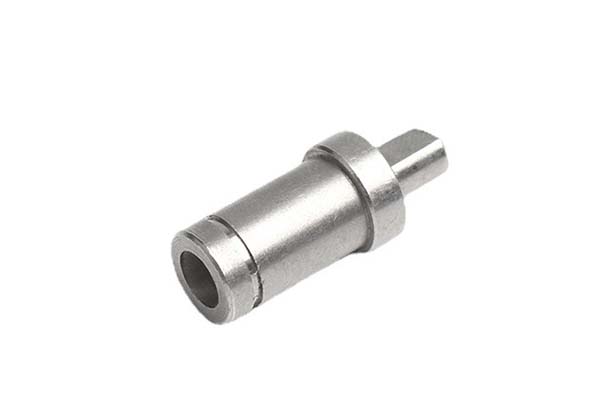
Swiss CNC machining started in the Swiss watch industry. Watchmakers needed tiny gears and shafts made to insane precision. Over decades, this technology left the watch bench. It moved into medical devices, aerospace, and automotive systems. Today, it is the go-to method for small precision parts that other machines simply cannot make reliably.
But here is the real question most engineers ask: Why is Swiss machining worth the cost? And more importantly, when should you actually use it? This guide answers both. We break down the physics, the tolerances, the cost logic, and the real-world cases. By the end, you will know exactly if Swiss-type CNC turning is right for your next project.
1. What Is Swiss CNC Machining?
The Sliding Headstock Secret
A Swiss CNC lathe works differently from a regular CNC lathe. The key is the sliding headstock and the guide bushing. The bar stock slides through the bushing. The bushing supports the part right at the cutting point. This means the tool cuts the part almost at the point of support.
On a normal lathe, the part sticks out far from the chuck. It vibrates. It deflects. On a Swiss machine, the part is held tight near the tool. The result? Rock-solid stability even on tiny, long parts.
How the Bar Stock Moves
Here is the core difference. In Swiss machining, the bar stock moves through the machine. The tools stay mostly still. In a conventional CNC lathe, the part spins and the tools move along it. This sounds small. But it changes everything for small-diameter precision parts.
| Feature | Swiss CNC Lathe | Conventional CNC Lathe |
|---|---|---|
| Part Support | Guide bushing at cut point | Chuck only, far from tool |
| Best Diameter Range | 0.5mm – 38mm | 19mm – 300mm+ |
| Length-to-Diameter Ratio | Up to 20:1+ | Typically under 4:1 |
| Tolerance Capability | ±0.0002" (±0.005mm) | ±0.001" (±0.025mm) typical |
| Multi-Axis Ops in One Setup | Yes (live tooling) | Limited |
Swiss vs. Standard CNC Turning
Do not confuse a Swiss-type lathe with a standard CNC lathe that has live tooling. They are not the same. A true Swiss machine has the sliding headstock and guide bushing. It also has a sub-spindle. It can do backworking. It can mill, drill, and tap in one setup. A lathe with live tooling is a good machine. But it is not a Swiss CNC machining center.
2. Beating Deflection on Slender Parts
The Physics of Stability
Here is the problem with long, thin parts. When you cut metal, the cutting force pushes the part away from the tool. This is called deflection. On a normal lathe, a 2mm diameter part that is 40mm long will bend. The tool cuts too deep on one side. The part comes out tapered or curved. It fails inspection.
Swiss machining solves this with physics. The guide bushing holds the part within 1–2mm of the cutting tool. The unsupported length is tiny. So the cutting force has almost no leverage to bend the part. You can machine parts with a length-to-diameter ratio of 20:1 or more. That is unheard of on any other turning center.
Real-World Examples
- Surgical guide pins: 1.2mm diameter, 30mm long. Used in spinal surgery. Tolerance: ±0.002mm. Made on Swiss machines only.
- Hydraulic valve pins: 3mm diameter, 45mm long. Must be straight to 0.005mm. Swiss machining delivers this consistently.
- Fuel injector needles: 1.5mm diameter, 25mm long. Surface finish of Ra 0.4μm required. Done in one setup.
A medical device company in Minnesota switched from conventional turning to Swiss CNC machining for their spinal implant pins. Their scrap rate dropped from 18% to under 2%. Their lead time dropped from 6 weeks to 10 days. That is the power of eliminating deflection.
3. Micron-Level Tolerance Control
What Tolerances Can Swiss Machining Hold?
This is where Swiss CNC machining earns its reputation. Typical tolerance capabilities:
| Tolerance Level | Value | What It Means |
|---|---|---|
| Standard Swiss | ±0.001" (±0.025mm) | Easy for most Swiss shops |
| Tight Swiss | ±0.0005" (±0.013mm) | Routine for experienced shops |
| Precision Swiss | ±0.0002" (±0.005mm) | Requires top-tier machines and control |
| Ultra-Precision | ±0.0001" (±0.0025mm) | Only the best Swiss centers |
For context, a human hair is about 0.07mm thick. A tolerance of ±0.005mm is about 1/14th of a hair's width. That is what Swiss-type CNC turning delivers on small parts. Day after day. Part after part.
Why the Tolerances Are So Tight
Three factors make this possible:
- Thermal stability: Swiss machines use temperature-controlled enclosures. Some shops keep the machine room at a constant 20°C (68°F). This prevents thermal growth from throwing off dimensions.
- Machine rigidity: The sliding headstock and bushing create a very stiff system. Less vibration means less variation.
- Closed-loop servo control: Modern Swiss machines use encoders on every axis. They correct position errors in real time. This gives repeatability of ±0.001mm or better.
When Grinding Becomes Unnecessary
Grinding is slow and expensive. It adds a whole secondary operation. With Swiss CNC machining, you can often hold tolerances tight enough to skip grinding entirely. For example, a titanium medical pin at 1.0mm diameter can be turned to ±0.003mm and have an Ra 0.8μm finish. That meets most implant specs without any post-processing.
4. Complex Geometry in One Setup
Live Tooling Changes Everything
Modern Swiss CNC machines have live tooling. This means the tools can move in X and Y axes, not just Z. You can mill flats, drill cross-holes, cut slots, and tap threads. All while the part is still spinning in the guide bushing.
Add a sub-spindle, and you can machine the back end of the part without flipping it. Add backworking capability, and the main spindle can reach behind the guide bushing. You can machine features on the back side of the part. All in one loading.
What You Can Do in One Setup
Here is a typical complex Swiss-machined part workflow:
- Face the end of the bar stock
- Turn the outer diameter to final size
- Mill a flat on the side
- Drill a cross-hole at an angle
- Tap a thread on the OD
- Cut a groove near the tip
- Part off with the sub-spindle
All seven operations happen without touching the part. No re-chucking. No secondary setup. This is huge. Every time you re-handle a part, you risk damage or misalignment. Swiss machining eliminates that risk.
Reducing Lead Time and Errors
A connector pin for a satellite system had 5 features. The old process used 3 setups across 2 machines. Lead time: 3 weeks. First-pass yield: 72%. After switching to Swiss CNC machining in one setup, lead time dropped to 5 days. First-pass yield hit 96%. The engineering team saved over $40,000 per year on that one part alone.
5. Material Efficiency and Cost Control
Near-Net-Shape Machining
Swiss CNC machining is incredibly material-efficient. The guide bushing supports the part right at the cut zone. This means you can use very small bar stock diameters. You waste less metal. For expensive materials like titanium, Inconel, or medical-grade stainless steel, this matters a lot.
| Material | Bar Stock Cost (per kg) | Waste Reduction with Swiss |
|---|---|---|
| 316L Stainless Steel | 15–25 | 30–40% less waste |
| Titanium Ti-6Al-4V | 80–120 | 35–45% less waste |
| Inconel 718 | 100–150 | 25–35% less waste |
| PEEK Plastic | 150–250 | 20–30% less waste |
Remnant Length Matters
On a Swiss machine, the remnant length (the leftover bar after part-off) can be as short as 2–3mm. On a conventional lathe, it is often 10–15mm. That difference adds up fast. At 10,000 parts per month in titanium, you could save thousands of dollars in material alone.
Swiss vs. Screw Machining vs. Cold Heading
Not every small part needs Swiss machining. Here is when each method wins:
| Method | Best For | Volume Sweet Spot | Cost Per Part |
|---|---|---|---|
| Swiss CNC | Complex, tight tolerance, small dia | 100 – 500,000+ | Medium-High |
| Screw Machining | Simple geometry, moderate tolerance | 5,000 – 2,000,000+ | Low |
| Cold Heading | High volume, simple shapes | 50,000 – 10,000,000+ | Very Low |
If your part has threads, cross-holes, and tight tolerances under 6mm diameter, Swiss CNC machining is almost always the right call. If it is a simple bolt at high volume, cold heading wins.
6. Surface Finish That Meets Medical Standards
What Surface Finish Can Swiss Deliver?
Surface finish is measured in Ra (roughness average). Lower Ra means smoother.
| Application | Required Ra | Swiss As-Machined Capability |
|---|---|---|
| General Industrial | 3.2 – 1.6 μm | Easily achieved |
| Hydraulic Systems | 0.8 – 0.4 μm | Routinely achieved |
| Medical Implants | 0.4 – 0.2 μm | Achievable with tuning |
| Aerospace Sealing | 0.2 – 0.1 μm | Possible, may need light hone |
Why As-Machined Finish Is So Good
The guide bushing dampens vibration. The tool is always supported. The cut is consistent. These factors combine to produce a smooth surface finish without any secondary polishing. For many medical and hydraulic parts, the as-machined surface is good enough to pass final inspection.
Eliminating Secondary Operations
Secondary finishing like grinding or polishing adds cost and time. A Swiss machine running the right parameters can deliver Ra 0.4μm on a 2mm diameter shaft. That meets most medical device specs. No grinding needed. No polishing needed. One operation. Done.
A hydraulic component manufacturer in Germany reported cutting their finishing costs by 60% after switching to Swiss CNC machining. Their Ra 0.8μm requirement was met as-machined on 3mm valve pins. They removed the entire honing step from their process.
7. Is Swiss CNC Right for Your Project?
Ideal Part Characteristics
Swiss CNC machining shines when your part has these traits:
- Diameter under 38mm (most common under 12mm)
- Tight tolerances of ±0.002" or better
- Length-to-diameter ratio above 4:1
- Multiple features (holes, flats, threads, grooves)
- Expensive material (titanium, Inconel, PEEK)
- High surface finish requirement
Volume Sweet Spot
| Volume Range | Recommendation |
|---|---|
| 1 – 50 pcs (prototype) | Swiss is great. Fast setup, high quality. |
| 50 – 5,000 pcs | Sweet spot. Best cost-per-part balance. |
| 5,000 – 500,000 pcs | Excellent. Automation keeps cost low. |
| 500,000+ pcs | Evaluate screw machine or cold heading. |
Red Flags: When NOT to Use Swiss
Swiss machining is not always the answer. Skip it if:
- Your part is over 50mm diameter. Use a conventional lathe or mill.
- Tolerances are loose (±0.005" or wider). A screw machine is cheaper.
- The part is simple (one OD, one face). High-volume screw machining wins.
- You need internal features larger than 20mm. A mill is better.
8. Choosing a Swiss CNC Machining Partner
What to Look for in a Shop
Not every shop that says "Swiss machining" actually has true Swiss-type CNC lathes. Here is what to check:
| Capability | What to Ask | Why It Matters |
|---|---|---|
| Machine Brand | Citizen, Star, Tornos, Tsugami, or Hanwha? | These are real Swiss machine builders. |
| Number of Axes | 6+ axes with Y-axis live tooling? | Determines complex geometry ability. |
| Bar Capacity | Up to what diameter? | Must match your part size. |
| Sub-Spindle | Yes or no? | Needed for back-side features. |
| Guide Bushing Size | Smallest bushing opening? | Determines smallest part diameter. |
Quality Systems That Matter
- In-process inspection: Does the shop measure during the run? Or only at the end?
- SPC (Statistical Process Control): Are they tracking Cpk values? A Cpk of 1.33 or higher means a capable process.
- Certifications: ISO 13485 for medical. AS9100 for aerospace. These are not optional for critical parts.
DFM Support Is a Game-Changer
The best Swiss CNC machining partners offer Design for Manufacturing (DFM) support. They will look at your drawing and say: "Move this hole 2mm left. It will save you 30% on machining time." That kind of help can save thousands of dollars. Always choose a shop that offers DFM reviews before production.
Conclusion
Swiss CNC machining is not just a fancy turning method. It is the gold standard for small precision parts that demand tight tolerances, complex geometry, and superior surface finish. From surgical pins to aerospace sensors, this technology delivers what no other process can match consistently.
The key takeaways are simple:
- Deflection is nearly eliminated thanks to the guide bushing.
- Tolerances of ±0.0002" are routine on the right machine.
- Complex parts come out in one setup, saving time and reducing errors.
- Material waste is minimal, which matters a lot for expensive alloys.
- As-machined surface finish often meets medical and hydraulic specs.
If your parts are small, precise, and complex, Swiss CNC machining is not a luxury. It is the smartest choice you can make. The real question is not whether to use it. It is whether you have the right partner to execute it.
FAQ
What is the smallest diameter Swiss CNC can machine?
True Swiss machines can handle diameters as small as 0.3mm to 0.5mm. Some advanced shops go down to 0.2mm with special tooling.
How much does Swiss CNC machining cost per part?
It varies widely. For a simple 3mm stainless steel pin at 1,000 pieces, expect 0.50–2.00 per part. Complex titanium parts can run 5–50+ each. Volume and complexity drive the cost.
Can Swiss machining replace grinding?
Yes, for many applications. If you need ±0.003mm tolerance and Ra 0.8μm finish, Swiss machining often eliminates the need for grinding entirely.
What is the difference between Swiss machining and screw machining?
Swiss machining uses a sliding headstock and guide bushing. It handles long, slender parts better. Screw machining uses a fixed collet and is faster for short, simple parts at very high volume.
Is Swiss CNC machining good for prototypes?
Absolutely. Setup times are fast. Quality is high. It is one of the best methods for low-volume prototypes of small, precise parts.
What materials work best on Swiss machines?
Almost anything. Stainless steel, titanium, brass, aluminum, PEEK, Inconel, and even gold are all commonly machined on Swiss CNC lathes.
Contact Yigu Technology for Custom Manufacturing
Need Swiss CNC machining for your small precision parts? Yigu Technology specializes in high-tolerance, complex-geometry components for medical, aerospace, automotive, and hydraulic industries. Our Swiss-type CNC lathes handle diameters from 0.5mm to 38mm with tolerances down to ±0.0002". We offer full DFM support, in-process inspection, and fast quoting.
📞 Get a quote today and see why top engineers trust Yigu for their most demanding small parts.