Introduction
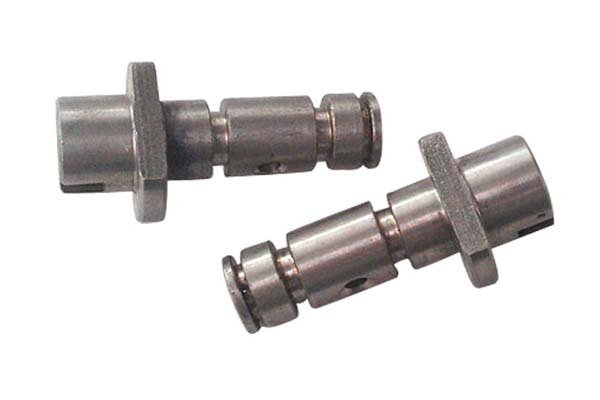
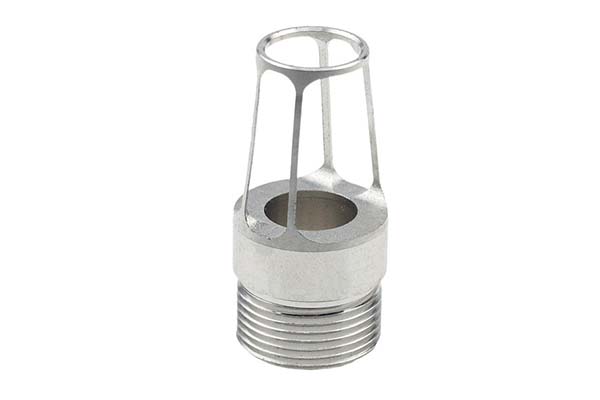
Every precision metal part you touch—from the surgical tool in a hospital to the bracket holding a satellite in orbit—starts the same way. A block of metal gets cut, shaped, and finished by a metal CNC machining process. This isn't just old-school manufacturing. It's the backbone of modern industry. Despite the hype around 3D printing and new casting methods, CNC machining remains irreplaceable for most high-performance metal parts. Why? Because it delivers tight tolerances, repeatable quality, and material versatility that other methods simply can't match at scale. If you're searching for answers on metal CNC machining, you likely face real headaches—picking the right material, getting accurate quotes, balancing precision with cost, or avoiding design failures. This guide covers all of that. We'll walk through material selection, cost control, surface finish, lead times, DFM tips, and quality standards. By the end, you'll know exactly how to get the best results from your next CNC machining project.
What Is Metal CNC Machining?
Core CNC Processes
Metal CNC machining is a subtractive process. It removes material from a solid block to create a finished part. The main operations include:
- Milling: Rotating cutters remove material from flat or contoured surfaces.
- Turning: The workpiece spins while a cutting tool shapes it.
- Drilling: Holes are bored to exact depths and diameters.
- Multi-axis machining: 4-axis and 5-axis machines angle the part for complex geometry.
These processes run on G-code—a language that tells the machine every move. CAD models feed into CAM software, which generates the toolpaths. Automated tool changers let one machine do dozens of operations without human hands.
Metals You'll Commonly Machine
| Metal | Key Trait | Typical Use |
|---|---|---|
| Aluminum (6061, 7075) | Light, easy to cut | Aerospace, automotive |
| Steel (1045, 4140) | Strong, affordable | Gears, shafts, tooling |
| Stainless Steel (304, 316) | Corrosion-resistant | Medical, food, marine |
| Titanium (Ti-6Al-4V) | High strength-to-weight | Aerospace, implants |
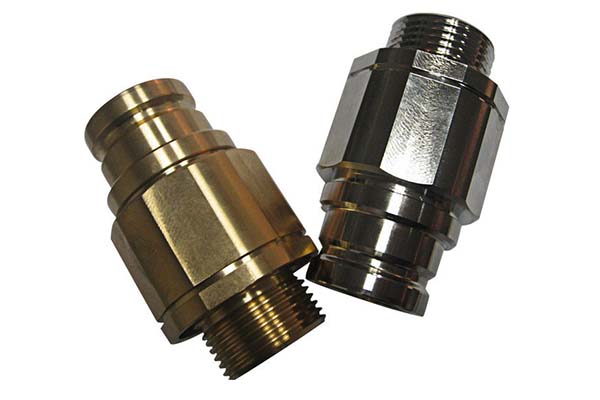
| Brass (C360) | Great for threading | Fittings, valves |
| Copper (C110) | Conducts heat/electricity | Electrical connectors |
Each metal behaves differently under the cutter. That's why material selection matters before you even start programming.
How to Choose the Right Metal
Aluminum: The Go-To Lightweight
Aluminum 6061 is the most popular CNC metal for general engineering. It machines fast, costs less than steel, and resists corrosion. Use 7075 aluminum when you need airplane-grade strength. A real-world example: a drone frame maker switched from steel to 6061 aluminum. The parts dropped 60% in weight. Machining time stayed the same. That's the power of the right pick.
Steel and Stainless: Strength Champions
Carbon steel like 1045 handles high loads and wear. It's cheap and easy to source. Stainless steel 316 adds corrosion resistance for harsh environments. A food processing client needed pump housings. They chose 316 stainless. The parts lasted 8 years without rust. That's material matching done right.
Titanium: When Nothing Else Works
Titanium Ti-6Al-4V handles extreme heat and stress. Aerospace and medical implants rely on it. But it's tough to machine. It gums up tools and wears them fast. Costs run 3–5x higher than aluminum. Use it only when your design truly demands it.
Quick Decision Framework
| Factor | Ask Yourself |
|---|---|
| Strength needed? | Light duty → aluminum. Heavy → steel or titanium. |
| Corrosion risk? | Yes → stainless or titanium. No → carbon steel. |
| Budget tight? | Aluminum or brass. Avoid titanium unless required. |
| Electrical/thermal use? | Copper or brass. |
| Post-processing? | Anodizing works on aluminum. Plating works on steel. |
Balancing Precision and Cost
Where Tolerances Hit Your Wallet
Here's a hard truth: tighter tolerances cost exponentially more. A ±0.005" tolerance is standard. Push to ±0.001" and you're paying 2–4x more. Why? The machine runs slower. Tool wear increases. Inspection takes longer. Every 0.001" of tightness adds time and risk.
| Tolerance Range | Relative Cost | When to Use |
|---|---|---|
| ±0.010" | 1x (baseline) | Non-critical housings |
| ±0.005" | 1.5x | Most mechanical parts |
| ±0.002" | 2.5x | Bearings, tight fits |
| ±0.001" | 4x+ | Aerospace, medical |
Use GD&T to Save Money
Don't slap tight tolerances on every dimension. GD&T (Geometric Dimensioning & Tolerancing) lets you specify only what matters. For example, use a position tolerance with a datum instead of tight ±0.001" on four holes. This gives the machinist flexibility. It also cuts your cost. A medical device company saved 35% on a titanium implant bracket just by switching to proper GD&T callouts.
Cut Time Without Losing Quality
- Use larger end mills where possible. They remove more material per pass.
- Reduce air cuts—moves where the tool doesn't touch the part.
- Group similar features to minimize tool changes.
Achieving Consistent Surface Finish
What Drives Surface Quality?
Surface finish (measured in Ra values) depends on three things:
- Tool selection: Sharp carbide tools leave cleaner cuts.
- Speeds and feeds: Too fast = chatter marks. Too slow = built-up edge.
- Coolant use: Flood coolant reduces heat and improves finish.
| Finish Type | Ra Value (μin) | Best For |
|---|---|---|
| As-machined | 32–63 | Functional parts, hidden areas |
| Standard finish | 16–32 | Most general-purpose parts |
| Fine finish | 8–16 | Sliding fits, cosmetic parts |
| Mirror polish | <8 | Medical, optical, aerospace |
Common Post-Machining Finishes
- Bead-blasted: Uniform matte look. Hides minor tool marks.
- Anodized: Hard coating on aluminum. Adds color and wear resistance.
- Electroplated: Nickel, zinc, or chrome for corrosion protection.
- Polished: High-gloss finish for visible or sealing surfaces.
Pro tip: Always specify your Ra requirement in the drawing. Saying "smooth finish" means nothing to a machinist. Saying "Ra 16 max" does.
Accelerating Lead Times
What Slows Down Your Order?
Lead time in metal CNC machining isn't just cutting time. It includes:
| Step | Typical Time | Delay Risk |
|---|---|---|
| Quoting | 1–3 days | Unclear drawings |
| Programming | 1–2 days | Complex 5-axis parts |
| Setup | 0.5–1 day | Fixture changes |
| Machining | 1–7 days | Part complexity, material |
| Inspection | 0.5–1 day | First-article rejection |
A real case: a startup sent a CAD file with no tolerances. The shop quoted in 2 weeks. After three redesign rounds, the project took 6 weeks. Clear specs upfront would have saved a month.
How to Speed Up Quoting
- Send STEP or IGES files, not just screenshots.
- Include tolerances, surface finish, and material in the drawing.
- Note any special requirements: coating, heat treat, certifications.
Talk to Your Supplier Early
The best shops will tell you upfront if your design has issues. They'll suggest DFM improvements before you pay for a quote. That conversation alone can cut your lead time by 30%.
Design for Manufacturability Tips
Wall Thickness and Corner Radii
Thin walls warp during machining. Keep wall thickness at least 2x the cutter diameter. For internal corners, always add a radius of at least 0.5mm. Sharp internal corners are unmachinable with end mills. They require EDM—which adds cost and time.
| DFM Rule | Minimum Value | Why |
|---|---|---|
| Wall thickness | ≥2x cutter diameter | Prevents flex and chatter |
| Internal corner radius | ≥0.5mm (0.020") | End mills can't reach sharp corners |
| Hole depth-to-diameter | ≤4:1 | Deeper holes need gun drilling |
| Undercut depth | ≤3x cutter diameter | Limited by tool reach |
What CNC Cannot Do
- True internal threads deeper than 1.5x diameter need tapping, not milling.
- Deep cavities with no tool access require special setups or EDM.
- Undercuts need 5-axis machines or live tooling.
Designer-Machinist Collaboration
The best results come from early talks. Share your CAD file with the shop. Ask: "What would you change?" Most machinists will spot DFM issues in minutes. That saves you weeks of rework.
Quality Assurance and Traceability
Certificates You Should Demand
For regulated industries, material traceability is non-negotiable. You need:
- Material Certificates (Mill Test Reports): Prove the metal grade and chemistry.
- Heat Treat Records: Show hardness and temper conditions.
- Inspection Reports: Document measured dimensions vs. print.
| Standard | Industry | Key Requirement |
|---|---|---|
| ISO 9001 | General manufacturing | Quality management system |
| AS9100 | Aerospace | Full traceability + FOD control |
| ISO 13485 | Medical devices | Risk management + documentation |
| IATF 16949 | Automotive | PPAP + SPC + MSA |
In-Process and Final Inspection
Good shops use CMM (Coordinate Measuring Machines) for final checks. They also do in-process gauging—measuring critical features mid-run. This catches drift before it ruins a batch. SPC (Statistical Process Control) data proves your process is stable, not just lucky.
A medical client required AS9100 compliance for titanium spinal implants. Their shop provided full traceability on every bar stock lot. The client passed their FDA audit with zero findings. That's what proper QA looks like.
CNC vs. Alternatives: When to Use What
| Factor | CNC Machining | 3D Printing (Metal) | Casting | Forging |
|---|---|---|---|---|
| Tolerance | ±0.001" | ±0.005"+ | ±0.010"+ | ±0.005" |
| Surface finish | Excellent | Rough (needs post-work) | Good | Good |
| Material strength | Full density | 95–99% density | Good | Best |
| Volume | 1–10,000 pcs | 1–100 pcs | 100–100,000+ | 1,000+ |
| Lead time | Days–weeks | Days–weeks | Weeks–months | Weeks |
| Cost per part | Medium | High | Low (at volume) | Medium |
Bottom Line
- Choose CNC machining for precision, low-to-mid volume, and tough materials.
- Choose 3D printing for complex internal channels or one-off prototypes.
- Choose casting for high volume with simple shapes.
- Choose forging when you need maximum strength.
Many projects use a hybrid approach. For example, CNC machine the critical features, then cast the bulk shape. This saves cost without sacrificing performance.
Conclusion
Metal CNC machining isn't going anywhere. It delivers the precision, material range, and repeatability that modern manufacturing demands. Whether you're making one prototype or ten thousand production parts, CNC gives you control. The key to success? Pick the right metal. Spec tolerances with GD&T. Talk to your shop early. Demand proper QA documentation. Avoid DFM mistakes before they cost you weeks. When you follow these principles, you get parts that work—on time, on budget, and on spec. That's why CNC machining remains essential. Not because it's the newest technology. But because it's the most reliable.
FAQ
What is the most commonly machined metal?
Aluminum 6061 is the most popular. It's affordable, lightweight, and easy to cut.
How much does metal CNC machining cost?
It varies widely. A simple aluminum part might cost 50–200. A complex titanium aerospace part can run 500–5,000+. Material, tolerances, and volume all drive the price.
What tolerances can CNC machining achieve?
Standard CNC holds ±0.005". High-precision machines reach ±0.001" or better. Tighter than that requires special processes like grinding.
Is CNC machining better than 3D printing?
For most production parts, yes. CNC offers better tolerances, surface finish, and material properties. 3D printing wins only for very complex geometries or ultra-low volumes.
What surface finish can I expect from CNC?
As-machined finishes range from Ra 8 to Ra 63 μin. Polished or anodized finishes go below Ra 8. Always specify your requirement clearly.
How long does CNC machining take?
Simple parts: 3–7 days. Complex multi-axis parts: 2–4 weeks. Always add 1–3 days for quoting and inspection.
Do I need material certificates for my CNC parts?
For aerospace, medical, and automotive—yes, always. For general use, it depends on your quality requirements.
Contact Yigu Technology for Custom Manufacturing
Need precision metal CNC machining with full quality documentation? Yigu Technology delivers custom parts in aluminum, steel, stainless steel, titanium, copper, brass, and more. We support tight tolerances, complex 5-axis geometry, and industry certifications including AS9100, ISO 13485, and IATF 16949. Get a fast quote with clear pricing—no surprises.