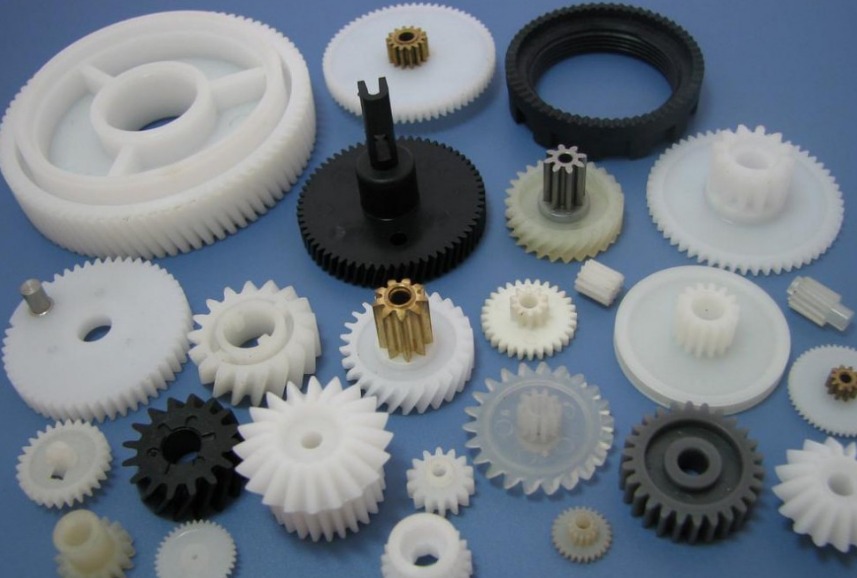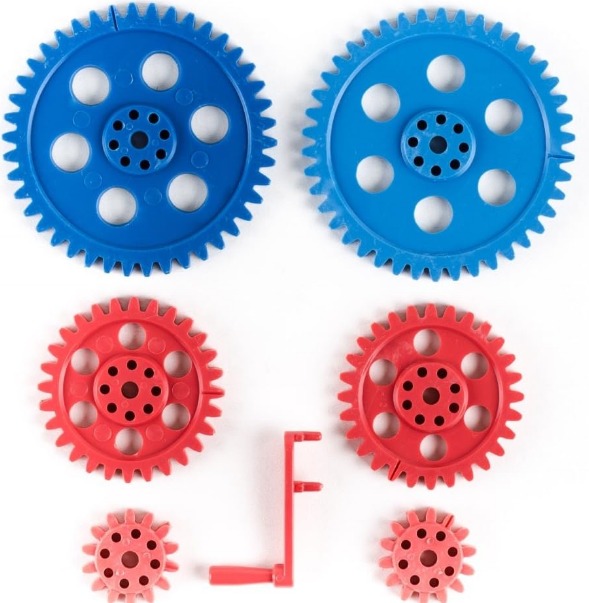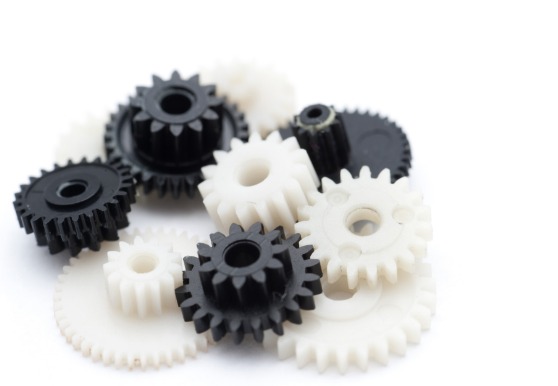
Plastic crown gears are quietly revolutionizing mechanical design. These specialized gears transfer motion between non-parallel shafts—typically at 90-degree angles—while offering advantages that metal gears cannot match. Their lightweight construction, low friction, and noise reduction properties make them increasingly common in everything from electric toothbrushes to automotive steering systems.
This guide explains how plastic crown gears work, why they improve efficiency, and where they deliver the greatest value. You will learn material selection criteria, performance comparisons, and real-world applications backed by data. Whether you are designing a new product or optimizing an existing system, these insights help you make informed decisions.
What Exactly Are Plastic Crown Gears?
Structure and Function
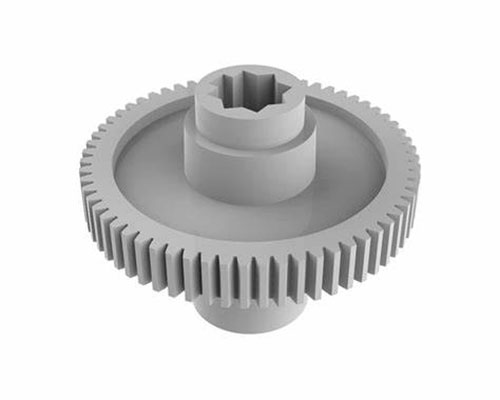
A crown gear gets its name from its shape—teeth set at an angle on a conical surface, resembling a royal crown. This geometry allows it to mesh with a standard spur gear or pinion, transmitting motion between shafts that intersect at 90 degrees.
Unlike bevel gears that require precise alignment, crown gears offer more flexibility in assembly. The angled tooth arrangement provides smooth engagement even with minor misalignment, reducing installation complexity.
Common Plastic Materials
| Material | Key Properties | Best Applications |
|---|---|---|
| Acetal (POM/Delrin) | High stiffness, dimensional stability, low friction | Precision mechanisms, printers, small motors |
| Nylon (PA) | Excellent wear resistance, self-lubricating, moderate load capacity | Power tools, automotive components, actuators |
| Polypropylene (PP) | Cost-effective, chemical resistance, lightweight | Low-load applications, consumer goods, medical devices |
| PEEK | High-temperature stability, exceptional strength | Aerospace, high-performance industrial |
Each material brings trade-offs. Acetal offers precision but costs more. Nylon provides wear resistance but absorbs moisture. Polypropylene is economical but limited in strength. The right choice depends on your specific operating conditions.
How Do Plastic Crown Gears Improve Efficiency?
Reduced Friction and Energy Loss
Lower friction coefficient is the primary efficiency driver. Acetal has a friction coefficient of 0.2–0.3 against steel. Steel-on-steel gears run 0.6–0.8 under similar conditions without lubrication.
This difference matters. In a small electric motor, switching from metal to plastic crown gears reduces friction-related energy losses by 10–15%. Less friction means less heat. Less heat means better dimensional stability. Better stability means consistent performance over time.
One manufacturer we worked with replaced metal gears with acetal crown gears in a conveyor drive system. The motor current draw dropped by 12%, and operating temperature fell by 8°C. The system ran cooler and used less electricity.
Wear Resistance and Longevity
Plastic crown gears offer excellent wear resistance, often outperforming untreated metals. Nylon contains amide groups that form a thin lubricating film during operation. This self-lubricating property reduces direct tooth contact and minimizes wear.
Test data tells the story:
| Material | Wear After 1,000 Hours | Notes |
|---|---|---|
| High-performance plastic | 0.05 mm | Self-lubricating |
| Untreated steel | 0.15 mm | Requires external lubrication |
| Hardened steel | 0.03 mm | Higher cost, heavier |
The plastic gear outlasted untreated steel by a factor of three. While hardened steel lasts longer, it costs significantly more and adds weight.
In a real application, a packaging machine using nylon crown gears ran for three years without replacement. The previous metal gears required replacement every 18 months. Maintenance costs dropped by 40%.
Lightweight Design and Energy Savings
Weight reduction directly impacts energy consumption. Plastic density is roughly one-seventh that of steel. Nylon: 1.15 g/cm³. Steel: 7.85 g/cm³.
The kinetic energy equation (E_k = \frac{1}{2}mv^2) shows the advantage. Lower mass means less energy needed to accelerate and decelerate.
In a small conveyor system, replacing metal crown gears with plastic versions reduced motor energy consumption by 20–30%. The motor simply had less mass to move.
Handheld tools benefit too. An electric screwdriver with plastic crown gears accelerates faster and feels lighter in hand. Users experience less fatigue during extended use.
Noise and Vibration Reduction
Sound dampening is a major advantage. Metals conduct sound efficiently. Plastics absorb vibrations rather than transmitting them.
Testing shows the difference clearly:
| Gear Type | Noise Level at 1,000 rpm |
|---|---|
| Metal crown gear | 70 dB(A) |
| Plastic crown gear | 55 dB(A) |
A 15 dB reduction is substantial—perceived as roughly half as loud. This matters in consumer products where noise affects user experience.
The vibration absorption also protects other components. In a printing press, plastic crown gears in the paper feed mechanism prevented vibrations from reaching the print head. Print quality improved, and maintenance intervals extended.
Where Do Plastic Crown Gears Deliver the Most Value?
Automotive Applications
Transmission systems benefit from weight reduction. In compact cars like the Honda Fit, plastic crown gears in auxiliary transmission mechanisms contribute to 3–5% fuel efficiency improvement. Lighter rotating components reduce engine load.
Electric power-assisted steering (EPAS) systems use plastic crown gears to transfer motor motion to the steering column. The Ford Focus EPAS system achieves 10–15% lower energy consumption with plastic gears compared to metal alternatives. Lower friction means the electric motor works less, extending its life.
Robotics and Automation
Joint actuation in humanoid robots demands precision and responsiveness. Boston Dynamics' Atlas uses plastic crown gears in joint mechanisms. The lightweight gears enable faster acceleration and deceleration.
Test data shows plastic-gear-based joints achieve 20% faster response time when changing direction compared to metal-gear versions. This responsiveness translates to smoother, more natural movement.
In educational robots, replacing metal with plastic crown gears reduced power consumption by 30–40%. The robots run longer on battery charges—critical for classroom applications.
Consumer Electronics
Electric toothbrushes like Philips Sonicare use plastic crown gears in their drive mechanisms. The combination of low noise, wear resistance, and energy efficiency creates a better user experience.
A comparative study found electric toothbrushes with plastic crown gears consumed 15–20% less energy over a month of regular use compared to metal-gear models. Lower friction means less battery drain.
Electric shavers from Braun utilize plastic crown gears in cutting-head drives. The lightweight design enables quick startup. The reduced friction prevents motor overheating. Long-term testing showed 25% longer lifespan compared to metal-gear versions—primarily from reduced motor stress.
Medical Devices
Plastic crown gears appear in surgical tools, diagnostic equipment, and patient mobility devices. Their non-magnetic properties make them safe near MRI machines. Their lightweight nature reduces fatigue for surgeons during lengthy procedures.
One medical device manufacturer replaced metal gears with acetal crown gears in a portable surgical saw. The tool weight dropped by 30%, and battery life increased by 25%. Surgeons reported less hand fatigue during long operations.
How Do You Select the Right Plastic Crown Gear?
Match Material to Operating Conditions
Start with your application requirements:
| Requirement | Recommended Material | Rationale |
|---|---|---|
| High speed, light load | Acetal | Low friction, dimensional stability |
| Moderate load, medium speed | Nylon | Wear resistance, self-lubricating |
| Chemical exposure | Polypropylene | Chemical resistance, low cost |
| High temperature | PEEK | Thermal stability, strength retention |
| High precision | Glass-filled nylon | Reduced thermal expansion, stiffness |
Consider Environmental Factors
Temperature matters. Most engineering plastics maintain properties up to 80–100°C. Above that, consider PEEK or other high-temperature materials.
Moisture affects nylon significantly. It absorbs water and swells, changing dimensions and mechanical properties. For precision applications in humid environments, acetal or PEEK may be better choices.
Chemical exposure requires careful material selection. Polypropylene resists many chemicals. Nylon degrades in strong acids. Acetal resists fuels and solvents well.
Evaluate Load Requirements
Plastic crown gears excel in low to moderate load applications. For high-torque, high-impact scenarios, metal gears remain appropriate.
Load limits vary by material:
- Acetal: Good for continuous moderate loads
- Nylon: Handles intermittent higher loads
- Glass-filled: Increased strength, reduced impact resistance
When loads exceed plastic capabilities, consider hybrid designs—plastic crown gears with metal inserts or reinforcements.
What Design Considerations Maximize Efficiency?
Tooth Profile Optimization
Proper tooth geometry ensures smooth engagement and minimal friction. Standard involute profiles work well, but modifications can improve efficiency:
- Modified root fillets reduce stress concentration
- Optimized pressure angles balance strength and efficiency
- Crowned teeth accommodate misalignment
Integration with Other Components
Plastic crown gears often run against metal pinions. Material compatibility matters. Acetal against steel provides low friction without lubrication. Nylon against steel benefits from the plastic's self-lubricating properties.
Molding Quality
Injection molding parameters affect gear performance:
- Mold temperature influences crystallinity and dimensional stability
- Gate location affects weld lines and strength
- Cooling rate determines residual stress
Poor molding creates internal stresses that lead to premature failure. Work with suppliers who understand gear molding specifically.
How Does Yigu Technology Approach Plastic Crown Gears?
At Yigu Technology, we treat plastic crown gears as precision components, not commodity parts. Our approach combines material science, design optimization, and manufacturing control.
Material innovation: We continuously evaluate new composites. For one client requiring higher strength without added weight, we developed a carbon nanotube-reinforced nylon. The material increased strength by 25% while maintaining the lightweight properties that made plastic gears attractive.
Customization: Different applications demand different solutions. For a medical device requiring extreme precision, we produced acetal crown gears with tolerances of ±0.02 mm. For an industrial automation system with high torque demands, we designed reinforced nylon gears with optimized tooth profiles.
Process control: We monitor molding parameters in real time. This ensures consistent crystallinity, minimal residual stress, and repeatable geometry across production runs.
Conclusion
Plastic crown gears enhance mechanical efficiency through multiple mechanisms. Lower friction reduces energy loss and heat generation. Wear resistance extends service life and reduces maintenance. Lightweight construction cuts energy consumption and improves responsiveness. Noise and vibration reduction creates better user experiences and protects other components.
These advantages make plastic crown gears ideal for automotive systems, robotics, consumer electronics, and medical devices. Material selection matters—acetal for precision, nylon for wear resistance, polypropylene for chemical resistance, PEEK for high temperatures. Design optimization and quality manufacturing maximize the benefits.
When applied appropriately, plastic crown gears deliver efficiency gains that metal gears cannot match. The result: quieter operation, lower energy costs, reduced weight, and longer system life.
Frequently Asked Questions
How do I choose the right plastic material for crown gears?
Consider operating speed, load, temperature, and chemical exposure. Acetal works well for high-speed, light-load precision applications. Nylon handles moderate loads with self-lubricating wear resistance. Polypropylene suits chemical-exposure applications. PEEK is necessary for high-temperature environments above 100°C.
Can plastic crown gears replace metal gears in all applications?
No. Plastic crown gears excel in low to moderate load applications where weight, noise, and cost matter. For high-torque, high-impact, or extreme temperature applications, metal gears remain necessary. Evaluate your specific requirements before selecting.
How do I maintain plastic crown gears for long-term efficiency?
Clean regularly with mild detergent and a soft brush to remove debris. Use lubricants compatible with the plastic—silicone-based lubricants work well for most. Inspect periodically for wear, cracks, or deformation. Store in dry, cool environments when not in use.
What is the typical lifespan of plastic crown gears?
Lifespan varies by material and operating conditions. In moderate-load applications, nylon gears often last 2–3 years of continuous operation. Acetal gears in light-load applications can exceed 5 years. Proper material selection and maintenance significantly extend service life.
Are plastic crown gears suitable for high-speed applications?
Yes, but with limitations. Acetal and PEEK perform well at high speeds due to their dimensional stability. However, speed generates heat. Ensure operating temperatures stay within material limits. For very high speeds, consider reinforced materials or cooling strategies.
Contact Yigu Technology for Custom Manufacturing
Need plastic crown gears engineered for your specific application? At Yigu Technology, we combine material expertise with precision manufacturing to deliver gears that optimize efficiency. From material selection to tooth profile optimization, our engineering team helps you get the right solution.
Whether you need high-precision acetal gears for medical devices, wear-resistant nylon gears for automotive systems, or custom composites for demanding applications, we have the experience and equipment to deliver. Contact us today to discuss your requirements.