Introduction
Injection molding creates billions of plastic parts every year. From car dashboards to medical device housings, this process shapes the products we use daily. But here is the truth: part quality does not happen by accident. It comes from precise control over specific machine settings.
When parameters drift even slightly, defects appear. Parts may warp, shrink unevenly, or develop surface flaws. These issues cost time and money. They also delay production and hurt customer trust.
Understanding the seven critical parameters gives you the power to prevent defects. You can spot problems early. You can work with your molding partner to dial in the right settings. And you can ensure consistent, high-quality results.
This guide walks you through each key parameter. You will learn what it does, how it affects your parts, and what to watch for.
1. Temperature: How Hot Is Too Hot?
Temperature controls how the plastic melts and how it cools. Getting this wrong leads to burned material or incomplete parts.
Barrel Temperature
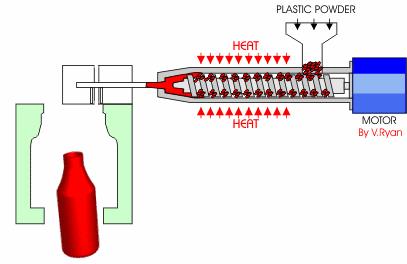
The barrel melts the plastic pellets. Heat from heaters and mechanical shear turns solid plastic into a flowing liquid. Proper barrel temperature ensures the material moves smoothly into the mold.
If the barrel runs too hot, plastic degrades. You may see black streaks or smell a burnt odor. The polymer chains break down, weakening the final part. For example, polyethylene (PE) loses its strength when overheated.
If the barrel runs too cold, plastic does not melt fully. The result is short shots—parts that are incomplete. Unmelted particles also create weak spots in the product.
Mold Temperature
Mold temperature controls how fast the plastic cools. A higher mold temperature slows cooling. This reduces internal stresses and prevents warping.
For amorphous plastics like polystyrene (PS), a mold temperature between 40°C and 80°C works well. It helps maintain dimensional stability.
For crystalline plastics like polypropylene (PP), a mold temperature of 30°C to 60°C allows controlled crystallization. This improves strength and surface appearance.
When mold temperature drops too low, the plastic skin cools too fast. The surface becomes dull or rough. Sink marks may appear, especially in thick sections.
2. Pressure: What Force Fills the Cavity?
Pressure moves the molten plastic into the mold. Two types matter: injection pressure and holding pressure.
Injection Pressure
This is the force that pushes plastic from the barrel into the cavity. Sufficient injection pressure ensures the material reaches every detail of the mold.
Too little pressure causes short shots. A connector with fine features may come out missing teeth or thin sections.
Too much pressure causes flash. Molten plastic squeezes out between mold halves. This adds extra material that must be trimmed. In extreme cases, high pressure can damage the mold itself.
Holding Pressure
After the cavity fills, holding pressure kicks in. Its job is to compensate for shrinkage. As plastic cools, it contracts. Holding pressure pushes more material into the cavity to fill that space.
Insufficient holding pressure leads to sink marks. Thick sections shrink more, creating visible depressions. Voids may form inside the part, weakening its structure.
Excessive holding pressure over-packs the cavity. This creates internal stresses that can cause cracking or warping over time. It also wastes material.
3. Speed: How Fast Should the Plastic Flow?
Injection speed determines how quickly molten plastic enters the mold. Balance is key.
Injection Speed
Higher injection speeds reduce cycle time. They also help fill thin walls and long flow paths before the plastic cools.
In thin-walled container production, fast injection ensures complete filling. The plastic reaches all areas before solidifying.
But speed that is too high creates problems. Jetting can occur, where the plastic shoots through the gate and folds onto itself. This leaves visible flow marks. High speed can also cause air entrapment, leading to burn marks.
Lower injection speeds give the plastic time to flow evenly. However, speeds that are too low allow premature cooling. The plastic becomes too thick to fill the cavity completely.
4. Time: When Does Each Stage End?
Time parameters control how long each phase lasts. Precise timing prevents defects.
Injection Time
Injection time is how long plastic flows into the mold. Correct injection time ensures complete and even filling.
Too short an injection time leaves the cavity partially filled. A small gear may come out with missing teeth.
Too long an injection time lets plastic cool while still flowing. This causes uneven filling and inconsistent wall thickness. Cycle time also increases, lowering production efficiency.
Holding Time
Holding time is how long holding pressure stays applied. Proper holding time allows enough material to enter the cavity as it shrinks.
A complex part with varying wall thicknesses needs different holding times for different sections. Thick sections require longer holding time because they shrink more.
Crystalline plastics like PP generally need longer holding times than amorphous plastics. The crystallization process causes greater volume change.
Cooling Time
Cooling time is how long the part stays in the mold before ejection. Adequate cooling time ensures the part is solid enough to hold its shape.
Cooling time too short: The part may deform under its own weight during ejection. Large panels can warp when removed too soon.
Cooling time too long: The part becomes brittle. Cycle time increases, reducing output. For high-volume production, even seconds of extra cooling time add up.
5. Screw Rotation Speed: How Fast Should the Screw Turn?
The screw rotates to melt and mix the plastic. Its speed affects how uniformly the material plasticizes.
Role in Plasticization
Higher screw speeds increase plasticization efficiency. More material melts per unit time, which can shorten cycle time.
In high-volume production, faster screw speeds boost output. But too much speed creates problems.
Excessive shear heat from high-speed rotation can degrade the plastic. Polycarbonate (PC) becomes brittle when overheated. The polymer chains break down, reducing impact strength.
Inconsistent plasticization also occurs. Some areas get over-sheared while others remain unmelted. This creates parts with uneven density and mechanical properties.
Lower screw speeds mean slower plasticization. Unmelted particles may enter the melt stream. These particles can block the nozzle or create surface imperfections.
6. Back Pressure: Why Add Resistance?
Back pressure resists the screw's backward movement during plasticization. This refines the melt.
Function of Back Pressure
Proper back pressure increases melt density. It forces trapped air and volatiles out of the plastic. The result is a more homogeneous material.
For optical lenses made of acrylic, back pressure eliminates air bubbles. Any bubble would scatter light and ruin optical clarity.
Back pressure also improves mixing. When colorants or additives are used, back pressure ensures even distribution. Low back pressure can cause color streaks or inconsistent coloring.
Heat generation is another benefit. Mechanical work from back pressure adds heat to the melt. This helps maintain uniform temperature, which promotes consistent flow.
Too much back pressure increases melt temperature excessively. This can cause degradation. It also prolongs cycle time because plasticization slows down.
7. Shot Size: How Much Material Is Enough?
Shot size is the volume of plastic injected each cycle. Getting this right prevents waste and defects.
Determining the Shot Size
Accurate shot size starts with cavity volume. CAD software can measure the mold's internal space precisely. Convert this volume to material weight using the plastic's density.
The runner system also consumes material. Plastic in the runners does not become part of the product but must still be melted and pushed through.
In multi-cavity molds, runner calculations become more complex. Each cavity may have different runner lengths and diameters. Account for all of them to set the right shot size.
Too small a shot size causes short shots. The cavity does not fill completely.
Too large a shot size over-packs the mold. Flash, high stress, and material waste follow.
The table below summarizes common defects from incorrect shot size:
| Shot Size Issue | Resulting Defects |
|---|---|
| Too small | Short shots, incomplete parts, weak sections |
| Too large | Flash, high internal stress, material waste |
| Inconsistent | Part-to-part variation, dimensional drift |
Conclusion
Injection molding quality comes down to controlling seven critical parameters. Temperature melts the plastic and controls cooling. Pressure fills the cavity and compensates for shrinkage. Speed balances flow rate with filling completeness. Time ensures each stage finishes properly. Screw rotation speed affects plasticization uniformity. Back pressure refines the melt. Shot size delivers the right amount of material.
Each parameter interacts with the others. Changing one often requires adjusting others. An experienced molding partner understands these relationships. They know how to dial in settings for your specific part and material.
When all seven parameters work together correctly, you get parts that meet specifications consistently. Defects drop. Cycle times improve. Your product reaches market faster and performs better.
FAQ
What happens if injection molding temperature is too high?
High temperatures cause thermal degradation. The plastic may show black streaks, burn marks, or a burnt odor. Mechanical properties like strength and impact resistance decrease because polymer chains break down.
How does holding pressure affect part dimensions?
Holding pressure compensates for shrinkage as plastic cools. Too little holding pressure causes sink marks and voids. Too much holding pressure creates internal stresses and over-packs the cavity, affecting dimensional accuracy.
Why is cooling time so important in injection molding?
Cooling time determines if the part is solid enough to eject without deforming. Insufficient cooling causes warping or breakage during ejection. Excessive cooling increases cycle time and can make the part brittle.
What is the difference between injection pressure and holding pressure?
Injection pressure pushes molten plastic into the cavity during filling. Holding pressure applies after filling to add material as the plastic shrinks during cooling. Both are essential but serve different purposes.
How do I know if my shot size is correct?
A correct shot size fills the cavity and runners completely without causing flash. Inspect parts for short shots (too small) or flash (too large). Consistent part weight across cycles also indicates proper shot size.
Contact Yigu Technology for Custom Manufacturing
Getting injection molding parameters right takes experience. At Yigu Technology, we specialize in custom plastic and metal parts. Our engineers fine-tune temperature, pressure, speed, and every other parameter to match your specific requirements. We handle complex geometries, tight tolerances, and demanding materials.
Let us help you produce high-quality parts with confidence. Contact Yigu Technology today to discuss your project.